
The best karaoke system for your home is the one that fits the room, the way your household actually sings, and the level of simplicity or control you want to live with long term. In most homes, the right choice is not the biggest system or the one with the longest feature list. It is the home karaoke system that keeps vocals clear, feels easy enough to use regularly, and still feels right after the excitement of shopping wears off.
Written by Toan Ho — Tittac editorial team.
Quick Answer
Start with four questions: Where will you actually sing? How often will the system be used? How simple do you want daily setup to feel? How much room do you want to leave for future upgrades? In most homes, the best home karaoke system is the one that matches the room, keeps vocals clear, feels easy to repeat, and gives you enough control without adding complexity you will not enjoy.
If you are not sure where to begin, choose in this order: room first, home use case second, system format third, microphone workflow fourth, and budget last. That order prevents a lot of expensive mistakes.
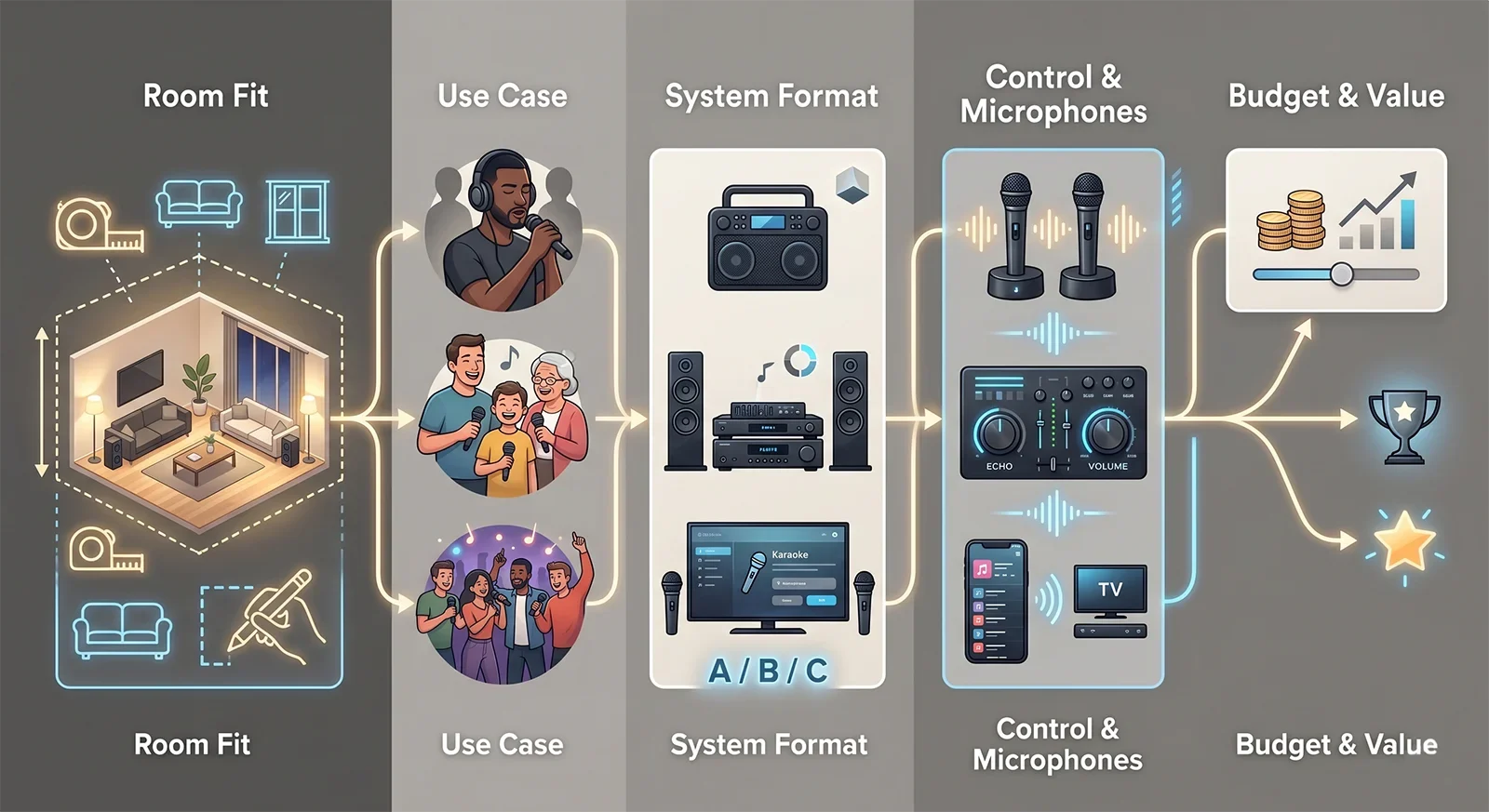
Definition: In this guide, a home karaoke system means the full at-home setup you use to sing comfortably in your real living space, including the room fit, system format, microphones, control flow, and long-term usability.
Who this guide is for: This guide is for home karaoke buyers who want the right overall system direction before comparing specific models, brands, or feature lists.
How this guide was prepared: This guide was prepared using the practical factors that matter most in real home use: room fit, vocal clarity, ease of use, speaker coverage, microphone workflow, system format, upgrade flexibility, and long-term value.
Need help choosing the right setup for your home? Visit our Garden Grove showroom or contact Tittac for help in English or Vietnamese.
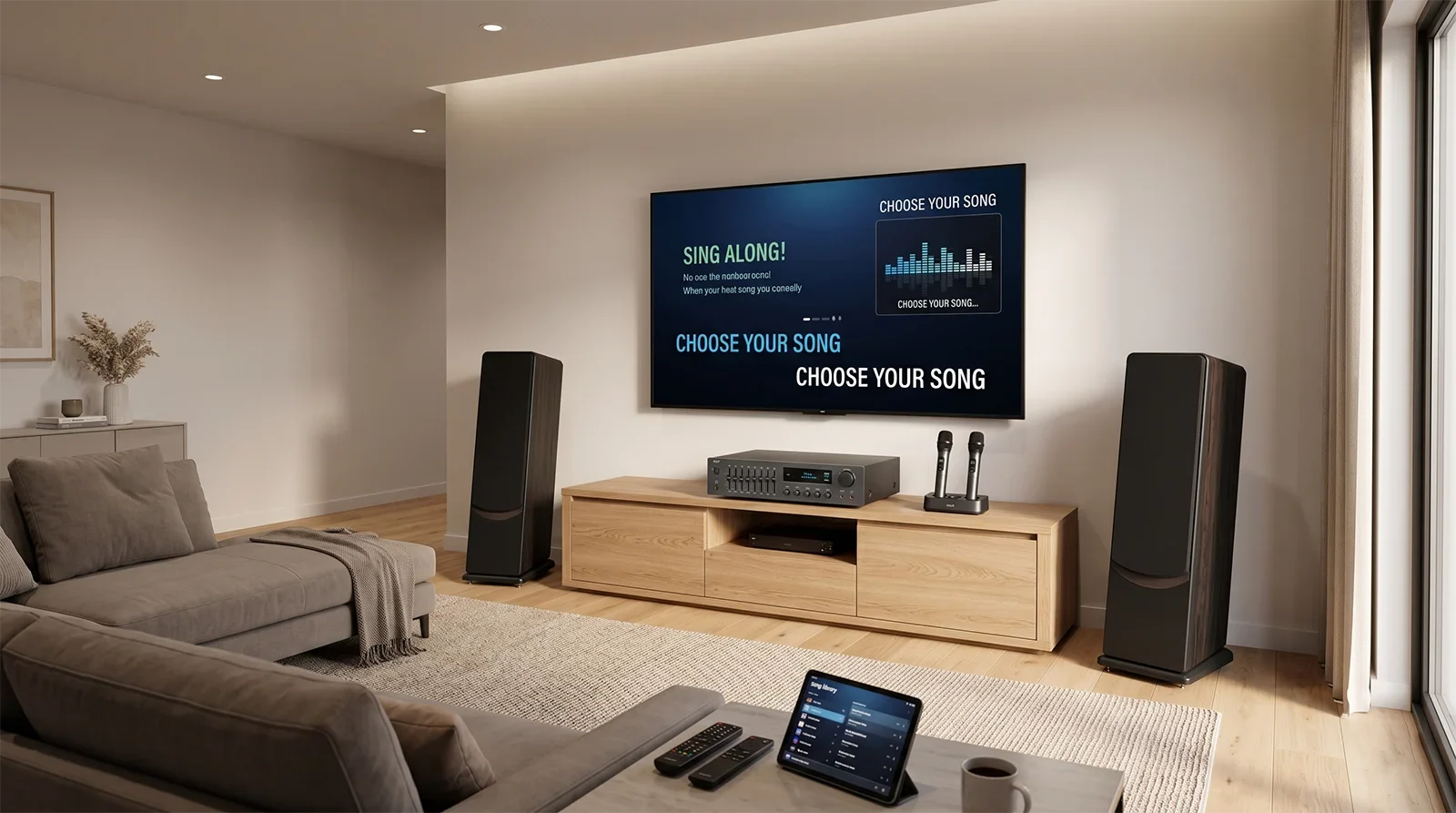
Table of Contents
- Start With the Room You Actually Use
- Decide What Kind of Home Karaoke Experience You Want
- Choose the Right System Format
- Make Sure the Microphones and Control Flow Fit the Household
- Set a Realistic Budget for the Way You Will Actually Use It
- Common Buying Mistakes
- How to Choose in 60 Seconds
- Frequently Asked Questions
- Final Recommendation
Start With the Room You Actually Use
The first job of a home karaoke system is not to look impressive on paper. It is to fit the room where your family will actually sing most of the time. A system that feels great in a compact condo living room may feel thin in a larger open space. A system that feels exciting in a large room may feel oversized, boomy, or tiring in a smaller one.
That is why room fit comes before specs. Start by asking how demanding the room really is. Ceiling height, open layouts, reflective surfaces, furniture, and singer-to-speaker distance all matter. A smaller tiled room can behave more aggressively than expected. A larger furnished room may be easier than it looks.
If room size is your biggest question, go next to best karaoke system for small rooms vs large rooms. That page owns the room-size comparison. This page is the broader buying framework.
| Decision filter | What to ask | Why it matters |
|---|---|---|
| Room fit | Where will karaoke actually happen most often? | It changes how much system the room can use comfortably |
| Use case | Is this casual family singing, regular weekend use, or a more serious setup? | It changes how much control, power, and structure you really need |
| Daily workflow | Do you want fast startup or more control over the experience? | It shapes whether the system will feel easy to live with |
| Growth path | Do you want a simple setup now or more upgrade flexibility later? | It helps avoid buying twice |
| Budget logic | Are you paying for real long-term value or for features you may barely use? | It protects you from both overspending and underbuying |
Decide What Kind of Home Karaoke Experience You Want
Casual Family Use
If karaoke in your home is mostly relaxed family singing, occasional weekends, holidays, or living-room fun, the best system is usually the one that feels easy to start and easy to repeat. Clear vocals, stable microphones, simple song playback, and a routine that does not turn karaoke into a project usually matter more than advanced-looking specs.
Regular Home Karaoke Use
If your family sings often and expects a better overall experience, the decision changes. Better microphone behavior, cleaner music-vocal balance, more room confidence, and a stronger long-term structure start to matter more. This is where buyers often realize that the cheapest system and the best-value system are not the same thing.
Shared Household Use
If several people in the house will use the system, simplicity becomes a real buying feature. A setup that only one person understands may not feel like a good home karaoke system even if it sounds impressive. If that is your concern, also compare easy-to-use karaoke systems for parents and seniors or karaoke system buying guide for beginners.
Choose the Right System Format
Portable vs Full-Size
This is one of the most important decisions after room fit. Portable karaoke systems usually make sense when flexibility, easier movement, and lighter everyday use matter most. Full-size home karaoke systems usually make more sense when you want a more planted home setup, stronger microphone integration, and better long-term satisfaction in regular use.
If that is your main decision, read portable vs full-size karaoke systems.
All-in-One vs Component
An all-in-one karaoke system usually works better for buyers who want fewer boxes, fewer cables, faster startup, and a cleaner daily routine. A component karaoke system usually works better for buyers who want more control, more flexibility, and a setup that can be upgraded in stages.
This is not a question of which option sounds more serious during research. It is a question of what will feel right once the system is in your home and part of your real routine. If that is your main comparison, read all-in-one vs component karaoke systems.
When One Format Usually Wins
Choose the simpler format if karaoke should feel fast, repeatable, and low-stress in a shared home environment. Choose the more flexible format if you already know the room is demanding, the system will be used often, or you care enough about control and future upgrades to live with more setup structure.
Make Sure the Microphones and Control Flow Fit the Household
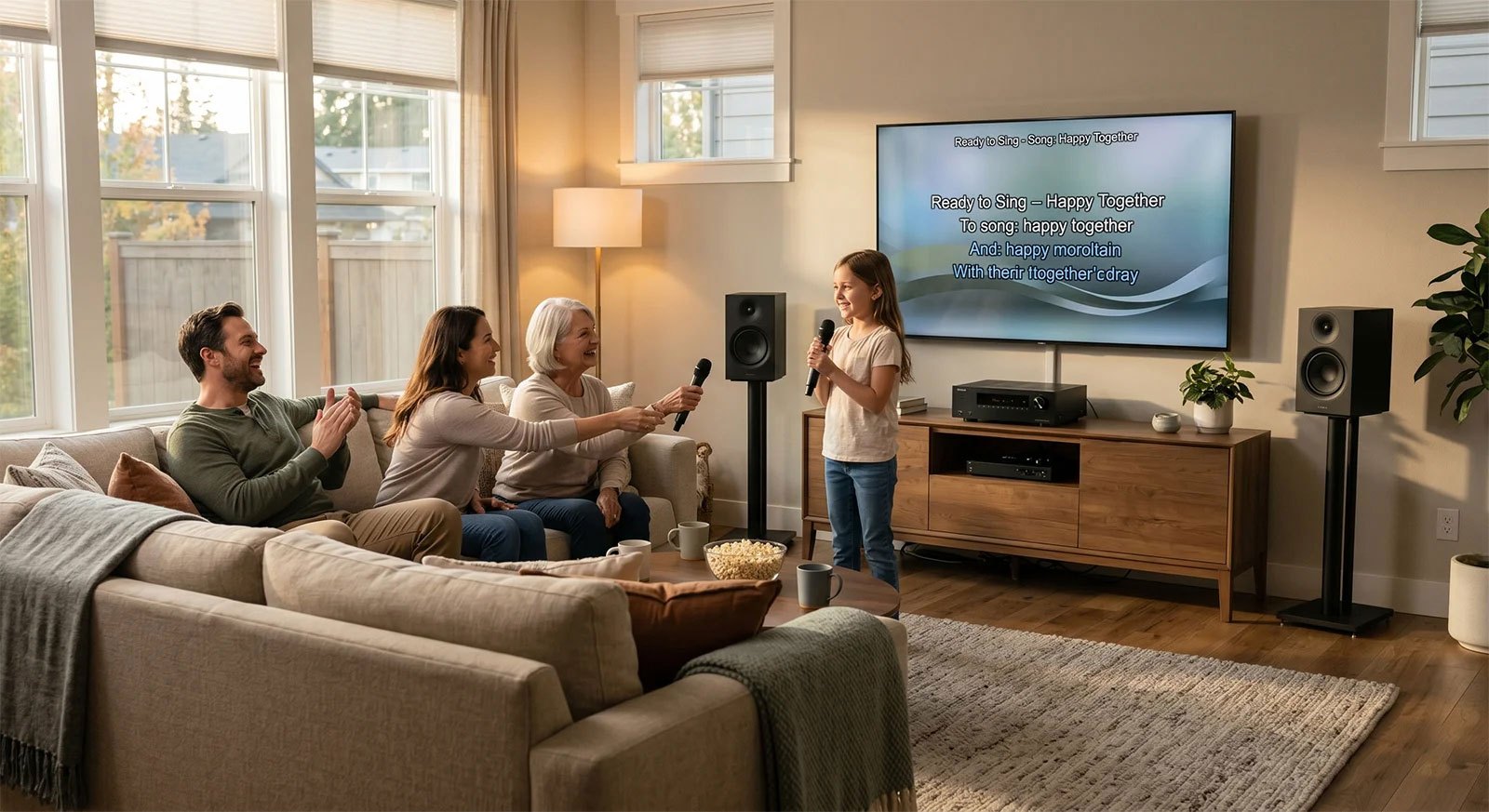
Many buyers think speakers decide everything. In real home use, microphone behavior and control flow matter almost as much. A home karaoke system is only satisfying if people can start songs, adjust levels, and sing comfortably without confusion or constant troubleshooting.
That means asking practical questions early. How many people usually sing at once? Does the household mainly do solo songs and duets, or does group singing happen often? Does someone in the house enjoy adjusting settings, or do you want a setup that feels obvious the first time someone turns it on?
If microphone capacity is your next question, go to 2-mic vs 4-mic karaoke systems. If your playback workflow is still unclear, keep simplicity high on your buying priority list. A system that sounds good but feels annoying to start often gets used less than expected.
Set a Realistic Budget for the Way You Will Actually Use It
The smartest karaoke budget is not the one that buys the biggest package. It is the one that buys enough system for the room and the way your home will really use it. In smaller rooms and lighter-use homes, overspending often shows up as extra size, extra complexity, or extra capacity that never becomes meaningful. In larger rooms or regular-use homes, underbuying usually shows up later as thin sound, weak vocal presence, or a system that feels limited too quickly.
A better budget question is this: what are you paying for that will still matter after the first month? Clear vocals matter. Stable microphones matter. A system that fits the room matters. A setup that feels easy enough to use again next weekend matters. Those usually create more value than feature count alone.
If you want to translate room demand into a more realistic power expectation, read how many watts do I need for karaoke.
| Home situation | What usually matters most | What buyers often get wrong |
|---|---|---|
| Small or shared room | Balance, easy placement, clear vocals, low stress | Buying too much system for the space |
| Medium everyday living room | Room fit, repeatable setup, strong long-term usability | Buying for rare edge cases instead of normal use |
| Large or open-concept room | Coverage, headroom, better music-vocal balance | Underestimating how quickly a modest setup feels limited |
| Multi-user household | Simple control flow, readable setup, smooth mic use | Choosing a system only one person can manage confidently |
| Hands-on buyer who wants flexibility | Upgradeable structure and more control | Expecting convenience-first systems to satisfy the same way |
Common Buying Mistakes
Starting With Specs Instead of the Room
Specs can help later, but they are not the first decision. If you start with watt numbers, feature count, or whatever looks strongest in a listing, it becomes much easier to buy the wrong kind of system for the room.
Treating Every Home Like the Same Use Case
A condo living room, a larger family room, a multi-generational household, and a more serious home karaoke setup are not the same buying problem. The best system depends on how the room and the household actually behave.
Ignoring Daily Friction
If karaoke feels annoying to start, adjust, or repeat, the system may not feel like a good long-term buy even if it sounded impressive during shopping. Daily friction is a real cost.
Buying for a Rare Scenario Instead of Normal Use
Many buyers imagine the biggest party they might host and let that scenario control the whole purchase. A better system is usually the one that feels right for the room and routine you actually live with most often.
How to Choose in 60 Seconds
- Start with the room you actually use most often.
- Decide whether your real priority is simplicity, stronger performance, or long-term flexibility.
- Choose the right format: portable vs full-size, then all-in-one vs component if needed.
- Make sure the microphones and control flow fit the people who will really use the system.
- Set a budget around room fit and normal family use, not around rare edge cases.
If you only remember one thing, remember this: The best karaoke system for your home is the one that fits the room, the household, and the routine you will actually live with.
Frequently Asked Questions
What should I decide first when choosing a home karaoke system?
Start with the room and the real home use case. That tells you more than specs alone because it shapes how much system the space can actually use comfortably and what kind of daily setup will feel realistic.
Is a portable karaoke system better than a full-size system for home?
Not automatically. Portable is often better when flexibility and easier movement matter most. Full-size is often better when you want a more complete home setup with stronger long-term room confidence and microphone integration.
Is an all-in-one karaoke system better than a component system?
It is usually better for buyers who want a faster, simpler routine with less clutter. A component system is usually better for buyers who want more control and easier upgrades over time.
What is the most common mistake buyers make?
They choose by specs, feature lists, or imagined future scenarios before they lock the room and the real home use case. That often leads to a system that looks strong during research but feels mismatched in real life.
Final Recommendation
If you want to choose the best karaoke system for your home, do not start with model names. Start with the room, the way your household actually sings, the level of simplicity or control you want, and the amount of long-term flexibility that will truly matter to you.
The right buying order is simple: room first, use case second, format third, daily workflow fourth, budget last. Follow that order, and you are much more likely to end up with a home karaoke system that still feels right after the shopping excitement is over.
Want help narrowing it down by your room, your family, and your real home setup?
Start with small rooms vs large rooms, compare portable vs full-size karaoke systems, or go deeper with all-in-one vs component karaoke systems.