
The future of home karaoke technology is not about making speakers larger or spec sheets longer. The more important direction is toward systems that are easier to use, more reliable to connect, smarter in vocal processing, and better suited to the way families actually use karaoke at home.
Who this article is for: Home karaoke buyers who want to understand how wireless technology, streaming, DSP, and simpler control systems may influence what they buy and how they use karaoke over the next several years.
How this article was prepared: This guide is based on practical home karaoke consultation experience, the way families actually use their systems, and the changes we continue to see in connectivity, music sources, audio processing, and demand for simpler everyday operation.
For home karaoke, the best technology is usually not the technology that makes people think more. It is the technology that helps the family turn the system on quickly, find songs easily, keep microphones working reliably, make vocals feel natural, and avoid interrupting the singing session with small technical problems.
That is why the most useful question about the future of home karaoke is not simply, “How powerful is this system?” A better question is whether the system is smooth, simple, and flexible enough to remain useful as the family's entertainment habits change over the next several years. If you want the broader foundation before looking at technology trends, start with our Complete Guide to Home Karaoke Systems.
Table of Contents
Quick Answer
Home karaoke technology is moving toward more reliable wireless connections, smoother streaming, smarter DSP, simpler controls, and better coordination between the different parts of the system. Buyers are likely to care less about impressive specifications in isolation and more about whether a system is easy to use, easy to sing with, easy to connect, and appropriate for the actual room.
How Home Karaoke Is Changing
Home karaoke used to be viewed mostly as a collection of hardware: speakers, an amplifier, microphones, a player, and connecting cables. That view is still partly correct, but it is no longer enough. Today, people judge a karaoke system by the complete experience: how quickly it starts, how reliably it connects, how smoothly YouTube works, whether older family members can operate it, and whether vocals sound comfortable in a real living room.
This shift follows broader changes in everyday technology. People are already accustomed to smart TVs, phones, streaming apps, and devices that connect quickly. As a result, a karaoke system that requires too many steps can feel inconvenient even when its specifications look impressive.
Living spaces are changing too. Many families do not have a dedicated karaoke room. They sing in living rooms, family rooms, apartments, or multipurpose spaces that are also used for TV and entertaining guests. That makes compact systems, easier connections, better volume control, and less disruption to normal household use increasingly valuable.
Wireless Connectivity Needs to Be More Reliable
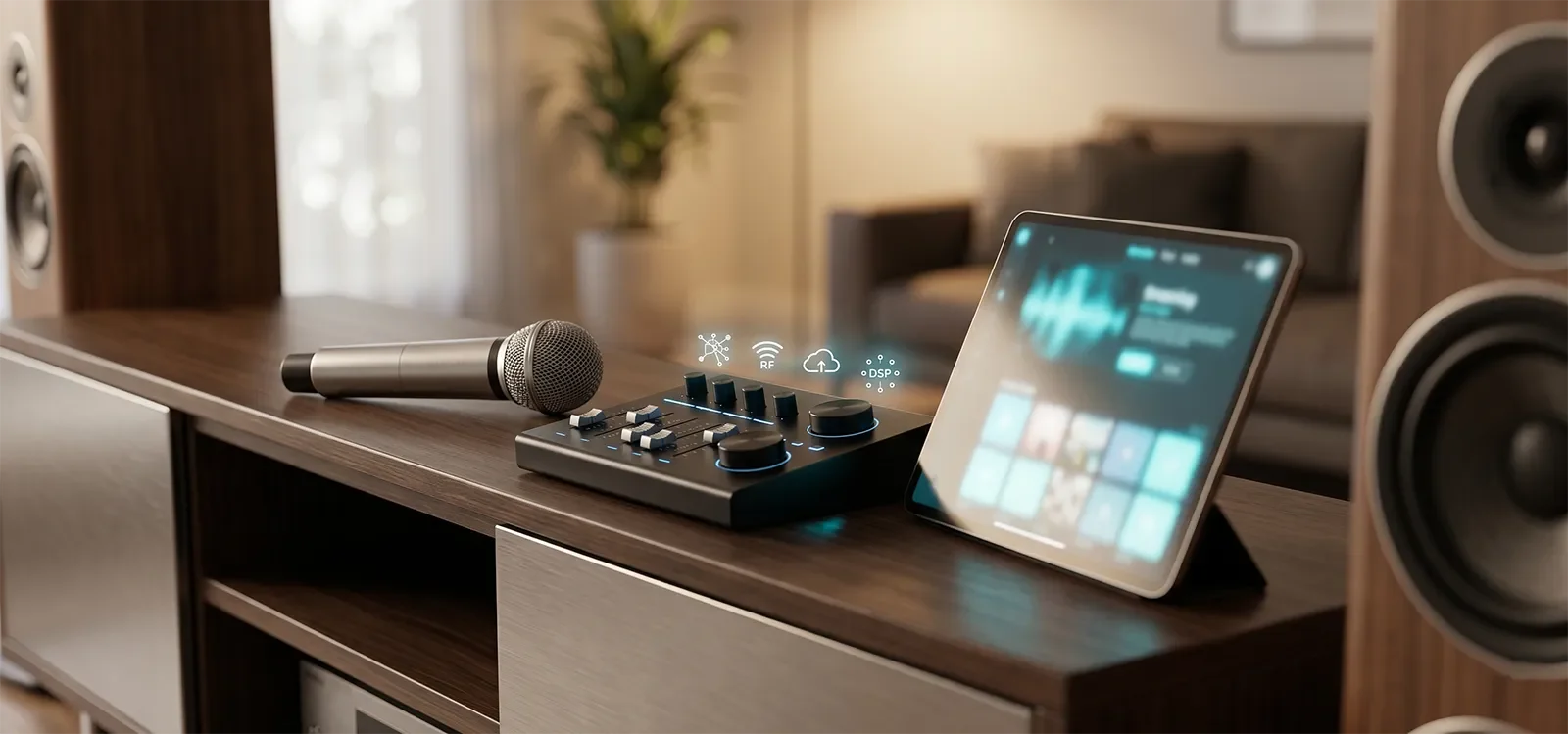
Wireless connectivity is no longer just an extra feature. In home karaoke, wireless microphones, wireless music sources, and faster connections between devices are increasingly becoming part of the expected experience.
But users do not need wireless technology simply because it sounds modern. They need wireless technology that works reliably: fast reconnection, fewer signal dropouts, less interference, less repeated pairing, and fewer interruptions in the middle of a singing session.
A good wireless system should almost disappear from the user's attention. The singer should not have to think about frequencies, pairing, or signal behavior. They should be able to pick up the microphone and sing. That is the practical value of wireless technology in a home environment.
Over the next several years, better home karaoke systems will need to offer more than a wireless feature on a specification sheet. Reliability during longer sessions, with multiple people and several devices operating in the same room, will matter much more.
Streaming Will Become Central to Home Karaoke
Home karaoke is already closely connected to YouTube, smart TVs, phones, tablets, and streaming devices. Because of that, the music source has become an important part of the karaoke experience rather than something separate from the system.
People do not simply want to be able to play YouTube. They want to find songs quickly, switch songs smoothly, see lyrics clearly, route audio correctly, and avoid having to explain a complicated process to every person in the household. When the source workflow is confusing, the entire karaoke session becomes harder to enjoy.
This is why streaming devices, TVs, and the audio connection path will continue to influence how a karaoke system feels in daily use. Good speakers and amplification can still produce a frustrating experience if the source is difficult to operate, introduces noticeable delay, or requires too many steps before anyone can start singing.
For a more detailed look at the source side of the system, see our Ultimate YouTube Karaoke Setup Guide. It explains when the TV itself is enough, when a separate streaming device may help, and why the audio path matters.
DSP Will Matter More to the Singing Experience
DSP, or digital signal processing, is becoming increasingly important in home karaoke because it can affect how vocals are shaped, balanced, controlled, and blended with the music. For a typical home user, DSP does not need to feel technical. What matters is whether the microphone feels easier to sing into, whether vocals sound less harsh, whether echo feels natural, and whether the system is easier to keep stable.
Good DSP does not replace good speakers, amplification, microphones, or proper setup. It can, however, help those components work together more effectively. Appropriate processing can make a system easier to adapt to different voices, listening levels, and room conditions without requiring constant manual adjustment.
The most useful direction for DSP is therefore not simply adding more controls. It is making karaoke easier to operate. Better presets, more controlled vocal effects, practical feedback-management tools, and room-aware adjustment can all contribute to a better home experience when implemented well.
If you want to understand DSP before comparing digital amplifiers, hybrid systems, or equipment with integrated processing, read DSP Explained for Home Karaoke.
Simpler Control Will Become the Standard
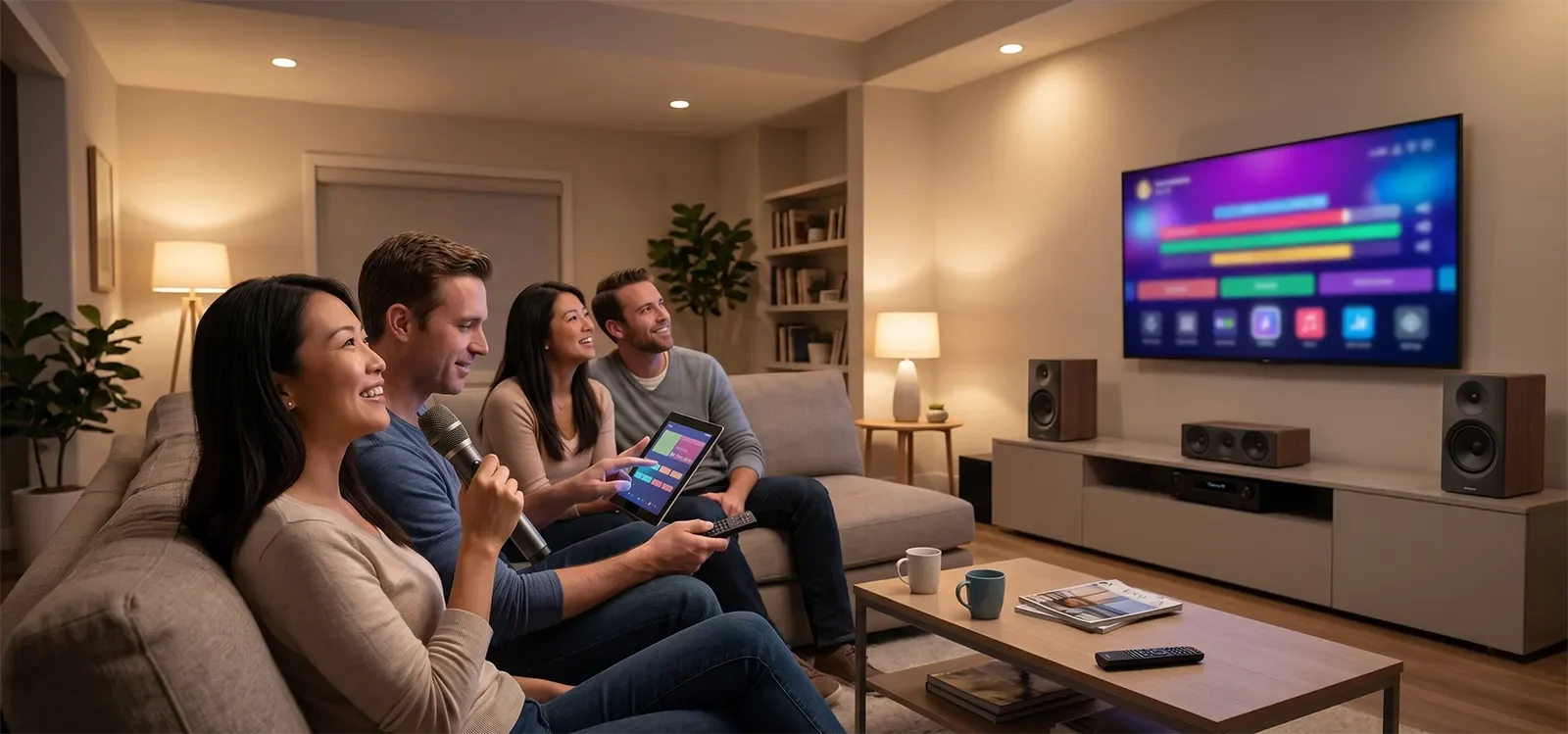
One important trend that is easy to overlook is control design. A home karaoke system is rarely used only by the most technical person in the household. Parents, older family members, guests, children, and occasional singers may all need to use the same system.
That means better home karaoke systems should become easier to understand: clearer controls, more useful presets, less cluttered interfaces, and fewer common functions buried inside complicated menus. A system can sound excellent and still be poorly suited to family use if only one person knows how to operate it.
Convenience will increasingly become part of what buyers consider performance:
- Faster startup and reliable reconnection between sessions.
- Easier source selection with less cable swapping or manual mode changing.
- Useful presets for family singing, parties, or lower-volume sessions.
- Reliable microphones that are easy to pass between singers.
- Clearer control of music volume, microphone level, and vocal effects for less experienced users.
The reason is simple: karaoke is a social activity. Long connection delays, confusing menus, or complicated sound adjustments can quickly interrupt the energy in the room. Good technology should keep the session moving instead of making everyone wait for the equipment.
Real-World Experience Matters More Than Isolated Specs
Technical specifications still matter, but individual specifications do not tell the entire story. Higher power ratings, long feature lists, or impressive technology names do not guarantee that a system will be comfortable to sing with in a real living room.
Buyers should increasingly focus on usable performance: Are the vocals clear? Is the sound comfortable for longer sessions? Is the system reliable? Can the rest of the family operate it? Will people still want to use it several months after the initial excitement is gone? Those questions often reveal more than one isolated wattage number or feature claim.
A system can look powerful on paper and still be tiring to live with: complicated wiring, a confusing source path, frequent feedback, harsh sound in a small room, or settings that need to be rebuilt every time people sing. By contrast, a more modest system that is matched and configured properly can deliver a better overall experience because the parts work together.
This is one of the most important changes in how home karaoke should be evaluated. Instead of treating speakers, amplification, microphones, DSP, sources, and controls as separate competitions, buyers should look at how the entire system supports one goal: making karaoke easier and more enjoyable for the people who actually use it.
How to Buy Today Without Becoming Outdated Too Quickly
Buying a karaoke system that can remain useful for several years does not mean buying the most expensive system available. It means avoiding choices that are unnecessarily locked down, difficult to upgrade, or dependent on only one source or one method of use.
Before buying, ask these practical questions:
- Does the system work smoothly with the music source I use most often?
- Do the microphones, amplification, speakers, and source work well together, or do they only look strong individually?
- Can the family turn the system on and sing without depending on one technical person?
- If I change the TV, streaming device, or room later, will the system remain flexible?
- Can I upgrade individual parts when needed, or would I have to replace most of the system?
A smart buying strategy is to prioritize a solid foundation: clear connections, comfortable sound, microphones that are easy to sing with, enough flexibility for the household, and controls that are not more complicated than they need to be. When the foundation is right, individual components can be upgraded over time without rebuilding the entire system.
A technology change does not automatically mean the entire karaoke system has to be replaced. In many homes, the smarter approach is to upgrade the weakest link: the source, microphones, processing or amplification, speakers, or the connection path. If you already own a karaoke system and want to improve it without wasting money, see How to Upgrade an Existing Karaoke System Without Wasting Money.
Home karaoke will likely become smarter internally while becoming simpler externally. That is the direction worth watching. Buyers do not need to chase every new feature. A better goal is to choose a system with a strong foundation, enough flexibility to adapt, and an experience that still makes the family want to use it regularly.
Frequently Asked Questions
Will home karaoke eventually become completely software-based?
Probably not. Software, streaming, and DSP are likely to become more important, but hardware will continue to play a major role in the actual sound. Speakers, microphones, amplification, and overall system matching still determine whether vocals are clear, comfortable, and appropriate for the room.
Can DSP make a home karaoke system easier to use?
Yes, when the DSP is designed and configured well. Useful processing can make vocals smoother, effects more natural, and system behavior easier to control. Some DSP systems can also help manage conditions that contribute to feedback. However, DSP cannot compensate for a fundamentally mismatched system or poor speaker placement.
Will wireless connections completely replace signal cables?
Not necessarily. Wireless connections will likely continue to expand, especially for microphones and music sources, while wired connections will remain valuable where consistent, predictable signal delivery matters. The goal for home karaoke is not to eliminate every cable. It is to use the connection method that makes the system both convenient and reliable.
Will high amplifier power still matter?
Yes, but power should never be evaluated by itself. Useful output depends on the speakers, speaker sensitivity, listening distance, room conditions, desired volume, and system headroom. A system that is unnecessarily powerful for a small room can be harder to control than one that is properly matched to the space.
How can I buy a karaoke system that will not become outdated too quickly?
Prioritize a system that is easy to connect, simple to operate, flexible with music sources, reliable with microphones, and upgradeable in individual stages. A system that ages well is usually not the one with the longest feature list. It is the one that remains convenient, enjoyable to sing with, and adaptable as the household's habits change.
If you want to choose or upgrade a karaoke system for longer-term use, start with your room, music source, singing habits, and the level of simplicity your household actually needs.