
A massage chair warranty is only useful if you understand what it really covers, how service is handled, and who helps you after the chair is delivered. Before buying a premium massage chair, separate parts, labor, structural coverage, and in-home service instead of assuming one warranty promise covers everything.

Who this guide is for: Buyers comparing massage chair warranty and in-home service before purchasing a home massage chair, especially in the premium range where long-term support matters as much as features.
How this guide was prepared: This guide was organized around real pre-purchase support questions: what warranty language means, how parts and labor coverage differ, what in-home service may or may not include, why local support matters, and how to judge ownership confidence before buying. Warranty terms can vary by brand, model, retailer, and location, so buyers should always review the written warranty for the specific chair they are considering.
If you are comparing massage chair warranty and in-home service, the real goal is not to find the chair with the most comforting wording. The goal is to understand what would actually happen if the chair needs help after delivery.
This matters because a massage chair is not a small product. It is heavy, mechanical, electronic, and often used by the whole family. For buyers shopping in the $7,000–$15,000 premium range, the warranty and service conversation should be part of the buying decision from the beginning — not something you only read after a problem happens.
A strong warranty does not always mean the longest warranty. A stronger ownership experience usually comes from clear coverage, realistic service access, honest explanation, and a seller who can explain the process before you buy.
Table of Contents
- Quick Answer
- Why Warranty and Service Should Be Checked Before You Buy
- Separate Parts, Labor, Structural Coverage, and In-Home Service
- What In-Home Service Really Means
- Why Serviceability Can Matter More Than Warranty Length
- Why Local Support Changes the Real Value of a Warranty
- What Premium Massage Chair Buyers Should Ask
- Japanese, Japanese-Technology, and Chinese-Made Chairs: Support Still Matters
- Warranty and Service Red Flags
- Questions to Ask Before You Buy
- Keep Warranty Separate From Troubleshooting, Financing, and Sale Timing
- Frequently Asked Questions
- Related Guides
Quick Answer
Before buying a massage chair, check exactly what the warranty covers and how service works in real life. Separate parts coverage, labor coverage, structural coverage, and in-home service. Ask who handles support, whether local service is available, what costs may still fall on you, and what steps happen if the chair needs repair. A clear warranty with a realistic service path is often more valuable than a long warranty that sounds impressive but leaves too many questions unanswered.
Why Warranty and Service Should Be Checked Before You Buy
Many buyers think about warranty only at the end of the purchase. That is a mistake. Warranty and service should be part of the comparison before you choose the chair, especially when you are buying a premium massage chair for long-term home use.
The reason is simple: a massage chair can look excellent in a showroom, feel great during a demo, and still become frustrating later if the support process is unclear. If no one can explain what happens when a part fails, who handles service, or whether help is available in your area, the ownership risk is higher than it first appears.
This page is not a repair guide. It is a pre-purchase trust guide. The job is to help you understand support before you commit.
If you are comparing premium models, do not separate warranty from value. A chair in this price range should feel good, fit well, and come with a support path that is clear enough to trust before delivery.
Separate Parts, Labor, Structural Coverage, and In-Home Service
One of the biggest warranty mistakes is treating the warranty like one single promise. In practice, massage chair coverage is often divided into several parts.
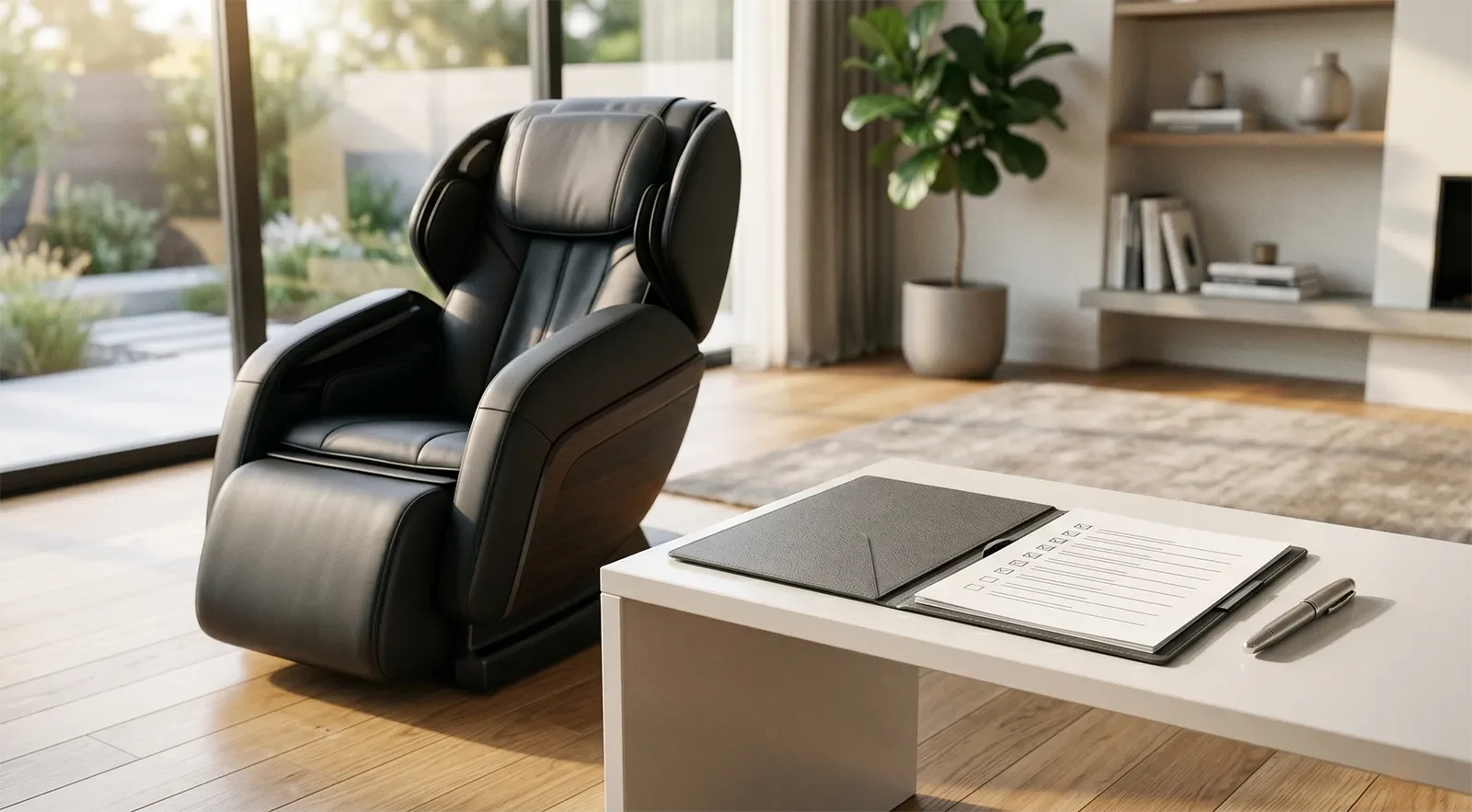
Parts coverage
Parts coverage usually refers to covered components that may be replaced if a qualifying issue occurs during the warranty period. This can include certain mechanical or electronic parts, depending on the written warranty.
Do not assume parts coverage automatically includes labor, shipping, travel, diagnosis, or in-home repair. Those details may be handled separately.
Labor coverage
Labor coverage refers to the work needed to diagnose or repair the chair. A warranty may cover parts for one length of time and labor for a shorter length of time. That difference matters because a chair may still have covered parts while the repair work itself is no longer fully covered.
Structural coverage
Structural coverage often sounds very reassuring, but buyers should ask what “structural” means in the actual written warranty. It may refer to the frame or certain core structural components, not every major part of the chair.
In-home service
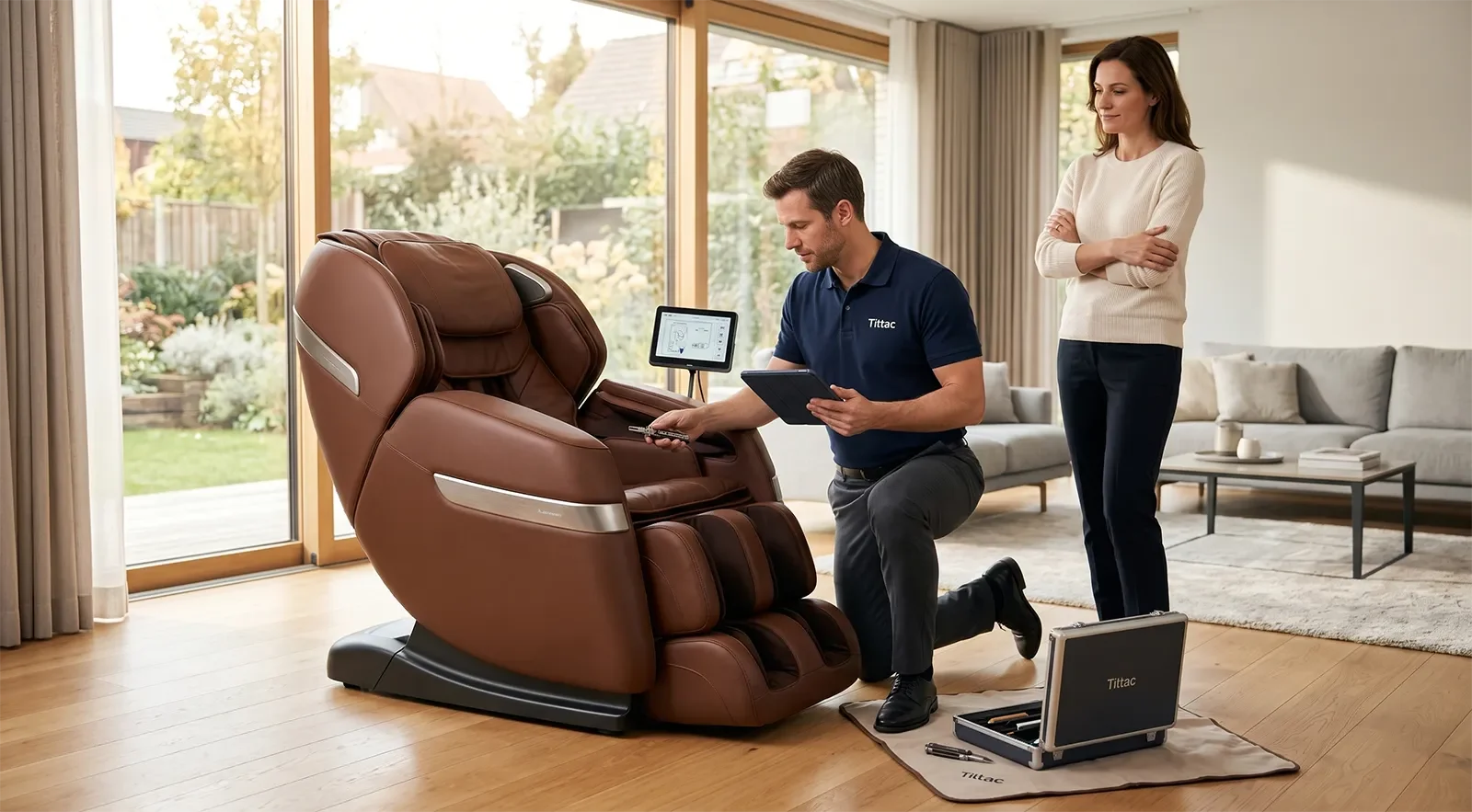
In-home service is one of the most important phrases to clarify. It may mean a technician can service the chair at your home under certain conditions, but the exact process, availability, limits, and costs can vary.
| Coverage Area | What Buyers Should Clarify |
|---|---|
| Parts | Which parts are covered, for how long, and what exclusions apply? |
| Labor | Is repair work covered, and is the labor period shorter than the parts period? |
| Structural | What counts as structural coverage in the written warranty? |
| In-home service | When is in-home service available, and what conditions apply? |
| Service access | Who handles the support process if the chair needs help? |
What In-Home Service Really Means
In-home service can be valuable, but buyers should not assume the phrase means everything is automatically handled at no cost.
Different companies may use the phrase differently. In some cases, in-home service may depend on location, technician availability, approval steps, warranty period, or the type of problem. In other cases, certain parts may be covered while travel, labor, or non-covered work may be handled differently.
What buyers often assume
- A technician will always come to the home automatically.
- Every repair-related cost is included during the warranty period.
- The brand or retailer will handle the entire process without extra steps.
- In-home service is available in every location.
- All problems qualify for in-home repair.
What buyers should ask instead
- When is in-home service included?
- Is service available in my city or region?
- Who approves the service request?
- Who sends the technician?
- Are there any travel, diagnostic, shipping, or labor costs?
- What happens if the problem is not covered?
The goal is not to distrust every warranty. The goal is to understand the process clearly before the chair is in your home.
Why Serviceability Can Matter More Than Warranty Length
A long warranty can sound impressive, but length alone does not tell you how easy the chair will be to service.
Serviceability means the chair can be supported in a practical way. That includes access to parts, clear support communication, realistic technician availability, and a defined process when something goes wrong.
For a premium massage chair, serviceability can be just as important as the written coverage period. A shorter but clearer support structure may feel safer than a longer warranty with vague steps and unclear responsibility.
Ask yourself this: if the chair stopped working six months or two years from now, would you know who to call and what happens next? If the answer is unclear, keep asking before you buy.
Why Local Support Changes the Real Value of a Warranty
Massage chair service is not the same as returning a small product. A massage chair is large, heavy, and difficult for most owners to move or repair by themselves. That is why local support can change the real value of the warranty.
Before buying, ask whether support is handled by the manufacturer, retailer, local technician network, third-party service provider, or a combination of those. The more clearly the seller can explain this, the more confidence you can have in the ownership experience.
For buyers near a showroom, local support can also make the purchase feel more grounded. You are not only buying a product; you are buying into a support path. That support path should be understandable before you pay.

What Premium Massage Chair Buyers Should Ask
If you are shopping in the $7,000–$15,000 range, the support conversation should be more serious. A premium chair should not come with vague answers.
At this level, buyers are usually not only paying for more programs or a bigger feature list. They are expecting better comfort, stronger construction, more refined massage quality, a better ownership experience, and clearer support. If you are still comparing which premium category makes sense, use Best Luxury Massage Chairs from $7,000 to $15,000 as the broader shortlist guide.
Premium buyers should ask:
- What parts are most important to understand in the warranty?
- How long are parts and labor covered?
- Is in-home service included, limited, or conditional?
- Who handles the service request if something happens?
- Is there support available in my area?
- How does the seller help after delivery?
- What is excluded from coverage?
- What should I keep for records after purchase?
If a seller can explain the massage technology but cannot explain the service process, that is a problem. A premium purchase should come with premium clarity.
Japanese, Japanese-Technology, and Chinese-Made Chairs: Support Still Matters
Many buyers, especially Vietnamese families, trust Japanese massage chairs or Japanese massage technology because Japan has a strong reputation for engineering, refinement, and durability. That trust is understandable.
However, warranty and service should still be checked carefully no matter where the chair is made. A Japanese-made chair, a chair using Japanese technology, and a premium Chinese-made chair may all have different support structures depending on the brand, distributor, retailer, and local service access.
Country of origin can be part of the decision, but it should not replace the support questions. The better question is: if this specific chair needs service in my home, what exactly happens?
A well-supported premium chair can be a better ownership decision than a chair with a stronger reputation but unclear service access in your area.
Warranty and Service Red Flags
Some warning signs are easy to miss when the chair itself feels exciting. Slow down if you notice any of these issues:
- Vague warranty language: The coverage sounds strong but does not clearly explain parts, labor, structure, or service steps.
- No clear service path: You cannot tell who handles the request if the chair needs help.
- Unclear in-home service: The phrase is used, but the conditions are not explained.
- Overfocus on discount: The seller pushes the sale price but avoids support details.
- No local clarity: Service availability in your area is not confirmed or clearly explained.
- Confusing exclusions: Important limitations are hidden, unclear, or only discussed after you ask repeatedly.
A good seller should not make you feel difficult for asking these questions. Support clarity is part of the product.
Questions to Ask Before You Buy
Use these questions before choosing a massage chair:
- What exactly is covered under parts?
- How long is labor covered?
- What does structural coverage include?
- Is in-home service available for this chair?
- Is in-home service available in my area?
- Who do I contact if something goes wrong?
- Does the retailer help with the service process?
- Are there any costs I may still be responsible for?
- What situations are excluded from the warranty?
- Where can I read the written warranty before buying?
These questions usually reveal more than the warranty headline. They help you understand the real ownership experience before the chair is delivered.
Keep Warranty Separate From Troubleshooting, Financing, and Sale Timing
This page has one job: helping you judge warranty and service confidence before buying. It should not turn into a troubleshooting guide, financing guide, or sale-timing article.
Troubleshooting is a different topic
If you already own a chair and need help understanding common issues, that is a post-purchase problem-solving topic. This page is for pre-purchase support evaluation.
Financing is a different decision
A payment plan can make a chair easier to buy, but financing does not make the warranty stronger. Payment strategy and warranty confidence should be judged separately.
Open-box and sale timing are separate too
Open-box, floor model, and sale timing questions can affect value, but they should be evaluated separately from warranty clarity. If you are considering a discounted chair, compare the support risk carefully in Open-Box vs Brand-New Massage Chairs.
Frequently Asked Questions
What is the most important thing to check in a massage chair warranty?
The most important thing is to separate parts, labor, structural coverage, and in-home service. Do not assume one warranty promise covers everything. Ask what is covered, how long it is covered, what is excluded, and how service works if the chair needs help.
Does in-home service mean repairs are always free at my house?
Not always. In-home service can vary by brand, model, warranty terms, location, and service process. Buyers should ask when in-home service applies, who sends the technician, and whether any costs may still be the owner’s responsibility.
Is a longer massage chair warranty always better?
No. Warranty length matters, but clarity and serviceability matter too. A long warranty with unclear support may be less useful than a shorter warranty with a clear repair process, realistic service access, and honest explanation.
Should warranty affect which massage chair I buy?
Yes. Warranty should not replace comfort, fit, and massage feel, but it should support the final decision. If two chairs feel similar, the chair with clearer service support and a better ownership path may be the safer purchase.
Should I read the written warranty before buying?
Yes. Buyers should review the written warranty for the exact chair they are considering. Verbal explanations can help, but the written warranty is what clarifies coverage, exclusions, time periods, and service conditions.
Do Japanese massage chairs always have better warranty support?
Not automatically. Japanese-made chairs and Japanese-technology chairs may appeal to buyers who value engineering reputation, but warranty support depends on the specific brand, retailer, distributor, and service access in your area.
What should premium massage chair buyers care about most?
Premium buyers should care about massage feel, body fit, build quality, ease of use, warranty clarity, and support confidence. In the $7,000–$15,000 range, vague service answers should not be ignored.
Before buying a massage chair, make sure the support promise feels as clear as the feature list. A good warranty should help you understand parts, labor, structure, in-home service, and who helps you after delivery. When those answers are clear, the purchase becomes easier to trust.
Want to understand warranty and in-home service before choosing a premium massage chair? Contact Tittac or visit the showroom to compare support expectations, service options, and long-term ownership confidence before you buy.
Contact Tittac or visit our showroom for help comparing warranty, service, and premium massage chair options for your home.