
Clipping in a home karaoke system can sound hard, strained, sharp, and increasingly uncomfortable when part of the signal chain is pushed beyond its clean operating range. It is not simply “more volume” or “more brightness.” One useful clue is that strong vocal peaks and dense musical passages begin to sound flatter, harsher, or more compressed instead of simply getting louder.
Written by Toan Ho — Tittac editorial team.
Who this article is for: Home karaoke users who want to distinguish normal brightness, harsh sound caused by tuning or the room, and listening symptoms that may indicate clipping when singing or playing music at higher levels.
How this article was prepared: This guide is based on practical listening observations in home karaoke systems, especially during strong vocal peaks, louder choruses, and situations where the sound changes from open and comfortable to strained or compressed.
Sometimes a karaoke system does not seem extremely loud, yet the vocals begin to sound sharp, the music feels tense, and the entire mix starts pressing forward in an uncomfortable way. Many people hear this change without knowing what to call it. Some assume the treble is too high. Others blame EQ, the speakers, or simply the character of the system.
In some cases, part of that change may be related to clipping. Technically, clipping happens when a stage in the signal chain is asked to produce more signal than it can reproduce cleanly, causing the waveform to be limited or distorted. To the listener, that may be perceived as harder, flatter, sharper, or more strained sound.
Listening alone cannot always prove that clipping is the cause, because harshness, room reflections, aggressive EQ, compression, loudspeaker behavior, and other forms of distortion can sound similar. This article therefore focuses on one practical goal: recognizing listening clues that may suggest clipping in home karaoke. It is not a full electronics lesson, a complete gain-staging tutorial, or a diagnostic procedure for every type of distortion. For broader technical context, see our Karaoke Technical Guides.
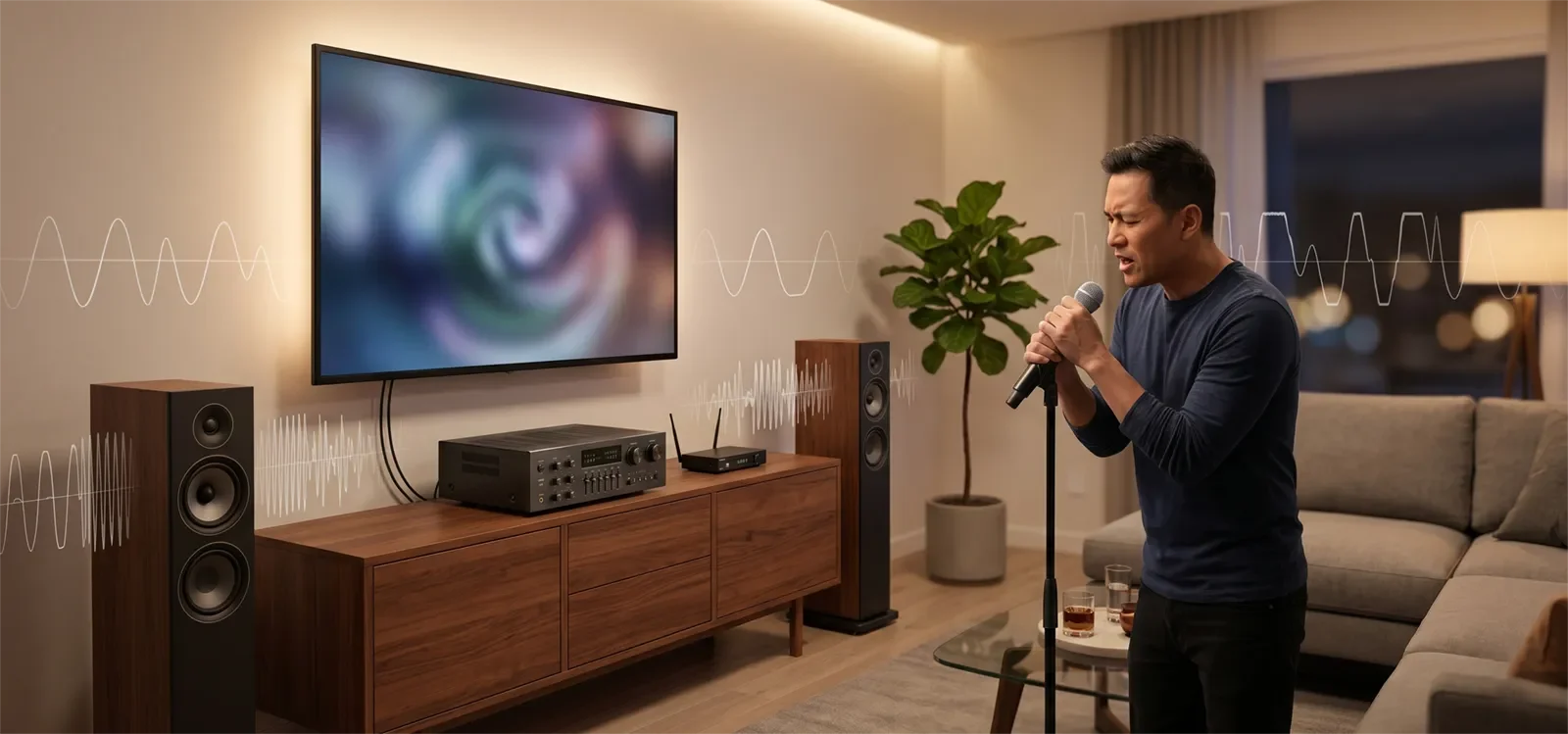
Table of Contents
What Does Clipping Mean When You Hear It?
In technical terms, clipping occurs when an electronic or digital stage is driven beyond the level it can reproduce cleanly. Instead of continuing to follow the incoming waveform accurately, the signal is limited or flattened near its peaks. That creates distortion.
For a home listener, you do not necessarily hear a waveform being “cut off.” What you may notice instead is a change in character. The sound can become harder, denser, sharper, more strained, or less open as the system is pushed.
Clipping is not always immediately obvious as a loud crackling or obviously “broken” sound. Mild or intermittent clipping can first become noticeable on strong vocal peaks or dense musical passages. Vocals may lose some smoothness, consonants may become more aggressive, and the mix may become more tiring.
However, those symptoms are not unique to clipping. They should be treated as warning signs that deserve investigation, not absolute proof that clipping is occurring.
What Can Clipping Sound Like in Karaoke?
In home karaoke, possible clipping is often most noticeable when the system is asked to handle stronger peaks. A vocal can sound comfortable at a moderate level, then become suddenly harder, flatter, sharper, or more distorted when the singer pushes into a stronger note.
The same thing can happen in the music. A chorus or dense instrumental section may start to feel more congested instead of simply louder. Drums, instruments, and vocals may lose separation and begin to sound like they are being pressed together.
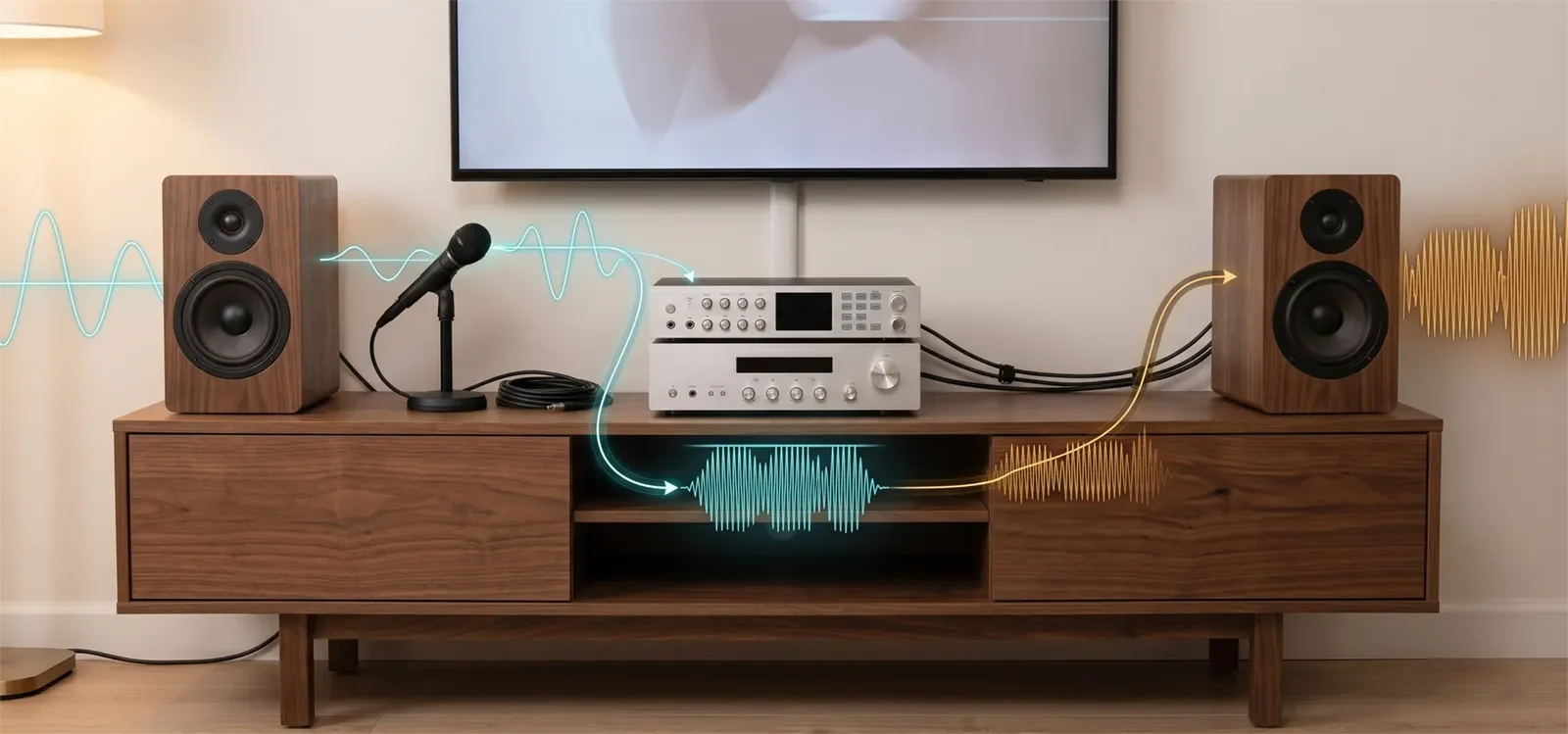
One useful clue is a change that appears consistently as a particular stage is driven harder. If the system sounds reasonably open at one setting but becomes disproportionately harder or more distorted after a small increase, something in the signal chain may be running out of clean headroom.
That still does not tell you exactly where the problem is. The clipping could occur at a source, mixer input, microphone preamp, DSP stage, amplifier, powered speaker input, or another point in the chain. That is why good diagnosis requires more than simply turning down the final master volume.
How Does It Affect Singing and Listening?
For the singer, a system that is being driven into distortion can feel less natural. Strong notes may stop opening up smoothly and instead become harder or more aggressive. That can encourage the singer to push even harder because the vocal no longer feels as effortless or expressive.
For listeners, distorted peaks can make the sound more tiring. Vocals may become dry, edgy, or overly forward, while the music can lose openness and separation. The system may not seem dramatically louder, yet the listening experience becomes less comfortable.
This can lead to the wrong response. Someone may think the system needs more microphone volume, more treble, or more amplifier output when one stage is already being driven too hard. Adding more level at the wrong point can make the problem worse.
If you want to understand how levels move through the signal chain, read What Gain Structure Means in Home Karaoke. That article provides the foundation for understanding why one stage can clip even when another stage still appears to have room left.
Where Do Listeners Often Notice It First?
Strong vocal peaks are often a useful place to listen because singing can change level very quickly. A microphone signal that seems comfortable during a soft verse can rise sharply when the singer moves into a stronger chorus or holds a high note.
Because human hearing is especially sensitive to the voice, changes in vocal texture are often easy to notice. The voice may become flatter, sharper, more compressed-sounding, or less smooth during the strongest moments.
Dense musical passages can reveal similar behavior. When drums, instruments, and vocals all rise together, a stage with insufficient headroom may begin to distort more clearly.
A practical test is to reduce the level feeding the suspected stage and listen again. If the harsh or distorted character improves significantly while the overall tonal balance remains similar, excessive level somewhere in the chain becomes a more plausible explanation.
That is still a listening clue, not laboratory confirmation. Correct diagnosis means identifying which stage is actually being overloaded.

Why Is Clipping Often Confused With Harshness?
Clipping and harshness can both make a system sound sharp, tense, or tiring, but they are not the same thing.
A karaoke system can sound harsh because of speaker voicing, room reflections, excessive upper-mid or treble energy, EQ choices, microphone characteristics, or listening position. That harshness may be present even when every electronic stage is operating cleanly.
Clipping, by contrast, is a specific form of distortion caused by exceeding the available signal range of a stage. It often becomes more obvious as that particular stage is driven harder.
This distinction matters because turning down treble will not fix actual clipping, while reducing gain at the wrong stage may not solve room-related harshness.
So do not diagnose clipping from the word “harsh” alone. Listen for whether the character changes significantly with signal level, whether strong peaks behave differently from quieter passages, and whether reducing the level into a particular stage restores cleaner sound.
For a broader explanation of harshness, read Why Some Karaoke Systems Sound Harsh at Home.
A Practical Listening Method
The first rule is to listen for change, not just loudness. If the system gets louder while the tonal character stays reasonably clean and open, that alone does not suggest clipping. If a small increase causes the sound to become disproportionately harder, flatter, more congested, or distorted, something deserves attention.
The second rule is not to use “harsh” as a diagnosis. Ask whether the harshness is present all the time or appears mainly when the signal reaches stronger peaks. Consistent harshness can point toward room, speaker, EQ, or voicing issues. Level-dependent distortion makes clipping or another overload problem more plausible.
The third rule is to listen at the most demanding part of the song. A system may sound completely comfortable during a soft verse but reveal limited headroom when the singer hits a loud chorus and the music becomes dense at the same time.
The fourth rule is to think in stages. Do not assume the power amplifier is automatically the problem. A microphone input, mixer channel, DSP, source output, amplifier input, or powered speaker input can be overloaded even when other controls still appear to have room.
The practical goal is not maximum loudness. A good home karaoke system should have enough usable headroom that normal vocal peaks and musical peaks remain clean and comfortable at the level the room actually requires.
Conclusion
Clipping in home karaoke does not always announce itself with obviously broken sound. Early symptoms can appear as harder vocal peaks, increased strain, loss of openness, or a mix that becomes disproportionately tiring as one part of the system is driven harder.
But those symptoms should not be treated as proof by themselves. Harshness, compression, EQ, room reflections, speaker behavior, and other forms of distortion can produce similar listening impressions.
The most useful habit is to notice when the sound changes character instead of merely changing level. When increasing a signal causes the system to become much harder, flatter, or more distorted instead of simply louder, stop pushing and investigate where the available headroom is being lost.
Understanding clipping does not require becoming an electronics technician. It means learning one practical principle: when clean headroom is gone, adding more level is not the same as getting better sound.
Frequently Asked Questions
Does clipping always sound obviously broken or distorted?
No. Severe clipping can sound clearly distorted, but lighter or intermittent clipping may first become noticeable as harder peaks, increased harshness, reduced openness, or listening fatigue. Those symptoms are clues, not definitive proof, because other problems can sound similar.
How can I distinguish clipping from normal brightness or harshness?
Harshness caused by the room, speaker voicing, or EQ can remain relatively consistent across different levels. Clipping is more likely when distortion or hardness increases noticeably as a specific signal stage is driven harder. The safest approach is to reduce the level feeding that stage and compare the result rather than relying on tonal description alone.
Can clipping affect how karaoke feels to sing?
Yes. Distorted vocal peaks can make strong notes feel harder, more aggressive, or less natural. The singer may respond by pushing harder, which can increase the signal level further and make the problem more obvious.
Is a weak amplifier the only cause of clipping?
No. Clipping can occur at different points in the signal chain, including a source output, microphone input, mixer stage, DSP, amplifier, or powered speaker input. The important question is not simply whether the amplifier is powerful enough, but which stage is exceeding its clean operating range.
Is this a complete gain-staging guide?
No. This article focuses on recognizing possible clipping by listening and understanding why it can be confused with harshness. For a broader explanation of signal levels, read What Gain Structure Means in Home Karaoke.
Want to move from recognizing symptoms to understanding how a well-tuned karaoke system is approached as a complete signal chain?
Continue with How Professionals Tune Karaoke Systems for Better Home Sound.