
A massage chair may help some people feel warmer, less stiff, or less heavy after a session, but it should not be presented as a proven treatment for circulation problems. The honest answer is limited: massage-chair use may support comfort-related feelings of better flow for some users, while medical circulation concerns need proper medical guidance.
If you are wondering can a massage chair improve circulation, the first step is to separate everyday comfort language from medical claims. Some people use the word “circulation” to describe warmer feet, lighter legs, less stiffness, or a more refreshed feeling after sitting for a long time. Those experiences can be real. But they are not the same as proving that a massage chair fixes poor circulation, vascular disease, swelling, clot risk, or a health condition.
Who this guide is for: Readers who are curious whether massage chairs really help circulation and want a careful, science-aware answer.
How this guide was prepared: This guide was prepared using cautious wellness guidance, plain-language clinical context, and practical home-user framing to separate comfort-related circulation effects from unsupported medical claims.
Quick Answer
A massage chair may support circulation in a limited, practical sense by encouraging relaxation, changing body position, and creating gentle mechanical movement through massage or air compression. Some users may notice that their legs feel less heavy, their body feels warmer, or mild stiffness eases after a session. But the evidence does not support broad claims that massage chairs fix circulation problems, prevent vascular issues, or replace medical care. The safest takeaway is that a massage chair may support comfort and short-term feelings of improved flow for some people, while stronger health claims should be treated cautiously. If you have swelling, pain, numbness, weakness, skin-color changes, or known circulation problems, safety matters more than marketing language.
Table of Contents
- What people usually mean by “better circulation”
- What the science supports more clearly
- What the science does not support clearly
- Why massage-chair circulation claims get overstated
- Features people often associate with circulation
- When to be more careful with circulation claims
- A realistic way to think about circulation benefits
- Frequently asked questions
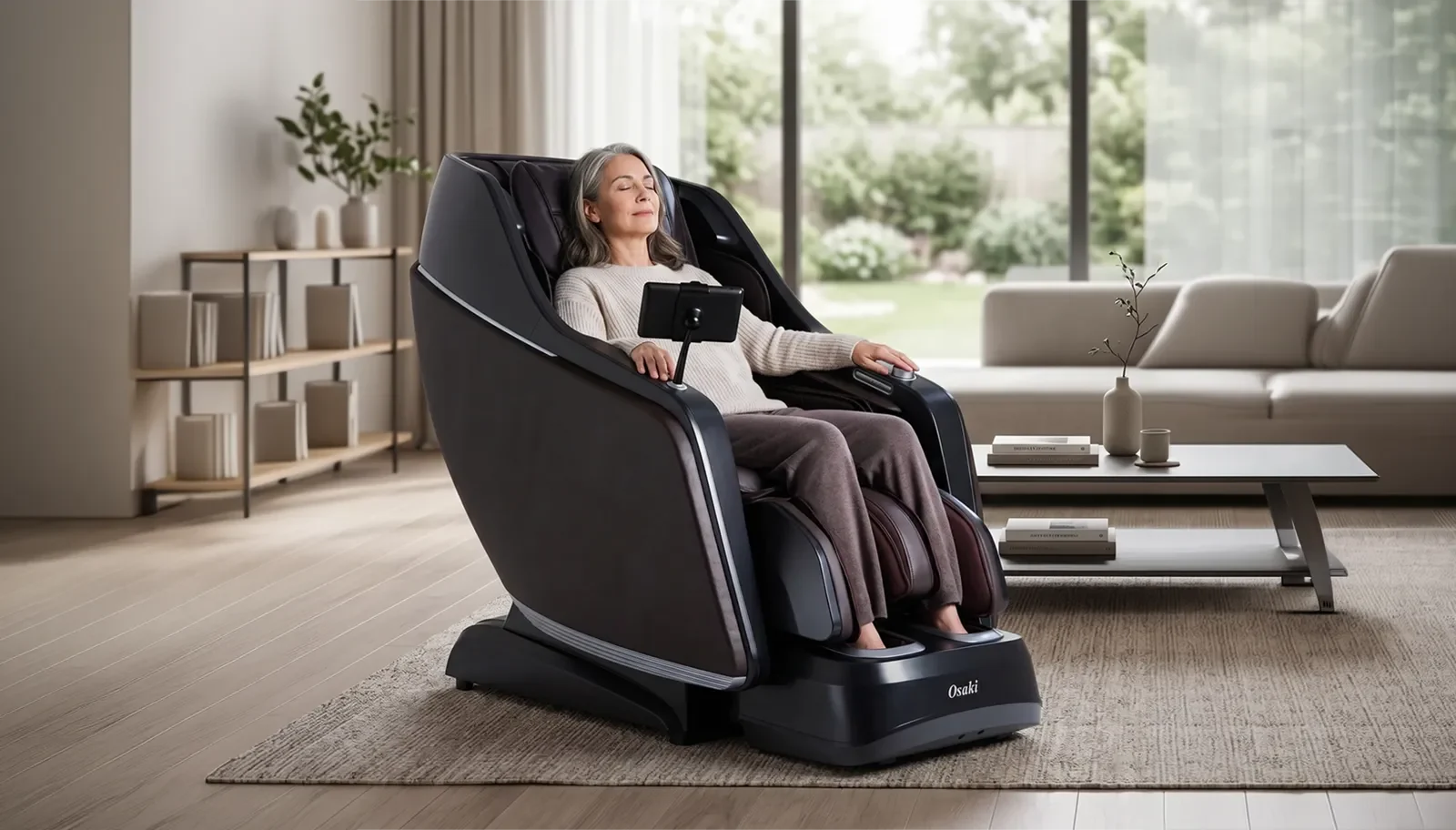
What people usually mean when they say “better circulation”
In everyday shopping language, “circulation” often gets used too loosely. One person may mean their feet feel cold. Another may mean their legs feel heavy after sitting. Someone else may mean stiffness, tight calves, tired feet, or a general sense that the body feels more refreshed after a session.
Those are not all the same thing. Feeling warmer or more relaxed after massage is not the same as proving that a chair has solved a blood-flow problem. That difference matters because circulation is often used in marketing as a broad wellness claim, even when the real effect may be more modest and comfort-based.
What the science supports more clearly
Massage may support relaxation and short-term comfort
The strongest responsible framing around massage is usually not “circulation cure” language. It is the more practical idea that massage may help people feel less tense, more relaxed, and more comfortable for a short period. When the body relaxes, posture changes, and muscles stop bracing as much, some users describe that as feeling like circulation is better.
Localized blood-flow changes are plausible
It is reasonable to think that massage-like movement, warmth, or gentle compression may create temporary local changes in the area being worked. That helps explain why some users feel warmer, lighter, or less stiff after a session. But temporary local changes are not the same as proving broad cardiovascular or vascular benefit across the whole body.
Body position may affect how the lower body feels
Some massage chairs place the body in a reclined position that feels less compressed and more supported. That may help certain users feel more comfortable through the legs, hips, and lower body. If you want the posture side of that idea explained, read what zero gravity means in a massage chair. This page does not own that feature in detail, but body position is one reason some sessions feel different from simply sitting upright.
What the science does not support clearly
It does not prove that massage chairs fix circulation problems
This is where many wellness pages overreach. A massage chair should not be treated as a solution for poor circulation, vascular disease, clot risk, unexplained swelling, or numbness. Those are medical topics, not comfort-copy topics. Even if a chair makes you feel better for a while, that does not prove it has corrected the underlying problem.
It does not justify broad claims for every feature
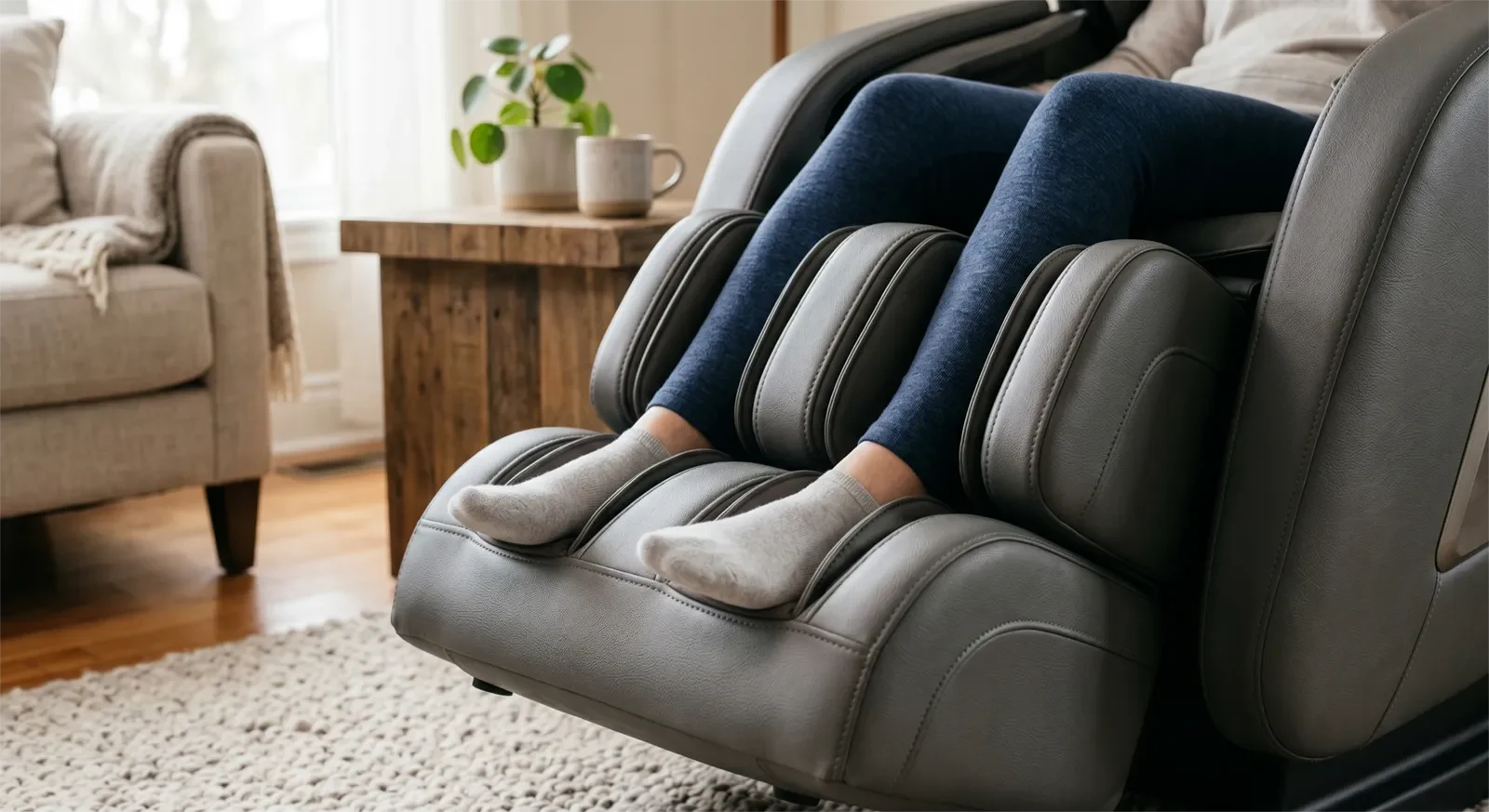
Features like foot rollers, calf massage, and air compression are often connected to circulation claims, but that does not mean every feature has strong evidence behind every promise attached to it. This page intentionally avoids turning into a lower-leg feature explainer. If you want the feature overview itself, go to foot rollers, calf massage, and air compression explained.
It should not be confused with medical compression therapy
Massage-chair air compression may feel pleasant and supportive, but it should not automatically be treated as the same thing as clinical compression therapy used for specific medical reasons. Similar wording does not mean the same purpose, evidence level, pressure control, or medical supervision.
Why massage-chair circulation claims get overstated
Circulation is an appealing word because it sounds scientific, broad, and beneficial. It can be used to imply more energy, faster recovery, healthier legs, less swelling, and better overall wellness all at once. The problem is that the evidence is usually not that sweeping.
A more realistic way to read the claim is this: some massage-chair features may help some people feel more comfortable, warmer, less stiff, or less heavy for a while. That can be a meaningful comfort benefit. It is just not the same as a proven medical outcome.
What features people often associate with circulation
Shoppers usually connect circulation claims with lower-leg air compression, calf massage, foot rollers, heat, and recline. Those associations are understandable, especially because these features can make the legs or feet feel more active, warmer, or more supported during a session.
But features do not prove medical benefit by themselves. If you want to understand the lower-leg feature group itself, use the lower-leg feature explainer. If you want to understand how recline may change body position and comfort, see our zero-gravity guide.
If you are still comparing massage chairs broadly, read how to choose the best massage chair for your home before choosing based on circulation language alone.
When you should be more careful with circulation claims
- If you have leg swelling that is new, one-sided, painful, warm, red, or unexplained.
- If you have known vascular disease, diabetes-related foot concerns, or a history of circulation-related medical problems.
- If “poor circulation” is being used to describe numbness, weakness, pain, coldness, skin-color changes, or slow-healing sores.
- If symptoms are getting worse or feel different from your usual pattern.
- If you are hoping a chair will replace medical evaluation for symptoms that need a clinician.
In those cases, the main question is no longer “Does this chair help circulation?” It becomes “Is it appropriate to use a massage chair at all right now?” That is why safety needs to stay in the conversation. Read our health and safety guide when using a massage chair before leaning too hard on circulation marketing.
A realistic way to think about circulation benefits
The most balanced expectation is that a massage chair may support comfort-related feelings people often describe as better circulation: warmer legs, less heaviness, less stiffness, or a more refreshed feeling after sitting for long periods. Those outcomes are believable and useful for some users.
What is not realistic is treating a chair as a proven answer for circulation disorders, swelling causes, clot prevention, or broader cardiovascular health. A massage chair can be a comfort tool. It should not be treated like a vascular treatment plan.
For older adults or family members who may be more sensitive to pressure, heat, or lower-leg compression, the safest buying logic is not “more features.” It is comfort, control, fit, and ease of use. If the chair is for a parent or senior family member, read our guide to massage chairs for seniors before choosing based on circulation claims.
Frequently Asked Questions
Does a massage chair help blood flow?
It may help some people feel short-term local warmth, comfort, or reduced heaviness, which is part of how improved blood flow is described in everyday language. But that is different from proving a broad medical blood-flow benefit for every user or every condition.
Do foot rollers and calf airbags prove better circulation?
No. They may be associated with comfort and a feeling of movement through the lower legs, but the existence of those features alone does not prove strong medical circulation outcomes. Features and evidence should be treated as separate questions.
Is a massage chair the same as compression therapy?
No. Massage-chair air compression may feel supportive, but it should not automatically be treated as equivalent to medical compression therapy used for specific clinical reasons.
Can a massage chair help cold feet or heavy legs?
It may help some users feel warmer, lighter, or more relaxed for a short period, especially after sitting for a long time. But cold feet, heaviness, numbness, pain, swelling, or color changes can also have medical causes, so persistent or concerning symptoms should not be handled as a massage-chair shopping question only.
When should I stop thinking of this as a wellness question and ask a clinician?
If you have new swelling, one-sided swelling, pain, numbness, weakness, skin-color changes, coldness on one side, slow-healing sores, or known circulation-related health concerns, stop relying on wellness marketing language and get proper medical guidance instead.
Related Guides
- Health & Safety Guide When Using a Massage Chair
- Foot Rollers, Calf Massage, and Air Compression Explained
- What Is Zero Gravity in a Massage Chair?
- How to Use a Massage Chair Safely in Your First 30 Days
- How to Choose the Best Massage Chair for Your Home
Start with safety, not marketing claims
If this article helped you rethink circulation claims more carefully, the best next step is to read our health and safety guide when using a massage chair before treating any comfort feature as a medical promise. If you are comparing chairs for general comfort, Tittac can also help you think through fit, pressure, heat, recline, and lower-leg features without overclaiming what a chair can do.