
The best holiday karaoke party ideas for Christmas and New Year at home are the ones that follow the natural rhythm of the gathering: let guests settle, start with familiar songs, make room for food and conversation, then bring everyone back together with shared songs.
Who this guide is for: Home hosts planning Christmas karaoke, New Year karaoke, or a holiday family gathering where singing should feel warm, festive, and easy to join without taking over the whole night.
How this guide was prepared: This article was rebuilt as a holiday-specific karaoke planning guide. It focuses on Christmas and New Year timing, song flow, room atmosphere, shared participation, food breaks, and practical home hosting choices, while leaving broader karaoke party planning to their proper guide pages.
Holiday karaoke at home is different from a regular singing night. Guests may arrive at different times, food may still be moving through the room, relatives may want to talk first, and some people may only join when a familiar Christmas or New Year song comes on.
That is why holiday karaoke works best when it supports the gathering instead of trying to control it. If you want the broader party hub, start with Karaoke Party Ideas. This guide stays focused on Christmas and New Year karaoke at home.
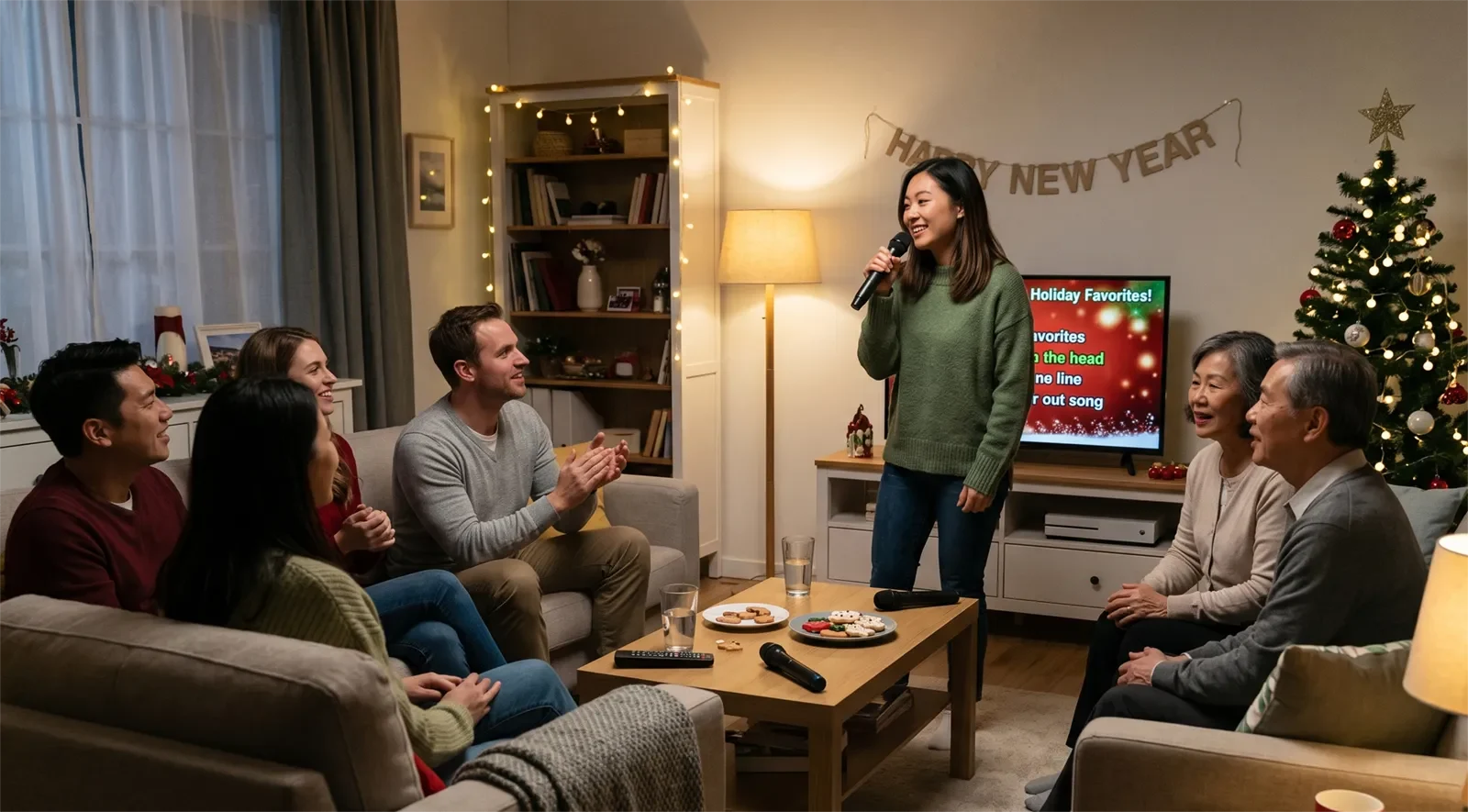
Table of Contents
What makes holiday karaoke different
Holiday karaoke has a softer rhythm than many regular karaoke parties. Christmas and New Year gatherings are usually not just about singing. They include food, conversation, family moments, gift exchanges, photos, kids moving around, and guests who may need time before they feel ready to join.
The mistake is trying to make karaoke dominate the whole night too early. If the room is still greeting people, serving food, or settling into conversation, a loud performance block can feel disconnected from the mood.
A better approach is to let karaoke rise naturally. Start with songs that feel familiar. Use shared choruses and easy singalongs. Give guests space to talk and eat. Then bring karaoke back when the room has energy again.
The best holiday karaoke plan does not ask everyone to participate the same way. Some guests will sing full songs. Some will join a chorus. Some will enjoy watching. That is normal. A good holiday karaoke night gives all of them a place in the room.
Start after guests have settled
Holiday karaoke usually works better when guests have time to arrive, greet each other, eat a little, and get comfortable before singing becomes the main activity.
If karaoke starts the moment people walk in, the room may feel awkward. Guests are still finding seats, saying hello, checking on food, or settling children. The first songs can fall flat, not because the songs are wrong, but because the room is not ready yet.
Give the gathering a short settling-in phase. Let the room become social first. Once people are relaxed, start with a familiar song that does not demand a big performance.
This is especially helpful for family gatherings, where older relatives or quieter guests may need more time before joining. When the first song feels easy, the rest of the night becomes easier to open.
Choose songs that feel festive and easy to join
Holiday karaoke songs should bring the room together. The best opening songs are familiar, warm, and easy enough for people to join without feeling pressured.
For Christmas gatherings, that may mean seasonal songs, family favorites, or familiar ballads that fit the mood. For New Year gatherings, it may mean songs that start relaxed and build toward more energy later in the night.
A strong holiday karaoke playlist usually includes:
- familiar Christmas or seasonal songs
- crowd-friendly songs with easy choruses
- duets for guests who do not want to sing alone
- a few upbeat songs for later energy
- shared songs for the closing stretch
Avoid starting with songs that are too long, too difficult, or too performance-heavy. Holiday karaoke should lower the barrier to participation, not raise it.
For deeper help with song order and energy flow, read How to Build the Perfect Karaoke Playlist for Home Parties.
Match the flow to Christmas or New Year
Christmas and New Year karaoke often need different pacing.
Christmas gatherings usually feel warmer, more family-centered, and more reflective. The best karaoke flow often starts gently, leaves room for conversation, and uses familiar songs that different ages can enjoy together.
New Year karaoke can usually build more energy later. Guests may start with food and conversation, then become more ready for louder, more upbeat songs as the night moves closer to the countdown or final celebration moments.
The key is to follow the emotional tone of the gathering. Do not force Christmas karaoke to feel like a loud stage show if the room wants warmth. Do not keep New Year karaoke too slow if the room is naturally building toward celebration.
A good host watches the room and adjusts. If guests are talking and eating, let the moment breathe. If people start gathering near the screen, bring in a more active song. If the room feels split, use a familiar group song to pull people back together.
Use lighting and room atmosphere to support the mood
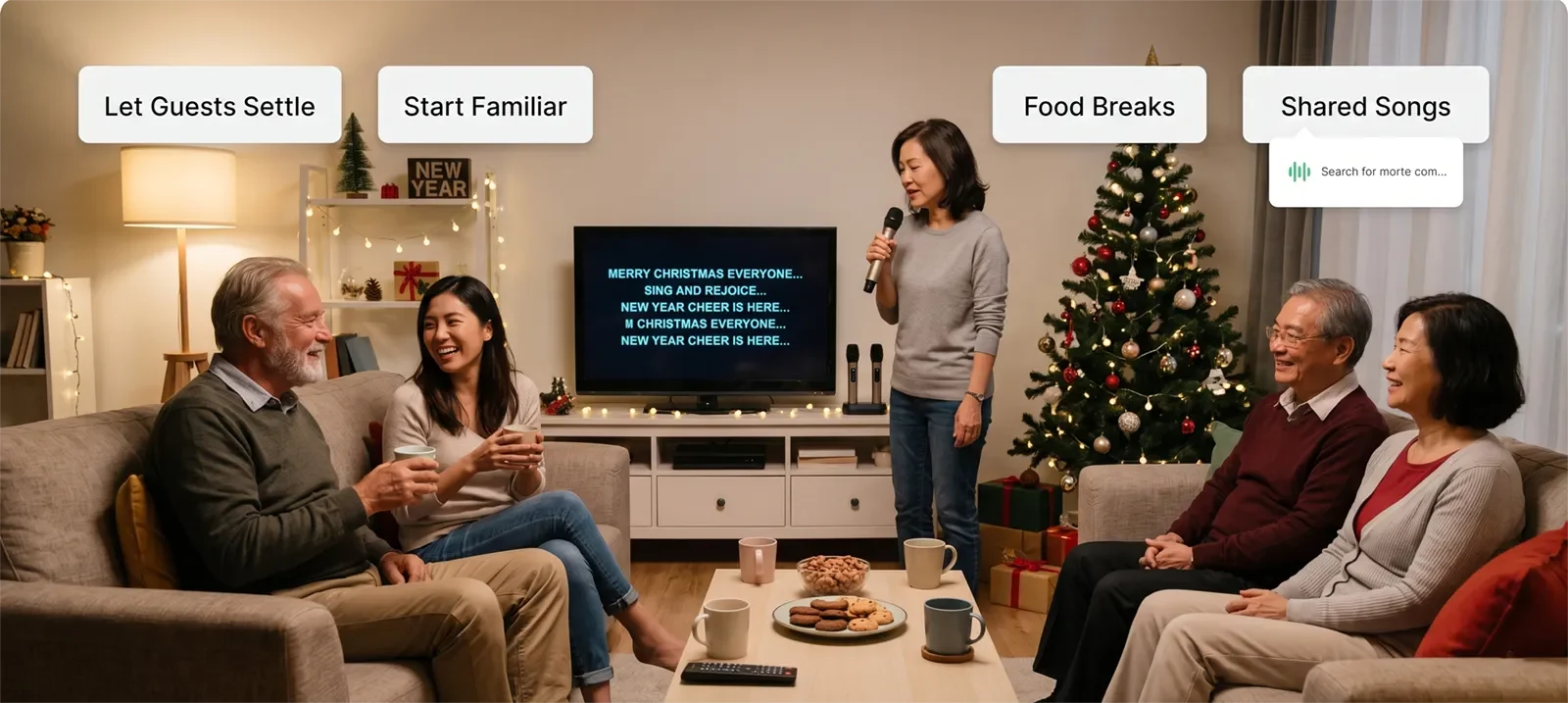
Holiday karaoke feels better when the room looks warm and easy to join. You do not need a stage. You need a room where guests can see the lyrics, move comfortably, and feel that singing belongs naturally inside the celebration.
Soft lighting usually works better than a harsh bright room or a room that is too dark. Guests should still be able to see each other, read lyrics, move around safely, and enjoy the holiday atmosphere.
Keep the lyric screen visible from the main seating area. Some guests may want to sing from their seat or join a chorus before they ever stand up. That kind of casual participation is part of what makes holiday karaoke feel warm.
Small atmosphere choices can help: softer room lighting, a clear singing area, comfortable seating, and enough space near the microphones for duets or group songs. If you want more room ideas, read Karaoke Room Lighting Ideas for Family Home Setups.
Balance food, conversation, and singing
Food and conversation are not interruptions during a holiday karaoke party. They are part of the event. The goal is not to keep karaoke running nonstop. The goal is to bring karaoke in at the right moments so it strengthens the gathering.
A common mistake is pushing songs while guests are serving food, preparing dessert, greeting late arrivals, or getting ready for a toast. That usually creates weak participation because the room is focused somewhere else.
Instead, use natural breaks. Let food and conversation happen, then bring karaoke back with a familiar song. A recognizable chorus works well because it gives people an easy way to rejoin after a pause.
Keep the queue visible, but flexible. A holiday gathering can feel too mechanical if every song must happen in strict order. A loose queue works better: enough structure to avoid confusion, but enough flexibility to follow the room.
If you want the broader hosting foundation for keeping a party smooth, see How to Host a Karaoke Party at Home Without Stress.
A simple holiday karaoke party flow
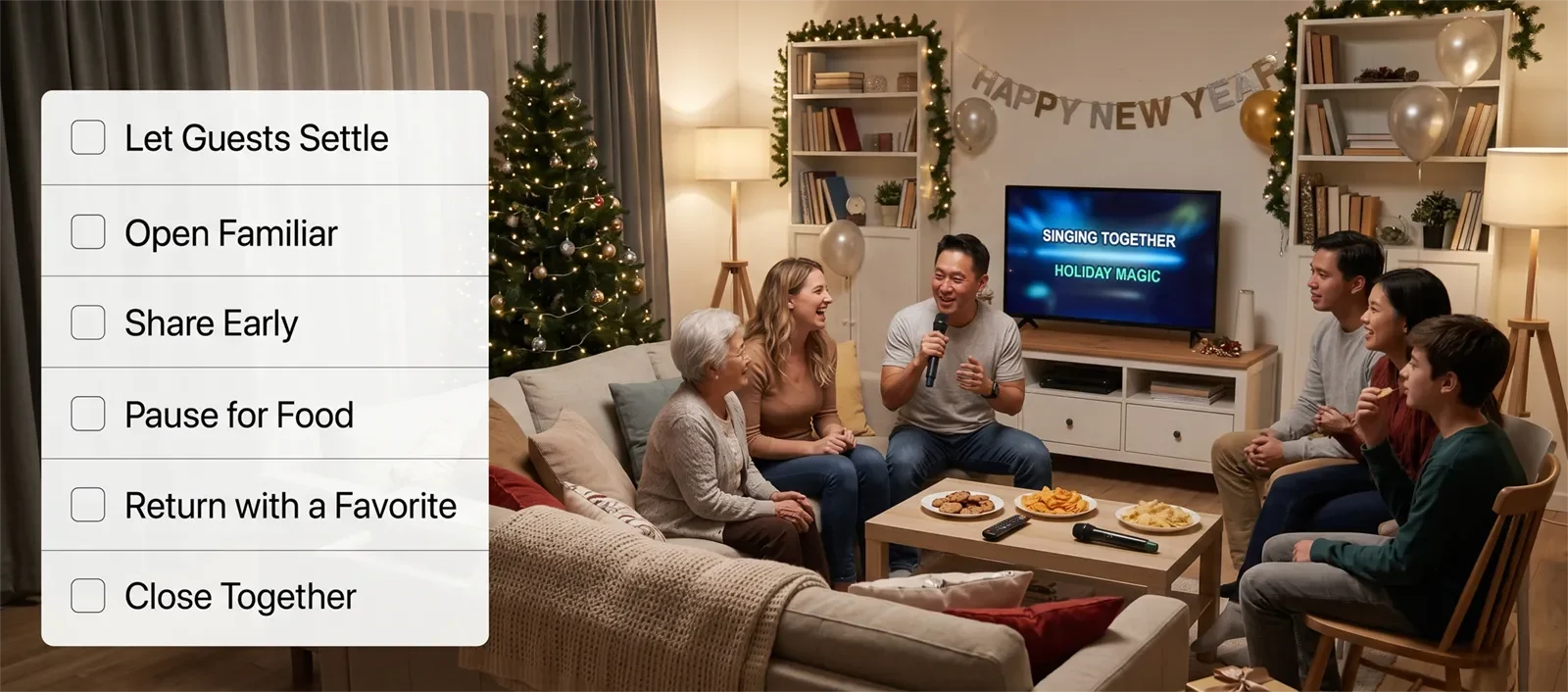
You do not need a complicated holiday schedule. A simple rhythm is enough.
- Let guests settle first. Give people time to arrive, greet each other, eat, and get comfortable.
- Open with familiar songs. Start with warm, low-pressure songs that make the room feel included.
- Use shared participation early. Duets, group choruses, and seasonal favorites help guests join without pressure.
- Build energy gradually. Let confident singers and upbeat songs come in after the room has warmed up.
- Pause naturally for food, dessert, gifts, or a toast. Treat those moments as part of the gathering, not as problems.
- Bring karaoke back with a familiar song. After a break, restart with something easy and recognizable.
- Close with shared energy. End with a crowd-friendly song, duet, or group moment so the night finishes warm instead of scattered.
This flow works because it matches how holiday gatherings already move. Karaoke does not have to carry every minute. It only needs to appear at the right moments and give the room a reason to come together.
Final Thought
The best holiday karaoke party ideas are simple, warm, and easy to repeat. Let guests settle, start with familiar songs, keep the room comfortable, and use karaoke as part of the celebration instead of forcing it to become the whole event.
When Christmas or New Year karaoke follows the rhythm of the room, singing feels festive instead of forced. Guests can talk, eat, laugh, join a chorus, sing a full song, and return to the gathering naturally. That is what makes holiday karaoke at home feel memorable.
Frequently Asked Questions
Should holiday karaoke start right after guests arrive?
Usually not. Most holiday gatherings feel better when guests have time to settle in, talk, and get comfortable first. Karaoke tends to work better after the room has warmed up socially.
What songs work best early in a Christmas karaoke gathering?
Familiar, low-pressure songs work best early. Seasonal songs, easy singalongs, and well-known crowd favorites help guests join without feeling like the first few songs require strong performances.
How do I make New Year karaoke feel more exciting?
Let the energy build in phases. Start with easier songs, then move into more upbeat tracks as the room gets closer to the countdown or later celebration moments. New Year karaoke usually works well with a gradual rise.
How do I keep quieter relatives comfortable during holiday karaoke?
Use shared songs, duets, and familiar choruses instead of pushing solo turns too early. Keep the volume comfortable and let guests participate by singing, watching, clapping, or joining from their seats.
Should karaoke happen before or after food?
It can happen around food, but it should not fight with food. A short warm-up before a meal can work, then a stronger karaoke stretch often works better after guests have eaten and settled into the room.