




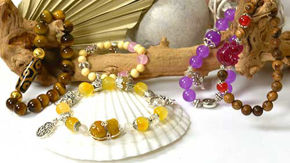
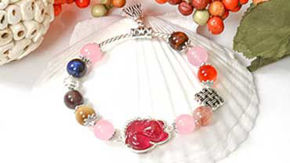


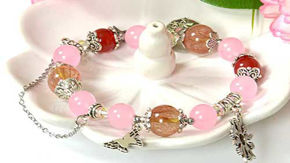
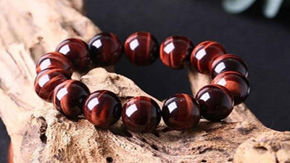

Healing jewelry is best understood as meaningful jewelry, not medical treatment. Many people use a bracelet, pendant, ring, mala, or stone as a physical reminder of an intention such as calm, grounding, focus, love, protection symbolism, or clarity. The piece may support attention, ritual, mindfulness, and personal meaning, but it should not be described as curing, diagnosing, preventing, or guaranteeing any result.
Who this guide is for: This guide is for readers who want to understand how healing jewelry is commonly used in symbolic, spiritual-wellness, cultural, styling, or mindfulness-oriented ways without treating stones or jewelry as medical care or guaranteed energy work.
How this guide was prepared: This article explains healing jewelry through symbolism, intention, ritual, touch, memory, styling, and everyday personal meaning. Tittac does not present healing jewelry, crystals, stones, chakras, cleansing, or intention-setting as medical treatment, guaranteed energy healing, or a promise of health, luck, wealth, love, protection, or spiritual ability.
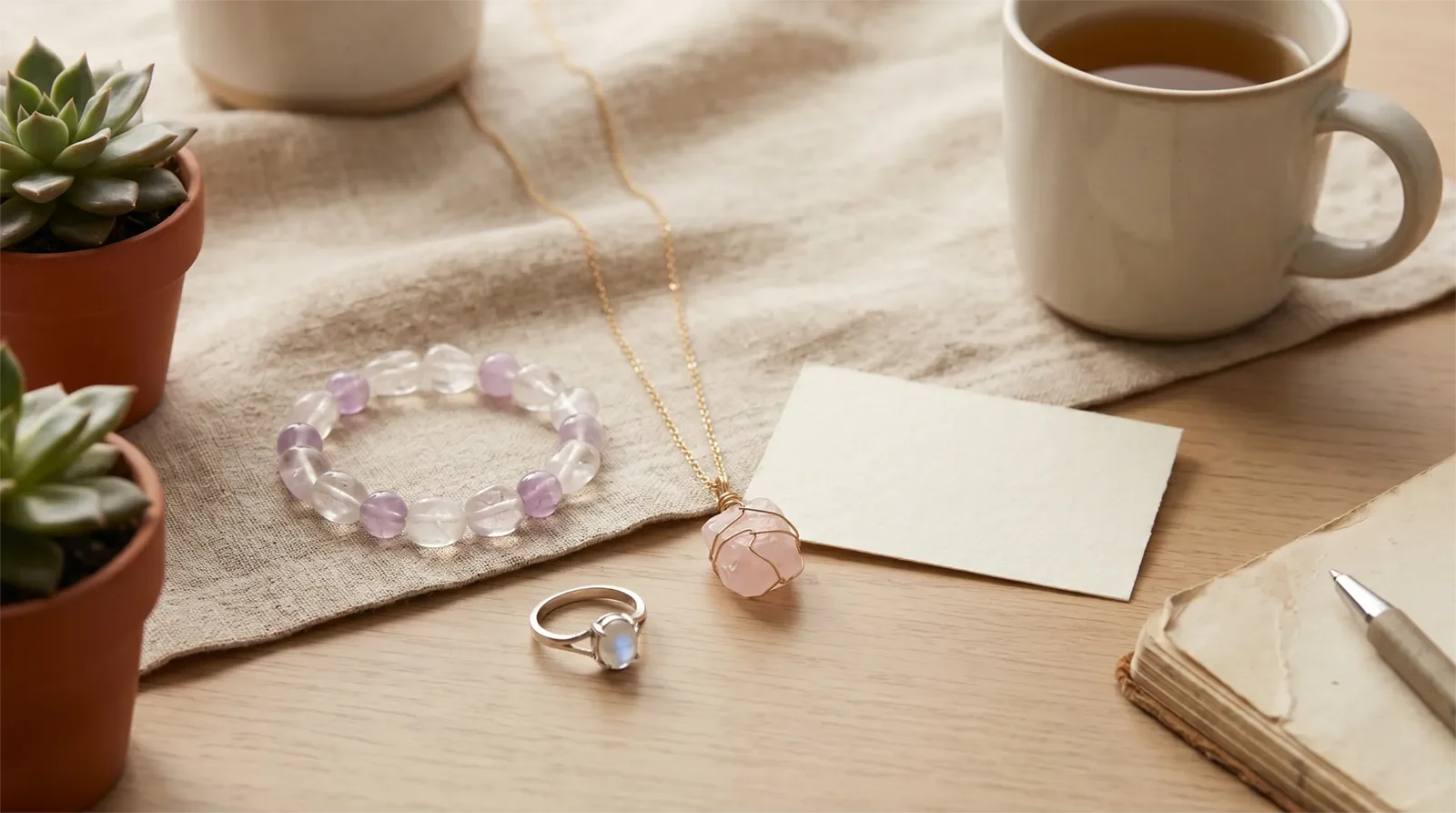
If you already understand what healing jewelry is, the next question is usually more practical: how does it actually work in someone’s daily life?
The most responsible answer is this: healing jewelry often works through meaning, attention, and habit. A bracelet may remind someone to pause before reacting. A pendant may represent protection symbolism. A stone ring may feel like a quiet anchor during a stressful day. These experiences can be meaningful without turning the jewelry into a medical tool or guaranteed spiritual device.
If you want the boundary-setting guide, read Healing Jewelry Myths. If you are ready to choose a piece, continue with How to Choose Healing Jewelry. If you want to connect a piece with a personal theme, read How to Set an Intention for Healing Jewelry.
Table of Contents
- Quick Answer
- The Clearest Answer
- Five Ways People Understand Healing Jewelry
- What Science Does and Does Not Support
- Why Symbolic Tools Can Still Matter
- How to Use Healing Jewelry Responsibly
- A Simple One-Week Experiment
- Symbolic Use vs. Medical or Guaranteed Claims
- Choosing with Tittac
- Important Claim-Safe Note
- Frequently Asked Questions
- Related Guides
Quick Answer
Healing jewelry is most responsibly understood as jewelry that works through symbolism, intention, ritual, tactile reminder, memory, and mindfulness. A piece may help someone remember a value, pause during the day, feel connected to a tradition, or carry a personal meaning. It should not be presented as a cure, medical treatment, guaranteed protection, or proof of measurable energy effects.
A simple way to understand it is this: the jewelry does not need to promise a result to be meaningful. It can serve as a visible, wearable reminder of what the person wants to carry into daily life.
The Clearest Answer
Healing jewelry works for many people as a meaningful object that directs attention, supports ritual, and reminds the wearer of a chosen intention.
That does not mean the jewelry has proven medical power. It also does not mean the jewelry is meaningless. Many objects in daily life carry meaning through memory, identity, culture, ritual, touch, and emotional association. Wedding rings, religious medals, family heirlooms, memorial jewelry, prayer beads, lucky charms, and meaningful gifts can all matter deeply without being medical devices.
Healing jewelry often belongs in that same human space. It may become a small physical cue that helps the wearer remember calm, grounding, patience, love, protection symbolism, focus, or personal strength.
Five Ways People Understand Healing Jewelry
1. Symbolism
Many people choose healing jewelry because it symbolizes something they want to remember or strengthen. A bracelet may represent calm. A pendant may represent protection symbolism. A bead strand may remind someone of grounding, patience, love, clarity, or courage.
In this view, the jewelry works as a visible symbol. The stone, color, texture, shape, or design may be chosen because of traditional associations, personal meaning, cultural background, or a story connected to the wearer.
Symbolism should stay grounded. It is safer to say a stone is “traditionally associated with calm” than to claim it cures anxiety or guarantees emotional change. If you want to explore common themes, read Stones by Intention or Healing Stones & Crystal Meanings.
2. Ritual
For some wearers, the action around the jewelry matters as much as the jewelry itself. Putting on a bracelet before meditation, prayer, journaling, work, travel, or a difficult conversation can become a small ritual.
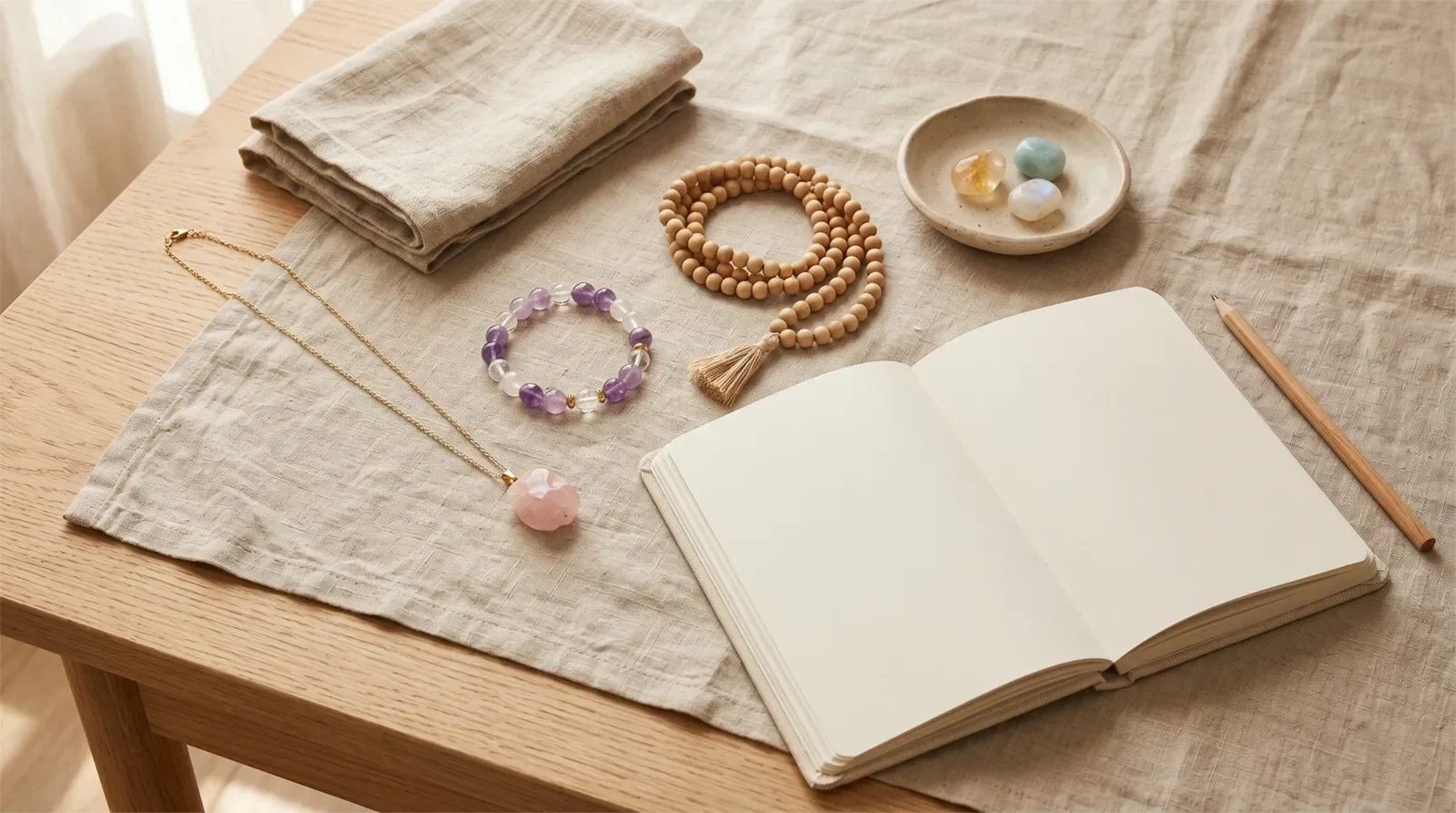
A ritual gives meaning to a repeated action. It can help someone slow down, focus, and reconnect with what they want to carry into the day. That does not make the jewelry a medical tool. It makes the jewelry part of a personal practice.
Some people connect this kind of use with chakra language or spiritual systems. If that part feels confusing, read What Are Chakras? 7 Centers Explained.
3. Tactile reminder
Jewelry is physical. You can see it, touch it, adjust it, and notice it throughout the day. That physical presence is one of the clearest ways healing jewelry may feel useful for beginners.
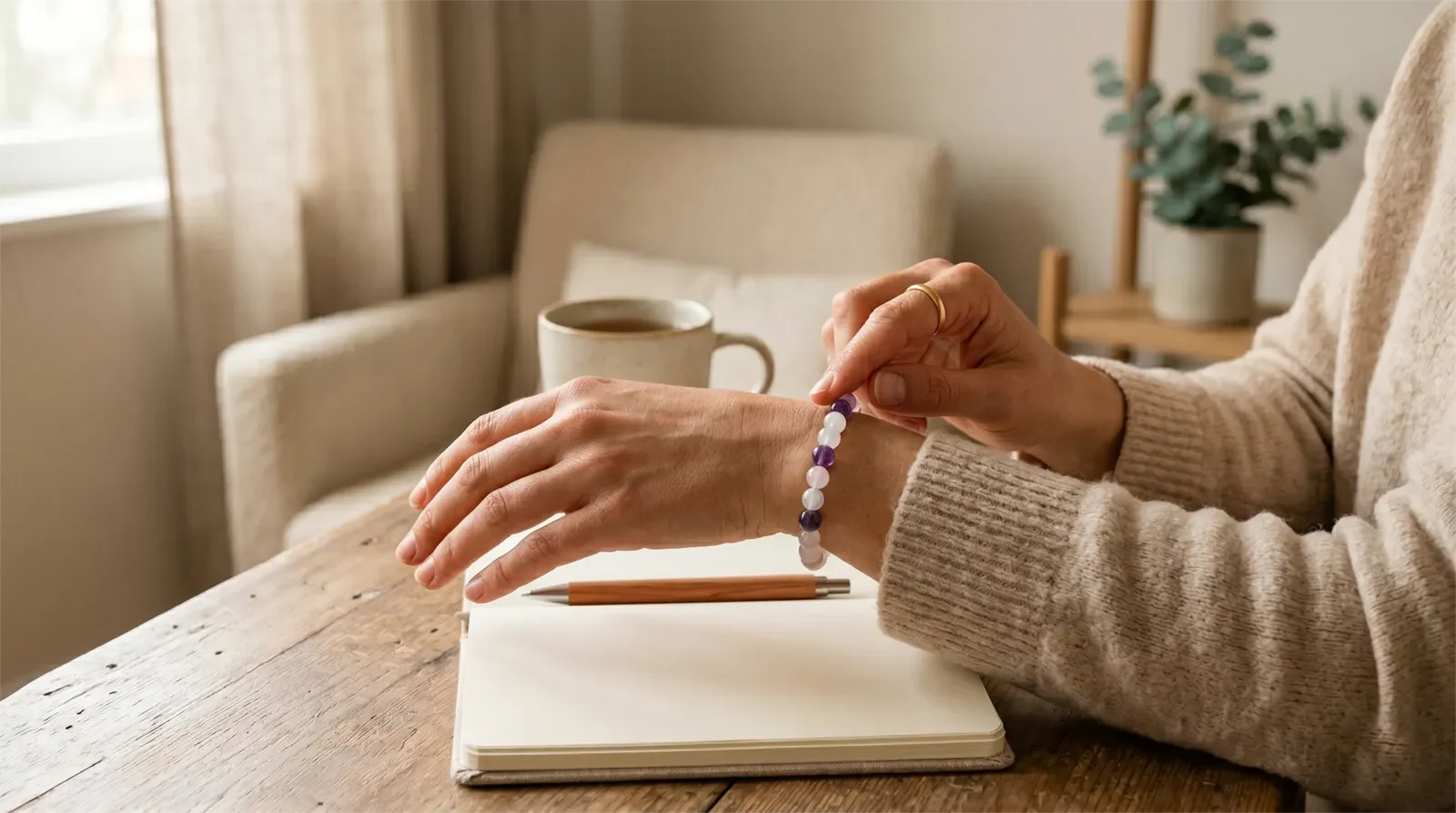
A bracelet can interrupt autopilot when you touch it. A pendant can remind you to pause. A ring can become a small cue when your hand moves. Beads can give your fingers something steady to return to during reflection.
The piece becomes a reminder: not magic, not medicine, but a small object that brings attention back to an intention.
4. Expectation and attention
Expectation can shape what people notice. When someone wears a piece with a clear intention, they may become more aware of their mood, reactions, habits, or choices during the day.
For example, a person wearing a bracelet connected to patience may notice moments when they are about to react too quickly. Someone wearing a grounding stone may remember to take a breath before moving on. The jewelry does not need to create a guaranteed outcome for it to help direct attention.
5. Mindfulness
Many people use healing jewelry as a mindfulness object. In that sense, it works less like a device and more like a reminder to return to the present moment.
A simple mindfulness use might look like this: notice the bracelet, touch it, take one breath, repeat a short intention, and continue the day with more awareness. That is practical, realistic, and safer than claiming the stone itself is producing a medical effect.
What Science Does and Does Not Support
This is where responsible language matters. Healing jewelry should not be presented as proven treatment for anxiety, pain, inflammation, trauma, sleep problems, depression, illness, or any medical condition.
It is not appropriate to claim that simply wearing a stone, crystal, bracelet, or pendant produces a reliable medical effect by itself. That is why healing jewelry content should avoid claims such as “cures anxiety,” “removes trauma,” “treats inflammation,” “guarantees protection,” or “replaces therapy.”
What is easier to explain honestly is the indirect role a meaningful object can play. A physical reminder can focus attention. A repeated ritual can reinforce intention. A tactile cue can help someone pause. A beautiful object can carry emotional meaning. These are not medical claims, but they do help explain why healing jewelry can feel meaningful to wearers.
| Claim Type | Responsible Framing | Avoid Saying |
|---|---|---|
| Symbolic meaning | This stone is traditionally associated with calm. | This stone cures anxiety. |
| Mindfulness use | This bracelet can serve as a reminder to pause. | This bracelet treats stress. |
| Protection theme | Many people choose it as a symbol of protection. | It guarantees protection from harm. |
| Ritual use | Some wearers use it during intention setting. | It manifests any result you want. |
| Emotional connection | It may feel meaningful or comforting to the wearer. | It replaces therapy or professional care. |
Why Symbolic Tools Can Still Matter
Something does not need to be medical treatment to matter. People live with meaningful objects all the time: wedding rings, religious medals, family heirlooms, memorial jewelry, prayer beads, gifts, keepsakes, and pieces tied to important life moments.
Healing jewelry often works in that same human space. It may become:
- A reminder of a value or intention
- A grounding object during stress or uncertainty
- A quiet part of meditation, prayer, journaling, or reflection
- A symbol of change, hope, protection, love, or personal strength
- A wearable object connected to memory, culture, or spiritual practice
That meaning can be real without being universal. It can feel helpful without being a cure. It can be deeply personal without requiring every person to believe the same thing.
How to Use Healing Jewelry Responsibly
A responsible approach keeps both openness and limits in view. You can allow the jewelry to be meaningful without asking it to do a job it cannot honestly claim.
- Start with meaning, not promises. Choose a piece because it represents something important to you, not because you expect guaranteed results.
- Set one clear intention. Keep the intention simple and practical. If you need help, read How to Set an Intention for Healing Jewelry.
- Use the jewelry as a cue. Notice it, touch it, or pause when you feel it. Let it remind you of a behavior or mindset you want to practice.
- Keep care separate from meaning. Physical jewelry care and symbolic cleansing are different. For that distinction, read How to Cleanse & Care for Healing Jewelry.
- Avoid fear-based claims. A seller should not pressure you by saying you will attract bad luck, lose protection, or miss a life-changing result if you do not buy a specific piece.
- Do not replace professional care. If you are dealing with health, mental health, legal, financial, or safety concerns, use appropriate professional support.
This keeps healing jewelry in a realistic place: not pointless, not all-powerful, and not a substitute for actual care.
A Simple One-Week Experiment
If you are curious but cautious, try a one-week experiment. This helps you judge whether the jewelry supports attention or habit without expecting dramatic results.
- Choose one piece of jewelry.
- Choose one simple intention, such as “pause before reacting,” “return to calm,” or “stay grounded today.”
- Wear the piece consistently for seven days.
- Each time you notice or touch it, take one slow breath and repeat your intention quietly.
- At the end of each day, write one sentence: did the jewelry help you remember the intention at all?
That is the most useful thing to track. Not whether the stone changed your biology. Not whether you had a dramatic transformation. Just whether the object helped you pay attention, pause, or stay more consistent with a reflective practice.
Symbolic Use vs. Medical or Guaranteed Claims
| Responsible Symbolic Use | Avoid Saying This |
|---|---|
| This bracelet can serve as a reminder to pause, breathe, or return to an intention. | This bracelet treats stress, anxiety, illness, or pain. |
| This stone is traditionally associated with grounding, protection symbolism, or emotional balance. | This stone guarantees protection, removes negative energy, or changes your life automatically. |
| Some people use healing jewelry during meditation, prayer, journaling, or intention setting. | Healing jewelry manifests any result you want. |
| A meaningful object can support attention, ritual, memory, comfort, or personal reflection. | Jewelry has proven medical power by itself. |
| Wearing a piece daily can help someone remember a value, goal, or emotional anchor. | Wearing a piece guarantees luck, money, love, spiritual protection, or healing. |
Choosing with Tittac
At Tittac, healing jewelry is best approached as meaningful jewelry with symbolic, cultural, spiritual-wellness, or mindfulness-oriented value. If you are choosing a piece, focus on intention, comfort, material clarity, care needs, and whether the design fits your daily life.
A good piece should feel personal and wearable without relying on exaggerated promises. The right healing jewelry is not the one that claims the most. It is the one you can wear honestly, care for properly, and connect with in a grounded way.
Important Claim-Safe Note
Healing jewelry can be meaningful, beautiful, and personally supportive, but it should not replace medical care, mental health support, financial decisions, relationship work, or professional advice. The safest way to understand healing jewelry is as symbolic, spiritual-wellness, cultural, or mindfulness-oriented jewelry.
Frequently Asked Questions
How does healing jewelry work?
Healing jewelry is most often understood through symbolism, ritual, tactile reminder, expectation, and mindfulness. Many people use it as a physical reminder of an intention rather than as a medical treatment.
Is healing jewelry just placebo?
Not everyone would use that word. For many wearers, healing jewelry is better understood as a symbolic or mindfulness-oriented object. The more useful question is whether it helps create attention, ritual, or personal meaning without exaggerated claims.
Does that make healing jewelry meaningless?
No. Many meaningful objects work through memory, ritual, symbolism, identity, and emotional association. Healing jewelry can matter to the wearer even when it is not a medical intervention.
Can a stone reduce anxiety, inflammation, or pain?
This page does not make that claim. A safer and more honest approach is to say that some people use healing jewelry as a calming reminder, symbolic object, or mindfulness cue while avoiding direct medical or physiological promises.
What claims are safest to make about healing jewelry?
The safest claims use the language of symbolism, tradition, intention, and personal use. Phrases such as “traditionally associated with,” “often chosen for,” “many people use it as,” and “can serve as a reminder” are safer than medical promises.
What should I track when using healing jewelry?
Track whether the piece helps you remember an intention, pause during stress, or stay more consistent with a reflective practice. Those are clearer and more honest measures than trying to prove broad outcomes from the jewelry itself.
Should healing jewelry replace professional care?
No. Healing jewelry should not replace qualified medical, mental health, legal, financial, or other professional support when that support is needed.
What should I read after this guide?
Good next steps are Healing Jewelry Myths, How to Set an Intention for Healing Jewelry, Stones by Intention, and How to Cleanse & Care for Healing Jewelry.
Related Guides
- What Is Healing Jewelry?
- Healing Jewelry Myths
- How to Choose Healing Jewelry
- How to Set an Intention for Healing Jewelry
- Stones by Intention
- What Are Chakras? 7 Centers Explained
- How to Cleanse & Care for Healing Jewelry
Next step: If you want to choose a piece after understanding how healing jewelry is used, continue with How to Choose Healing Jewelry. If you want a reality-check on common overclaims, read Healing Jewelry Myths.