
The best karaoke party tips for Vietnamese communities are simple: keep the song flow bilingual, rotate gently across generations, control the volume, and make karaoke feel like part of the family gathering instead of a loud competition.
Who this guide is for: Vietnamese-American families, community-style home hosts, and mixed-generation groups who want karaoke to feel natural, bilingual-friendly, and comfortable for both older and younger guests.
How this guide was prepared: This article was rebuilt as a focused guide for Vietnamese community karaoke at home. It keeps the scope on bilingual song flow, family-style pacing, microphone sharing, age-group rotation, and practical hosting choices, while leaving broader party planning and system-buying decisions to their proper guide pages.
Vietnamese home karaoke has its own rhythm. The room may include parents, grandparents, adult children, teenagers, family friends, and guests who move naturally between Vietnamese and English songs. Some people want to sing full songs. Some only want to join a chorus. Others are happy to sit, listen, talk, and wait for the right song.
That is why a good Vietnamese karaoke night should not be treated like a fast, performance-heavy party. It works better when the host keeps the room warm, balanced, and easy to join. If you want the broader party hub, start with Karaoke Party Ideas. This guide stays focused on Vietnamese family and community-style karaoke at home.
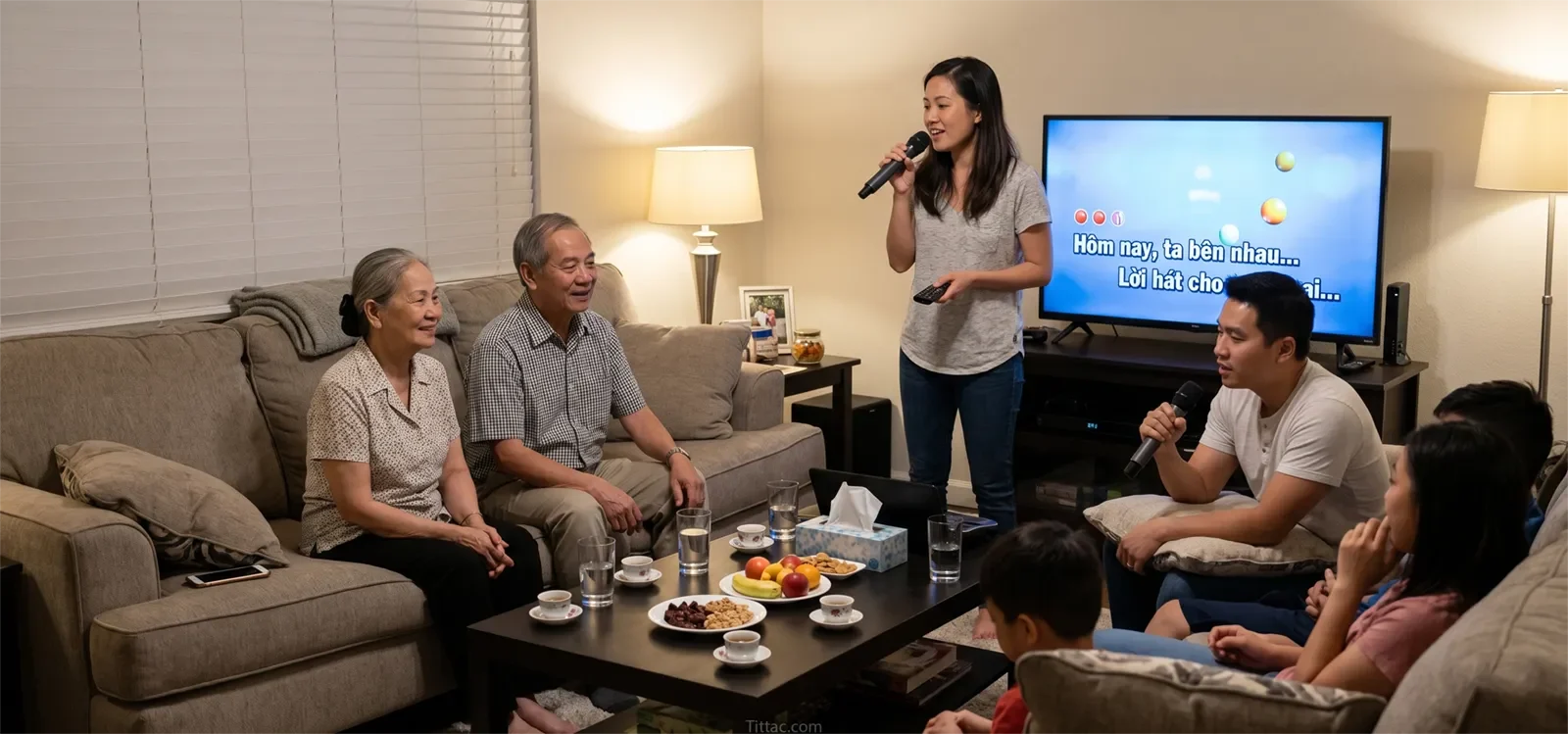
Table of Contents
What makes Vietnamese community karaoke different
Vietnamese community karaoke at home is usually not just about who sings best. It is about shared familiarity, family comfort, and keeping different generations connected in the same room.
Older relatives may prefer familiar Vietnamese songs, slower pacing, and enough volume to feel supported without feeling overwhelmed. Younger guests may want English songs, newer tracks, or a faster pace. Some guests may enjoy singing loudly. Others may only join when the song feels right.
The host’s job is not to force perfect balance. The host’s job is to notice when one part of the room has been left out for too long. If only the younger guests are choosing songs, older relatives may drift away. If the night stays only with older ballads, younger guests may disengage. A good karaoke night keeps bringing the room back together.
The best Vietnamese home karaoke gatherings feel like one shared room with many entry points, not two separate parties divided by age, language, or confidence level.
Keep the song flow bilingual without making it mechanical
Bilingual karaoke does not mean Vietnamese and English songs must alternate perfectly. Strict alternation can feel stiff. A more natural approach is to use short waves.
For example, a familiar Vietnamese song can be followed by a lighter English song, then a duet, then another Vietnamese classic, then something younger guests recognize. The goal is not a perfect pattern. The goal is to keep both language groups present throughout the night.
The biggest mistake is letting one style dominate for too long. Three or four songs in a row for the same age group can quietly split the room. People may not complain, but they stop paying attention, move into side conversations, or wait for their “part” of the night to come back.
A better song flow keeps checking the room: Who is still watching? Who has not had a song yet? Which side of the room has gone quiet? Those signals matter more than a rigid playlist rule.
For a deeper guide to song order, energy, and difficulty, read How to Build the Perfect Karaoke Playlist for Home Parties.
Rotate across generations gently
Vietnamese karaoke gatherings often include people who do not participate the same way. Some relatives may sing often. Some may wait for one meaningful song. Some may only sing if another person joins them.
That is why gentle rotation works better than strict pressure. Instead of forcing everyone to take a solo turn, create openings for different groups. Invite an older relative’s favorite song early. Let younger guests bring in newer songs after the room warms up. Use duets when someone does not want to sing alone.
It helps to rotate by comfort level as much as age. A confident singer can open the room, but quieter guests need easier entry points. A duet, a chorus, or a family favorite can make participation feel safer.
The goal is not to make everyone sing equally. The goal is to make everyone feel there is room for them.
Use familiar songs to keep the room together
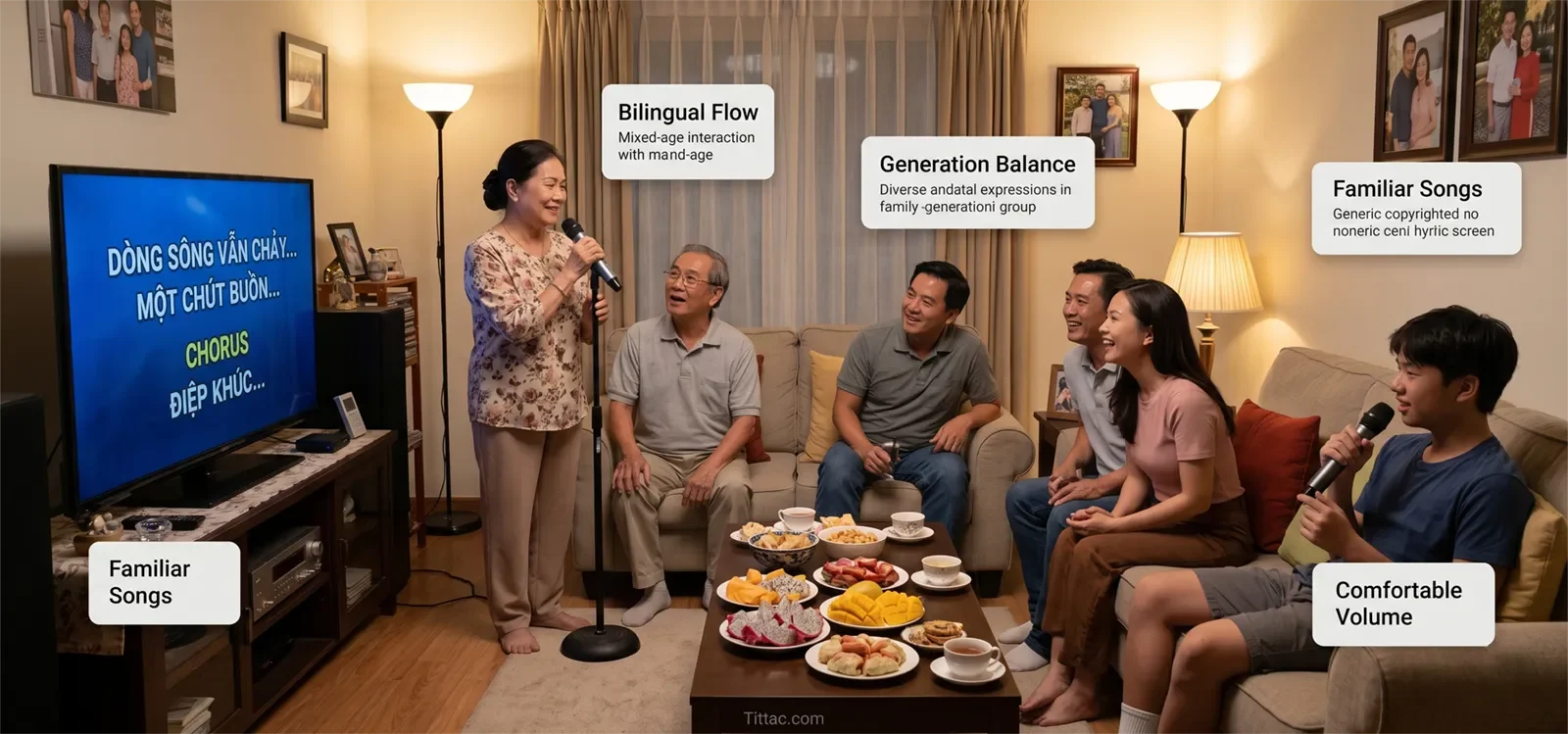
In Vietnamese community karaoke, familiarity often matters more than variety. A familiar song can bring the room together even if only one person is holding the microphone.
This is especially true for mixed-generation gatherings. Older guests may connect through Vietnamese classics. Younger guests may respond to English pop songs or bilingual-friendly tracks with easy choruses. The strongest playlist is not the one with the most impressive songs. It is the one that gives more people a reason to stay emotionally involved.
Familiar songs also lower pressure. People are more likely to join a chorus when they already know the melody. They are more likely to clap, smile, or sing from their seat when the song feels connected to the room.
Save difficult songs, long solos, or very personal song choices for later, after the gathering has warmed up. Early in the night, choose songs that help the room feel shared.
Make microphone sharing feel easy
Microphone flow matters in Vietnamese family-style karaoke because many people join casually. Someone may sing seated. Someone may join only for a chorus. Someone may pass the microphone to an aunt, uncle, parent, or friend when the right part comes up.
Two microphones are usually enough for most home gatherings. They support solo singing, duets, backup lines, and quick handoffs without making the setup feel messy.
Keep the microphones visible and easy to reach. When a song ends, guests should not have to search the room for the mic. A clear resting place helps the night feel smoother and prevents awkward pauses between songs.
Microphone sharing should feel warm, not competitive. In this kind of gathering, the mic is not only for the strongest singer. It is a way to invite people into the moment.
Control volume so people stay comfortable
Volume can make or break Vietnamese home karaoke. Too soft, and singers feel unsupported. Too loud, and the room becomes tiring, especially for older relatives or guests who want to talk between songs.
Many home karaoke nights become less enjoyable not because the music is wrong, but because the sound level keeps pushing people out of the room. If people start raising their voices during conversation, moving away from the speakers, or avoiding the microphone, the volume may be too high.
A good family karaoke volume should let singers hear themselves clearly while still allowing the room to breathe between songs. Karaoke should feel lively, but it should not make normal family interaction impossible.
This is especially important for Vietnamese gatherings, where food, conversation, and singing often happen together. The sound should support the gathering, not overpower it.
A simple flow for Vietnamese family karaoke
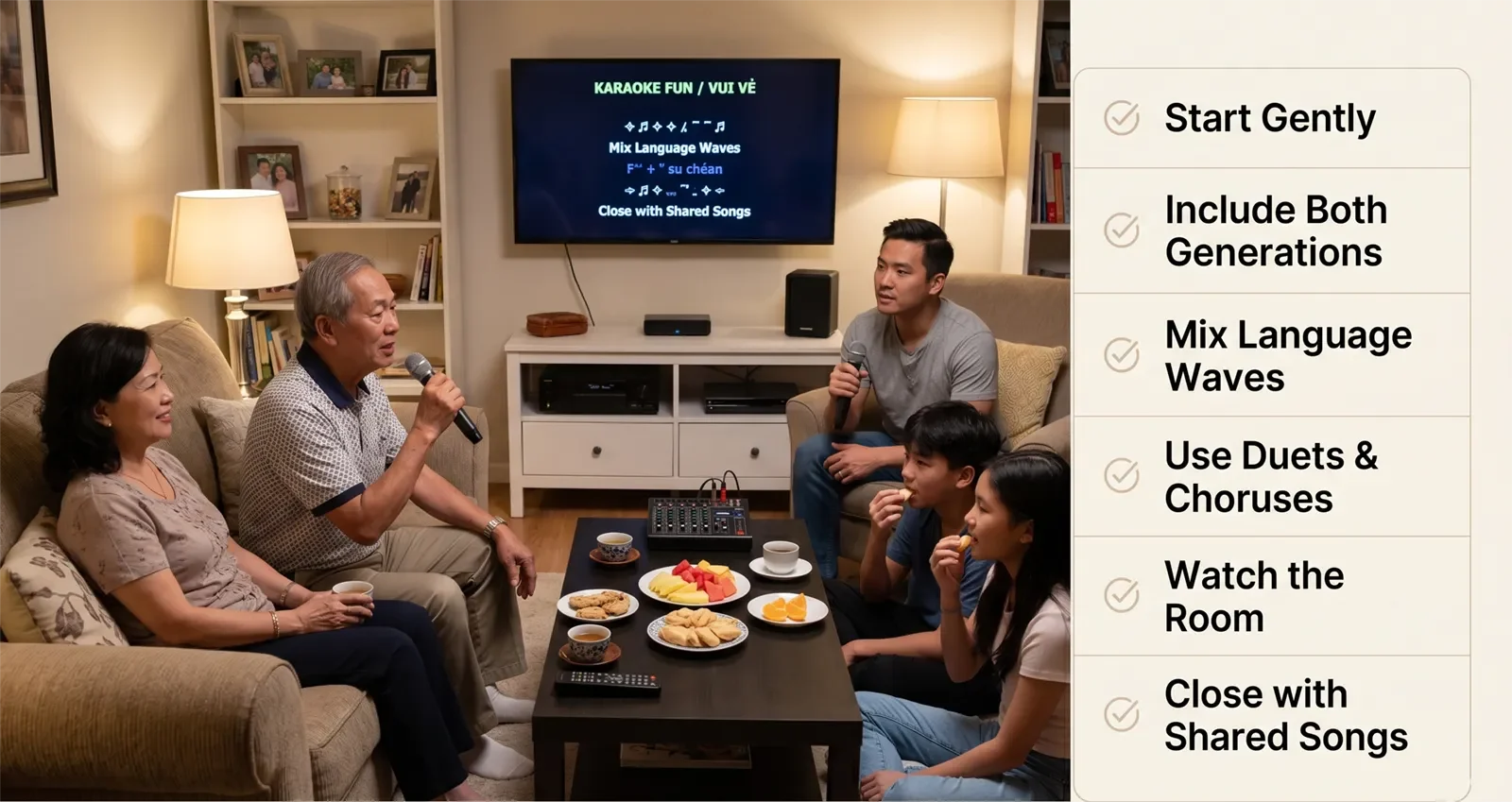
You do not need a strict schedule. A simple rhythm is enough to keep the night inclusive and easy to host.
- Start gently. Open with familiar songs and moderate volume so the room settles naturally.
- Include both generations early. Let older and younger guests hear something familiar within the first few rounds.
- Mix Vietnamese and English songs in short waves. Avoid letting one language or age group dominate for too long.
- Use duets and group choruses. These help quieter guests participate without needing a full solo turn.
- Watch the room, not just the queue. If one side gets quiet, shift the song flow or invite a more familiar pick.
- Close with shared songs. End with music more people can enjoy together, not only the strongest solo performance.
This flow works because it respects how Vietnamese family karaoke actually feels at home. People sing, listen, eat, talk, laugh, rejoin, and sometimes wait for one song that matters to them. A good host makes space for all of that.
If your gathering is more family-centered and you want a broader hosting framework, read How to Plan Karaoke for Family Gatherings at Home.
Final Thought
Vietnamese karaoke at home works best when it feels inclusive, not intense. The strongest nights usually come from familiar songs, bilingual balance, gentle rotation, comfortable volume, and a host who knows when to guide without taking over.
When older and younger guests both feel represented, karaoke becomes more than a list of songs. It becomes part of the family rhythm: singing, listening, laughing, talking, and coming back together around music everyone can share.
Frequently Asked Questions
Should Vietnamese and English songs alternate evenly during the night?
No. Strict alternation can feel mechanical. It is usually better to rotate in short waves so both Vietnamese and English songs appear regularly without making the playlist feel forced.
How do I keep older and younger guests both involved?
Give both groups comfortable entry points early in the night. Use familiar Vietnamese songs, recognizable English songs, duets, and moderate volume so the room feels shared instead of split by age group.
Is louder better for Vietnamese home karaoke?
No. Louder is not always better. If the volume makes conversation difficult or causes older guests to pull back, the room may feel less comfortable. A balanced sound level usually keeps more people involved longer.
What if some relatives only want to sing one song?
That is normal. In family-style karaoke, one meaningful song can matter more than many random turns. Good hosting means leaving room for different levels of participation.
How many microphones work best for Vietnamese family karaoke?
Two microphones work well for most home gatherings. They make duets, shared choruses, and casual handoffs easier without making the setup feel complicated.