
Good karaoke etiquette at home is not about strict rules. It is about making the room easy to share: fair turns, natural microphone handoffs, supportive reactions, and no pressure on guests who are not ready to sing.
Who this guide is for: Home hosts planning karaoke with friends, family, kids, adults, or mixed-age groups who want the night to feel relaxed, fair, and comfortable for everyone.
How this guide was prepared: This guide was written for real home karaoke situations where people have different confidence levels, song tastes, and social habits. It focuses on turn-taking, microphone sharing, respectful reactions, passing without pressure, and simple host habits that keep group singing fun.
Group karaoke can get awkward faster than most hosts expect. Usually, the problem is not the music. It is the uncertainty around the room. Who sings next? Is it okay to pass? Should guests clap after every song? What happens when one person keeps taking the microphone?
When those small questions are not handled, karaoke can start to feel tense even in a friendly home. The best etiquette makes the room feel generous instead of formal. People should know they can join, wait, pass, laugh, and sing imperfectly without feeling judged.
If you want broader ideas for different home karaoke party formats, start with Karaoke Party Ideas. This guide stays focused on karaoke etiquette for group singing at home.
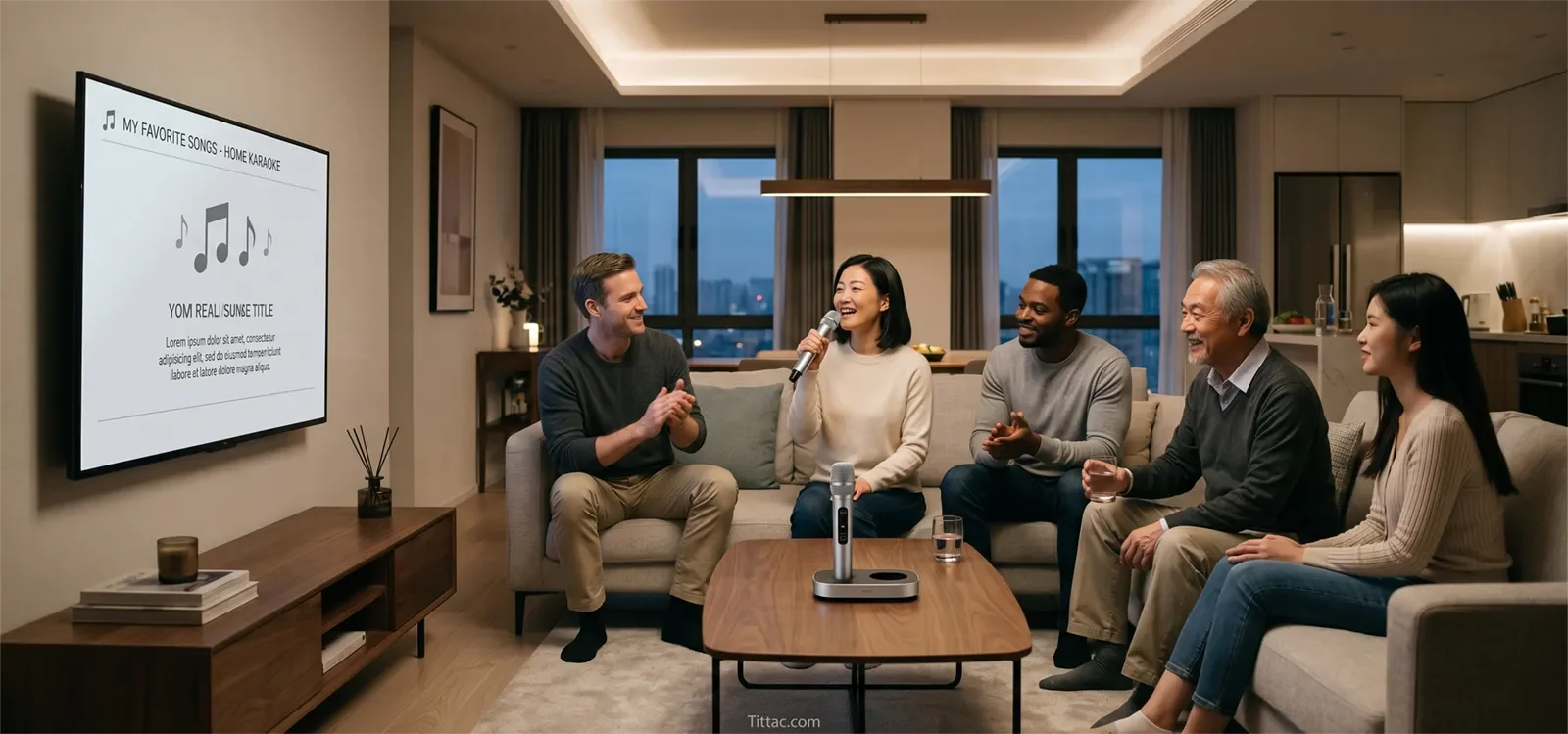
Table of Contents
Quick Answer
Good karaoke etiquette means helping everyone feel comfortable sharing the room. Take turns fairly, do not pressure people to sing, pass the microphones clearly, support weaker singers, avoid taking over the queue, and choose songs with the group’s mood in mind. At home, karaoke works best when participation feels easy, not forced.
Why Karaoke Etiquette Matters at Home
The hardest part of group karaoke is often not the singing. It is the social uncertainty around singing.
Guests may wonder whether they should volunteer, whether their song choice is too long, whether someone else wanted the microphone, or whether the group is laughing with them or at them. These questions may seem small, but they affect how safe the room feels.
At home, reactions are more noticeable than they are in a public karaoke bar. The room is smaller. People are closer together. A joke, a long pause, or one person dominating the microphone can change the mood quickly.
Good etiquette lowers that friction. It does not make the night stiff. It makes the night easier to share. When guests know that turns are fair, passing is okay, and imperfect singing will be treated kindly, they are more likely to stay involved.
That is the real purpose of karaoke etiquette: protect the comfort of the room so the music can stay fun.
Keep Turns Fair Without Making It Rigid
Turn-taking is the foundation of good karaoke etiquette. When turns feel fair, people relax. When one person keeps jumping back in, the room starts to feel dominated.
For most home karaoke nights, the host does not need a strict system. A simple visible queue is enough. Let each person or pair take a turn, then give others a chance before the same singer goes again.
Duets should also be handled with awareness. A duet is a shared moment, but it should not become a way for one person to stay on the microphone all night. If one confident singer keeps joining every song, the host may need to gently redirect the room back to other guests.
If the queue gets long, shorter and more familiar songs usually help. Long songs are not automatically rude, but repeated long songs can make the night feel slow when many people are waiting.
Fair turns do not need to feel formal. They just need to make guests trust that the room belongs to everyone.
Share the Microphones Naturally
Microphone sharing affects the whole flow of the night. A microphone should be easy to find, easy to pass, and easy to hand back after a song.
One simple habit is to keep the microphones in a consistent place between turns. That prevents confusion and avoids moments where one person accidentally carries the microphone into a side conversation or another room.
Handing off the microphone should also feel natural. Pass it to the next singer clearly, but do not make a reluctant guest feel trapped by placing it in their hand when they have not agreed to sing.
If there are two microphones, encourage sharing without letting one pair control both all night. If kids and adults are singing together, make sure the microphone rotation still feels fair and safe for everyone.
Good microphone etiquette keeps transitions smooth. The less confusion between songs, the easier the night feels.
Make Passing Normal
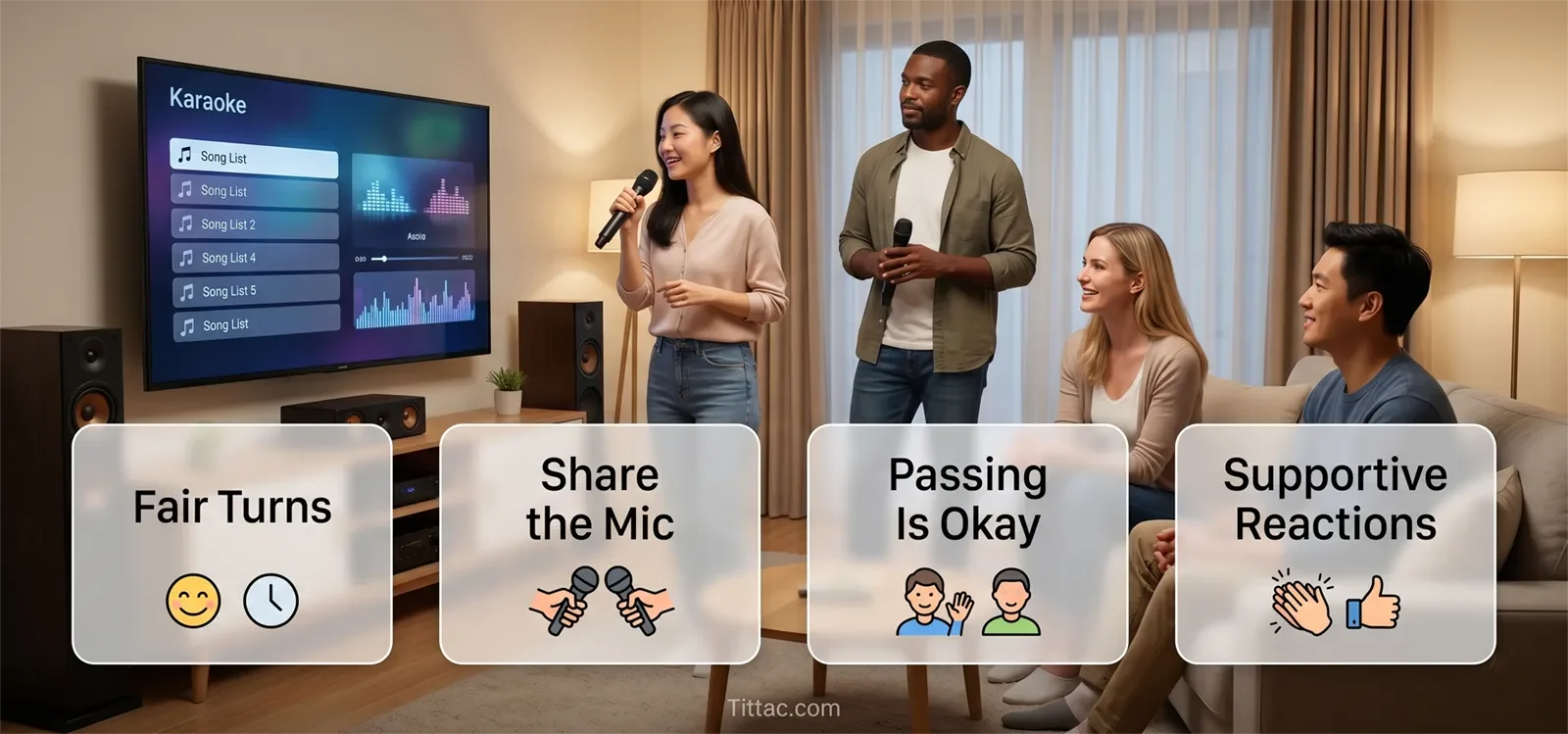
Passing should be normal at a home karaoke party. Not everyone wants to sing immediately, and not everyone wants a solo turn at all.
A guest should be able to say “maybe later” without being teased, questioned, or pressured. That one habit changes the whole mood of the room. When people know they can decline comfortably, they often relax enough to join later in a smaller way.
Passing also helps mixed groups. Some guests may prefer singing only with family. Some may join a chorus but not a full song. Some may enjoy choosing songs for others. Some may simply like listening.
Good etiquette makes space for all of that. Karaoke should invite participation, not demand it.
React With Support, Not Criticism
Most home karaoke singers are not trying to sound perfect. They are trying to have fun. The room should react in a way that supports that.
Clapping, smiling, singing along, and laughing kindly can make guests feel safe. Talking loudly over someone’s song, mocking missed notes, correcting lyrics, or making jokes at the singer’s expense can make the room feel colder very quickly.
This matters most for casual singers. A confident singer may laugh off a mistake. A quieter guest may remember one uncomfortable reaction and avoid singing again for the rest of the night.
Support does not have to be dramatic. Guests do not need to cheer like every song is a concert. But visible warmth helps. A little applause or encouragement after each turn keeps the room connected.
The rule is simple: react in a way that makes people more willing to sing again.
Choose Songs With the Room in Mind
Song choice is personal, but the time and mood of the room are shared. That is why room-aware song choices are part of good karaoke etiquette.
A long ballad can be great at the right moment. A dramatic song can be fun when the room is ready for it. A deep personal favorite can work if the group is settled and listening. But if the queue is long or the room is losing energy, repeated slow or unfamiliar songs may drag the night down.
Good song choices consider the room’s current state. Early in the night, familiar songs help people warm up. When the room is lively, upbeat songs and duets can keep momentum. When guests are tired, shorter songs or group-friendly choices may work better.
This does not mean everyone has to choose the same type of music. It means each person should notice that karaoke is shared. A good song choice helps the singer enjoy the moment without making the rest of the room disappear.
Help Shy Guests Join Without Pressure
Not everyone enters karaoke the same way. Some guests want a turn right away. Others need time to watch, relax, and feel out the room.
Good etiquette does not treat hesitation as a problem. It treats hesitation as normal.
Instead of pushing shy guests into a solo, offer smaller ways to participate. They may join a chorus, sing from their seat, help choose songs, take part in a duet, or join a group song later in the night.
The host’s language matters. “Join whenever you feel like it” feels very different from “Come on, everyone has to sing.” A gentle invitation leaves the door open. Repeated pressure closes it.
If shy participation is the main issue in your group, read How to Make Karaoke Fun for Shy Guests for a more focused guide.
What the Host Should Manage
A good host protects the room without controlling every detail.
The host should manage the basics: fair turns, understandable microphone flow, a reasonable queue, and a comfortable mood. If one person is dominating the microphone, interrupting others, or making the room tense, the host can gently redirect the night.
But the host should not over-correct harmless mistakes. Missed lyrics, off-key moments, messy duets, and sudden laughter are part of home karaoke. Those moments usually make the night more human.
The host’s job is boundary-setting, not perfection. Protect fairness, comfort, and momentum. Let the rest stay playful.
If you want a broader structure for pacing, room flow, and guest handling, read How to Host a Karaoke Party at Home Without Stress.
Simple Karaoke Etiquette Rules
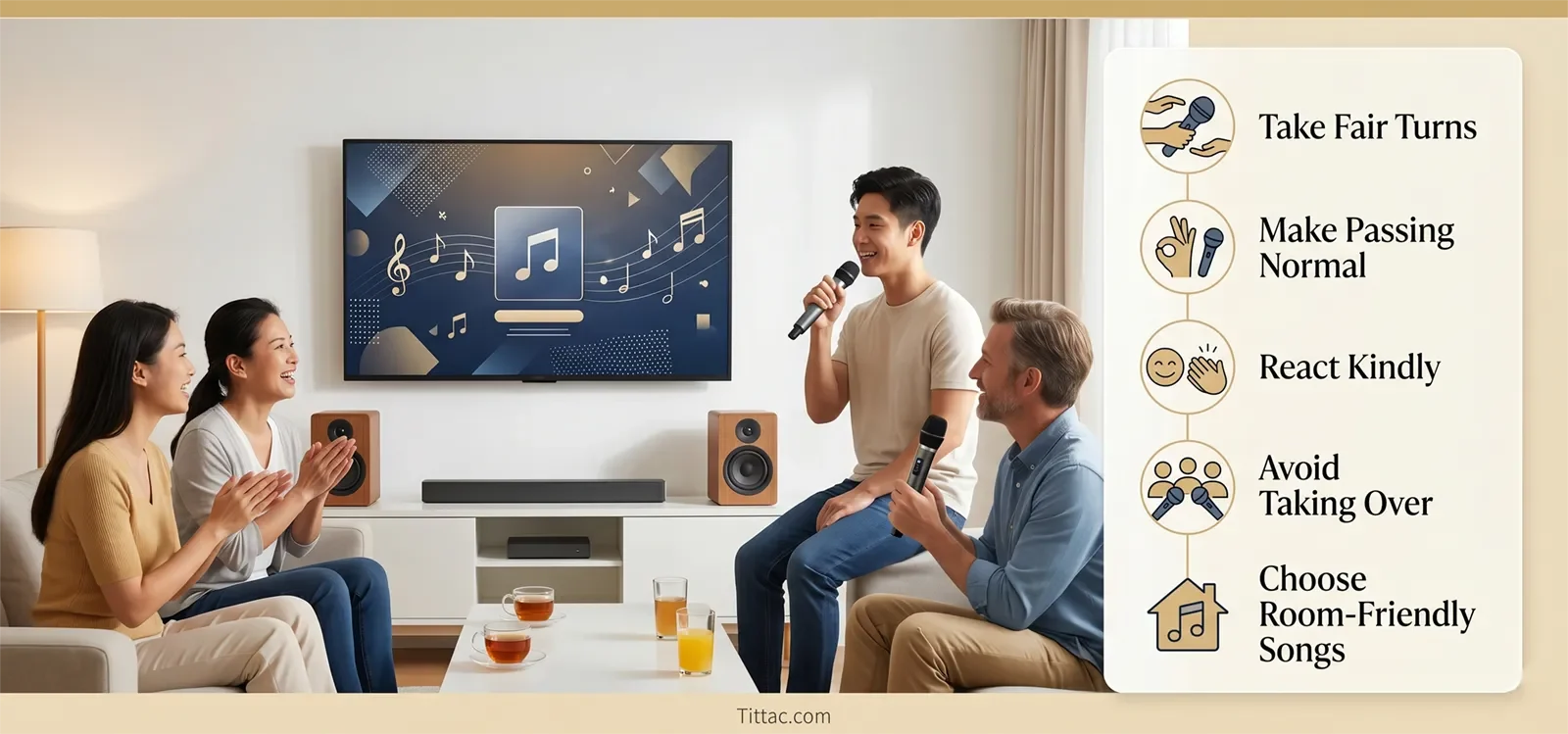
Most home karaoke nights do not need a speech. They just need a few simple habits that the host models and the group follows.
- Take one fair turn before repeating. Let others have a chance before the same singer returns to the microphone.
- Make passing normal. Nobody should have to explain why they are not ready to sing.
- Share the microphones clearly. Keep them in a consistent place and hand them off without confusion.
- React kindly. Cheer, clap, sing along, and laugh with people, not at them.
- Avoid taking over the room. Strong singers should help lift the group, not dominate every song.
- Choose songs with the room in mind. Long or intense songs work better when the queue is short and the room is ready.
- Keep the mood flexible. Solos, duets, group songs, and chorus-only moments can all count as participation.
These rules work because they solve the most common group karaoke problems: unfair turns, pressure to sing, messy microphone handoffs, uncomfortable reactions, and song choices that ignore the room.
Final Advice
Karaoke etiquette at home is really about generosity. The best groups make space for confident singers, casual singers, shy guests, kids, adults, strong voices, weak voices, and people who simply want to enjoy the atmosphere.
Fair turns, supportive reactions, natural microphone sharing, and low-pressure participation do more for the night than trying to make every song perfect.
When the room feels easy to share, karaoke feels more fun. Guests stay engaged, people are more willing to join, and the night feels relaxed instead of awkward.
Comfort usually decides whether karaoke feels fun or forced. If your group needs more help around low-pressure participation, read How to Make Karaoke Fun for Shy Guests Without Putting Them on the Spot.
Frequently Asked Questions
Is it rude to pass on a turn during home karaoke?
No. Passing should be treated as normal in casual home karaoke. Some guests need more time, and some may not want to sing at all. A pressure-free pass keeps the room more comfortable.
How should a host handle someone who keeps taking the microphone?
Use light redirection. Point back to the queue, invite another guest forward, or say that everyone should get a turn first. A calm adjustment usually works better than public scolding.
Are long songs bad karaoke etiquette?
Not always. Long songs can work when the room is settled and the queue is short. If many people are waiting, shorter and more familiar songs usually keep the night moving better.
Should guests clap after every karaoke song?
They do not need to react the same way every time, but some visible support helps. A little applause, encouragement, or friendly reaction makes the room feel safer for casual singers.
What is the most important karaoke etiquette rule?
The most important rule is to make the room easy to share. That means fair turns, no pressure, supportive reactions, and awareness that karaoke is a group activity, not one person’s stage.