
The best karaoke plan for a family gathering is not a strict performance schedule. It is a relaxed flow that lets relatives sing, listen, talk, eat, and rejoin without pressure.
Who this guide is for: Home hosts planning a family karaoke gathering with mixed ages, different comfort levels, and relatives who may want to sing, watch, talk, or join only for part of a song.
How this guide was prepared: This article was rebuilt as a focused guide for family karaoke gatherings at home. It keeps the scope on hosting flow, song choice, turn-taking, shared singing, and comfort across generations, while leaving broader party planning and equipment decisions to their proper guide pages.
Family karaoke is different from a friend-only karaoke night. The room usually has more than one mood happening at the same time. Some relatives want familiar songs. Some want to talk and watch. Some children may join for one chorus and disappear. Older family members may enjoy the atmosphere but prefer a softer pace.
That is why the best family karaoke nights feel easy instead of overplanned. Karaoke should become part of the gathering, not something that takes over the whole room. If you want the wider party-planning overview, start with Karaoke Party Ideas. This guide stays focused on making karaoke work naturally for family gatherings at home.
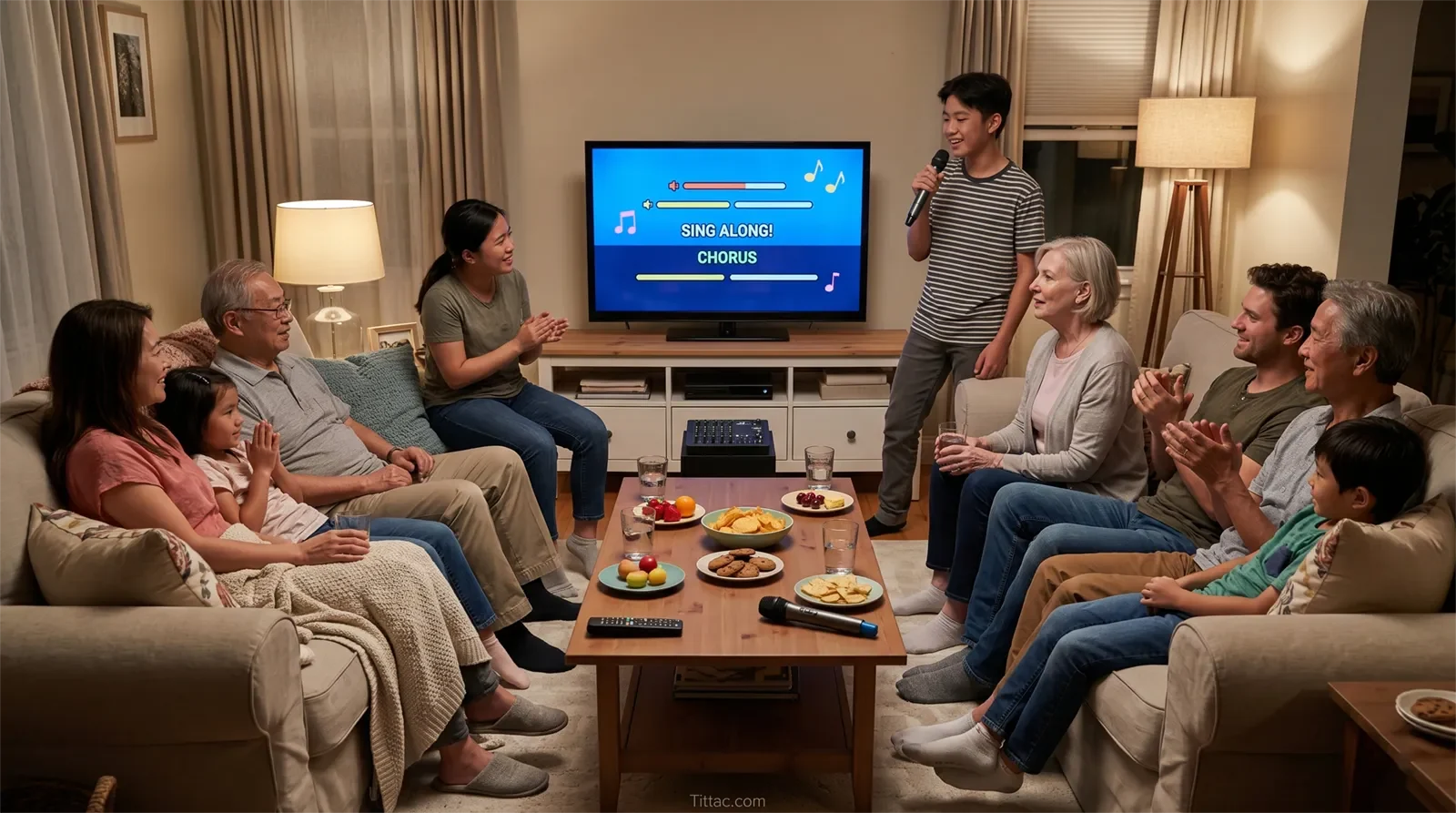
Table of Contents
What makes family karaoke different
A family karaoke gathering has to serve more than one kind of guest. One person may be ready to sing right away. Another may only want to join a chorus. Someone else may be helping with food, watching kids, or sitting with older relatives. That mix is normal, and the karaoke plan should respect it.
The goal is not to make everyone perform. The goal is to make singing feel available. When the room feels relaxed, more people join naturally. When the host pushes too hard, quieter relatives often pull back.
Family karaoke also needs more breathing room than a high-energy party. A few songs, then a pause for food or conversation, often works better than a long nonstop queue. The night should feel shared, not controlled by the loudest singers in the room.
A good family karaoke plan creates three easy options: sing a full song, join someone else, or simply enjoy the room. When all three options feel welcome, the gathering usually works.
Start with familiar songs
The first songs set the tone. For family gatherings, start with music that more people recognize quickly. Familiar songs help relatives stay connected even if they are not holding the microphone.
This does not mean every song must be old or slow. It means the opening songs should be easy to follow, easy to sing along with, and not too difficult for the first person who volunteers. Save the harder solos for later, after the room has warmed up.
A strong family karaoke playlist usually includes a mix of:
- well-known songs older relatives recognize
- easy chorus songs that others can join
- duets for people who do not want to sing alone
- a few fun songs for kids or younger family members
- stronger solo songs after the room feels comfortable
The playlist does not need to impress people. It needs to include people. If you want a deeper song-flow guide, see How to Build the Perfect Karaoke Playlist for Home Parties.
Rotate without making it feel forced
Turn-taking matters, but family karaoke should not feel like a formal program. A strict rotation can make shy relatives nervous. No rotation at all can let two or three confident singers take over the night.
The best approach is a gentle rotation. Invite different parts of the family early: one confident singer, one duet, one older relative’s favorite song, one song for the kids, then back to open requests. This keeps the room balanced without making anyone feel trapped.
It also helps to avoid asking, “Who wants to sing next?” too many times in front of everyone. That question can put pressure on people. A softer approach works better: “We can do one easy song together,” or “This one is good for two people.”
For family gatherings, fairness does not mean everyone sings the same number of songs. Fairness means everyone feels there is room for them if they want to join.
Use duets and group songs to lower pressure
Duets and group songs are one of the easiest ways to make family karaoke feel comfortable. Many relatives are willing to sing when they do not have to carry the whole song alone.
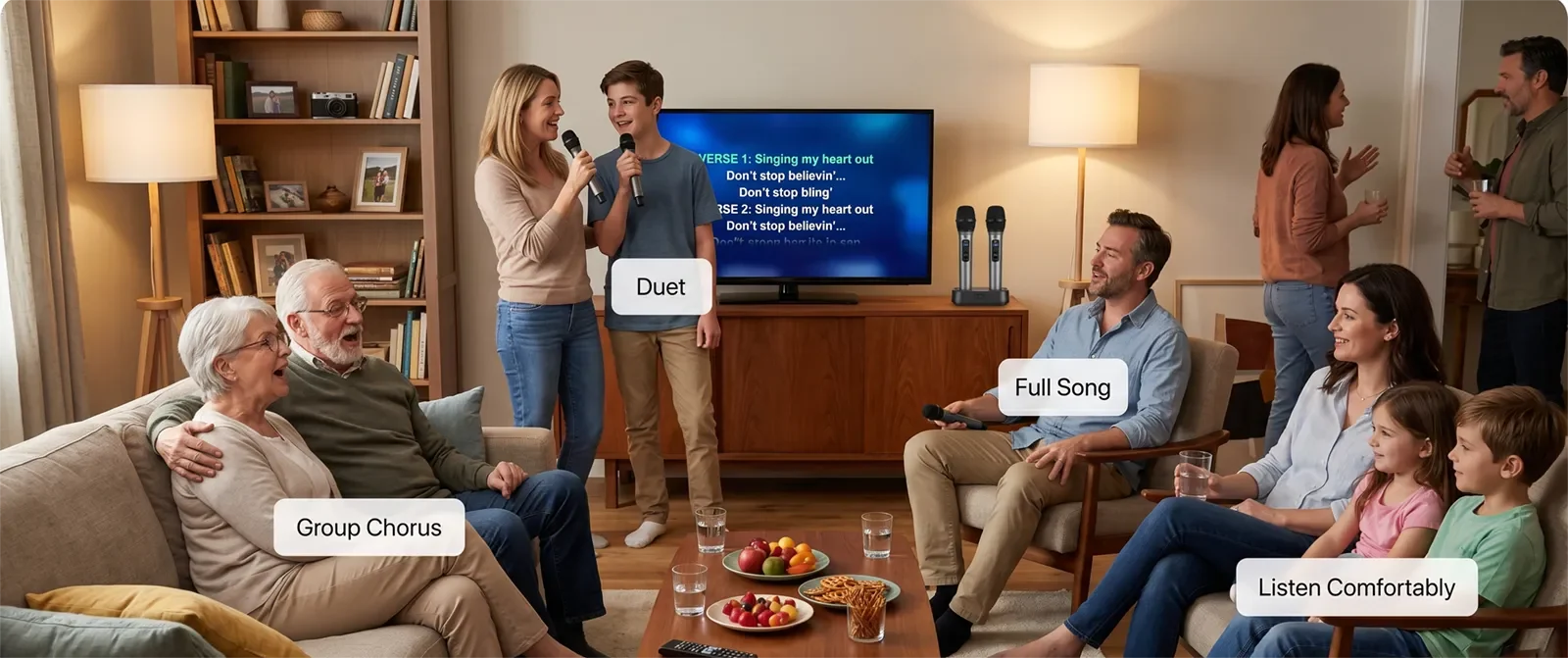
A duet can help a shy singer join with someone more confident. A group chorus can bring kids, parents, grandparents, cousins, or friends into the same moment without turning it into a performance. These shared songs often become the parts people remember most.
Group singing is especially useful when the room starts to split between active singers and quiet listeners. A familiar chorus can pull people back together without forcing anyone into the spotlight.
If you want to use this style more intentionally, read How to Use Duets and Group Songs for Karaoke Parties. It fits family gatherings very well because it keeps the mood warm, flexible, and less intimidating.
Set up the room for singing and conversation
Family karaoke usually happens in the same space where people eat, talk, relax, and move around. The room should not feel like everyone has to stop living normally just because karaoke starts.
Place the lyric screen where people can see it from the main seating area. This helps relatives stay involved even before they sing. Keep the microphones easy to pass around, but do not make them the center of attention all night.
Two microphones are usually enough for most family gatherings. They allow solo songs, duets, and backup singing without making the setup feel complicated. What matters more is microphone flow: people should know where the microphones are and feel comfortable handing them off.
Volume also matters. If the music is too loud, conversation disappears. If it is too soft, singers feel unsupported. For family karaoke, the right sound level should make singing feel full while still allowing people nearby to talk between songs.
The room does not need to feel like a karaoke lounge. It needs to feel like a family space where karaoke can happen comfortably.
A simple family karaoke flow
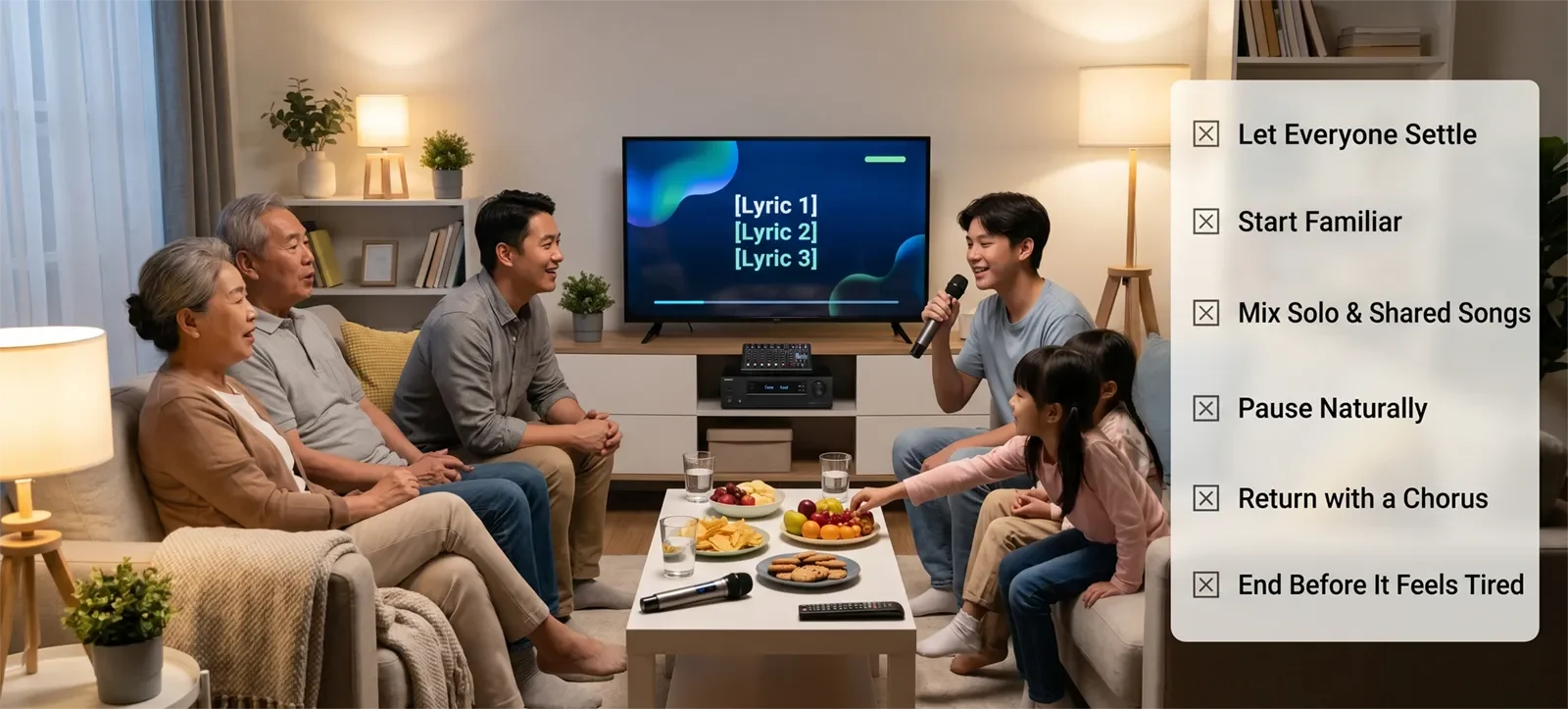
You do not need a minute-by-minute schedule. A simple rhythm is enough.
- Let everyone settle first. Give relatives time to arrive, eat, talk, and get comfortable before karaoke becomes the main activity.
- Start with one familiar song. Choose something easy, recognizable, and low-pressure.
- Mix solo turns with shared songs. Do not let the night become only strong singers performing for everyone else.
- Pause naturally. After a few songs, let the room breathe. Food, conversation, and short breaks help the gathering last longer.
- Bring people back with an easy chorus. When energy dips, use a familiar group song instead of pushing another difficult solo.
- End before the room feels tired. It is better for people to want one more song than to feel the karaoke went too long.
This kind of flow keeps karaoke active without making it heavy. It also makes the gathering easier to repeat for holidays, birthdays, weekend visits, or casual family nights.
For a broader hosting structure, see How to Host a Karaoke Party at Home Without Stress.
Common mistakes to avoid
The biggest mistake is treating family karaoke like a stage show. Most family gatherings do not need nonstop singing, loud hosting, or a packed queue. They need comfort, flexibility, and enough structure to keep the room moving.
Another mistake is starting with songs that are too hard. If the first few songs feel intimidating, shy relatives may decide early that karaoke is not for them. Easy opening songs make the room safer.
It is also easy to let confident singers dominate. That can happen naturally, especially when they are helping keep the room alive. But if the same few people sing every song, the gathering starts to feel less shared.
Finally, avoid making participation feel mandatory. Some relatives enjoy karaoke most by watching, clapping, laughing, or joining one chorus from their seat. That still counts as participation in a family setting.
Final Thought
Karaoke for family gatherings works best when it fits the family instead of trying to turn the family into a karaoke crowd. Familiar songs, gentle turn-taking, shared choruses, and natural pauses usually matter more than a perfect playlist or a strict schedule.
When karaoke feels easy to join and easy to step away from, more relatives stay connected to the night. That is the real win: not just more songs, but a warmer family gathering that people want to do again.
Contact Tittac for help choosing a home karaoke system that fits your room, family, and budget.
Frequently Asked Questions
How is family karaoke different from a regular karaoke party?
Family karaoke usually needs softer pacing, more flexible participation, and more room for conversation. A regular karaoke party may focus on energy and performance, while a family gathering works better when singing, watching, eating, and talking can all happen naturally.
Should everyone in the family take a turn?
No. Family karaoke works best when participation is available but not required. Some relatives may sing several songs, some may join a duet, and others may simply enjoy listening. The goal is comfort, not pressure.
What songs work best for family karaoke?
Familiar songs usually work best, especially early in the gathering. Choose songs with recognizable melodies, easy choruses, and room for shared singing. More difficult solo songs can come later after the room feels comfortable.
How long should karaoke last during a family gathering?
Most family gatherings work better with karaoke in shorter stretches instead of one long nonstop block. A few songs, a natural pause, and another short round usually feels easier for mixed ages and comfort levels.
How many microphones do you need for family karaoke?
Two microphones are enough for many family gatherings. They allow solo singing, duets, and easy support for someone who does not want to sing alone, without making the setup feel complicated.