
Karaoke becomes easier for shy guests when participation feels optional, gradual, and normal. The best approach is not to push quiet people into solos, but to give them lower-pressure ways to join through duets, group choruses, seated singing, and a clear pass option.
Who this guide is for: Home hosts who want quieter guests to enjoy karaoke without feeling called out, pressured, or forced into the spotlight.
How this guide was prepared: This guide was written for real home karaoke gatherings where different personalities share the same room. It focuses on host wording, room habits, duet formats, group participation, and practical ways to make karaoke feel welcoming without slowing down the party.
Some guests like karaoke in theory but freeze the moment the microphone comes near them. They may laugh, follow the lyrics, sing quietly from the couch, or enjoy everyone else’s performances, but a full solo turn feels too exposed.
That does not mean they hate karaoke. It usually means the room is asking for too much too soon. If the only visible way to participate is to stand up and sing alone while everyone watches, many quieter guests will choose not to participate at all.
If you want broader ideas for different types of home karaoke gatherings, start with Karaoke Party Ideas. This guide focuses on one specific hosting challenge: how to make karaoke fun for shy guests without forcing them into the spotlight.
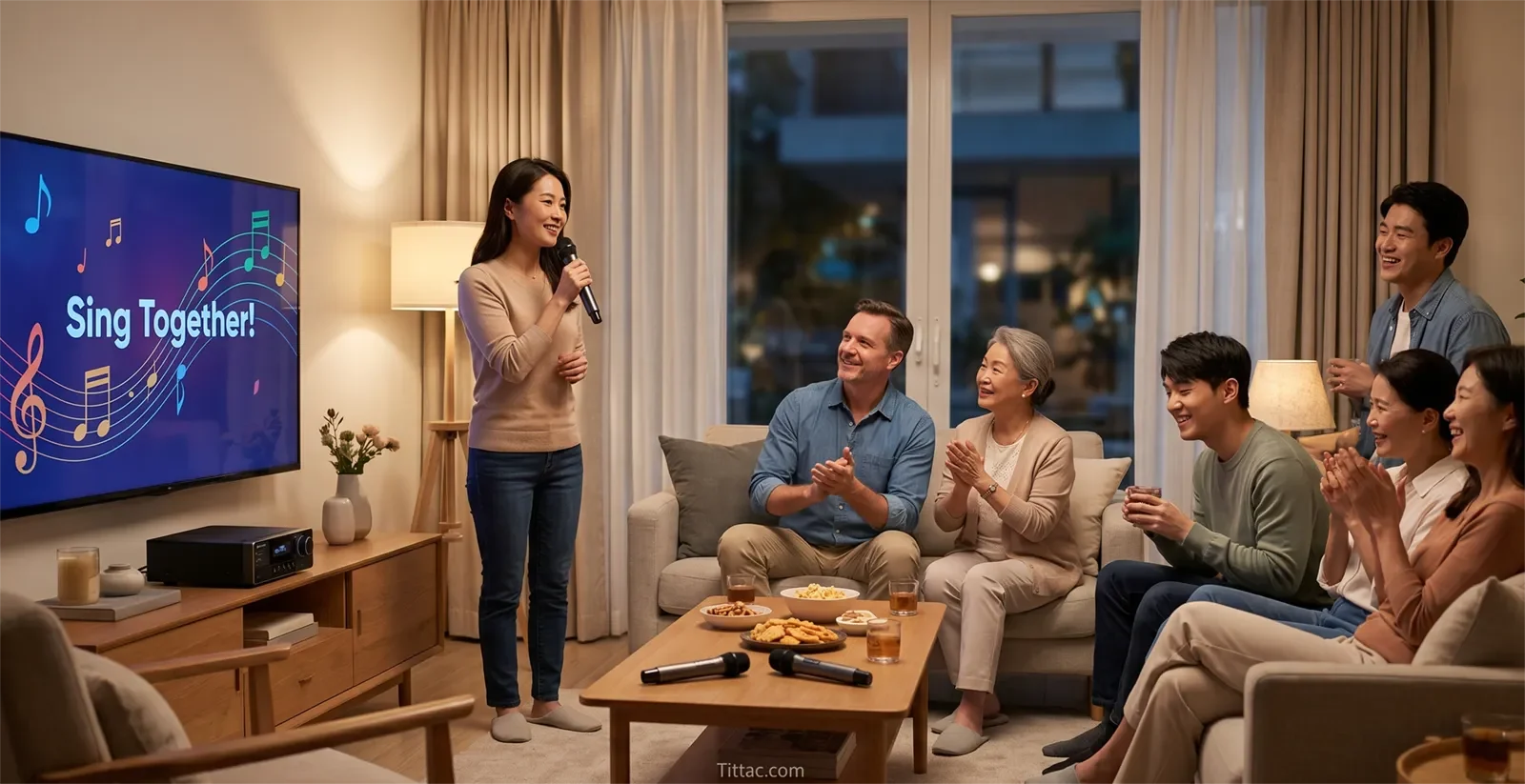
Table of Contents
Quick Answer
The best way to make karaoke fun for shy guests is to lower the pressure around participation. Make solo singing optional, offer duets and group choruses, let guests pass without awkward comments, and avoid putting one reluctant person in the center of the room. When karaoke feels easy to enter and easy to decline, quieter guests are much more likely to join in some form.
Why Shy Guests Pull Back at Karaoke Parties
Shy guests usually do not pull back because they dislike music or dislike the group. More often, they pull back because the format feels too exposed.
A straight solo turn can feel much bigger to them than the host realizes. The room may be friendly, but the moment can still feel like a public test: stand up, hold the microphone, sing the whole song, and have everyone watch until it ends.
The pressure gets worse when karaoke feels like an all-or-nothing activity. If the only choices are “sing a full solo” or “refuse,” many quieter guests will refuse. Not because they want to disconnect from the party, but because the first step feels too large.
Timing also matters. Some guests need to watch the room for a while before they feel comfortable. If they are pushed too early, they may become more resistant, not more confident. Teasing, dramatic introductions, or repeated encouragement can make the pressure worse even when the intention is friendly.
The practical issue is not whether a guest is “confident enough.” The issue is whether the room gives them smaller ways to enter. Good karaoke hosting gives quieter guests a path into the fun instead of demanding a full performance right away.
Group comfort matters here too. If the room has fair turn-taking, supportive reactions, and respectful behavior, shy guests are more likely to relax. For the broader social side of karaoke, see Karaoke Etiquette for Group Singing.
Make Solos Optional From the Start
The easiest way to lower pressure is to make it clear that solos are not required.
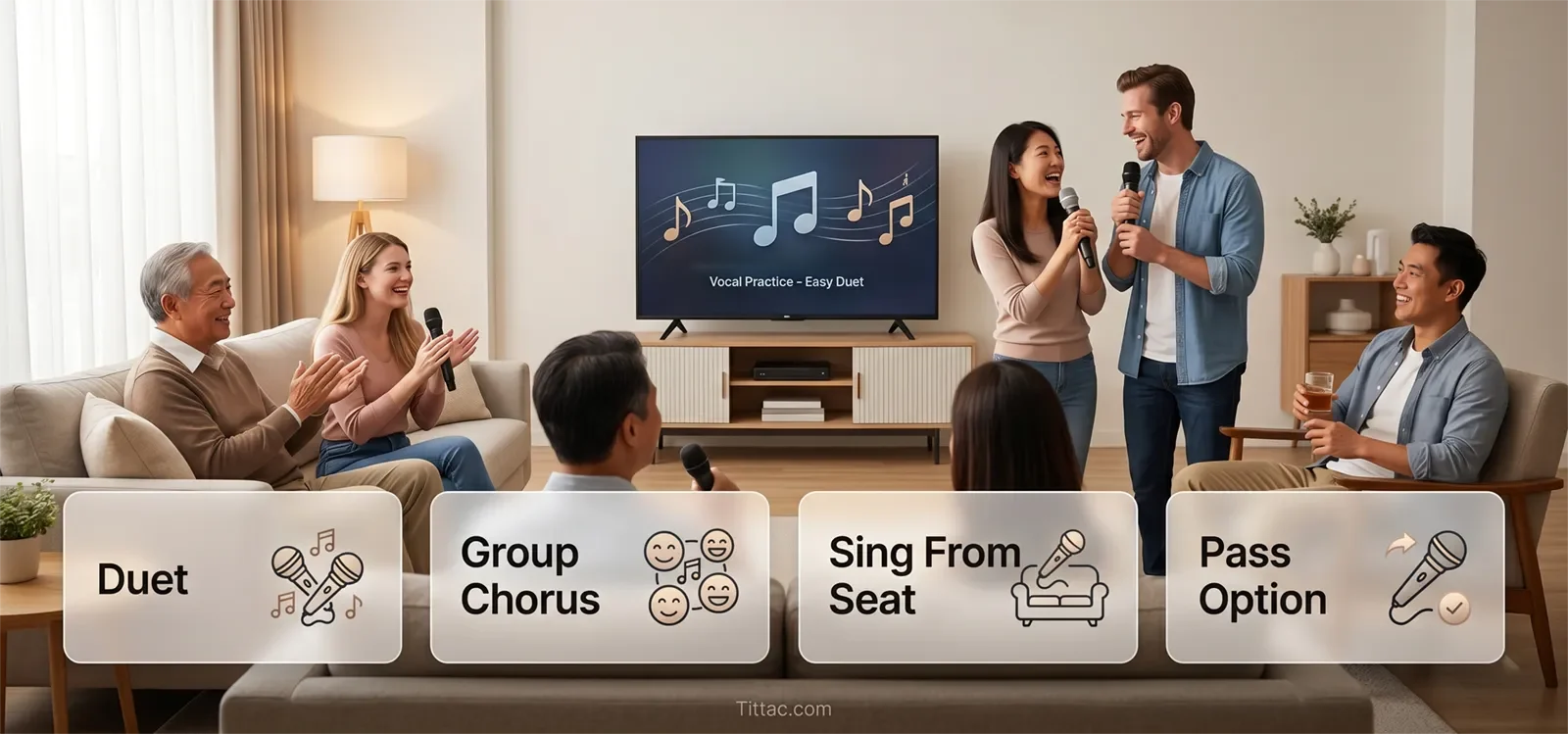
This does not mean announcing, “Nobody has to sing,” in a serious way that makes the room feel awkward. It simply means setting a relaxed tone from the beginning. Let guests know that people can sing a full song, join a duet, jump in for a chorus, sing from their seat, or just enjoy the room.
When guests know there is no penalty for passing, they relax faster. A normal pass option protects the mood of the party because no one has to defend themselves. A guest can say “maybe later,” and the night keeps moving.
That small freedom often makes participation more likely later. People are more willing to try karaoke when they know they can step in gradually instead of being trapped in a full spotlight moment.
Use Duets as the Easiest First Step
Duets are one of the best ways to help shy guests join because they divide the attention. Instead of one person carrying the whole song, two people share the moment.
A duet also gives the quieter guest someone to follow. If they miss a lyric, lose confidence, or get nervous, the other singer can keep the song moving. That makes the turn feel social instead of performative.
The duet partner matters. A warm, patient, low-pressure singer is usually better than the loudest or most dramatic performer in the room. The goal is not to create a big show. The goal is to make the first step feel safe and natural.
You can also make the duet smaller. A shy guest does not need to sing every line. They can take the chorus, echo a few familiar parts, or sing only the sections they know. That still counts as participation.
For more ideas built around shared singing, see How to Use Duets and Group Songs to Keep Karaoke Parties Moving.
Make Group Choruses Feel Normal
Group choruses are another easy bridge for shy guests. Many people who do not want a solo will still join a familiar chorus if the whole room is singing.
This works because the attention is spread across the group. No one feels singled out. The guest can participate without feeling like the room has paused to evaluate them.
Choose songs with easy hooks, familiar refrains, or parts that guests naturally know. The host can join first, then invite the room casually: “Everybody take the chorus.” That feels different from pointing at one shy guest and saying, “You sing now.”
Group choruses also help keep the energy alive. Confident singers still get their moments, but quieter guests have a way to be included without the pressure of a full turn.
Use Host Language That Does Not Create Pressure
Host wording matters more than many people think. A shy guest may decide whether karaoke feels safe based on one sentence.
Good host language is casual and low-pressure:
- “Join whenever you feel like it.”
- “We can do a duet later if you want.”
- “You can just take the chorus.”
- “No pressure — maybe next round.”
These lines leave the door open without making the guest defend themselves.
What usually does not help is pressure disguised as encouragement. Avoid saying things like “Come on, everyone has to sing,” “Don’t be shy,” “We’re all waiting for you,” or “You’ll be amazing, just do it.” Even positive pressure can still feel like pressure.
It is also better not to tease someone for being quiet. A joke may seem harmless to the host, but it can make the guest feel watched. Once that happens, they may pull back even more.
One gentle invitation is enough. If the guest passes, move on naturally. The best host makes participation feel available, not demanded.
Set Up the Room So Participation Feels Easier
The room itself can either raise or lower pressure.
If the singer zone feels like a stage, shy guests may hesitate. If every seat faces the singer too directly, the room can feel more like an audience than a casual gathering. If the microphone handoff is dramatic, even a small turn can feel too big.
A softer layout helps. Keep the singer area visible but not overly formal. Let guests sit close enough to feel included without putting quieter people in the center of attention too early.
It also helps to normalize smaller participation from different places in the room. Guests can clap, sing a line from their seat, join a chorus, or stand beside a friend for part of a song. These small actions should feel normal, not like second-best participation.
When the room gives people multiple ways to join, shy guests have more control over their comfort level.
Avoid Making Shy Guests the Main Event
One common mistake is turning a shy guest’s possible turn into a public moment.
Do not stop the room to announce that someone might sing. Do not build crowd energy around a reluctant person. Do not hand them the microphone with everyone watching to see what they will do.
Even when the room means well, that kind of attention can make the choice harder. The guest is no longer just deciding whether to sing. They are deciding in front of everyone.
A better approach is to make entry feel ordinary. Suggest a duet quietly. Invite the whole room into a chorus. Offer a familiar song without making the guest the center of the setup. If they join, let it feel natural.
Also avoid overreacting when a shy guest finally participates. Supportive applause is good. Turning it into a huge event can make the next turn feel harder. The goal is for participation to feel normal, not rare or dramatic.
A Simple Shy-Guest-Friendly Karaoke Flow
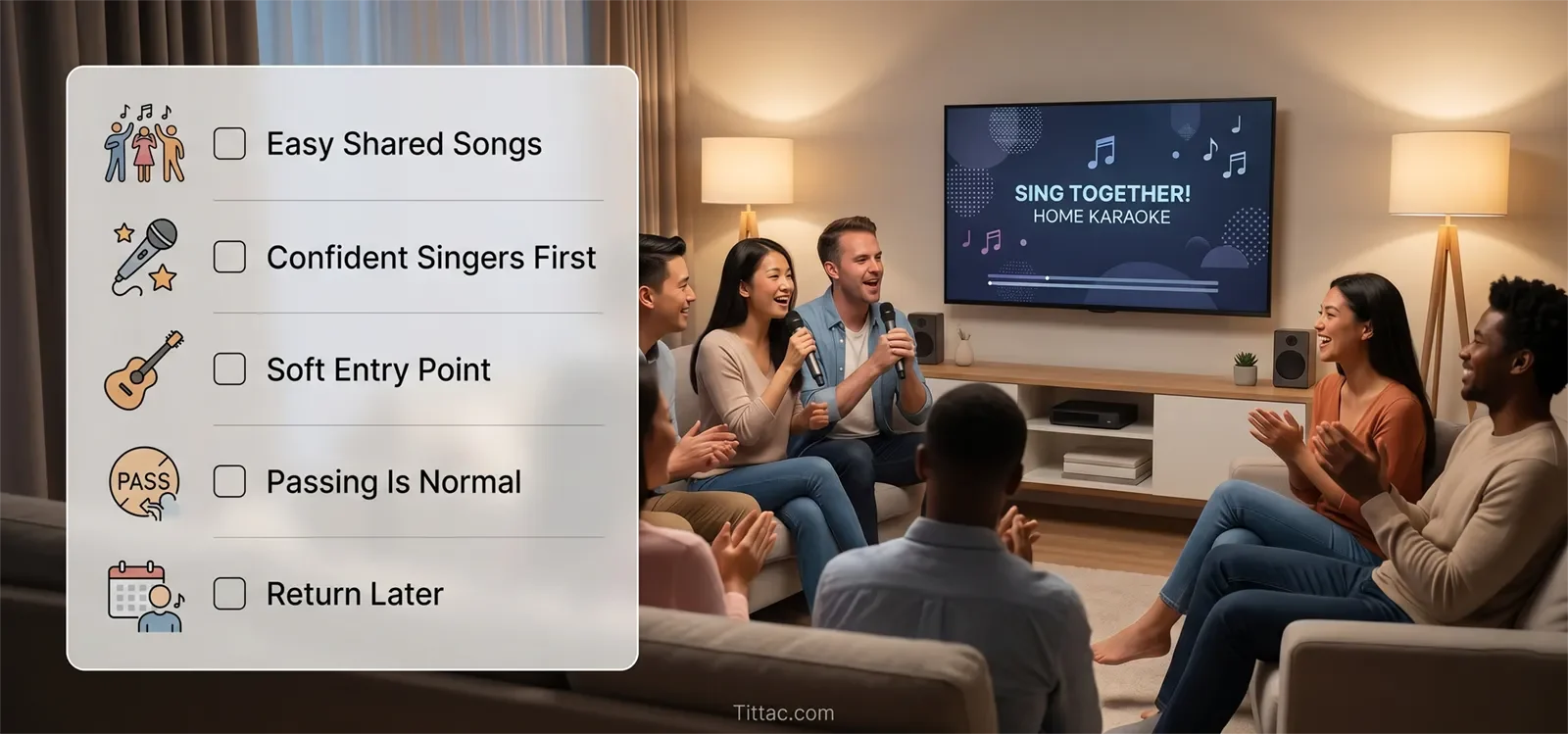
You do not need a complicated plan. A simple flow is usually enough.
- Start with easy shared songs. Open with familiar songs that let people sing along casually before solo turns matter.
- Let confident singers go first. This warms up the room without pushing quieter guests too early.
- Offer a soft entry point. Suggest a duet, chorus, or short section instead of a full solo.
- Make passing normal. If someone says no, move on without teasing, commentary, or repeated asking.
- Return later with a lighter option. Once the room is warmer, a familiar duet or group song may feel easier.
This flow works because it respects timing. Many shy guests do not need a different party. They just need a smaller first step into the same party.
It also protects the energy of the room. The night does not slow down, and the host does not make one person’s hesitation the center of attention.
Final Advice
Making karaoke fun for shy guests is not about forcing them to “come out of their shell.” It is about removing unnecessary pressure so they can enjoy the room on their own terms.
Make solos optional. Use duets. Invite group choruses. Keep the pass option normal. Avoid teasing, repeated calling out, or making a reluctant guest the focus of the room.
When karaoke feels easy to enter and easy to decline, quieter guests often become more comfortable over time. Some may sing a duet. Some may join the chorus. Some may only sing from their seat. That still counts as a successful karaoke night because the room feels welcoming instead of forced.
Shared singing is often the easiest bridge for quieter guests. For a practical next step built around duets, group songs, and easier participation formats, read How to Use Duets and Group Songs to Keep Karaoke Parties Moving.
Frequently Asked Questions
Should I invite a shy guest to sing more than once?
One gentle invitation is usually enough at first. If they pass, move on naturally and leave the door open later. Repeated asking can turn a friendly invitation into pressure.
Are duets better than solo turns for shy guests?
Often yes. Duets share attention, reduce pressure, and give quieter guests someone to follow. They are usually one of the easiest first steps into karaoke participation.
What if a shy guest says no to everything?
Let that be okay. The goal is to make karaoke available, not mandatory. Some guests enjoy the atmosphere, sing quietly from their seat, or join later after the room feels more comfortable.
Can karaoke games help quieter guests join in?
Yes, if the game stays light and easy to skip. Short group rounds, shared choruses, and low-pressure themed songs can help. Avoid games that make one reluctant person perform alone.
What should I avoid saying to a shy karaoke guest?
Avoid lines that call attention to their hesitation, such as “Don’t be shy,” “Everyone has to sing,” or “We’re waiting for you.” A calm invitation works better than public pressure.