
Maintaining a massage chair is mostly about simple habits done consistently: keep high-contact areas clean, protect the upholstery, avoid excess moisture, keep the setup area clear, and notice small wear signs early. Good care should never turn into DIY repair. If the chair starts acting strangely, stop cleaning and move to troubleshooting or support.
Who this guide is for: Massage-chair owners who want a simple, realistic cleaning and care routine that helps protect the chair over time.
How this guide was prepared: This guide was prepared using common manufacturer-style care guidance, practical home-use maintenance habits, and conservative owner-level boundaries so cleaning stays safe and does not drift into repair advice.
This guide focuses on routine care and cleaning for long-term ownership. It covers material-safe cleaning habits, regular inspection points, dust control, foot-area care, and simple habits that help a massage chair stay in better condition. If a feature seems to be malfunctioning, use the massage chair troubleshooting guide. If your question is about service expectations, use the massage chair warranty and in-home service guide.
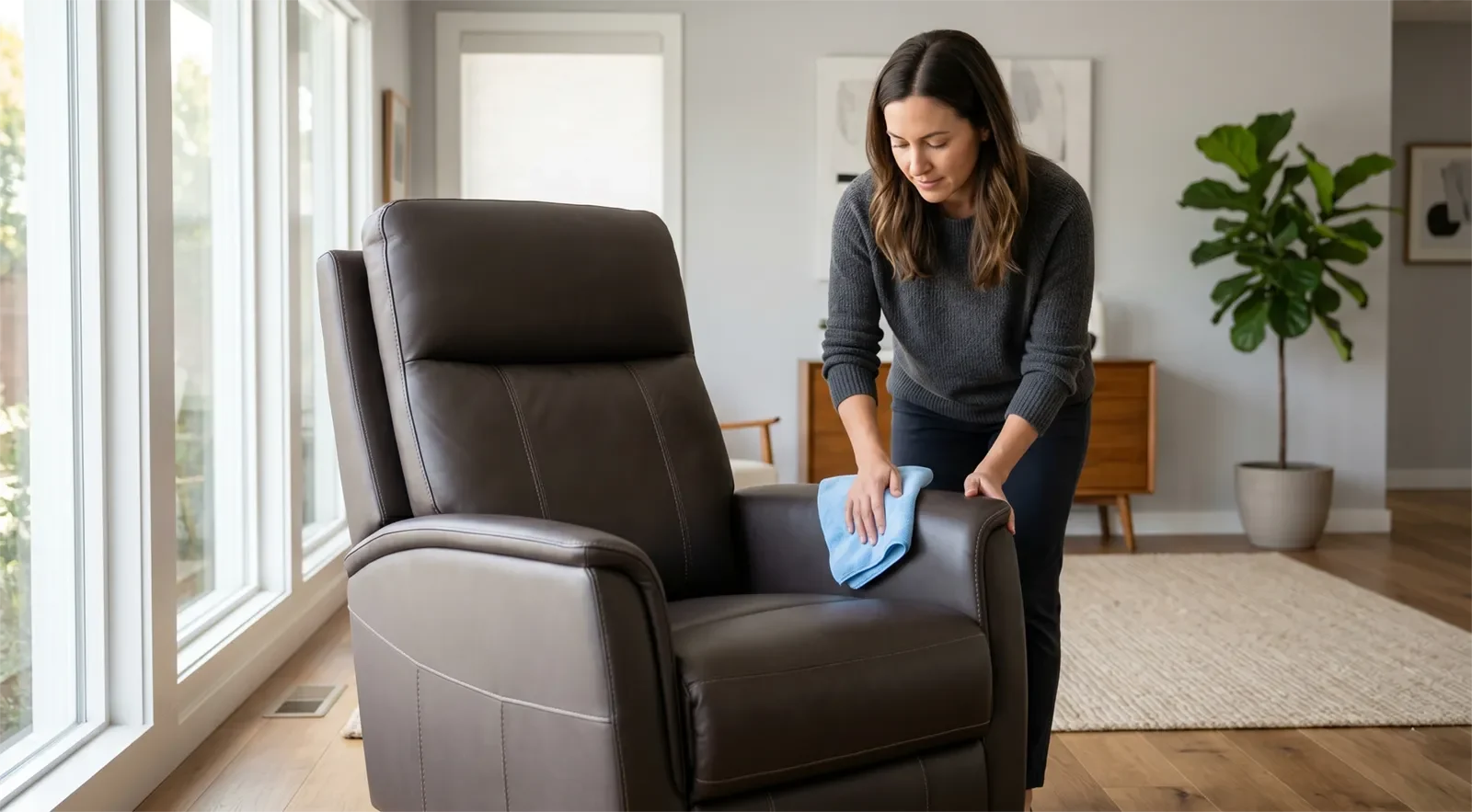
Table of Contents
- Quick Answer
- What Routine Care Actually Means
- Start With a Simple Cleaning Rhythm
- Match the Cleaning Method to the Material
- Areas Owners Often Forget to Clean
- Maintenance Habits That Help a Chair Last Longer
- Early Signs of Wear You Should Not Ignore
- Routine Care Still Works Best Alongside Safe Use
- A Practical Owner Routine You Can Actually Keep
- Frequently Asked Questions
- Related Guides
Quick Answer
To maintain and clean a massage chair for longevity, wipe high-contact areas regularly, use gentle material-safe cleaning methods, keep the area around the chair dust-free, avoid excess moisture, and check seams, foot sections, remote controls, and exterior surfaces for early signs of wear.
Routine care should be simple enough to repeat. Do not use harsh chemicals, soak surfaces, force moving sections, open panels, or treat strange chair behavior as a cleaning issue. If the chair starts making unusual noises, stops unexpectedly, feels mechanically off, or behaves differently than normal, move to basic troubleshooting or contact support.
What Routine Care Actually Means
Routine maintenance for a massage chair is mostly about cleanliness, surface protection, and paying attention to normal wear. It is not about opening the chair, adjusting internal parts, forcing the leg section, or trying to repair electrical or mechanical components.
A massage chair can look clean from a distance while still collecting buildup in the headrest, arm areas, foot section, seams, remote, and floor area around the base. Small, steady habits usually protect the chair better than occasional aggressive cleaning.
What this page covers
- Regular cleaning habits
- Material-safe surface care
- Dust and debris control
- Simple visual checks for wear
- Practical long-term ownership habits
What this page does not cover
- Mechanical repair
- Electrical troubleshooting
- Warranty interpretation
- Coverage disputes or service policy details
- Medical safety questions during chair use
Start With a Simple Cleaning Rhythm
The best cleaning routine is the one you will actually keep. For most homes, that means light cleaning on a regular basis and a more careful wipe-down when the chair has had heavier use.
Wipe high-contact areas regularly
Arm areas, headrest zones, seat surfaces, foot sections, and remote controls collect the most body oils, skin contact, dust, and daily residue. These areas usually show neglect first, so they should be the first areas you clean.
Keep dust away from the chair
Dust and lint around the base, sides, floor area, and nearby furniture can make the chair harder to keep clean over time. A massage chair usually stays in better condition when the surrounding setup area is also kept reasonably clean.
Clean gently, not aggressively
Cleaning should protect the finish, not wear it down. Harsh scrubbing, soaking surfaces, and using strong household chemicals can damage upholstery, touch areas, and finishes. Gentle, repeated care is usually safer than aggressive deep cleaning.
Match the Cleaning Method to the Material
Not all massage-chair surfaces should be treated the same way. Even if two chairs look similar, the safest habit is to follow the official care guidance for the specific materials used on your chair.
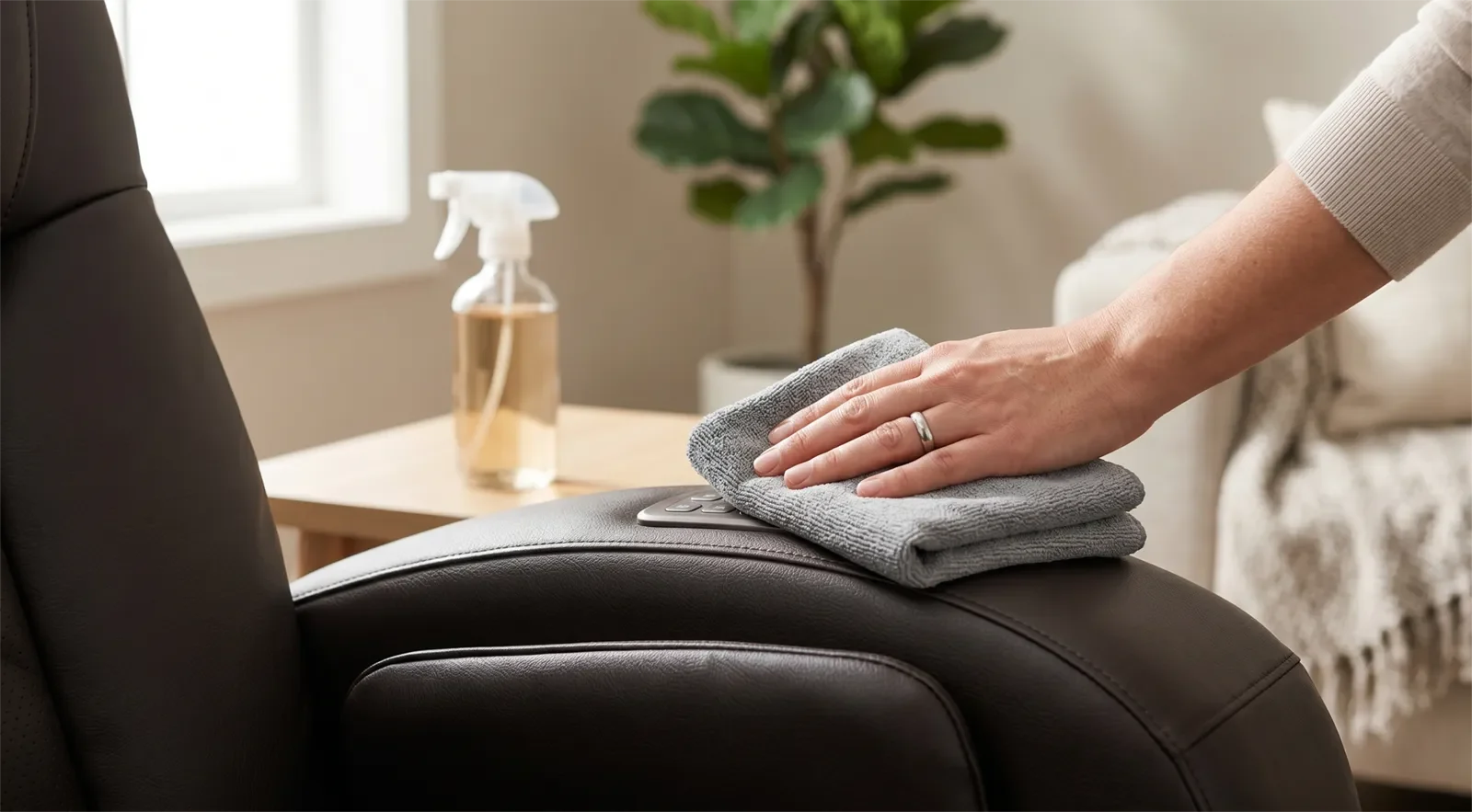
Use mild, material-safe cleaning methods
In many cases, a soft cloth and a gentle cleaner approved for the chair’s surface are safer than strong all-purpose products. When in doubt, use less product, less moisture, and less pressure.
Be careful with moisture
A massage chair is a powered product, so routine cleaning should avoid excess liquid. A lightly damp cloth is very different from letting moisture pool into seams, controls, openings, or foot areas.
Test unfamiliar products carefully
Do not assume a cleaner is safe because it is marketed as gentle. If you are trying a product for the first time, follow the chair’s official care instructions first and avoid applying it broadly before you know how the material responds.
Areas Owners Often Forget to Clean
Many owners focus on the visible seat and backrest, but other sections collect just as much buildup during normal use.
Headrest and neck-contact areas
These areas collect oils and residue faster than many people realize, especially in homes where the chair is used often. Wiping them regularly helps the chair feel cleaner and slows visible wear.
Arm pockets, side panels, and remote surfaces
These parts are touched often. Even when the main upholstery looks fine, dirty controls and side areas can make the chair feel neglected.
Foot and calf sections
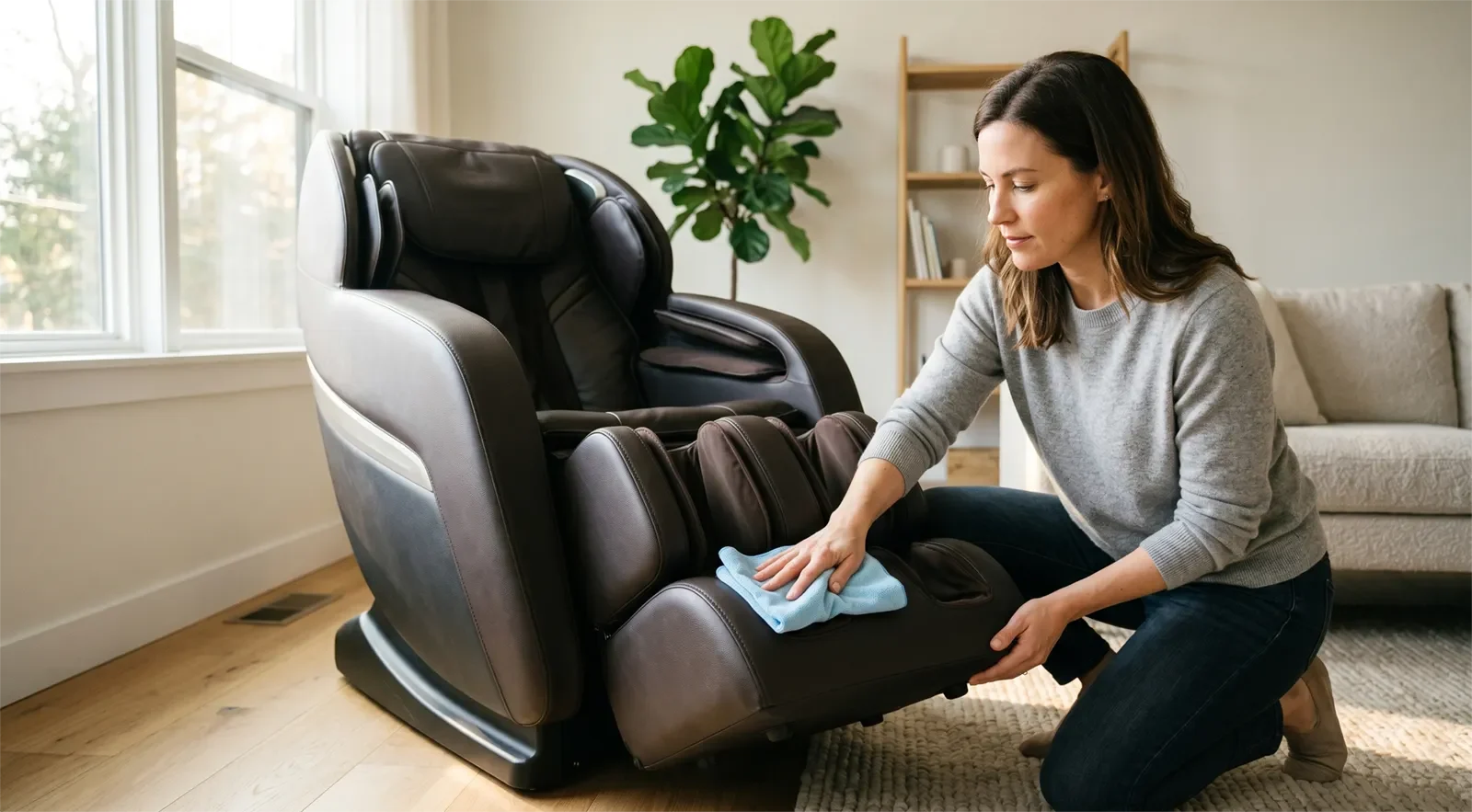
Foot and calf areas deserve regular attention because they see repeated contact and can collect dust, lint, and debris faster than the rest of the chair. Clean these areas gently and avoid forcing any moving section.
Seams, creases, and edges
Seams and edges can trap dust and show early stress. During routine cleaning, check whether any seam looks pulled, cracked, uneven, or unusually worn.
Maintenance Habits That Help a Chair Last Longer
Longevity is not only about cleaning. It also depends on where the chair sits, how people use it, and whether small issues are noticed early.
Keep the chair in a sensible environment
Placement affects long-term condition. A chair placed in harsh direct sun, heavy dust, tight clearance, or a high-traffic spot may age faster or stay dirtier. If you are still deciding on the best location, read where to place a massage chair.
Avoid treating the chair like rough-use furniture
A massage chair is not just another seat in the room. Repeated rough entry, heavy pressure on arms or side panels, standing on the foot section, or careless use around moving parts can increase wear over time.
Keep the power area neat
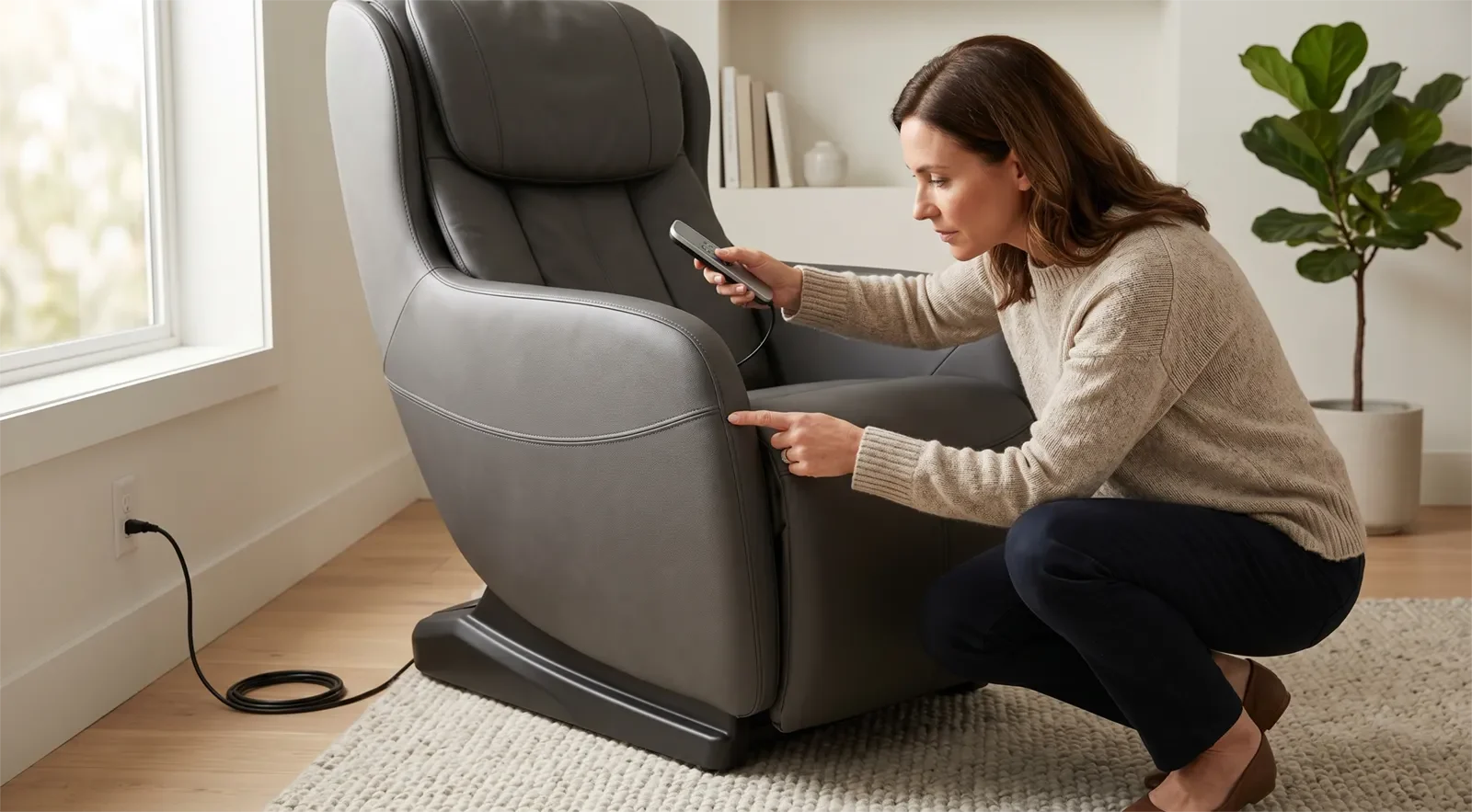
Basic ownership includes keeping the power cord area clean, visible, and free from unnecessary strain. Do not pinch the cord, route it awkwardly, or allow dust and clutter to build up around the power area.
Keep enough clearance around moving parts
If the chair reclines, slides, or extends near a wall or furniture, give it enough space to move normally. Tight clearance can create unnecessary stress and may also cause confusion when the chair does not move as expected.
Early Signs of Wear You Should Not Ignore
Good maintenance also means noticing when normal wear may be turning into a support issue. The earlier you document a problem, the easier it is to explain clearly if you need help later.
Surface cracking, peeling, or repeated stress marks
If upholstery or surface material starts showing unusual wear, document it early. Do not try to hide or “fix” it with harsh cleaners, tape, glue, or products that may make the material worse.
Seams that look stressed or uneven
A seam that looks like it is pulling, opening, or becoming uneven should not be ignored. It may still be cosmetic, but it is worth watching and documenting before the issue becomes harder to address.
Changes that seem beyond routine care
If the chair starts behaving strangely, making unusual mechanical sounds, stopping unexpectedly, or feeling mechanically off, stop treating it like a cleaning problem. Use the massage chair troubleshooting guide for the next step.
If your concern shifts from upkeep to service expectations or what support may apply, read the massage chair warranty and in-home service guide. This page covers routine care only, not policy interpretation.
Routine Care Still Works Best Alongside Safe Use
Cleaning helps with longevity, but long-term condition also depends on how the chair is used. Sensible use reduces unnecessary stress on the chair and helps the owner avoid turning comfort features into strain.
If you need the broader caution boundaries around use, read the health and safety guide when using a massage chair. That guide covers safe-use boundaries. This page stays focused on keeping the chair itself cleaner and in better everyday condition.
A Practical Owner Routine You Can Actually Keep
A good owner routine does not need to be complicated. It just needs to be consistent.
- Wipe high-contact areas regularly.
- Use only gentle, material-safe cleaning methods.
- Avoid soaking surfaces or letting moisture enter seams and controls.
- Keep the area around the chair clean and dust-free.
- Check seams, edges, and foot sections during routine cleaning.
- Watch for surface wear before it becomes harder to address.
- Keep the cord area neat and free from strain.
- Use troubleshooting or support when the issue goes beyond normal care.
Frequently Asked Questions
How often should I clean my massage chair?
That depends on how often the chair is used, but light regular cleaning is usually better than waiting for visible buildup. High-contact areas, the remote, headrest, arm areas, and foot sections usually need the most consistent attention.
Can I use any household cleaner on my massage chair?
No. It is better to follow official care guidance for the chair’s material instead of assuming a general household cleaner is safe. Harsh products, too much moisture, or aggressive scrubbing can shorten the life of surface materials.
Should I clean inside the chair or open panels?
No. Routine owner care should stay on safe, accessible exterior areas. Do not open panels, remove covers, force parts, or attempt internal cleaning unless the manufacturer’s instructions clearly tell you how to do it safely.
What should I do if I notice unusual wear?
Document it early, avoid aggressive cleaning, and monitor whether it gets worse. If the issue looks like mechanical behavior, strange movement, or abnormal operation, use the troubleshooting guide instead of treating it like a cleaning issue.
Does placement affect massage chair longevity?
Yes. A chair placed in a harsh, dusty, cramped, or high-traffic environment may be harder to keep clean and may show wear faster. The room placement guide can help you think through clearance, power, and practical setup.
Is maintenance the same as warranty service?
No. Maintenance is the owner’s routine care. Warranty service is about coverage, repair, and support expectations. If the issue becomes a service question, use the warranty and in-home service guide.
If your chair is clean but still feels off, the next step is not stronger cleaning. Start with the massage chair troubleshooting guide, then use the warranty and service path if the issue does not resolve with basic checks.