
Advanced EQ helps home karaoke most after the basic balance is already close. It should not be the first fix for every problem. Used well, EQ removes small friction from the vocal so singing feels clearer, calmer, and easier to follow through a full night at home.
Who this guide is for: Home karaoke users who already understand basic controls and want cleaner, smoother, more comfortable vocals without over-tuning the system.
How this guide was prepared: This guide was written from real home karaoke use, focusing on how EQ affects masking, harshness, vocal presence, clarity, and long-term listening comfort after the basic balance is already close.
EQ becomes more useful after the larger problems are under control. If the vocal is buried under the music, the room is too reflective, or the singer keeps changing mic position, EQ may only change the flavor of the problem instead of solving it.
But once the system is reasonably stable, EQ can make a real difference. A small cut can reduce mud. A careful adjustment can calm harshness. A restrained boost can help a vocal stay present without making it sharp. The key is knowing when EQ is helping and when it is being asked to do the wrong job.
This article focuses on advanced EQ as a post-baseline listening skill for home karaoke. For broader plain-English technical context, see our Karaoke Technical Guides.
Table of Contents
Quick Answer
The most useful advanced EQ tips for home karaoke are small, selective, and restraint-based. Cut when you clearly hear mud, boxiness, or harshness. Boost only when the vocal is already balanced but still needs a little help staying present over the music. In most homes, better EQ comes from removing what gets in the way, not from making every part of the vocal bigger. Good karaoke EQ should make the singer easier to follow, easier to place in the mix, and less tiring over time.
When Advanced EQ Becomes Worth Touching
Advanced EQ becomes worth touching only after the bigger problems are no longer dominating the sound. The vocal should not be obviously buried. The music should not be overpowering the room. The system should not be fighting major placement, room, or microphone-handling problems.
That matters because EQ works best as refinement. If the basic setup is still wrong, deeper EQ changes can make the system more complicated without making it easier to sing with.
For example, if the vocal is simply too low compared with the music, EQ is not the first answer. The vocal and music relationship needs to be corrected first. If the room is making everything harsh or blurry, EQ may help slightly, but it cannot fully remove the room from the sound.
For the earlier control layer, start with how to set mic volume, music volume, echo, bass, and treble. Advanced EQ should come after that baseline is mostly settled.
What Advanced EQ Is Really For
Advanced EQ is for reducing small problems that remain after the system already works. It is the stage where the vocal is basically usable, but still feels slightly muddy, boxed in, sharp, thin, or harder to follow than it should.
The most important idea is this: EQ does not only add clarity. Often, it creates clarity by removing what blocks the vocal.
A vocal may not need more brightness. It may need less mud. It may not need more volume. It may need less boxiness. It may not need more treble. It may need less harshness that makes people tired after a few songs.
That is why advanced EQ should be judged by comfort and intelligibility, not by how dramatic the change sounds during a short test. The goal is not to make the vocal impressive by itself. The goal is to make the singer sit more naturally in the full karaoke mix.
If the vocal is audible but still does not feel correctly placed in the song, read how vocal presence really works in karaoke mixes. Presence is not always solved by simply adding more high-end brightness.
How to Decide Whether to Cut or Boost
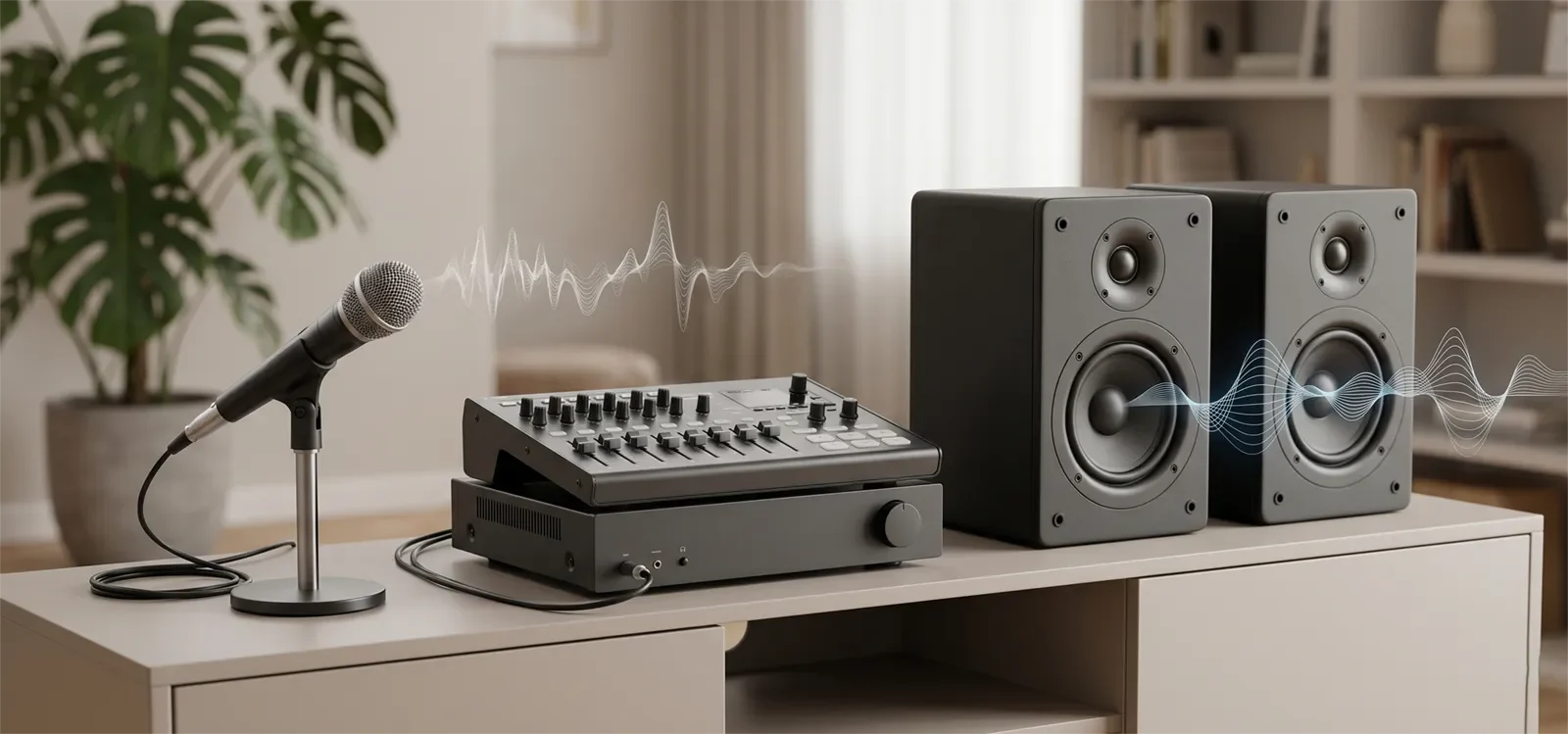
The safest listening order is simple: remove congestion first, calm harshness second, then decide whether the vocal still needs a small boost to come forward.
This order matters because many home users boost too early. They try to add clarity before removing what is making the vocal crowded. That can make the voice louder or sharper without making it easier to understand.
Cut first when the vocal feels crowded
If the vocal feels muddy, thick, trapped, or boxed in, a small cut usually sounds more natural than a boost. Cutting removes the part of the sound that is getting in the way. This can make the vocal feel cleaner without making it aggressive.
Calm edge before adding brightness
If the vocal already feels sharp or tiring, boosting for “clarity” can make the problem worse. Many users confuse brightness with clarity, but a harsh vocal is not easier to sing with. It may cut through for a moment, then become uncomfortable.
If harshness is a recurring issue in the room, read why some karaoke systems sound harsh at home. Harshness is often a mix of room behavior, volume, speaker response, mic tone, and tuning — not just one EQ setting.
Boost only after the vocal is already close
A small boost can help when the vocal is already balanced but still needs a little more presence. The boost should make the singer easier to follow, not more piercing. If the vocal becomes exciting for a few seconds but tiring after one song, the boost is probably too much.
What Advanced EQ Should Not Try to Fix
Advanced EQ should not be used as a rescue tool for problems that belong somewhere else. It can refine a basically good sound, but it cannot cleanly replace correct vocal balance, good microphone habits, better room control, or proper system setup.
Advanced EQ should not be expected to fix:
- A vocal that is much too low compared with the music.
- A singer who constantly moves too far from the microphone.
- A room that is strongly reflective, harsh, or boomy.
- Effects that are already too heavy and washing out the voice.
- Speakers or microphones that are badly mismatched for the room.
In those cases, EQ may help a little, but it will not solve the root issue. You may end up overcorrecting the vocal and making the system sound less natural.
In plain English, advanced EQ is a refinement tool. It is not a first-fix tool, not a substitute for balance, and not a full professional tuning workflow by itself.
Listening Tests That Actually Help
The best way to judge EQ is with real singing, real music, and normal home volume. Do not make final decisions from a quick spoken mic check. Speech can help you hear basic tone, but karaoke problems often show up only when the vocal sits against music.
Use this simple test:
- Start with the vocal and music already balanced.
- Choose one familiar song with both soft lines and stronger chorus sections.
- Listen for whether the words are easy to follow.
- Notice whether the vocal feels muddy, boxed in, sharp, thin, or tiring.
- Make one small EQ move at a time.
- Return to the full song and judge the change in context.
The phrase “in context” is important. A vocal can sound impressive alone but wrong inside the song. Advanced EQ is successful only when the whole karaoke mix becomes easier to sing with and easier to listen to.
How to Know When the Change Is Enough
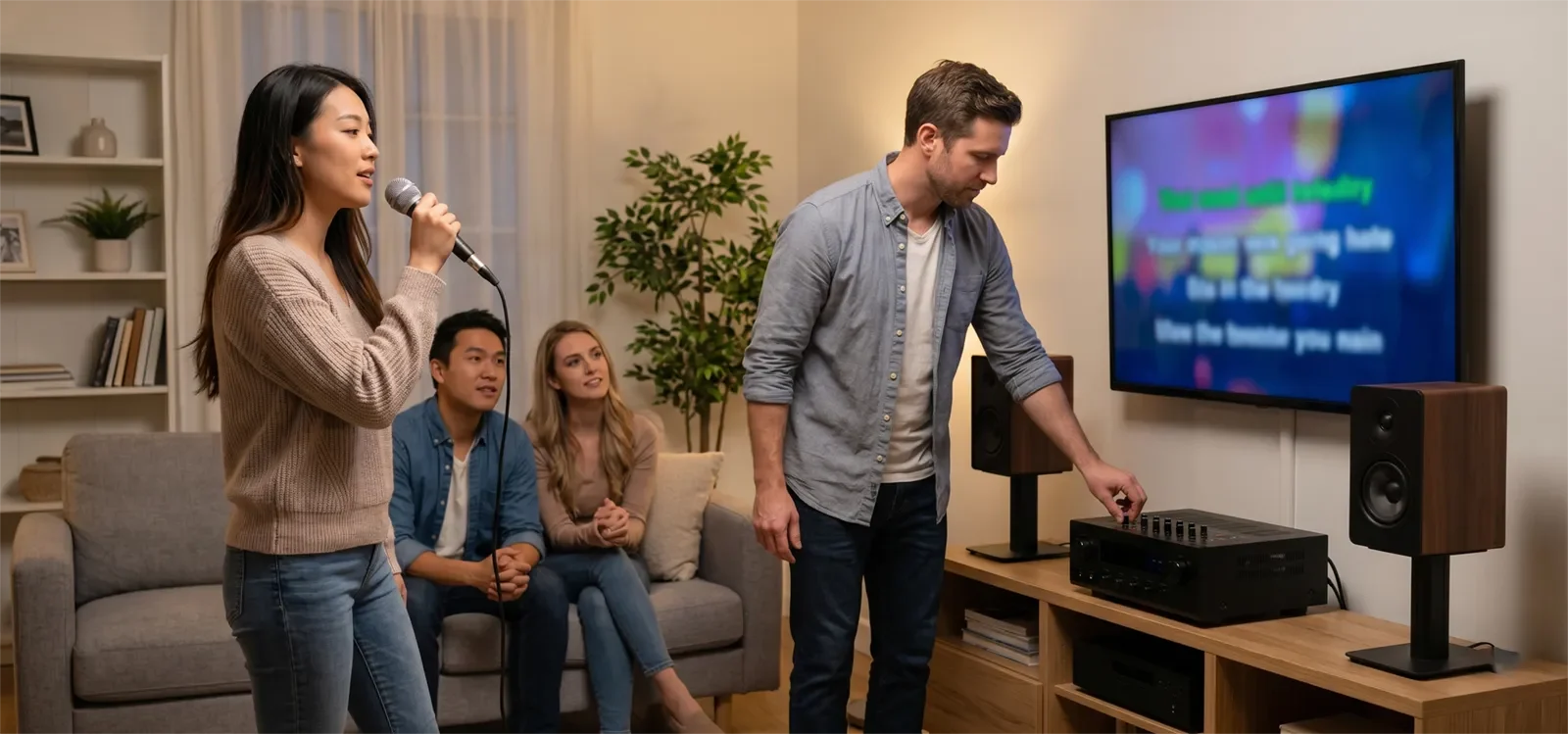
The stopping point is usually calmer than people expect. Good home karaoke EQ rarely sounds dramatic by itself. It sounds easier. The words arrive more cleanly, the vocal feels less strained, and the mix becomes less tiring over time.
Test more than one song if possible. A setting that flatters one phrase may not work across a full night of karaoke. The best EQ choice is the one that stays believable across different voices, different songs, and normal family-room volume.
Use this rule: stop once the friction is gone. If the vocal no longer feels muddy, sharp, boxed in, or hard to place, do not keep adjusting just to make the change more noticeable.
Advanced EQ works best when it disappears into the experience. The singer should feel clearer and more comfortable, but the EQ itself should not call attention to itself.
Common Advanced EQ Mistakes
Using EQ before fixing balance
If the vocal is too low under the music, EQ is not the first solution. Fix the vocal-to-music relationship first, then use EQ for refinement.
Boosting brightness to chase clarity
Brightness can help in small amounts, but too much can make the vocal harsh and tiring. Clarity often comes from reducing mud or boxiness before adding top-end energy.
Making too many changes at once
If you adjust several EQ areas at the same time, you may not know which move helped or hurt. Make one small change, then listen inside a song.
Judging the vocal alone
A vocal that sounds impressive by itself may not sit well with music. Karaoke EQ should always be judged in the full mix.
Trying to make one setting perfect for every singer
Different voices react differently. The best home setting is usually a stable middle ground that works well for most singers, not a dramatic setting that flatters only one person.
Conclusion
Advanced EQ for home karaoke is not about making bigger moves. It is about making better moves after the basic balance is already close. Small cuts and restrained boosts usually create a clearer, calmer, more comfortable vocal than dramatic adjustments.
The practical takeaway is simple: use EQ as post-baseline refinement. Cut obvious friction first, boost carefully only when the vocal still needs help, and judge every change by how natural and singable it feels during real songs at home.
Frequently Asked Questions
Should I use advanced EQ before the basic controls feel right?
No. Advanced EQ works best after the vocal level, music level, echo, reverb, and general system behavior are already close. If the basics are still wrong, EQ often changes the sound without solving the real problem.
Should I cut or boost first in home karaoke EQ?
In most cases, cut first when you clearly hear mud, boxiness, congestion, or harshness. Cutting usually sounds more natural than boosting another area to overpower the problem. Boost only when the vocal is already balanced and needs a small amount of extra support.
Can advanced EQ fix a vocal buried behind the music?
Not cleanly if the main problem is balance. A buried vocal usually needs a better music-to-vocal relationship first. After the vocal sits at the right level, advanced EQ can help refine how clearly it lands in the mix.
How do I know when to stop adjusting EQ?
Stop when the vocal feels easier, not when it sounds dramatic. If lyrics are clear, the singer feels natural in the mix, and the sound stays comfortable across more than one song, the EQ is probably already doing its job.
Can too much EQ make karaoke sound worse?
Yes. Too much EQ can make vocals sound thin, sharp, hollow, or unnatural. Home karaoke usually benefits from small corrections that reduce friction, not heavy shaping that makes the system feel overprocessed.
The next useful step is understanding why a vocal can be audible but still not sit correctly in the song.