
Harsh karaoke sound at home usually comes from interaction, not one bad knob. Room reflections, forward speaker voicing, upper-mid buildup, playback level, EQ choices, and vocal intensity can all stack together until the system feels sharp, tiring, or overly aggressive.
Written by Toan Ho — Tittac editorial team.
Who this guide is for: Home karaoke users who feel their system sounds sharp, tiring, or overly aggressive but are not sure whether the cause is EQ, room behavior, vocal use, or speaker voicing.
How this guide was prepared: This guide was written from a home-use perspective, focusing on how room reflections, frequency balance, playback level, and singing behavior combine to create harshness in real karaoke spaces.
Harsh karaoke sound is frustrating because the system may seem powerful enough, clear enough, and even exciting at first. But after a few songs, the sound starts feeling sharp, tiring, or harder to enjoy. Vocals may jump forward too aggressively, strong notes may sting, and the whole room may feel louder than the volume setting suggests.
That is why harshness is better understood as a system-interaction problem than one isolated fault. In home karaoke, room reflections, upper-mid emphasis, treble habits, playback level, and singing style can all push the sound in the same uncomfortable direction. This article explains that behavior in plain English, not as a step-by-step fix guide. For broader category context, browse our Karaoke Technical Guides.
Quick Answer: Some karaoke systems sound harsh at home because several factors stack together. Reflective rooms can exaggerate upper frequencies, speaker voicing can feel too forward, EQ changes can overcorrect clarity, and louder singing can push vocals into a sharper range. Harshness is not always obvious distortion. Often it is a listening-fatigue problem caused by too much energy in the wrong part of the sound, especially when the room keeps bouncing that energy back at you.
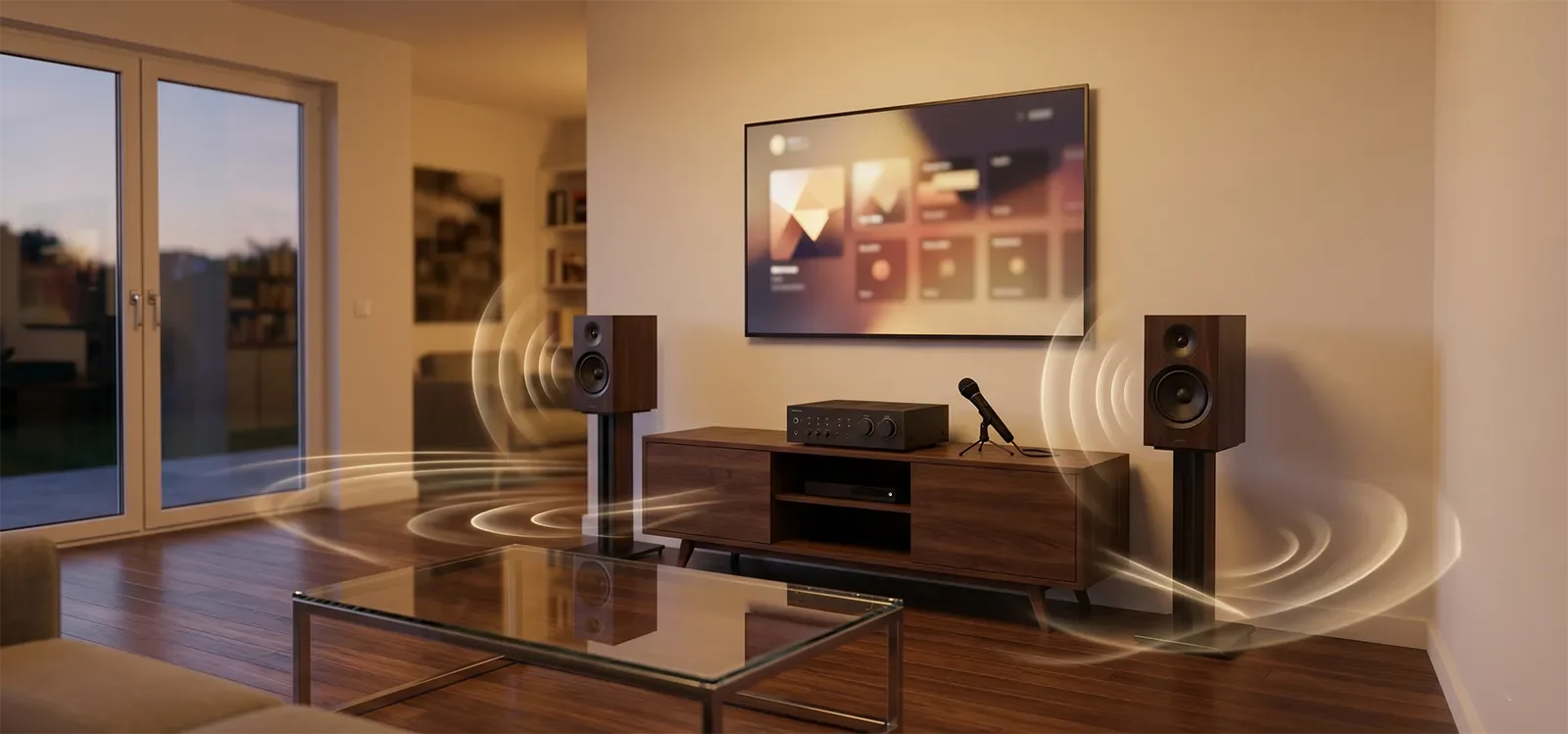
Table of Contents
What harshness actually means
In plain English, harshness means the sound feels harder than it should. It can feel sharp, edgy, tiring, or overly forward, especially on vocals. That does not always mean the system is broken. A karaoke system can be clear and still sound harsh if too much energy is concentrated in the wrong range or reflected back into the room too strongly.
At home, harshness is often tied to the upper mids and lower treble, where vocal bite, consonants, and strong presence live. Those frequencies help voices cut through music, which is useful up to a point. But if they become too dominant, the sound stops feeling clear and starts feeling aggressive.
So harshness is not just “too much treble.” It is a listening result that happens when clarity, level, room behavior, and vocal energy stop balancing each other well.
Why karaoke systems can sound harsh at home
Karaoke systems can sound harsh at home because vocals place special stress on the sound system. Unlike normal music playback, karaoke adds a live microphone into the room. That live vocal has to sit above the backing track, stay understandable, and remain comfortable while the room is also hearing the speakers.
If the vocal range is pushed too forward, the system may sound clear for a moment but tiring after several songs. If the music is already bright, the microphone can make the upper range feel even more exposed. If users keep turning up the mic or music to compete with the room, the sound can become aggressive before it becomes obviously distorted.
This is why harshness is not only an EQ issue. It is also a presence, gain, room, and behavior issue. A system can become harsh because many small choices are all pushing the same part of the sound too hard.
How room reflections make harshness worse
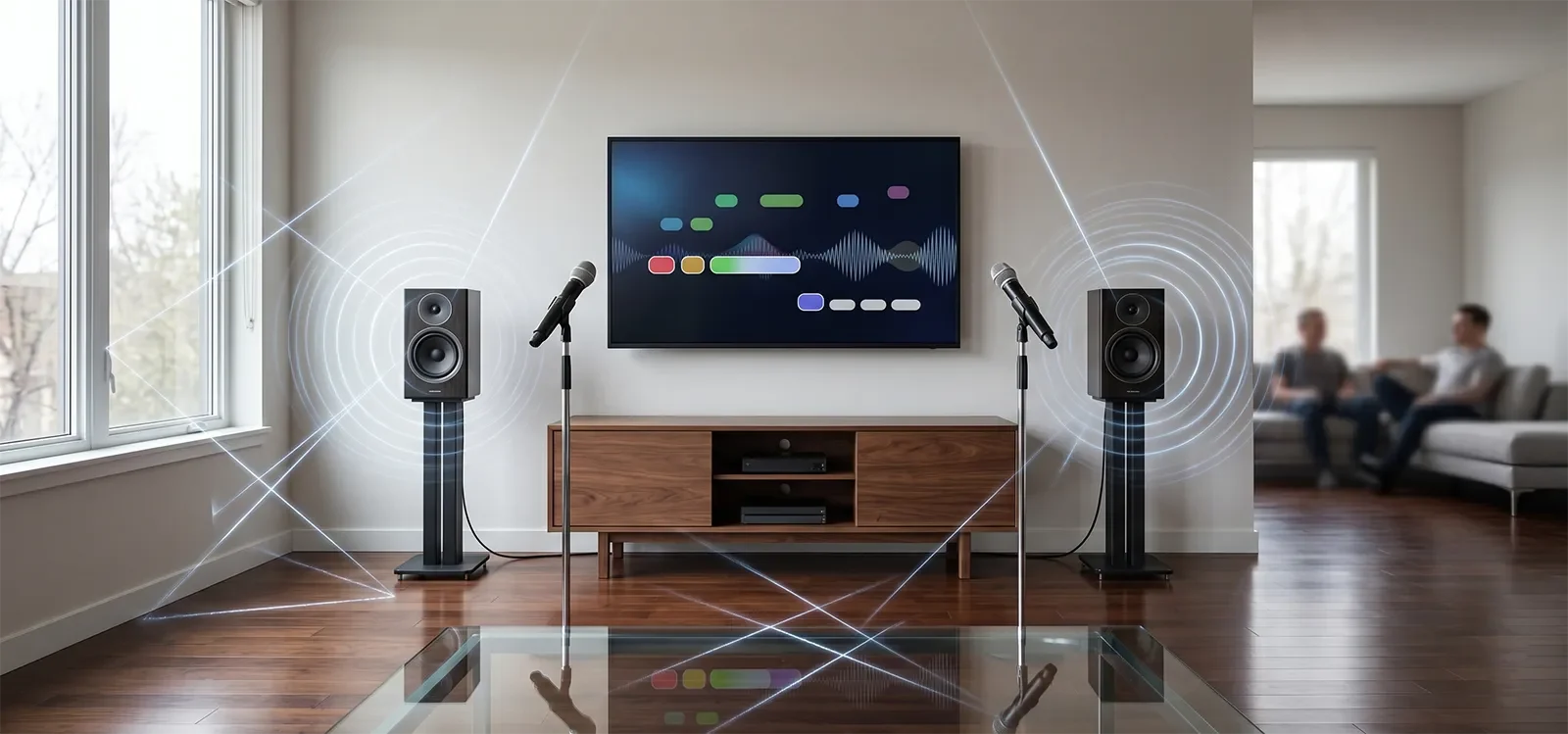
Room interaction is one of the biggest reasons a karaoke system sounds harsher at home than expected. Hard floors, bare walls, glass, low ceilings, and open reflective spaces can bounce vocal and speaker energy back into the listening area.
Those reflections do not affect every frequency equally. In many rooms, the parts of the voice that already feel sharp or forward become more noticeable. The result is not just “more sound.” It is a harder, brighter, more tiring version of the sound.
This is why a reasonable karaoke system can feel uncomfortable in the wrong room. The equipment may not be the only problem. The room may be reinforcing the very part of the sound that makes vocals feel sharp.
For that reason, When Room Treatment Helps More Than Better Equipment connects directly to this topic. Sometimes a calmer room changes the listening experience more than another gear upgrade would.
How vocal presence turns into sharpness
Vocal presence is useful in karaoke because it helps the singer stand out from the music. Without enough presence, the voice can feel buried, dull, or hard to follow. But too much presence creates the opposite problem: the voice feels exposed, sharp, and tiring.
When a karaoke system leans harsh, vocals may seem louder than they really are because the most attention-grabbing parts of the voice are pushed forward. Small level changes feel bigger than expected. Strong notes jump out. Consonants feel harder on the ears. The mix may still sound clear, but it no longer feels relaxed.
That is why How Vocal Presence Really Works in Karaoke Mixes is an important related read. Presence helps clarity, but when it goes too far, the system starts sounding more tiring than helpful.
What users hear at home
At home, harshness often shows up as listening fatigue. The system may impress at first, but after a few songs it starts feeling like it is pushing at you. Words may sound too hard. Vocal peaks may feel prickly. Turning the system up just a little more may make it less enjoyable instead of more exciting.
Harshness can also make singers uncomfortable. If the mic feels sharp, people may pull back, sing less naturally, or keep adjusting volume because the sound does not feel easy. Guests may not describe the problem technically, but they may say the system feels “too loud,” “too sharp,” or “hard on the ears.”
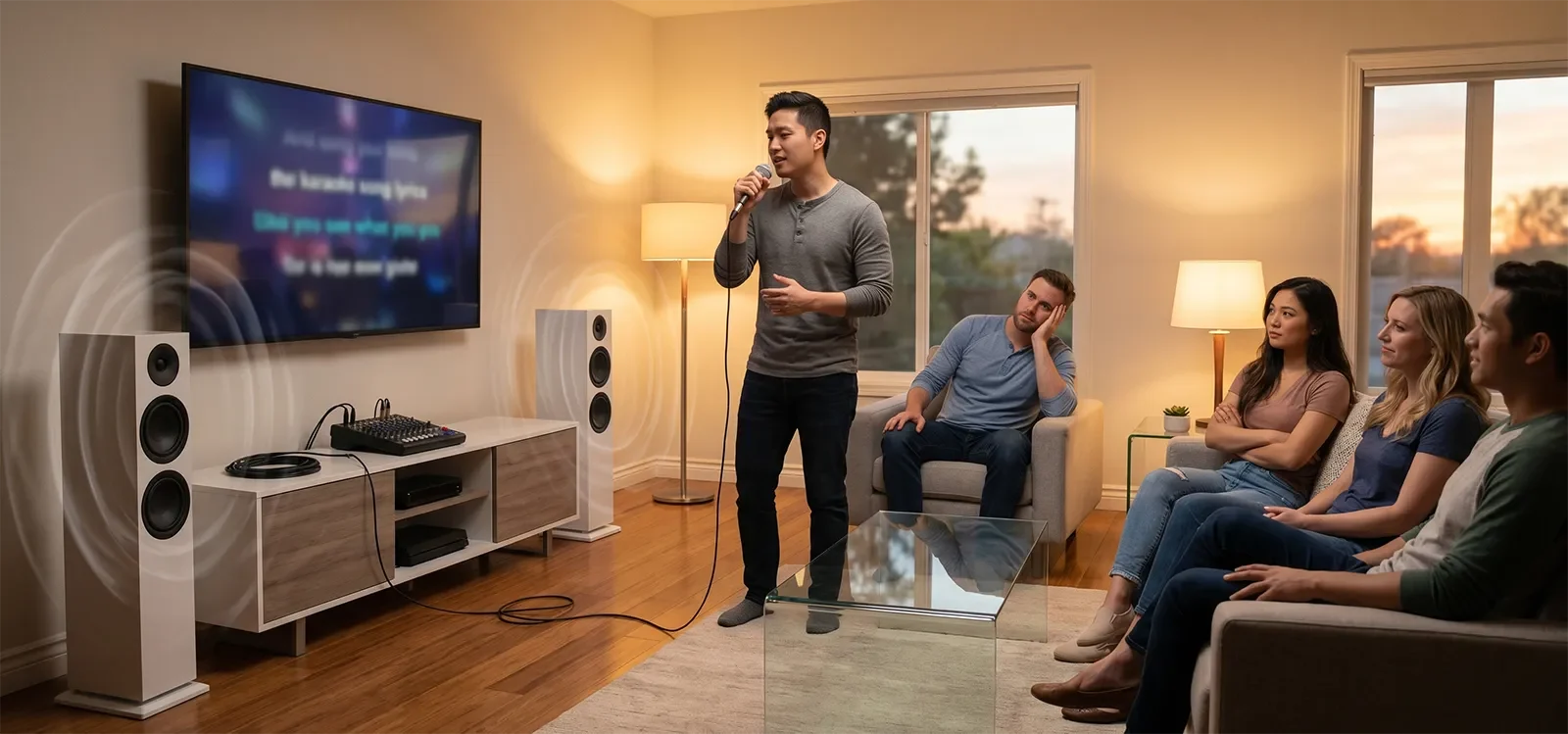
Vocal behavior matters too. Family karaoke often includes close mic use, louder singing, and moments when singers push harder for excitement. Those choices can add more upper-mid energy and make the system feel sharper even if the gear itself has not changed.
That is why harshness is often felt across the full experience, not blamed on one button. The room, system, singer, and settings are all part of the result.
Common misunderstandings
The biggest misunderstanding is assuming harshness always means the treble is simply too high. Treble can be part of it, but harshness is often more layered than that. It may come from upper-mid emphasis, room reflections, vocal technique, playback level, or EQ moves that pushed clarity too far.
The second misunderstanding is treating harshness like obvious distortion. A system can sound harsh long before it sounds broken. That is why users often describe it as tiring, sharp, or uncomfortable instead of distorted. The sound may still seem technically clean, but it no longer feels easy to listen to.
The third misunderstanding is assuming the answer is always better gear. Sometimes it is not. If the room is reflective and the system is already pushing the presence range hard, more equipment does not automatically make that behavior disappear. In some homes, the interaction is the bigger problem than the equipment list.
The better way to think about harshness is simple: it is usually the result of too much forward energy meeting a room and use pattern that make that energy harder to tolerate.
The practical listening rule
The practical rule is simple: listen for fatigue, not just detail.
A sound that feels exciting for thirty seconds may become tiring after three songs. If the system seems to get sharper faster than it gets more enjoyable, harshness is probably part of the picture.
For home karaoke, the goal is not maximum cut. The goal is usable clarity that still feels comfortable in a real room. If vocals feel too exposed, if strong notes sting more than they should, or if the room keeps making the mix feel harder as the level rises, the sound may be leaning harsh even if it still seems clear.
A good home karaoke sound should let vocals stay understandable without making the whole room feel tense. Clarity should help the singer, not wear everyone out.
Conclusion
Some karaoke systems sound harsh at home because multiple factors reinforce the same uncomfortable result. Room reflections, forward voicing, overcorrected EQ habits, louder playback, and strong vocal behavior can all add up until the sound feels sharper and more tiring than it should.
The practical takeaway is clear: do not treat harshness as only one knob problem. In home karaoke, it is often a perception issue created by how the system, the room, and the singer interact. Understanding that interaction makes later EQ, room, and tuning decisions much more useful.
Frequently Asked Questions
Does harsh karaoke sound always mean the treble is too high?
No. Treble can contribute, but harshness often comes from a mix of factors. Upper-mid emphasis, room reflections, vocal technique, playback level, and overall system balance can all make the sound feel sharper. That is why harshness is often broader than one simple treble problem.
Why does my karaoke system sound fine at first but tiring after a few songs?
That usually points to listening fatigue. The system may have enough clarity to seem exciting at first, but too much forward energy in a reflective room can become tiring over time. Harshness often reveals itself through comfort, not just obvious bad sound in the first minute.
Can the room really make karaoke sound harsher?
Yes. Hard floors, bare walls, glass, and other reflective surfaces can bounce upper-frequency energy back into the listening area. That can make vocals and music feel sharper and more aggressive than they would in a calmer room, even when the system itself has not changed.
Can harshness happen even if the system is not distorting?
Yes. Harshness does not always mean obvious distortion. A system can still sound clean but feel tiring if the upper-mid or lower-treble energy is too forward for the room and listening level.
Is this article telling me exactly how to fix harsh karaoke sound?
No. This guide explains why harshness happens as a system-interaction problem, not a step-by-step fix sequence. The useful takeaway is understanding the causes more clearly so later EQ, room, and tuning decisions are based on better listening, not random adjustments.
Want to keep going into the tuning side of this topic?
Continue with advanced EQ here.