
Room treatment can help more than better equipment when the room is the real reason your karaoke system sounds harsh, blurry, boomy, or tiring. In home karaoke, the room can reshape the sound so much that new gear may only make the same problem louder or more obvious.
Who this guide is for: Home karaoke users who are thinking about upgrading speakers, microphones, amplifiers, or mixers, but may actually be hearing room problems more than equipment limits.
How this guide was prepared: This guide was written from a real home-use perspective, focusing on reflective walls, tile floors, glass, open layouts, bass buildup, vocal clarity, and listening fatigue in family karaoke spaces.
Many people assume better karaoke sound always comes from better equipment. Sometimes that is true. Weak speakers, poor microphones, underpowered amplification, or bad tuning can all hold a system back.
But in many homes, the room becomes the bigger problem. A reflective living room can make decent equipment sound sharper, muddier, louder, and harder to control than it really is. When that happens, upgrading gear alone may not fix the issue because the room keeps reshaping the sound after it leaves the speakers.
This article does not replace a full acoustic design guide. It explains one specific technical idea: when the room is limiting karaoke performance so much that simple room-softening changes can help more than buying better equipment first.
Table of Contents
Quick Answer
Room treatment can help more than better equipment when the room is causing the main sound problem. In home karaoke, reflective surfaces, tile floors, bare walls, glass, and open layouts can blur vocals, exaggerate harshness, and make bass feel heavier than it should. If the room is smearing the sound, better gear may still sound limited because the space keeps adding reflections and buildup. In that situation, calming the room can improve vocal clarity, comfort, and singability more than upgrading the equipment first.
What Room Treatment Means in Home Karaoke
Room treatment means reducing the way a room reflects, exaggerates, or blurs sound. In a home karaoke setting, this does not always mean building a studio or covering every wall with acoustic panels. It can start with simpler room-softening changes that make the space less reflective and more comfortable to sing in.
The room is part of the karaoke system whether users think about it or not. Sound leaves the speakers, hits walls, floors, windows, ceilings, furniture, and open spaces, then returns back into the listening area. If too much of that reflected sound comes back strongly, the room starts adding its own character on top of the system.
That room character can make vocals less clear, music less controlled, and bass less balanced. The equipment may be doing its job, but the room is changing the result before the listener hears it.
When the Room Becomes the Bottleneck
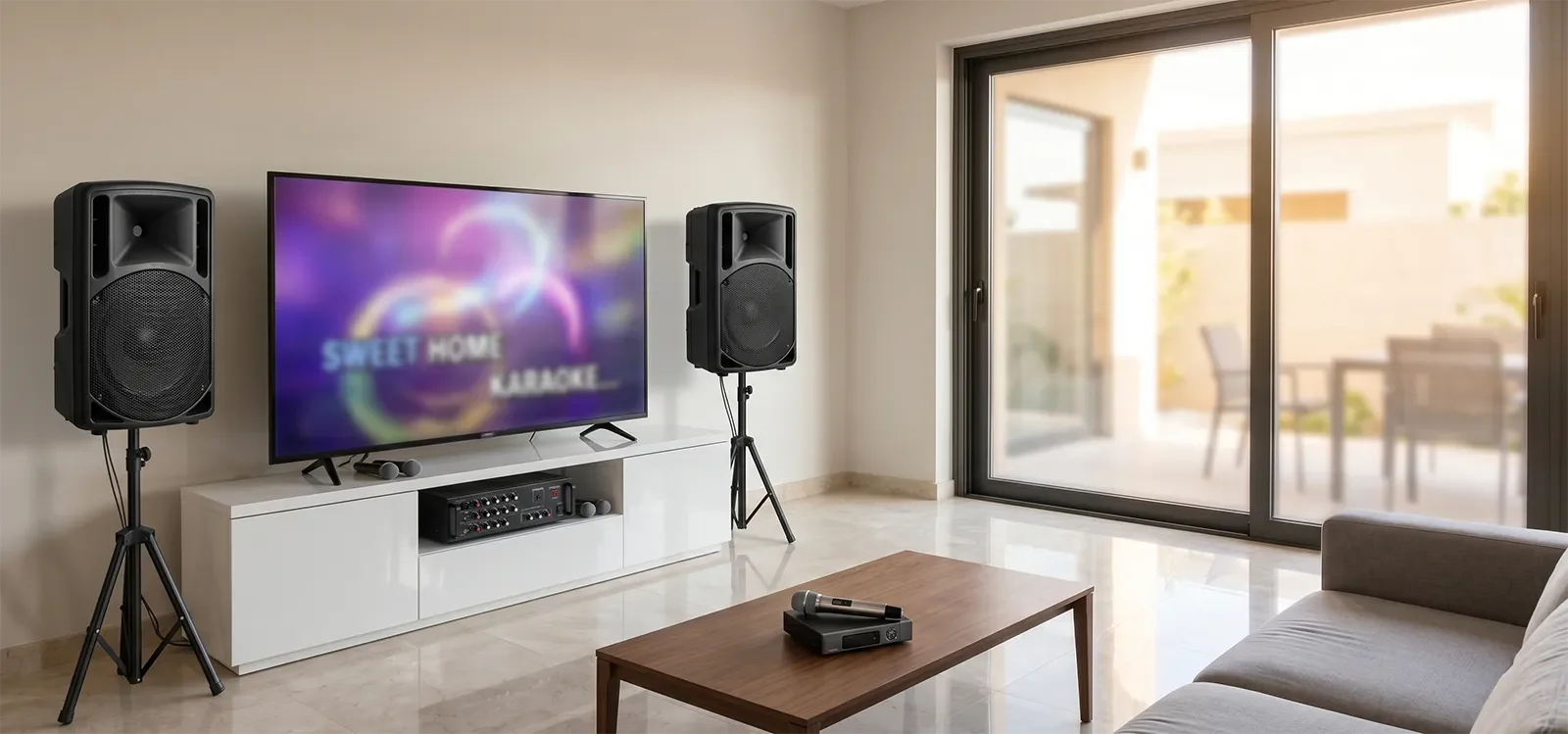
A room becomes the bottleneck when it prevents the system from sounding as clear, controlled, or comfortable as it should. This often happens in rooms with many hard surfaces and not enough soft material to absorb or break up reflections.
Common room conditions include:
- Tile, wood, or other hard flooring with little soft covering.
- Bare walls with few curtains, shelves, or soft furnishings.
- Large windows or glass doors.
- Open living rooms connected to kitchens or hallways.
- Minimal furniture, rugs, or fabric surfaces.
- Corners or walls that make bass feel heavy and uneven.
In these rooms, the system may sound loud and energetic at first, but not necessarily clear. The vocal can become harder to understand. The music may feel crowded. The treble may feel sharp. The bass may feel bigger but not tighter.
That is the point where more equipment is not automatically the best answer. If the room is already turning clean sound into reflected sound, the next useful improvement may be controlling the room instead of replacing the gear.
Why Better Gear May Not Fix a Room Problem
Better equipment can improve a karaoke system, but it cannot remove the room from the sound. A clearer speaker still plays into the same room. A stronger amplifier still energizes the same surfaces. A better microphone still has to work in the same reflective space.
If the room is causing harshness, better gear may reveal that harshness more clearly. If the room is causing bass buildup, stronger speakers may make the bass problem feel even heavier. If the room is blurring vocals, a more detailed system may still struggle because the reflected sound keeps overlapping the direct voice.
This is why some upgrades feel disappointing. The user buys better equipment, but the sound still feels stressful, sharp, muddy, or hard to sing with. The new gear may not be bad. It may simply be fighting the same room problem the old gear was fighting.
For a deeper look at harshness specifically, read why some karaoke systems sound harsh at home. Harsh sound is often a mix of system behavior, room reflections, volume, and tuning — not just one bad component.
What Users Actually Hear at Home
Most home users do not describe room problems with technical language. They describe what they feel while singing or listening.
Common signs include:
- The sound is loud but words are still hard to understand.
- Vocals feel sharp, edgy, or tiring after a few songs.
- The bass sounds big but not clean.
- The room feels crowded with sound even at moderate volume.
- Small EQ changes do not solve the problem cleanly.
- People keep turning the volume up, then down, because the sound never feels comfortable.
That last point is important. A room-limited karaoke system often feels unstable. It may sound exciting for one song, then tiring after several songs. The issue is not only volume. It is how the room keeps reflecting and reinforcing parts of the sound.
In family karaoke, comfort matters. A system should make singing feel easier, not more stressful. If the room makes the vocal harder to follow or the music harder to sit inside, the karaoke experience becomes less enjoyable even when the equipment is powerful.
Room Treatment vs Gear Upgrade
The question is not whether room treatment is always better than equipment. It is not. If the speakers are poor, the microphone is weak, the amplifier is mismatched, or the system is badly configured, equipment still matters.
The better question is: what is the real bottleneck?
If the system is underpowered, distorted, unreliable, or missing important features, a gear upgrade may be the right move. But if the system already sounds capable and the main issues are harshness, reflection, vocal blur, or bass overload, the room may deserve attention first.
A room-first improvement can help when:
- The system already has enough volume but still lacks clarity.
- Vocals are hard to understand in the room.
- The sound becomes tiring quickly.
- Bass feels heavy but not musical.
- The same system sounds better in another room.
- Turning controls does not solve the problem consistently.
This is also why more bass is not always better for karaoke. Too much low-frequency buildup can make singing harder, not easier. For that related issue, read why more bass can make karaoke harder to sing.
Common Misunderstandings
“Room treatment is only for recording studios.”
No. Studio treatment can be very detailed, but home karaoke users still feel the effects of room reflections. If the room makes vocals harsh, blurry, or tiring, the issue matters even if the space is only a living room.
“I need expensive acoustic panels right away.”
Not always. The first step is understanding whether the room is the problem. In many homes, even basic softening from rugs, curtains, furniture placement, or reducing bare reflective surfaces can make the room less aggressive.
“Better speakers will automatically overcome the room.”
Not always. Better speakers can improve the direct sound, but they still interact with the same surfaces. If the room is the main cause of harshness or blur, better speakers may not solve the core issue by themselves.
“If the system is loud, it must be working well.”
Loudness is not the same as clarity. A room can make a system sound big but still hard to understand. Karaoke needs intelligible vocals, controlled music, and comfortable listening — not just volume.
A Practical Listening Rule
Use this rule: if the system already has enough power but still sounds harsh, blurry, boomy, or tiring, check the room before assuming the equipment is the main problem.
Listen to how the space behaves. Do vocals stay clear, or do they smear into the room? Does bass sound controlled, or does it build up and cover the singing? Does the sound feel comfortable after several songs, or does everyone start lowering the volume because the room feels too intense?
The goal is not to make a home karaoke room perfect. The goal is to stop the room from undoing too much of what the equipment is already doing right. When the room becomes calmer, vocals can become easier to understand, music can feel less crowded, and the whole system can become easier to enjoy.
Conclusion
Room treatment can help more than better equipment when the room is the main reason karaoke sounds harsh, blurry, boomy, or tiring. In that situation, the system may not need more power or more expensive gear first. It may need a room that lets the existing equipment sound clearer and more controlled.
The practical takeaway is simple: before upgrading equipment, ask whether the room is already limiting the result. Better gear helps most when the room allows it to help. If the space keeps reflecting, smearing, or overloading the sound, a room-first improvement can be the smarter technical move.
Frequently Asked Questions
Does room treatment really matter more than better speakers in some homes?
Yes. If the room is highly reflective or has strong bass buildup, it can limit what better speakers are able to do. In that case, calming the room may improve clarity, comfort, and vocal intelligibility more than replacing the speakers first.
How can I tell if my room is the problem instead of my karaoke gear?
A common clue is when the system has enough volume but still sounds sharp, blurry, boomy, or tiring. If vocals are hard to understand, bass feels oversized, and small tuning changes do not solve the issue, the room may be a major part of the problem.
Is this article saying equipment upgrades do not matter?
No. Equipment still matters. Speakers, microphones, amplifiers, mixers, and tuning all affect karaoke sound. The point is that better equipment works best when the room is not already undoing its benefits.
Do I need a full acoustic treatment plan for home karaoke?
Not always. Some rooms benefit from simple softening before they need serious acoustic planning. Rugs, curtains, furniture, and reducing bare reflective surfaces can sometimes make the room more comfortable for karaoke.
Can room treatment help vocals sound clearer?
Yes. When a room reflects too much sound, vocals can become harder to understand. Reducing excessive reflections can make words clearer, reduce listening fatigue, and help the singer feel more connected to the system.
Want to understand the broader way a room shapes karaoke sound?