
More bass can make karaoke harder to sing when low-frequency energy starts crowding the room, masking vocal detail, and making the mix feel heavier than the singer can comfortably work with. Good karaoke bass should support the song without stealing space from the voice.
Who this guide is for: Home karaoke users who assume more bass always improves the experience but notice vocals become less clear, less comfortable, or harder to follow when the system sounds bigger.
How this guide was prepared: This guide was written from a home-use perspective, focusing on how bass energy affects vocal masking, room behavior, rhythm feel, and singing comfort in real karaoke spaces.
More bass often sounds impressive at first. The system feels bigger, fuller, and more exciting, especially on songs with strong low-end energy. But in home karaoke, that same bass can start working against the singer. The room feels heavier, the vocal sits less comfortably in the mix, and timing becomes harder to trust even though the system still feels powerful.
That is why bass in karaoke is not just about impact. It is also about singability: how much low-frequency energy the room and the singer can handle before clarity, timing, and comfort start slipping. This guide explains that trade-off in plain English. It is not the separate yes-or-no guide about whether you should add a subwoofer. For broader category context, browse our Karaoke Technical Guides.

Table of Contents
Quick Answer
More bass can make karaoke harder to sing because low-frequency energy does more than add weight. In home rooms, bass can build up, spread too broadly, and make vocals harder to follow. When bass becomes too dominant, it can mask parts of the mix the singer depends on, make rhythm feel less precise, and create a heavier, more tiring room sound.
Some bass absolutely helps karaoke feel fuller and more enjoyable. The problem starts when bass competes with vocal clarity and comfort. The key idea is simple: better karaoke bass is not always more bass. It is bass that supports the song without overwhelming the singer or the room.
What this bass trade-off actually means
In plain English, the trade-off is between impact and singability. Bass can make music feel grounded and satisfying, which is one reason people often want more of it. But karaoke is not only music playback. It also has to leave enough space for a live voice to stay understandable, comfortable, and easy to place inside the song.
That matters because bass does not stay politely in one small part of the listening experience. In home rooms, low frequencies tend to spread, linger, and build up more easily than many users expect. Once that happens, the room can start feeling slower, thicker, or less controlled even if the system still seems exciting.
So this topic is not about “bass is bad.” It is about understanding that more low-end energy brings a cost if it begins to crowd the parts of the sound that singers rely on for timing, monitoring, and vocal comfort. The question is not whether bass sounds impressive. It is whether the added impact still leaves the karaoke experience easy to sing through.
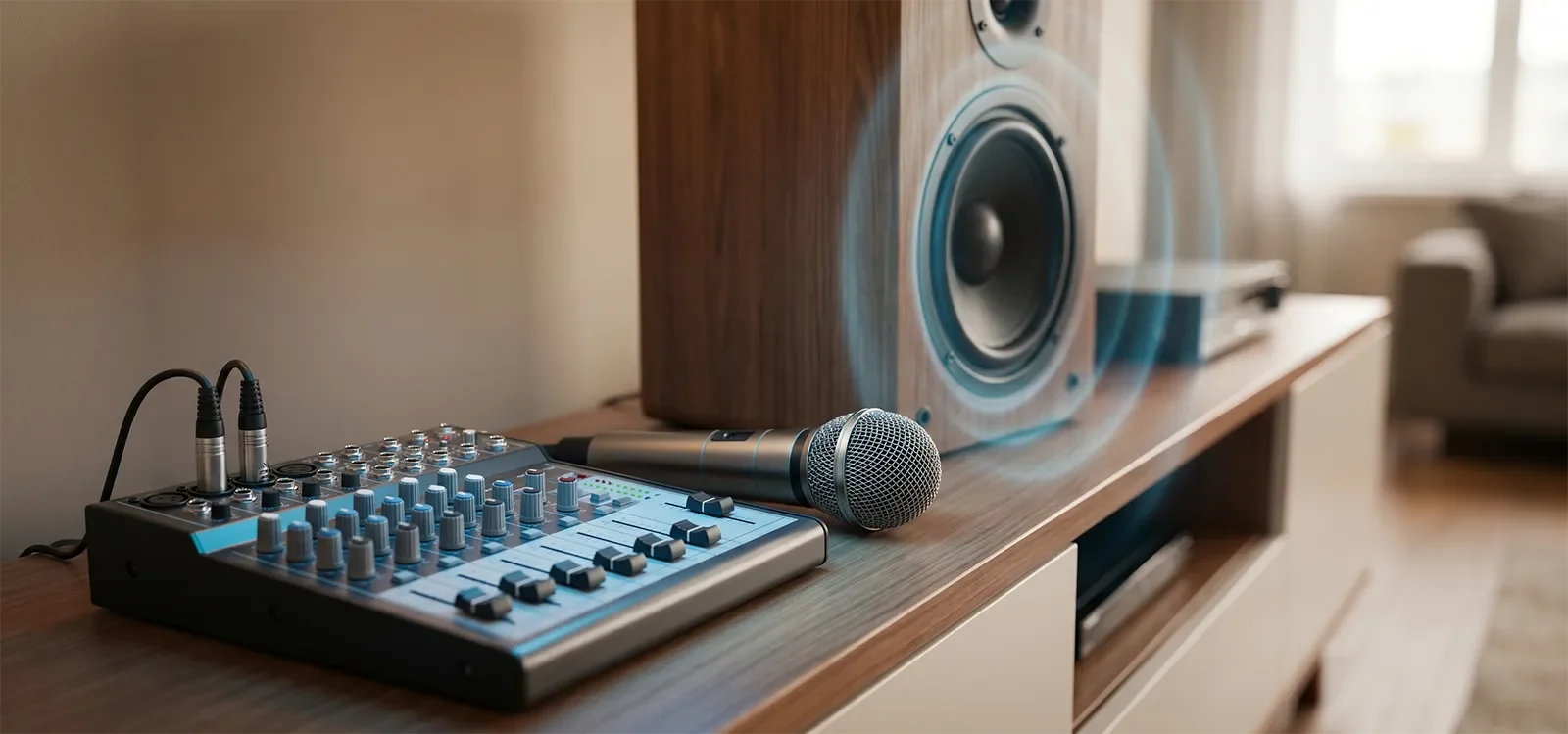
How too much bass changes singability
When bass becomes too dominant, the whole system can feel less balanced from the singer’s point of view. Vocals may seem less connected to the music, not because the mic suddenly got worse, but because the low end is taking up more space in the room and in the mix.
This is where bass becomes a singability issue, not just a taste issue. If low frequencies are not being distributed well, the room may feel heavier, the mix may feel slower, and the vocal range may lose some breathing room. That is why What a Crossover Does in a Karaoke System is an important foundation article here. Better crossover behavior can help the low end feel more organized instead of simply more dominant.
Room interaction matters just as much. Even a system with strong bass on paper may feel manageable in one room and overwhelming in another. Once the room starts reinforcing the lows too aggressively, the singer is not only hearing more bass. The singer is working against more bass.
This is what makes karaoke different from passive listening. A listener might enjoy the extra weight for a moment, but a singer has to stay comfortable inside it. That is why singability can drop before some users even realize what changed.
What users hear at home
At home, too much bass often sounds impressive for a moment and then becomes harder to live with. The room may feel fuller, but also blurrier. Vocals may still be audible, yet feel less clear and less comfortable to sing with. Some users describe it as the voice being buried, while others say the system feels too heavy or too slow.
This is especially common in small and medium rooms where low frequencies have less space to settle naturally. Bass buildup can make the whole presentation feel thick, and that thickness affects more than tone. It can also affect how rhythm is felt. If the low end dominates too much, timing cues may feel less clean, which makes singing feel less confident.
That is why room behavior belongs in this conversation. In many homes, the room decides how quickly helpful bass turns into tiring bass. For that reason, When Room Treatment Helps More Than Better Equipment is a useful next read when the room itself seems to be making the system harder to control.
The practical symptom is simple: the system may sound bigger, but the singer feels less free inside it. Once that happens, the trade-off has shifted away from singability.

What people misunderstand about bass impact
The biggest misunderstanding is thinking more bass always means more fun. It can feel that way at first, but karaoke is different from regular music listening. A singer has to hear pitch, rhythm, and vocal placement well enough to perform comfortably. If the room gets too loaded with low-end energy, that comfort can drop even while the system still feels exciting.
Another misunderstanding is assuming vocals only get buried when the music is too loud overall. In reality, bass can mask the mix in a broader way. Even if the vocal level has not changed much, the room can feel so full of low-end energy that the voice becomes harder to track naturally.
People also frame this topic too quickly as a subwoofer question. That misses the point. A system can have satisfying bass without becoming hard to sing on, and a system without a subwoofer can still feel too heavy if the low end is pushed poorly. The real issue is the trade-off between impact and singability, not the gear category by itself.
This is why this article stays narrower than a buying or system-choice guide. The key lesson is how bass affects the singer’s experience once it becomes too dominant, not whether one specific product should or should not be used in every home.
How to test whether bass is helping or hurting
A simple test is to listen to the voice first, not the bass first. Play a familiar karaoke track at normal home volume and ask whether the singer feels easier or harder to follow when the bass is stronger. If the music feels bigger but the vocal feels less open, the bass is probably costing too much.
Next, listen from more than one seat. If the bass feels acceptable in one spot but boomy or thick in another, the room is shaping the problem. That does not always mean the system is bad. It means low-frequency energy is not behaving evenly in the space.
Finally, test over several songs instead of one dramatic track. One bass-heavy song can make a system feel exciting. A full karaoke session reveals whether the low end stays supportive or becomes tiring. Good karaoke bass should still feel controlled after the first impression wears off.
The practical listening rule
The practical rule is simple: judge bass by what it does to singing, not only by what it does to music. If the low end makes the room feel fuller but the vocal becomes harder to place, harder to hear clearly, or harder to stay comfortable with, then the trade-off is moving in the wrong direction.
For home karaoke, the goal is not maximum bass weight. It is bass that supports groove and fullness without turning the room into a blanket of low-frequency energy. The best low end usually feels present, controlled, and helpful rather than oversized.
When bass helps karaoke, it gives the music body without stealing space from the singer. When bass hurts karaoke, it makes the whole system harder to read, harder to follow, and harder to sing with confidently.
Conclusion
More bass can make karaoke harder to sing because low-frequency energy affects more than tone. It changes how the room behaves, how clearly the vocal sits in the mix, and how comfortable the whole system feels during live singing.
What sounds powerful at first can become heavy, masked, or tiring once the singer has to work inside it. That is why karaoke bass should be judged by comfort and clarity, not only by impact.
The practical takeaway is clear. Do not judge karaoke bass only by how big it sounds. Judge it by whether it helps the song feel fuller while still leaving enough room for vocals, timing, and comfort. In home karaoke, the best bass supports the singer instead of competing with them.
Frequently Asked Questions
Does more bass always make karaoke vocals less clear?
No. Some added bass can make the music feel fuller and more enjoyable. The problem begins when low-frequency energy builds up enough to mask the mix, overload the room, or make the vocal harder to follow. The issue is not bass itself. It is bass that takes too much space away from singing comfort.
Why can bass make singing feel harder even if the bass itself. It is bass that takes too much space away from singing comfort.
Why can bass make singing feel harder even if the vocal is still loud enough?
Because singing depends on more than loudness. The singer also needs clean timing, a clear sense of pitch, and enough space in the mix to judge vocal placement comfortably. Too much bass can make the room feel heavier and less defined, which makes singing feel less natural even when the voice is still audible.
Is this only a problem in rooms with subwoofers?
No. A subwoofer can make the trade-off easier to notice, but boosted low end from full-range speakers can create similar issues. Any home karaoke system can become harder to sing through if bass spreads too much energy into the room and masks the parts of the sound that matter most for vocal comfort.
Is this article telling me whether I should use a subwoofer?
No. This guide explains the listening trade-off between stronger bass and easier singing. The separate subwoofer decision depends on your room, system balance, vocal clarity, and whether the missing piece is truly low-end foundation.
How do I know if bass is too much for karaoke?
Bass is probably too much if the room feels heavy, the vocal feels harder to follow, rhythm feels less clean, or singing becomes tiring even though the system sounds powerful. Good bass should make the music fuller without making the singer feel trapped inside the mix.
Want to keep going into the broader question of whether your setup really benefits from a subwoofer?
Continue with the subwoofer decision guide here.