
A crossover in a karaoke system helps divide frequency duties so bass, vocals, and speaker workload stay more organized. In home karaoke, that matters because poorly controlled low-end energy can make the system sound boomy, muddy, or tiring even when the volume is not very high.
Written by Toan Ho — Tittac editorial team
Who this guide is for: Home karaoke users who hear the word “crossover” in speaker, subwoofer, or DSP discussions and want to understand what it actually changes in everyday singing.
How this guide was prepared: This guide was written from a home-use perspective, focusing on how crossover behavior affects bass control, vocal clarity, speaker workload, and room sound in real karaoke spaces.
“Crossover” can sound like a technical word that belongs only to installers or audio engineers. But the listening problem is easy to recognize. Some karaoke systems feel tight, clear, and comfortable to sing with. Others feel thick, boomy, or strangely tiring even when the volume is not extreme. That difference is often not only about speaker quality. It is also about how the system divides the work.
In home karaoke, crossover behavior matters because it affects how deep bass, vocal range, and speaker output share space. When the low end is handled poorly, it can crowd the mix and make vocals harder to follow. When it is handled more cleanly, the system usually feels more balanced and easier to sing through. For the broader category context, see our Karaoke Technical Guides.
Table of Contents
Quick Answer
A crossover divides frequency duties inside a karaoke system. In simple terms, it helps decide which part of the system handles deeper bass and which part handles more of the mids and highs, including the range where vocals are easier to hear clearly. In home karaoke, that matters because better frequency distribution can make bass feel tighter, reduce strain on the main speakers, and leave more room for vocals to stay clean.
A crossover is not just an advanced technical feature. It changes how organized or crowded the whole system sounds, especially in living rooms where bass buildup and vocal masking are already common.
What a crossover actually means
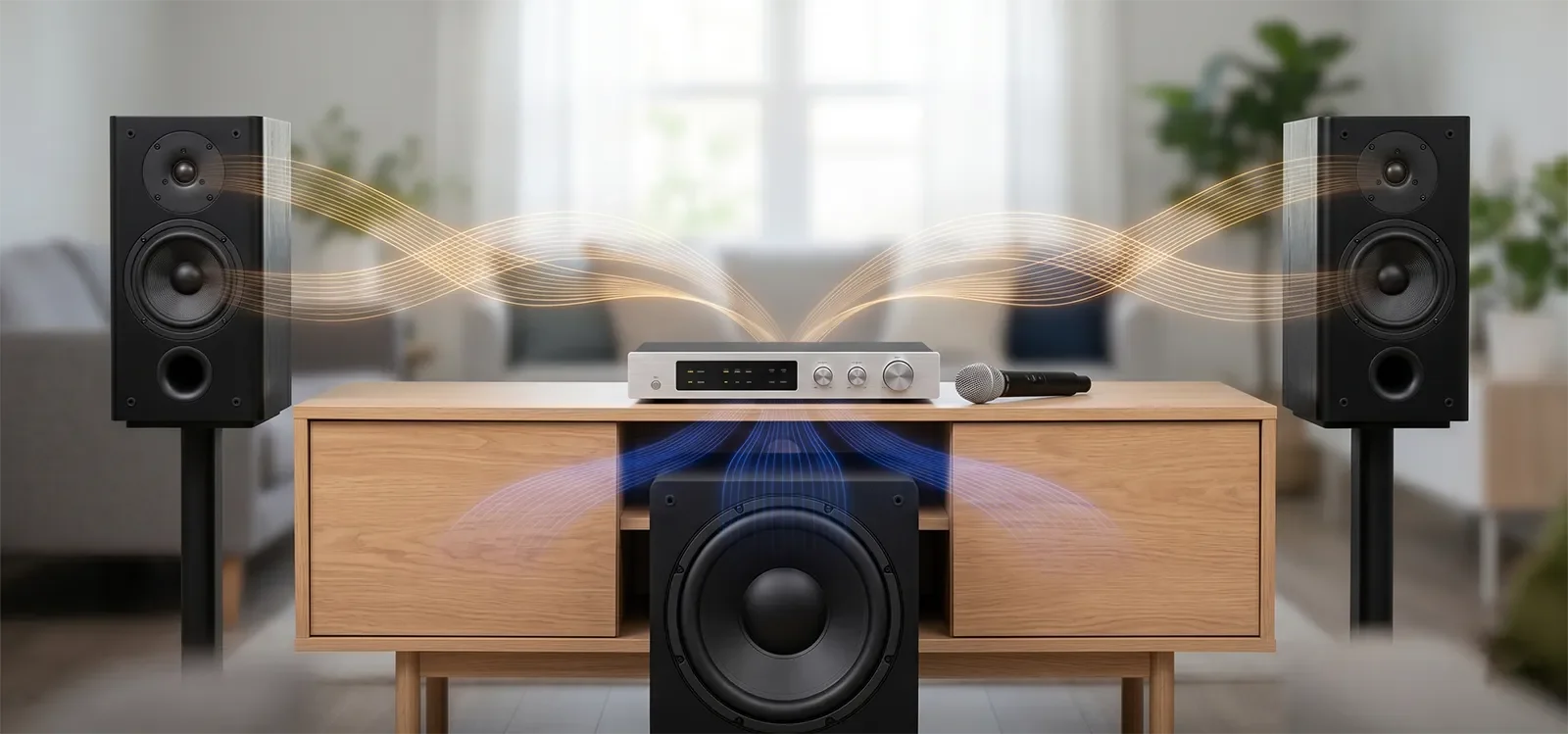
In plain English, a crossover is a traffic divider for sound. It helps split the frequency range so different parts of the system are not all trying to handle the same job at the same time. In a system with main speakers and a subwoofer, the crossover usually sends more of the deep bass to the subwoofer while allowing the main speakers to focus more on vocals, lyrics, and musical detail.
The important idea is not simply “more bass” or “less bass.” It is distribution. When low frequencies are handled more intentionally, the rest of the system often has more breathing room. When they are not, too much energy can pile up in the wrong place and make the sound feel thicker than it should.
That is why crossover behavior matters even when the controls are basic or mostly hidden inside the system. It is about how the system organizes the frequency spectrum, not just whether the user has a dedicated subwoofer menu.
What a crossover changes in system behavior
A crossover changes how hard each part of the system has to work. If the main speakers are being asked to reproduce deep bass, vocal range, and musical detail all at once, the whole presentation can start feeling stressed. The sound may become heavier, less controlled, and harder to balance for singing.
When frequency duties are divided more sensibly, the system often behaves more calmly. Bass support can feel grounded without spreading too far upward, and the main speakers may stay cleaner through the range that matters most for karaoke vocals. That is why Why More Bass Can Make Karaoke Harder to Sing is a useful related guide. Too much low-end energy in the wrong part of the system can make the whole mix harder to sing through.
Crossover behavior also affects overlap. If the main speakers continue producing too much low-frequency energy while the subwoofer is also filling the same range heavily, the result can feel bloated rather than powerful. So the crossover is not just splitting sound. It is shaping how cleanly the system works as a whole.
What users hear at home
At home, better crossover behavior usually sounds like better control. Bass may feel tighter instead of simply bigger. Vocals may feel easier to follow because they are not competing as much with heavy low-end energy. The whole system can sound less muddy, less crowded, and less tiring over time.
This is especially important in living rooms, family rooms, and smaller karaoke spaces, where low frequencies interact strongly with the room. A system may technically produce a lot of bass, but the room can exaggerate that energy and make the mix feel slow or oversized. That is why When Room Treatment Helps More Than Better Equipment connects directly to this topic. The room changes how crossover choices are actually experienced.
Users often describe the difference in simple language. The system feels tighter. Singing feels easier. Words come through more clearly. Those are real crossover-related outcomes, even when the listener never uses the word “crossover.”

What people misunderstand about crossovers
The biggest misunderstanding is thinking a crossover exists only to make the system hit harder. Bass output is part of the picture, but the more important role is frequency organization. A crossover helps keep deep bass from taking too much space away from vocals and musical detail.
Another misunderstanding is assuming there is one magic crossover point that works for every karaoke system. There is not. Different speakers, different rooms, different subwoofers, and different listening habits all change how the system responds. That is why this article focuses on the concept instead of giving one universal number.
People also tend to treat crossovers like something only advanced DSP users should care about. In reality, the listening effect matters even when the control is simple. If the system is distributing low frequencies poorly, the result still shows up in the sound.
The practical listening rule
The practical rule is simple: think of a crossover as a clarity tool, not only a bass tool. Ask whether the low end is supporting the system or spreading so much energy that vocals become less distinct and the whole mix feels heavier than it should.
For home karaoke, the goal is not maximum bass weight. The goal is a more organized sound. When deeper frequencies are handled in a more sensible way, the main speakers usually have more room to stay clear, and the system becomes easier to sing with at normal home volume.
That is the useful mindset. Better crossover behavior often means less masking, less strain, and a more stable balance between bass energy and vocal clarity.
Conclusion
A crossover in a karaoke system helps divide frequency duties so the low end does not interfere more than it should with vocals, detail, and overall speaker behavior. That affects more than technical design. It changes how controlled the bass feels, how clearly the vocal range comes through, and how hard the speakers have to work in a real room.
The practical takeaway is clear. Do not think of a crossover as just a subwoofer feature. Think of it as part of how the system organizes sound. In home karaoke, that organization often leads to tighter bass, cleaner vocals, and a mix that feels easier to sing with.
Frequently Asked Questions
Does a crossover only matter if I have a subwoofer?
No. A subwoofer makes crossover behavior easier to notice, but the concept matters more broadly. It is still about how frequency energy is distributed and how much overlap the system is creating. That affects bass control, clarity, and how hard the main speakers have to work.
Can a crossover improve vocal clarity?
Yes, indirectly. A crossover does not boost vocals by itself, but it can reduce the amount of low-frequency energy crowding the main speakers. When that happens, the vocal range often feels easier to hear, and the overall mix may sound cleaner and less muddy.
Is more bass always better if the crossover is working well?
No. Even with better crossover behavior, too much bass can still make karaoke harder to sing through. The goal is not maximum low-end weight. The goal is bass that feels controlled and supportive without masking the range singers depend on for timing, pitch, and lyric clarity.
Is this article telling me exactly what crossover setting to use?
No. This guide explains the concept in plain English, not one fixed setting for every system. Different speakers, rooms, and karaoke setups behave differently. The useful takeaway is understanding why crossover behavior matters so later decisions make more sense.
Need help understanding the right karaoke setup for your home? Call/Text English: 800-928-4331 | Call/Text Vietnamese: 800-640-5888.
Want to continue with the bigger question of whether your home karaoke setup benefits from a subwoofer at all?
Continue with the subwoofer guide here.