
Most home karaoke systems do not automatically need a subwoofer. A subwoofer can make music feel fuller, but it should only be added when the system already has clear vocals, stable balance, and a real need for more low-end foundation.
Who this guide is for: Home karaoke users deciding whether stronger bass will make their system more enjoyable or simply harder to control.
How this guide was prepared: This guide was written around real home karaoke behavior: vocal clarity, bass buildup, room size, singing comfort, and how added low-end changes the way a system feels over a full session.
A subwoofer can make karaoke feel bigger, but bigger is not always better for singing. At home, stronger bass can add weight and excitement to the backing track, yet it can also crowd the room, cover parts of the vocal, and make the whole system feel heavier than it needs to be.
That is why the real question is not whether more bass sounds impressive. It is whether more bass actually helps people sing in your space. In home karaoke, a subwoofer should be judged by behavior, not by upgrade hype. It changes how the music sits under the voice, how the room reacts, and how easy the system feels after several songs. For broader plain-English context around how technical choices affect real home singing, see our Karaoke Technical Guides.
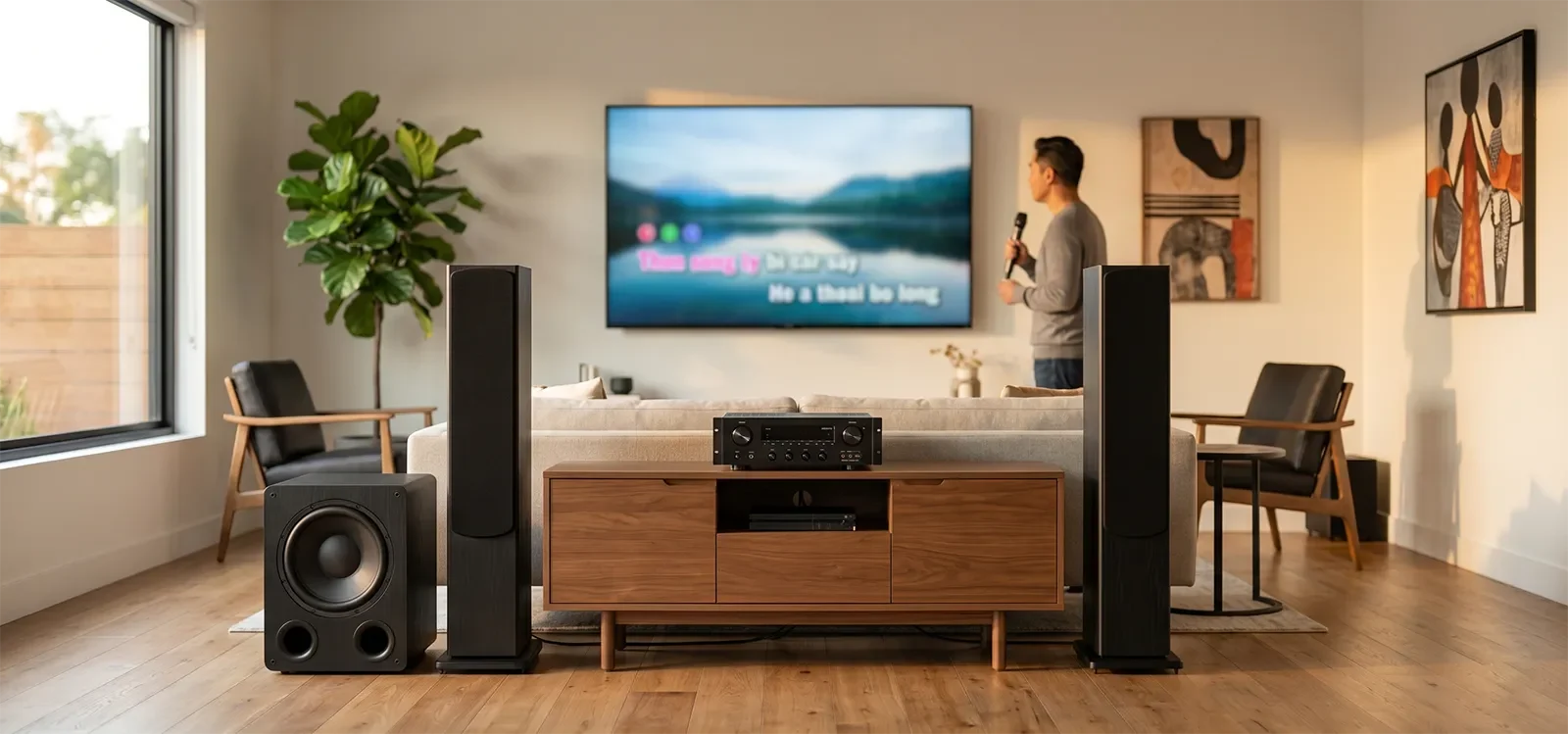
Table of Contents
Quick Answer
Most home karaoke setups do not automatically need a subwoofer. A subwoofer can help when the backing track feels too light, the room is larger or more open, and the system already has clear vocals and controlled balance. But it can also make karaoke harder to sing if the room builds up bass easily or if added low-end starts covering vocal detail.
For most homes, the best rule is this: add a subwoofer only when the system already sings comfortably without one, and the missing piece is clearly musical weight. If the room already sounds heavy, muddy, boomy, or hard to control, a subwoofer is more likely to complicate the system than improve it.
What a subwoofer actually changes
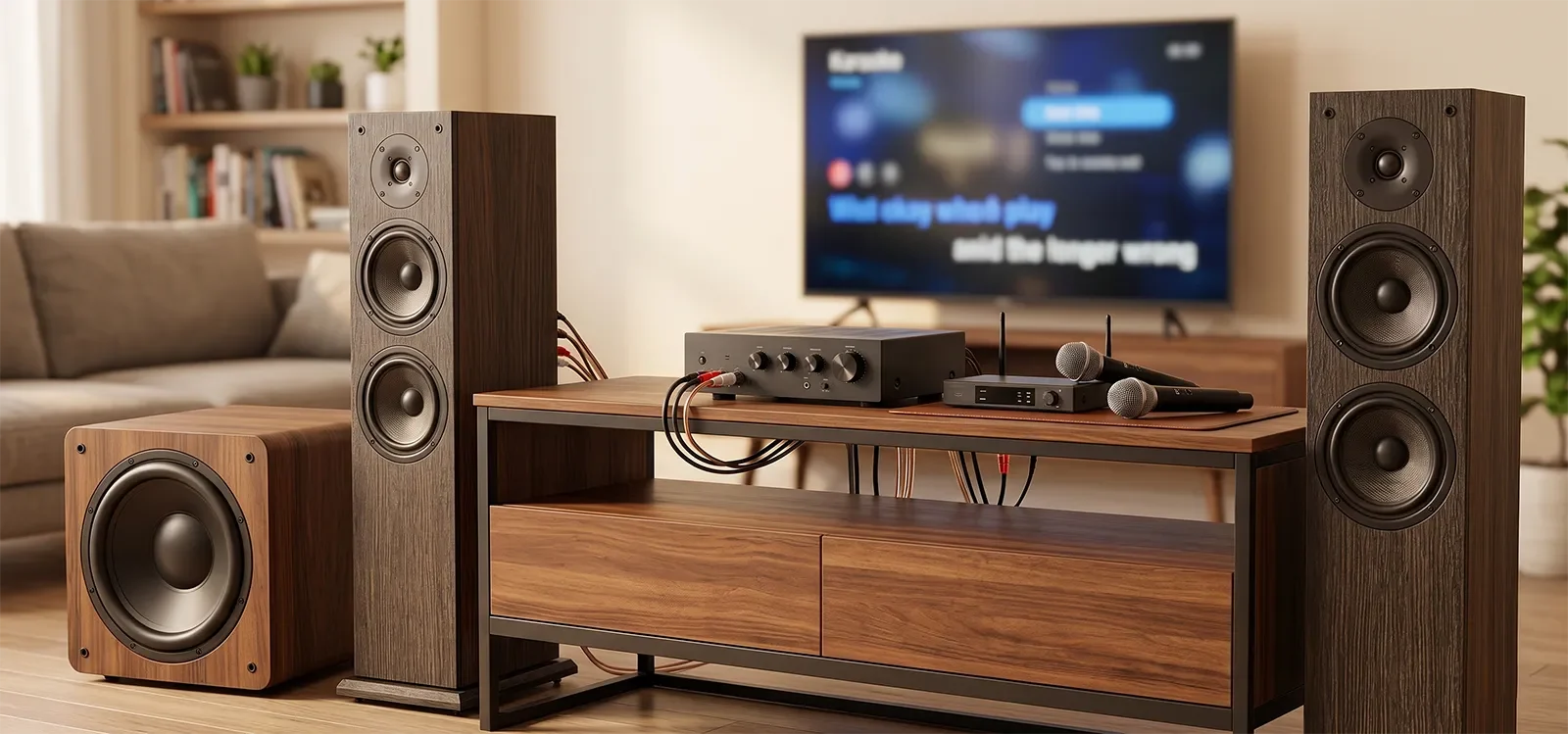
Without a subwoofer, the system depends more fully on the main speakers for musical body and low-end support. In many homes, that is enough. The sound may feel simpler, lighter, and easier to manage, especially when karaoke is mostly about vocals, familiar songs, and comfortable family-room listening.
With a subwoofer, the biggest change is not vocal quality itself. The main change is low-end foundation under the music. Songs can feel fuller, warmer, and more physically grounded. The room may also feel larger and more energetic because the backing track has more weight underneath it.
That can be useful, but it comes with a condition: low bass changes the room as much as it changes the music. Bass is not just extra depth. It is extra energy that has to live somewhere. In the right room, that energy supports the track. In the wrong room, it makes the system feel thick, crowded, and harder to sing through.
The real trade-offs in home karaoke
The main trade-off is simple. A subwoofer can make the backing track feel more complete, but that same low-end weight can make the vocal feel less open if the room starts building up too much bass.
At home, singing comfort depends on balance. Once the low end becomes too dominant, the ear has to work harder to follow the singer through the mix. The music may feel stronger, but the karaoke experience may become less comfortable.
This is why bass is not a “more is better” decision. In some rooms, added bass helps the music feel less thin and more enjoyable. In other rooms, it creates a thicker, slower, more crowded sound that reduces vocal ease. That difference often depends on how the room already reacts to sound, which is why How Room Acoustics Affect Karaoke Sound matters before assuming a subwoofer is the next upgrade you need.
The other trade-off is control. A system without a subwoofer is often easier to keep tidy. A system with a subwoofer can sound better when integrated well, but it also gives the room one more way to become heavy, uneven, or tiring if the bass energy is not kept in proportion to the rest of the mix.
What makes sense for most homes
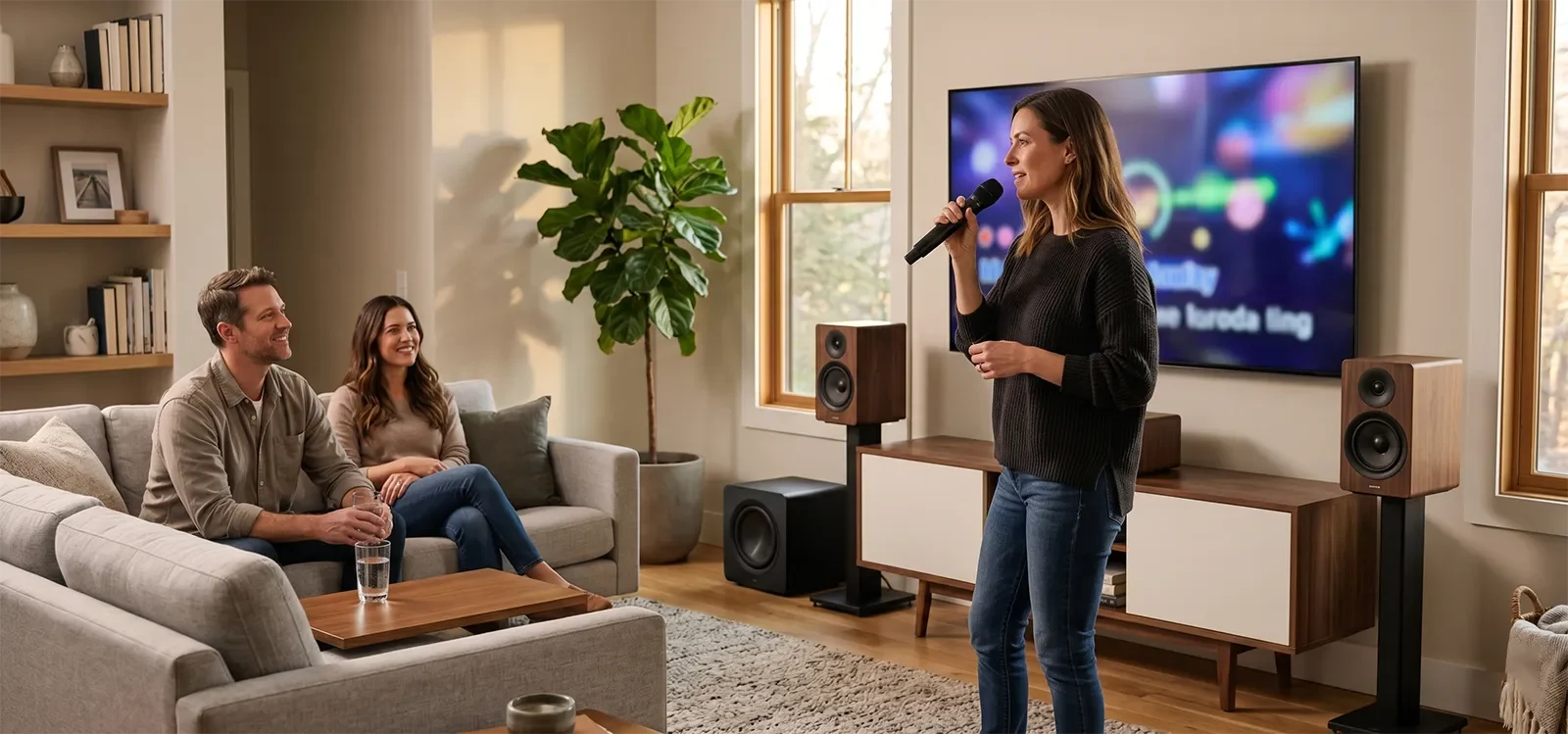
For most small and medium home karaoke rooms, the safer default is no subwoofer unless there is a clear reason for adding one. That is not because subwoofers are bad. It is because many home karaoke sessions depend more on vocal readability, smooth balance, and comfortable listening than on dramatic low-end impact.
In practical use, most homes benefit more from a system that feels clear and easy than from one that feels bigger but harder to sing through. If the current setup already gives enough warmth and body for the songs you use, adding more bass may change the sound without improving the karaoke experience.
Low-end support should be treated as part of system behavior, not a simple upgrade layer. Once bass is added, the way it blends with the main speakers matters as much as the added depth itself. That is where What a Crossover Does in a Karaoke System becomes useful, because crossover behavior shapes whether the bass feels natural under the music or disconnected from the rest of the sound.
When a subwoofer makes sense
A subwoofer makes sense when the main weakness in the system is clearly missing low-end foundation, not muddy vocals or poor room balance. In a larger or more open space, the backing track can sometimes feel too light. In that case, a properly integrated subwoofer can make the music feel more complete without forcing the main speakers to do all the low-end work.
A subwoofer can also help when the system already behaves well. If vocals are reasonably clear, the room is not already overloading in the bass, and the music still feels thin for the space, added low-end support can improve enjoyment without asking the voice to compete against a messy room.
The best use case is specific: the system already works, but the track still lacks enough foundation for the room and music style you actually use. That is very different from adding a subwoofer just because more bass sounds like an upgrade.
When a subwoofer is the wrong next move
A subwoofer is usually the wrong next move when the system already sounds muddy, boomy, or hard to control. If vocals are not clear yet, stronger bass will rarely solve the problem. It may make the backing track feel bigger, but it can also push the voice deeper into the mix.
It is also risky in rooms that already exaggerate low frequencies. Small rooms, corners, hard floors, reflective surfaces, and certain speaker positions can make bass build up quickly. In those spaces, a subwoofer may create more unevenness instead of more musicality.
The clearest warning sign is this: if you are hoping a subwoofer will fix a system that does not already sound balanced, pause first. Fix vocal clarity, speaker placement, room behavior, and music-to-vocal balance before adding more low-end energy.
A simple decision rule to remember
Use this rule: do not add a subwoofer unless the system already sings comfortably without one. That keeps the decision tied to real behavior instead of upgrade pressure.
If the voice is easy to follow and the only thing missing is musical weight, a subwoofer may help. If the room already feels muddy, crowded, or boomy, a subwoofer is probably the wrong next move.
A second useful rule is to judge bass by what it does to the singer, not just by what it does to the track. If the music feels richer but the vocal becomes harder to place, the trade-off is not worth it for karaoke. The goal is fuller music that still leaves the voice breathing room.
So the practical answer is not yes or no in the abstract. It is whether the added low-end improves the full karaoke experience in your room without making the voice harder to enjoy.
Conclusion
A subwoofer changes more than bass quantity. It changes how the music fills the room, how low-end energy competes with the vocal, and how easy the whole system feels during actual singing.
Some homes benefit from the added foundation. Other homes end up with heavier sound, less vocal space, and more tuning problems. That is why a subwoofer should be treated as a trade-off, not a default upgrade.
If your setup already feels balanced and only lacks low-end weight, a subwoofer may help. If the room already struggles with buildup or the voice still needs more breathing room, keeping the system simpler is often the better technical choice.
Frequently Asked Questions
Does a subwoofer improve karaoke vocals?
Not directly. A subwoofer mainly changes the weight and foundation of the backing track. It can make music feel fuller, but it does not automatically make the voice clearer. In some rooms, too much added bass can even make the vocal feel less open and harder to follow.
Why can more bass make karaoke harder to sing?
Stronger bass can crowd the room and shift attention away from the vocal. When low-end energy builds up too much, the mix feels thicker and the singer may seem less distinct inside it. That can make the system feel impressive at first but less comfortable over a full session.
Are subwoofers more useful in larger home rooms?
Often, yes. Larger or more open spaces may make the backing track feel lighter, so added low-end support can help the music feel more complete. In smaller rooms, bass builds up faster, which is why the same subwoofer can feel supportive in one home and excessive in another.
Should I add a subwoofer before fixing room or balance problems?
No. If the room already sounds heavy, muddy, or difficult to control, a subwoofer usually adds more complication instead of solving the real issue. It works best when the current system is already reasonably clear and balanced and the missing piece is truly low-end foundation.
What is the biggest mistake people make with karaoke subwoofers?
The biggest mistake is judging the subwoofer only by how big the music feels. For karaoke, the better test is whether the voice still feels clear, comfortable, and easy to sing with after the subwoofer is added.
Need help understanding the right setup for your home? Bass is useful only when it supports singing instead of pushing against it.
The next helpful step is the article that explains why stronger bass can sometimes make karaoke harder instead of better.
Read the bass trade-off article next.