
Room acoustics affect karaoke sound because you do not hear only the speakers and microphone. You hear the system plus everything the room reflects, traps, exaggerates, or softens. That is why a good karaoke system can still sound harsh, muddy, boomy, or uneven in the wrong room.
Who this guide is for: Home karaoke users who feel their system sounds harsher, muddier, boomier, or less controlled than expected and want to understand how much of the problem may be the room.
How this guide was prepared: This guide was written around real home karaoke conditions: reflective floors, bare walls, open layouts, bass buildup, room shape, speaker placement, and everyday family singing spaces.
Many home karaoke users blame the speakers, mixer, amplifier, or microphone when the real problem is the room itself. A setup can sound sharp, muddy, boomy, or strangely tiring even when the gear is basically fine. That happens because karaoke sound does not come only from the equipment. It also comes from what the room sends back to your ears.
In home karaoke, room behavior often changes the final result before new equipment does. Reflections can blur lyrics, bass can build up near walls or corners, and open layouts can make the sound feel uneven from one spot to another. For broader plain-English context around how technical audio ideas affect real home singing, see our Karaoke Technical Guides.
Quick Answer
Room acoustics affect karaoke sound by changing how vocals and music bounce, build up, and spread through the space before you hear the final result. Hard floors, bare walls, glass, low ceilings, open layouts, and poor speaker placement can create more audible problems than the equipment itself. Fast reflections can smear lyrics, strong low-end buildup can make the system sound heavy, and uneven room shapes can make one part of the room feel clear while another feels muddy or thin. In many homes, small changes to layout, softer surfaces, speaker angle, and room-aware tuning improve karaoke faster than buying new gear.
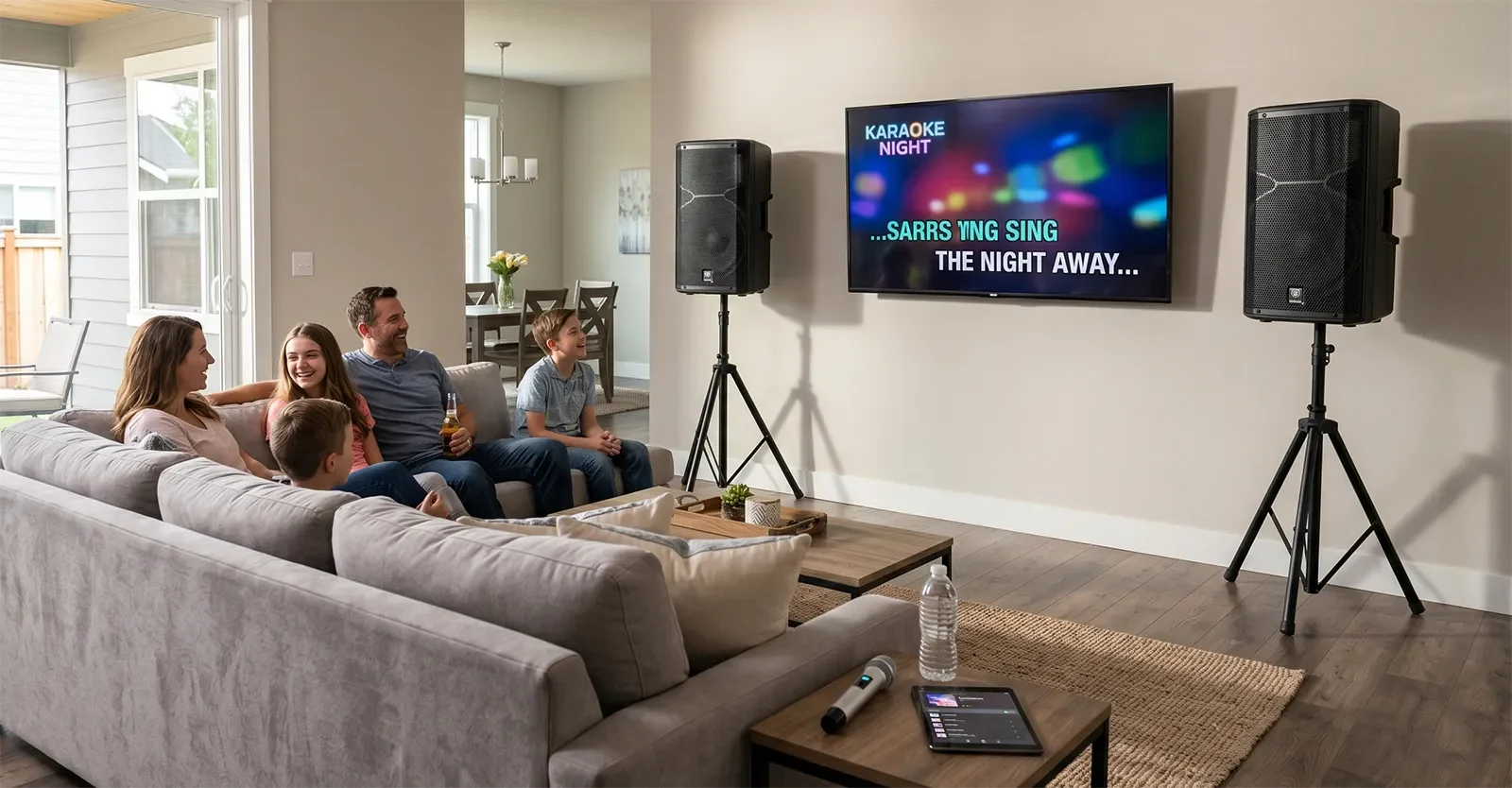
Table of Contents
What the room does to karaoke sound
The room changes karaoke sound because you never hear only the direct output from the speakers. You hear the speakers plus everything the room reflects, absorbs, exaggerates, or traps along the way. In plain English, the room becomes part of the karaoke system whether you planned for it or not.
This matters even more in karaoke than in casual background listening because live vocals are involved. The room shapes how clearly singers hear themselves, how easily other people follow the words, and how stable the whole mix feels when music and microphones are active together.
If reflections return too strongly or too quickly, the sound becomes less focused even when the volume seems high enough. If bass builds up near walls or corners, the system can feel powerful but muddy. If the room spreads sound unevenly, one seat may sound good while another feels dull or disconnected.
This is why a home setup can sound decent in one house and frustrating in another. The same equipment may behave very differently in a room with tile floors, glass doors, bare walls, and low ceilings than it does in a room with rugs, curtains, fabric seating, and broken-up surfaces.
How reflections blur vocals
Reflections happen when sound leaves the speakers or microphone area, hits a surface, and comes back into the room. Some reflection is normal. The problem starts when too much sound comes back too quickly from hard surfaces.
In karaoke, strong reflections can make vocals harder to understand. The singer may be loud enough, but the words feel less focused because reflected sound overlaps with the direct vocal and backing track. The result can feel louder without becoming clearer.
Hard floors, bare walls, large windows, glass doors, glossy furniture, and big flat screens can all add to this problem. One reflective surface may not ruin the sound by itself, but several reflective surfaces together can make the room feel sharp, messy, or tiring.
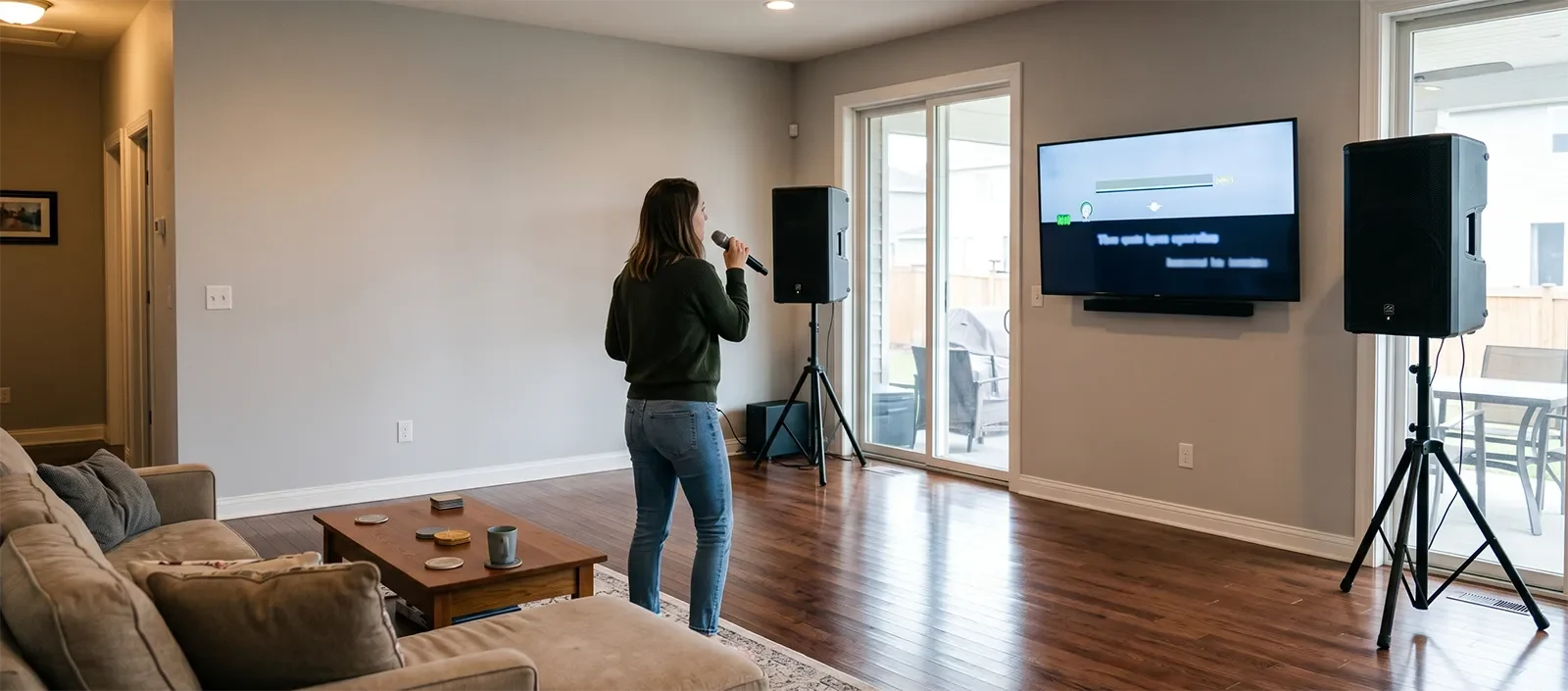
This is one reason people sometimes describe a karaoke system as harsh even when the gear is not actually defective. The room may be returning too much high-frequency energy and vocal reflection back into the listening area. For that specific behavior, see Why Some Karaoke Systems Sound Harsh at Home.
Why bass builds up differently in each room
Bass does not behave like vocal detail or treble. Low frequencies spread, collect, linger, and build up depending on room size, wall distance, corners, and speaker placement. That is why one room can sound heavy and boomy while another feels thin with the same system.
Corners and walls often exaggerate low-end energy. If speakers or subwoofers sit too close to those areas, the system may sound fuller at first, but the extra bass can quickly crowd the vocal and make the whole mix feel slower or less clear.
Bass buildup also changes from one listening position to another. One seat may feel thick and overpowering while another feels weak. Turning the bass knob up or down may help a little, but it may not fully solve a room pattern problem.
For karaoke, the goal is not maximum bass. The goal is enough weight for the music to feel full while leaving space for the singer to remain clear and comfortable.
Why room problems show up differently across homes
Not every room fails in the same way. Smaller rooms often create quick reflections and crowded bass because sound reaches the walls, floor, and ceiling quickly, then returns quickly. That can make vocals feel boxed in, overly forward, or harder to separate from the backing track.
Larger or more open rooms create a different problem. They may not feel as crowded, but the sound can become less connected and less consistent. One seating position may feel clear while another feels weak, boomy, or strangely distant.
Room materials matter as much as room size. A living room with tile floors, a large TV, glossy furniture, and a nearby glass door may sound sharper and more reflective than a larger room filled with soft furnishings.
This is why room acoustics should be understood as behavior, not just dimensions. The important question is not only how big the room is. It is how the room reflects, absorbs, spreads, and builds up sound during real karaoke use.
Easy fixes before changing equipment
Many room problems respond to simple changes before you spend money on new equipment. The goal is not to make the room dead or studio-like. The goal is to reduce the worst confusion so direct sound stays clearer and the room stops fighting the singer.
Start by softening the most reflective areas. A rug can calm a hard floor. Curtains can reduce glare from windows or sliding doors. Fabric seating, wall hangings, shelves, and ordinary household textures can help break up the feeling of one big hard box.
It also helps to avoid stacking reflective surfaces near the front of the system. A large screen, glossy table, bare floor, and nearby wall can combine to make the sound more aggressive than it needs to be.
Another easy improvement is effect restraint. In a lively room, too much echo or reverb can blur lyrics faster and make the system feel less controlled. Room-first thinking often means calming the space slightly before trying to make the vocal bigger or more dramatic.
If room-first changes become the real upgrade path, continue with When Room Treatment Helps More Than Better Equipment.
When placement matters more than better gear
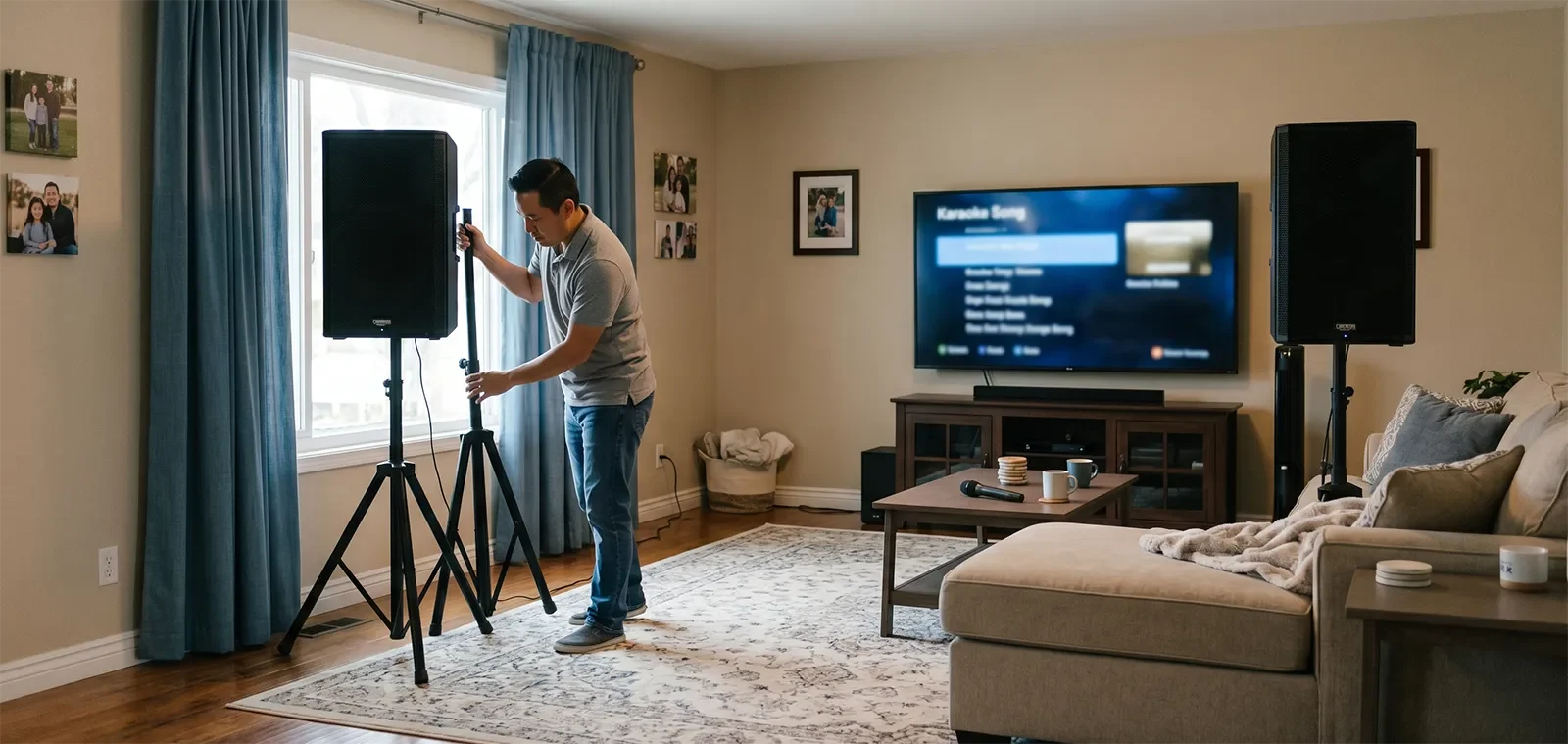
Placement often matters more than better gear because the room reacts to direction and distance, not just product quality. A modest system aimed sensibly into the room can sound clearer and easier to sing through than a more expensive setup aimed into the wrong wall, trapped in a corner, or placed too close to reflective surfaces.
This matters for both speakers and singers. If the speakers fire into glass, side walls, or hard nearby boundaries, reflected sound becomes more aggressive. If the singer stands where reflections and bass buildup are strongest, the whole karaoke experience feels harder even if the controls are technically fine.
Corner behavior matters too. Corners often exaggerate low-end energy and make the system feel heavier than it really is. That may sound exciting for a moment, but in karaoke it can quickly crowd the vocal and make the mix less comfortable.
That is why room-aware placement is not a small detail. It is one of the fastest ways to change the sound you actually live with. Before assuming the system needs to be replaced, it is worth asking whether the room is simply hearing the system in the worst possible way.
A repeatable room check you can use again
A simple room check works better than guessing. Use one familiar song, one normal singing position, and normal home volume. Listen for four things in order: lyric clarity, bass weight, reflection sharpness, and consistency across the room.
If lyrics seem smeared, the room may be returning too much reflected sound. If bass feels thick in one spot and weak in another, the room is shaping the low end unevenly. If the sound feels sharp only at home volume, the room may be amplifying brightness rather than the gear being inherently harsh.
Then move only one thing at a time. Try a slightly different speaker angle. Step away from a nearby wall. Test with a rug or curtain in place. Listen from the actual singing position, not only near the controls.
The practical rule is simple: if the sound changes a lot when you move around the room, the room is doing more than you think. That is a strong sign to work on layout, reflections, and room softening before treating the problem as a pure gear issue.
Conclusion
Room acoustics are not a side issue in home karaoke. They are one of the main reasons a system feels clear, muddy, harsh, boomy, or easy to sing through.
If you ignore the room, even capable equipment can feel disappointing. If you work with the room, the same system often becomes more enjoyable without a major upgrade. Reflections, bass buildup, layout, and speaker placement shape the final result before gear changes fully reveal their value.
The practical takeaway is to treat the room as part of the karaoke chain. In many homes, room-first thinking leads to better sound faster and with less wasted effort.
Frequently Asked Questions
Can a good karaoke system still sound bad in the wrong room?
Yes. A capable system can still sound muddy, sharp, boomy, or uneven if the room reflects too much sound or builds up bass in the wrong places. Gear quality matters, but the room changes what actually reaches your ears.
Why do hard floors and bare walls make karaoke vocals less clear?
Hard floors and bare walls reflect sound strongly instead of softening it. Those reflections overlap with the direct vocal and backing track, making words less focused. The result can feel louder but less understandable.
Do open spaces help or hurt karaoke sound?
They can do either, depending on the layout. Open spaces may reduce a crowded feeling, but they can also make the sound less connected and less even across the room. One area may sound thin while another feels heavy, which makes tuning less predictable.
Should I buy acoustic treatment before trying simple room changes?
Not usually. In many homes, small changes such as rugs, curtains, speaker angle, and better singing position already improve clarity and control. The best first step is understanding how the room behaves before turning the problem into a shopping project.
How do I know if the room is the problem instead of the equipment?
If the sound changes dramatically as you move around the room, or if the system sounds clear in one position but muddy, sharp, or boomy in another, the room is likely playing a major role. Equipment may still matter, but the room should be checked before assuming the gear is the main problem.
Many harsh or muddy karaoke problems start with the room before they start with the gear. The next helpful step is learning when room-first improvements solve more than another equipment upgrade.
Continue with room-first upgrade logic here