
Room reflections can make karaoke vocals sound blurred, smeared, or less focused even when the microphone, speakers, and volume are basically fine. The problem is not always weak equipment. Sometimes the room is sending delayed copies of the voice back into the listening space and softening the vocal clarity.
Who this guide is for: Home karaoke users who want to understand why vocals can sound less clean, less centered, or harder to follow even when the system seems powerful enough.
How this guide was prepared: This guide was written from a home karaoke perspective, focusing on how reflected sound affects vocal focus, lyric clarity, intelligibility, and singing comfort in real household spaces.
Many home karaoke users notice that the vocal does not always sound as clean as expected. The system may have enough volume. The microphone may seem fine. The music may sound acceptable. But the voice still feels slightly blurred, less direct, or harder to follow than it should.
Very often, reflected sound is part of the reason. When the vocal leaves the speakers, hits nearby surfaces, and returns into the room as small delayed copies, the voice can lose some of its clean outline. The result is not always obvious echo. More often, it is a softer, less focused vocal that feels harder to lock onto.
This article stays focused on one narrow technical question: how room reflections change karaoke vocals. For the broader room foundation, see how room acoustics affect karaoke sound.
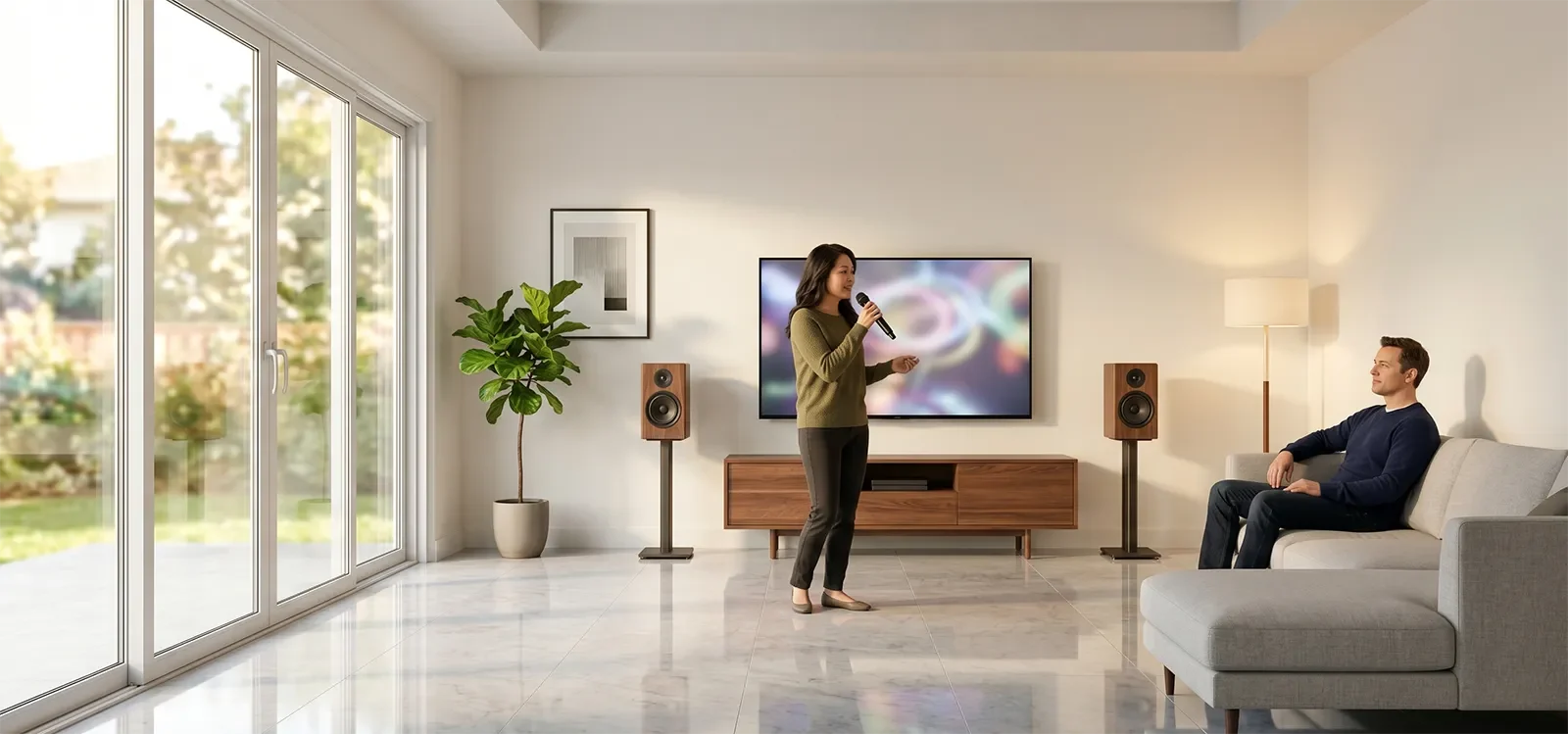
Table of Contents
Quick Answer
Room reflections are delayed copies of the karaoke vocal that bounce off walls, floors, glass, ceilings, furniture, and other surfaces before returning to the listener. In home karaoke, those reflections can reduce vocal focus, soften lyric edges, and make the voice feel less direct even when the system is working normally. The vocal may still be loud enough, but it can sound less precise, less centered, and harder to follow.
What Room Reflections Are
Room reflections happen when sound leaves the speakers, hits nearby surfaces, and bounces back into the listening area. In karaoke, that means you hear the direct vocal first, then smaller delayed versions of that same vocal arriving from different directions.
Those delayed copies do not always sound like obvious echo. In a normal living room, they may arrive so quickly that users do not hear them as separate sounds. Instead, they blend into the original vocal and change how focused the voice feels.
In plain English, the room starts answering back to the singer. A bare wall, tile floor, glass door, hard ceiling, or large reflective surface can send pieces of the vocal back into the room. The more those pieces overlap the direct vocal, the more the voice can lose clarity and shape.
This matters because karaoke depends heavily on vocal intelligibility. Music can tolerate some spaciousness, but vocals need enough definition for words, timing, and pitch to stay easy to follow.
How Reflections Change Karaoke Vocals
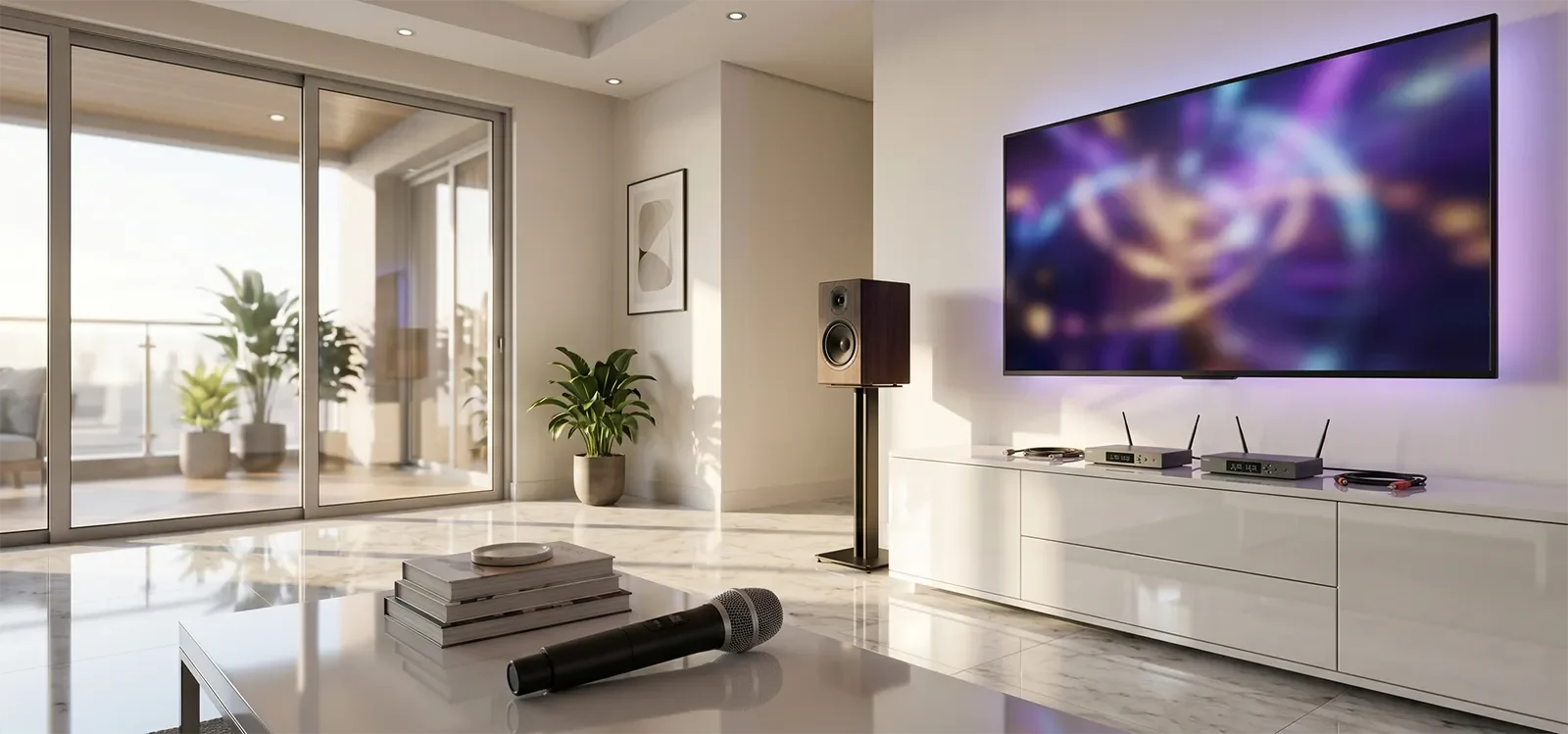
Reflections change karaoke vocals by reducing the feeling of one clean, direct voice. Instead of hearing a sharply focused vocal line, the listener hears the direct voice mixed with smaller delayed copies of itself.
That can make the vocal feel:
- Less centered in the room.
- Less sharply outlined over the music.
- Slightly smeared or softened.
- Harder to follow during faster lyrics.
- Less natural, even when the volume is strong enough.
This is why reflection-heavy vocals can sound “almost fine” but still feel wrong. The microphone may be working. The speakers may be producing enough output. The singer may be close enough to the mic. But the room is adding enough delayed energy to reduce vocal focus.
That is different from a simple volume problem. Turning the vocal up may make it louder, but it does not always make it clearer if the room continues to smear the sound.
Why Lyrics Soften Even When Volume Seems Fine
A karaoke vocal can have enough volume and still be hard to understand. That happens because clarity is not only about loudness. It is also about edge definition.
Lyrics depend on small details: consonants, syllable starts, timing, breath, and the clean transition between words. When reflections arrive shortly after the direct vocal, those details can soften. The words are still there, but they no longer feel as clearly drawn.
This is why people often describe the voice as blurry instead of quiet. The singer is audible, but the lyric edges feel less precise. The vocal line feels slightly spread out instead of cleanly locked in place.
Vocals are especially sensitive to this because the ear listens to human voice differently than background music. Small losses in articulation are easier to notice on a singer than on a backing track. That is why reflections often show up first as vocal blur, even when the music still sounds mostly acceptable.
What Users Actually Hear at Home
In a home karaoke room, reflection problems usually sound practical, not technical. Most users do not say, “The room has too many early reflections.” They say the voice sounds unclear, the lyrics are harder to follow, or the singer does not feel as present.
Common signs include:
- The vocal is loud enough but still not easy to understand.
- The singer sounds slightly distant even when the mic is close.
- Lyrics lose sharpness during faster songs.
- The voice feels spread across the room instead of centered.
- Turning up the mic helps volume but not clarity.
- The same system sounds clearer in another room.
These signs often appear in rooms with tile floors, bare walls, glass, open layouts, and minimal soft furnishing. The room may sound lively and energetic, but that liveliness can make vocals less readable.
For karaoke, that matters because singing should feel easy to follow. If the room keeps softening the vocal, the singer may feel less supported and listeners may get tired faster.
What People Often Misunderstand
“Unclear vocals always mean the microphone is bad.”
Not always. A weak microphone can cause problems, but a good microphone can still sound less focused in a reflective room. The room may be changing the vocal after it leaves the system.
“Reflections only matter if I hear obvious echo.”
No. Reflections often matter before they become obvious echo. In home karaoke, they may show up as blur, softness, harshness, or reduced vocal focus instead of a clear repeating echo.
“More volume will fix the vocal.”
More volume can make the vocal louder, but it may not make the words clearer. If reflections are the real issue, raising the level can also raise the reflected sound and keep the blur in place.
“The room is not part of the system.”
The room is always part of what you hear. Once sound leaves the speakers, the room shapes the final result. That is why the same karaoke setup can sound different in two different homes.
A Simple Listening Rule for Vocal Blur
Use this rule: if the vocal has enough level but still sounds less focused, less direct, or slightly smeared, listen for room reflections before blaming the equipment.
Do not judge the vocal only by loudness. Judge it by how easily the lyric holds its shape. If the words feel soft around the edges, the vocal image feels spread out, or the singer does not sound cleanly centered, the room may be adding too much reflected sound.
The goal is not to make every home karaoke room completely dry. A little room life can feel natural. The problem starts when reflections reduce intelligibility and make the vocal harder to follow.
Once you recognize that difference, you can make better decisions. Instead of randomly changing microphones, speakers, or EQ settings, you can hear when the room itself is part of the vocal problem.

Conclusion
Room reflections change karaoke vocals by adding delayed copies of the voice back into the listening space. Those reflections can reduce directness, soften lyric clarity, and make the vocal feel blurred, smeared, or less focused than it should.
The key takeaway is simple: a vocal can be loud enough and still not be clear enough. In home karaoke, clarity depends on how cleanly the voice reaches the listener, not just how much volume the system produces. When the voice feels less readable without an obvious equipment fault, room reflections are often part of the explanation.
Frequently Asked Questions
Do room reflections always make karaoke vocals sound worse?
No. Some reflections are normal, and most home rooms should not sound completely dead. The problem starts when reflections reduce vocal intelligibility, soften lyric edges, or make the voice feel less focused than it should.
Why do vocals seem blurrier than the music in some rooms?
Vocals are more sensitive because the ear pays close attention to speech-like detail. Small changes in timing, clarity, and edge definition are easier to notice on a human voice than on a backing track. That is why reflections often show up first as vocal blur.
Can a good karaoke system still sound unclear because of reflections?
Yes. A solid karaoke system can still sound less focused in a reflective room. That does not mean the gear is bad. It means the room may be softening the vocal after the sound leaves the speakers.
How can I tell if I am hearing reflections instead of a microphone problem?
If the vocal has enough level but feels spread out, smeared, or less sharply outlined, reflections are a likely factor. A microphone problem often follows the source more directly, while reflection problems feel like the room is reshaping the voice after it leaves the system.
Should I fix reflections before upgrading equipment?
If the room is clearly making vocals blurry or hard to follow, it may be worth addressing the room before buying more gear. Better equipment helps most when the room allows the sound to stay clear and controlled.
Want to understand the broader way your room changes karaoke sound?