
Hard surfaces make karaoke sound worse because they reflect sound back into the room instead of letting vocals and music settle naturally. In home karaoke, too much tile, glass, bare wall, wood flooring, or glossy surface can make a decent system sound sharper, blurrier, and more tiring than it really is.
Who this guide is for: Home karaoke users who want to understand why a system can sound harsh, splashy, echoey, or less clear in one room even when the equipment itself seems fine.
How this guide was prepared: This guide was written from a home-use perspective, focusing on how normal household materials affect vocal clarity, listening comfort, room reflections, and overall karaoke sound.
Many home karaoke users blame the speakers, microphone, mixer, or amplifier first when the sound feels wrong. Sometimes the equipment really is the issue. But in many homes, the room is already changing the sound before the gear gets a fair chance.
A living room with tile floors, sliding glass doors, bare painted walls, wood flooring, or a large glossy TV wall can make karaoke sound harder and less controlled. The system may have enough power and the microphone may be working normally, but the room keeps throwing sound back into the listening area.
This article focuses on one specific technical idea: why hard household surfaces can make home karaoke sound worse. For the broader foundation, see how room acoustics affect karaoke sound.
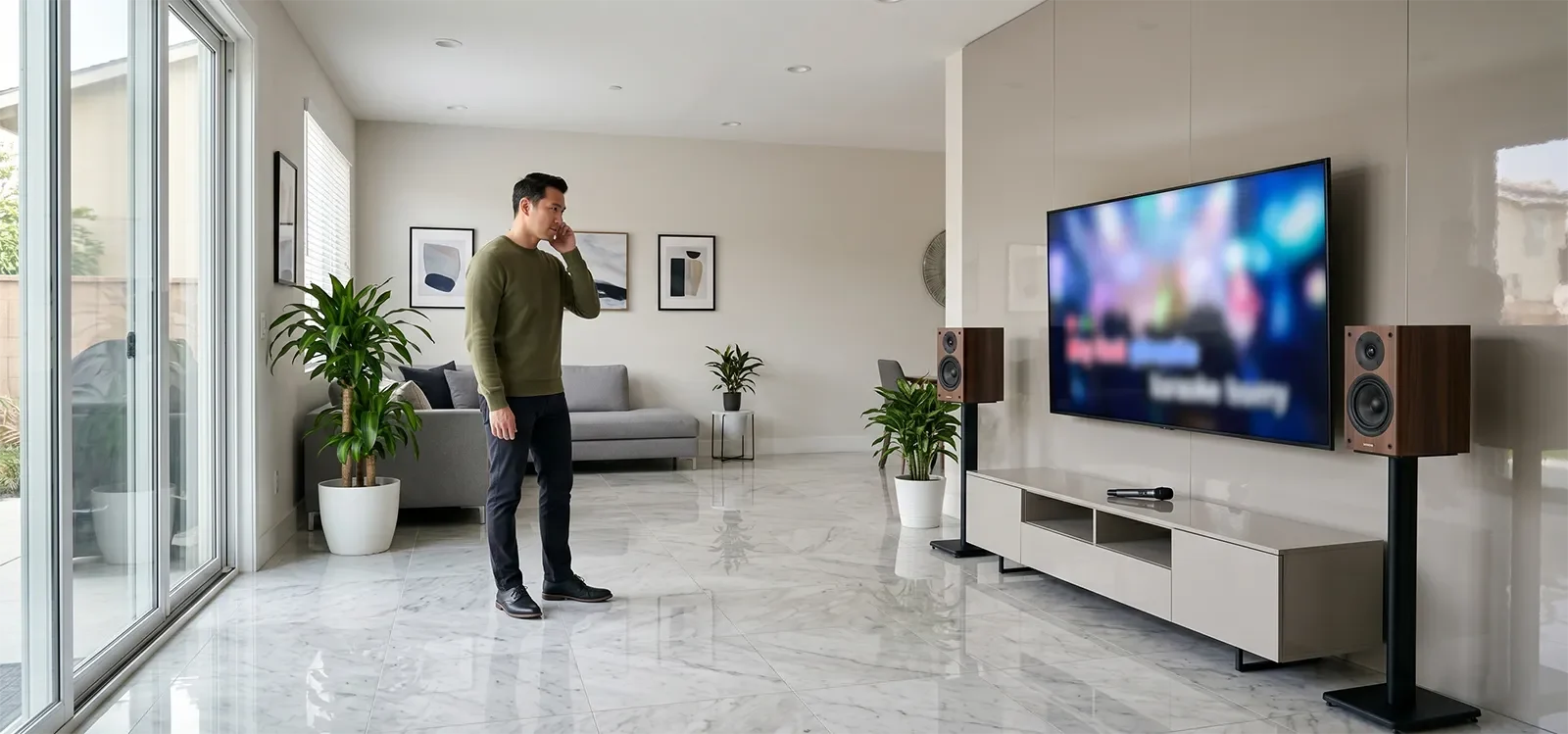
Table of Contents
Quick Answer
Hard surfaces make karaoke sound worse because they reflect sound instead of absorbing or softening it. In home karaoke, reflected sound can blur vocal detail, add sharpness, make lyrics harder to follow, and create listening fatigue. The problem is especially common in rooms with tile floors, glass doors, bare walls, wood floors, glossy furniture, and large TV surfaces. The equipment may be working normally, but the room is making the final sound less clear and less comfortable.
What Hard Surfaces Do to Sound
Hard surfaces reflect sound. Instead of letting the voice and music settle into the room naturally, they bounce sound back into the listening space. That returned sound overlaps with the direct sound coming from the speakers.
In karaoke, this matters because the direct vocal is what listeners need to hear clearly. When too much reflected sound returns from the floor, walls, windows, ceiling, furniture, or TV wall, the voice can lose focus. The system may still be loud, but the sound becomes less clean.
Think of it this way: the speaker sends out one version of the sound, but the room sends back extra copies. Those copies do not always sound like obvious echo. Often, they simply make the vocal feel less direct, less stable, and harder to understand.
Why Karaoke Is Especially Sensitive to Hard Surfaces
Karaoke is more sensitive to hard surfaces than casual music listening because vocals need speech-like clarity. A backing track can still feel acceptable with some room reflection, but a singer’s voice depends on word shape, consonants, timing, and presence.
When reflections build up around the vocal, the lyrics can soften. The singer may still be audible, but the words become less crisp. That makes the whole performance feel less natural, even if the volume is strong enough.
Hard surfaces can also make the upper range feel more aggressive. This is why some rooms make karaoke sound sharp or splashy. The system may not be overly bright by itself. The room may be reflecting enough vocal and music energy to make the sound feel harder than it should.
That is why hard-surface problems are often mistaken for equipment problems. The speaker, microphone, or mixer may be blamed, but the room is shaping what everyone hears.
What Users Actually Hear at Home
Most home users do not describe this problem as “too many reflections.” They describe what they feel while singing or listening.
Common signs include:
- The vocal is loud but still not very clear.
- The sound feels sharp, splashy, or echoey.
- Lyrics become harder to follow as the volume rises.
- The room feels too alive or too exposed.
- The music sounds big at first, then tiring after a few songs.
- The same system sounds better in a softer room.
This is the hard-surface penalty. The room makes the system feel less refined than it really is. A setup that could sound clear in a calmer room may sound stressful in a room full of tile, glass, and bare walls.
For karaoke, that matters because comfort is part of performance. If the room keeps reflecting sound back at the singer and listeners, people may start lowering the volume, singing less confidently, or feeling tired faster.
Common Hard Surfaces That Affect Karaoke
The most common problem surfaces are normal household materials. They are not “bad” by themselves. The issue is having too many reflective surfaces in the same room.
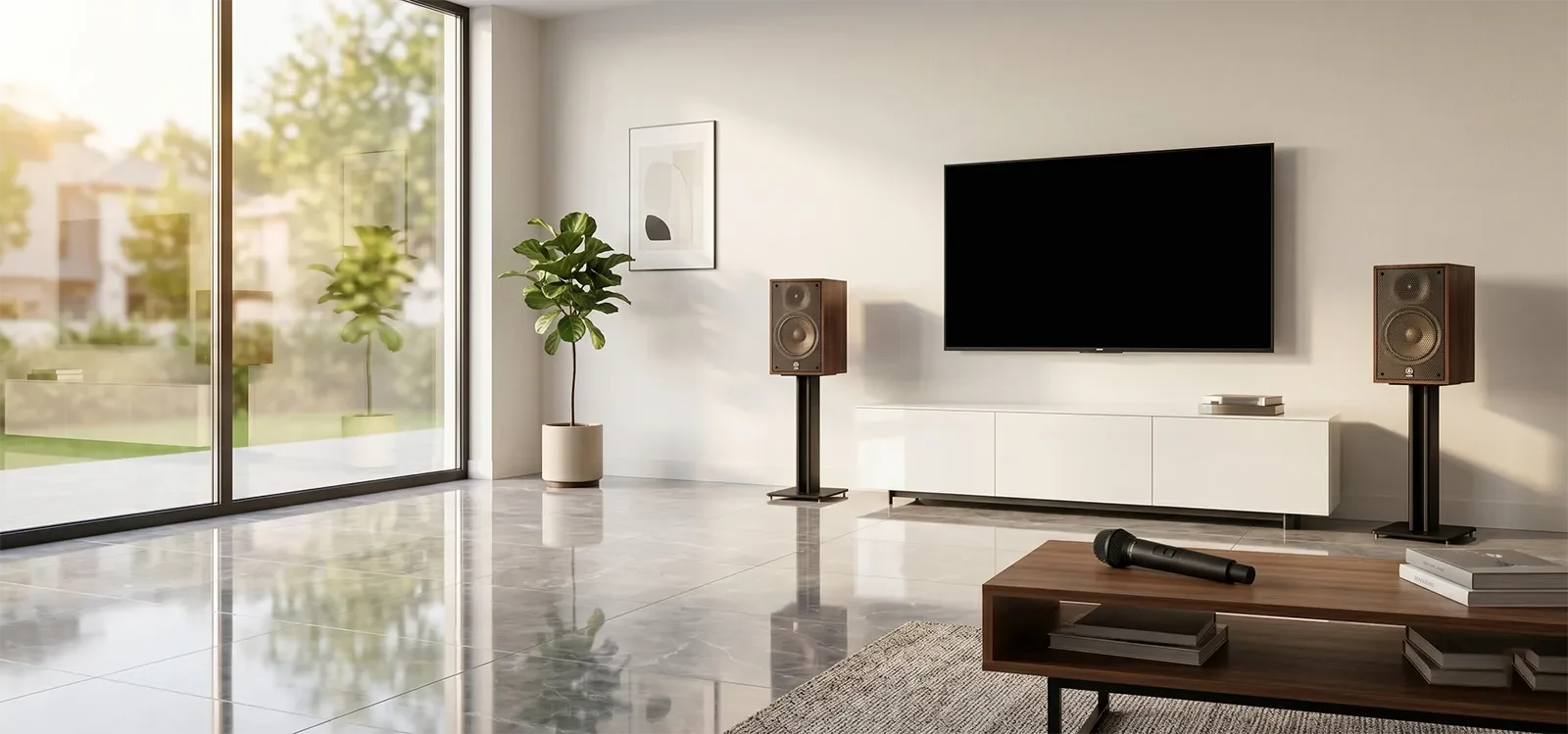
Tile floors
Tile reflects sound strongly and can make a room feel hard, bright, and exposed. In many homes, tile flooring is one of the biggest reasons karaoke vocals feel less warm and less controlled.
Glass doors and windows
Sliding glass doors, large windows, and glass partitions can reflect upper vocal detail back into the room. This can make vocals feel splashier or less focused.
Bare painted walls
Bare walls give sound a large reflective surface to bounce from. If the room has few curtains, shelves, wall decor, or soft materials, the vocal can feel more smeared.
Wood or laminate flooring
Wood and laminate floors can sound less harsh than tile in some rooms, but they are still reflective. Without rugs or soft furniture, they can contribute to vocal blur and brightness.
Large glossy TV walls
A large TV, glossy cabinet, or polished entertainment wall can reflect sound around the front of the room. This is especially important because many karaoke systems are set up near the TV screen.
What People Often Misunderstand
“Hard surfaces only matter if I hear echo.”
No. Hard-surface problems often appear before you hear a clear echo. The sound may simply become sharper, blurrier, splashier, or more tiring.
“The speakers must be too bright.”
Maybe, but not always. A reflective room can make normal speakers sound brighter or harsher than they are. Before blaming the speakers, notice whether the room has many reflective surfaces.
“More volume will make the vocal clearer.”
Not necessarily. More volume also gives the hard surfaces more energy to reflect. In a reflective room, turning up the system can make the sound louder but not cleaner.
“The room is not part of the karaoke system.”
The room is always part of the final sound. Once sound leaves the speakers, the room decides how much of that sound stays clean and how much comes back as reflections.
A Practical Listening Rule
Use this rule: if the same karaoke system sounds more tiring, more splashy, or less focused in one room than another, look at the surfaces before blaming the gear.
Notice whether the room has tile, glass, bare walls, hard floors, glossy furniture, or a large reflective TV area. Then listen to the vocal. Does it stay centered and easy to follow, or does it spread out and harden as the music gets louder?
If the vocal becomes less clear while the system still has enough power, hard surfaces may be part of the reason. The solution is not always to buy more equipment first. Sometimes the smarter first step is understanding how the room is changing the sound.
Conclusion
Hard surfaces make karaoke sound worse because they reflect sound back into the room and interfere with the direct sound you want to hear. That can reduce vocal clarity, add sharpness, blur lyric detail, and make the whole system feel more tiring over time.
The key takeaway is simple: a room can make good equipment sound worse. If karaoke sounds harsh, splashy, echoey, or less focused than expected, look at the tile, glass, bare walls, wood floors, and glossy surfaces around the system. The gear may not be the only thing shaping the sound.
Frequently Asked Questions
Do hard surfaces always make karaoke sound bad?
No. Every home has some hard surfaces. The problem starts when there are enough reflective materials to make vocals less clear, sharper, or more tiring. A balanced room can have hard surfaces and still sound comfortable if there are also enough soft or diffusing elements.
Why do tile floors and glass make karaoke vocals less clear?
Tile and glass reflect sound strongly. Those reflections return to the listening area and overlap with the direct vocal. The result is often not a dramatic echo, but softer lyric edges, reduced focus, and a voice that feels less natural.
Can a good karaoke system still sound bad in a reflective room?
Yes. A good system can still sound harsh, blurry, or tiring in a room with too many hard surfaces. The equipment may be producing a clean signal, but the room changes how that sound reaches your ears.
Why do people blame the equipment before the room?
Because the equipment is easier to notice. Speakers, microphones, mixers, and amplifiers look like the sound-making parts. Floors, walls, glass, and furniture feel like background details, but they strongly affect the final sound in real home rooms.
Does adding soft material help?
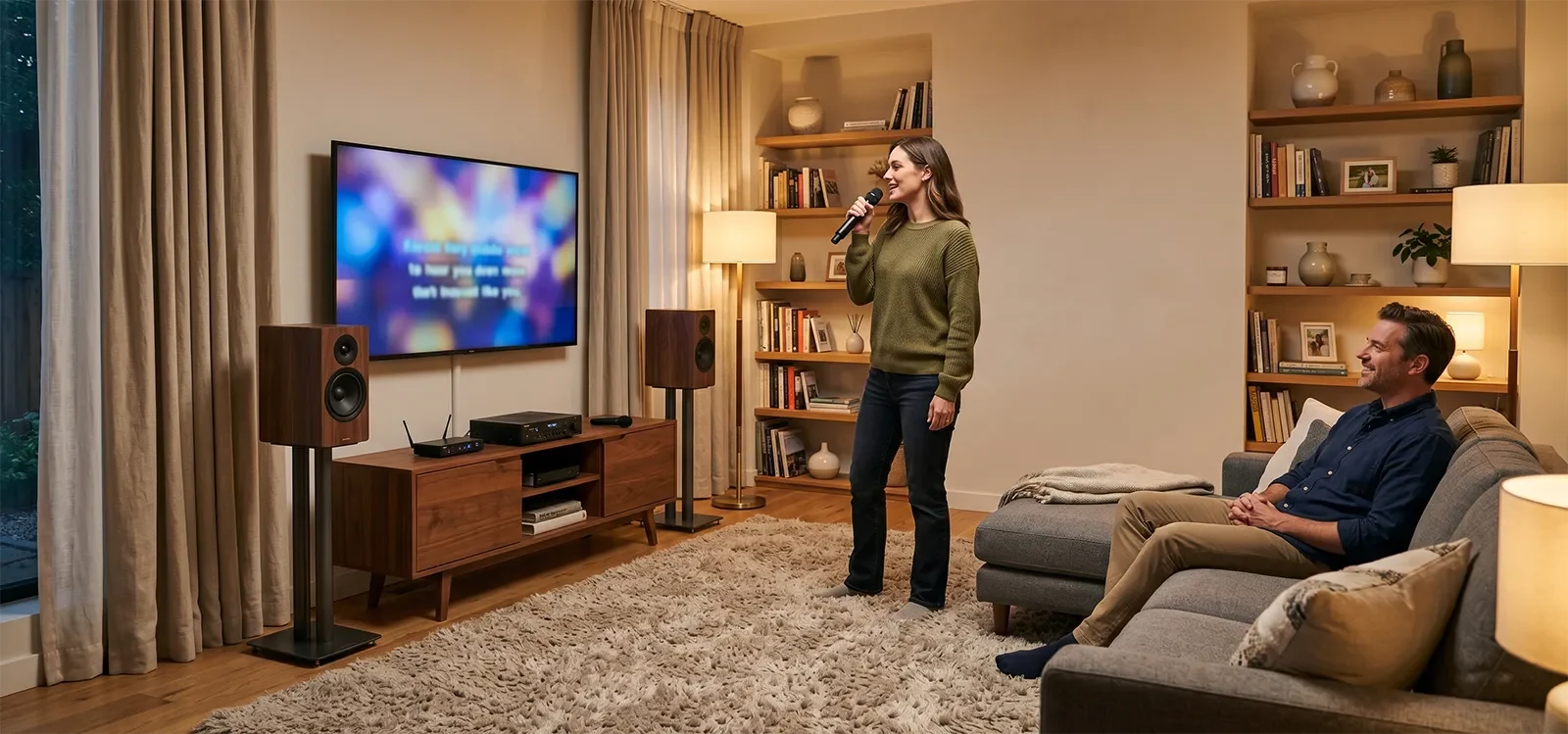
Often, yes. Rugs, curtains, fabric furniture, shelves, and other softer surfaces can reduce how aggressively sound bounces around the room. The goal is not to make the room dead, but to make the vocal clearer and the listening experience more comfortable.
If your room keeps making karaoke sound harsh or less focused, the next step is understanding how those reflections affect the vocal itself.