
Choose an all-in-one karaoke system if you want faster setup, less clutter, and a simpler family routine. Choose a component karaoke system if you want more control, easier upgrades, and a setup that can grow piece by piece. For most casual home buyers, all-in-one is easier to live with; for more hands-on buyers, component systems offer more long-term flexibility.
Written by Toan Ho — Tittac editorial team.
Who this guide is for: This guide is for home karaoke buyers deciding between an all-in-one karaoke system and a component karaoke system, especially if they want to balance ease of use, room fit, long-term value, and how much setup complexity they are willing to manage.
How this guide was prepared: This guide was prepared around the practical factors that matter most in real home use: room size, daily workflow, visual clutter, upgrade flexibility, ease of maintenance, family usability, and whether more control will actually improve the karaoke experience.
Choosing between an all-in-one karaoke system and a component karaoke system is not really about which one sounds more serious on paper. It is about which setup will feel right once it is in your home, in your room, and part of your normal routine.
One option usually wins on convenience, speed, and simplicity. The other usually wins on flexibility, piece-by-piece upgrades, and long-term control. Neither is automatically better for every home.
If you want the bigger buying framework first, start with our complete home karaoke system guide. Then use this guide to decide whether your home is better served by a simpler all-in-one system or a more flexible component setup.
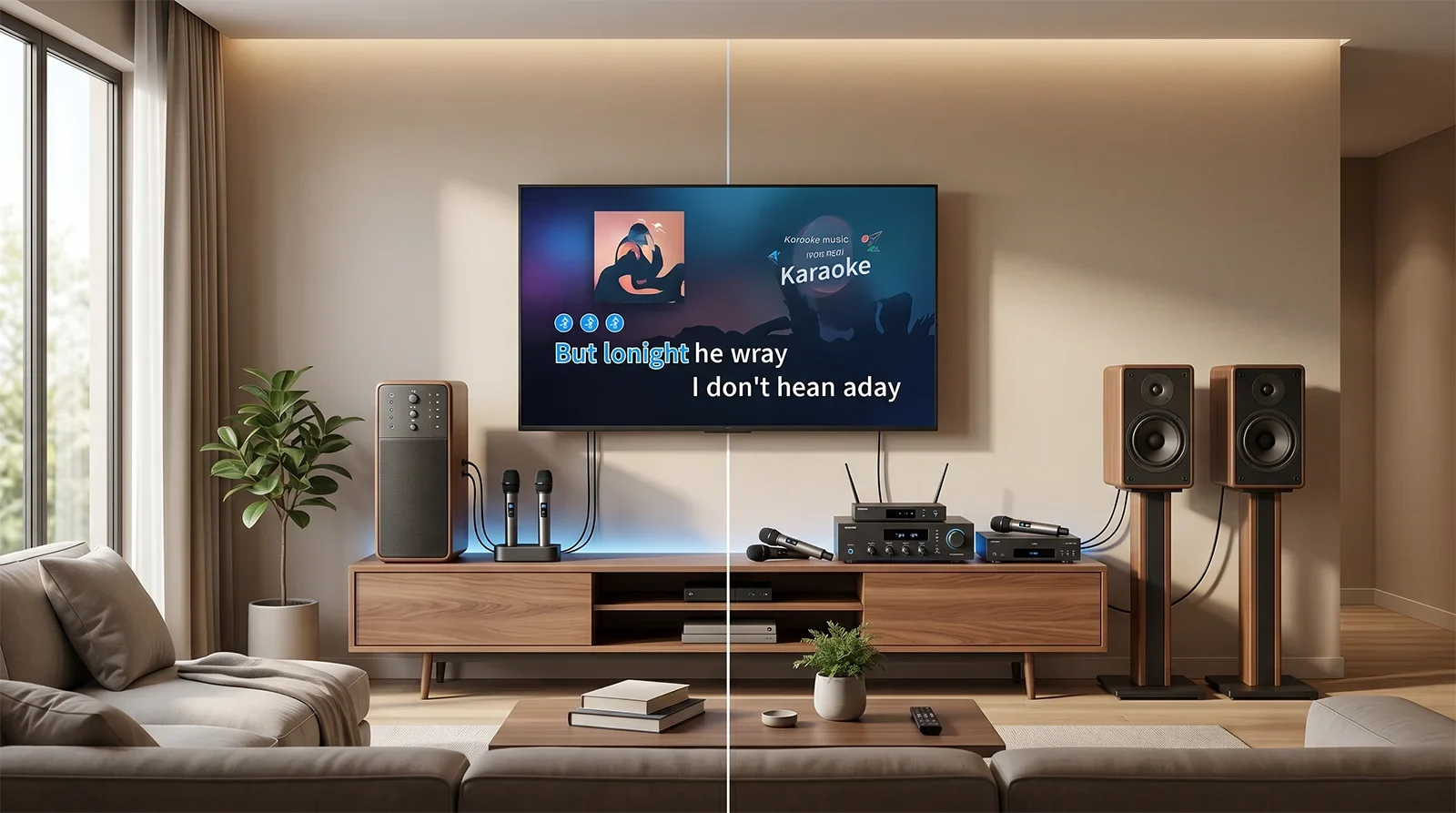
Table of Contents
Quick Answer
An all-in-one karaoke system is usually better if you want a faster, cleaner, easier setup with fewer separate parts to manage. A component karaoke system is usually better if you want more control over speakers, microphones, amplifiers, mixers, placement, and future upgrades.
For most casual home users, all-in-one is the easier path because it reduces setup friction and visual clutter. For buyers who sing often, have a larger room, or want to shape the system more carefully over time, a component system may be the better long-term choice.
The best decision is not “simple versus serious.” The best decision is whether your home needs easier daily use now or more flexibility later.
What Matters Most When Choosing All-in-One vs Component Karaoke Systems
Room Fit Should Come Before System Type
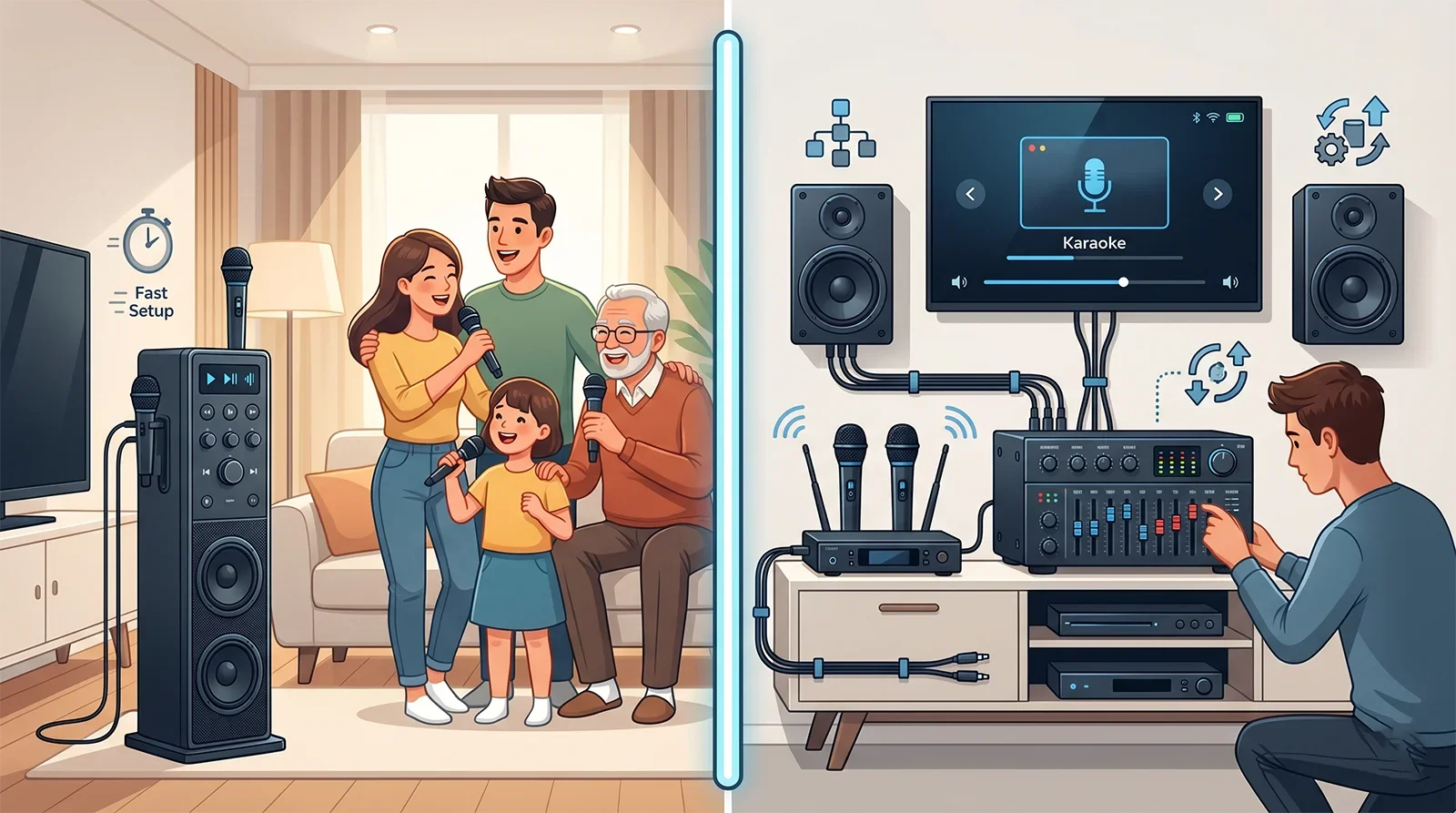
Room setup changes this decision more than many buyers expect. An all-in-one karaoke system often feels more natural in shared spaces, family rooms, apartments, condos, and homes where karaoke should be easy to start without turning the room into a technical audio setup.
A component system usually makes more sense when the room is larger, the setup is used more regularly, or the buyer already knows they want more control over speaker placement, microphone quality, amplifier choice, and future changes.
The right question is not “Which one is more advanced?” It is “Which one fits this room and this household better?”
Daily Workflow Decides Whether the System Gets Used
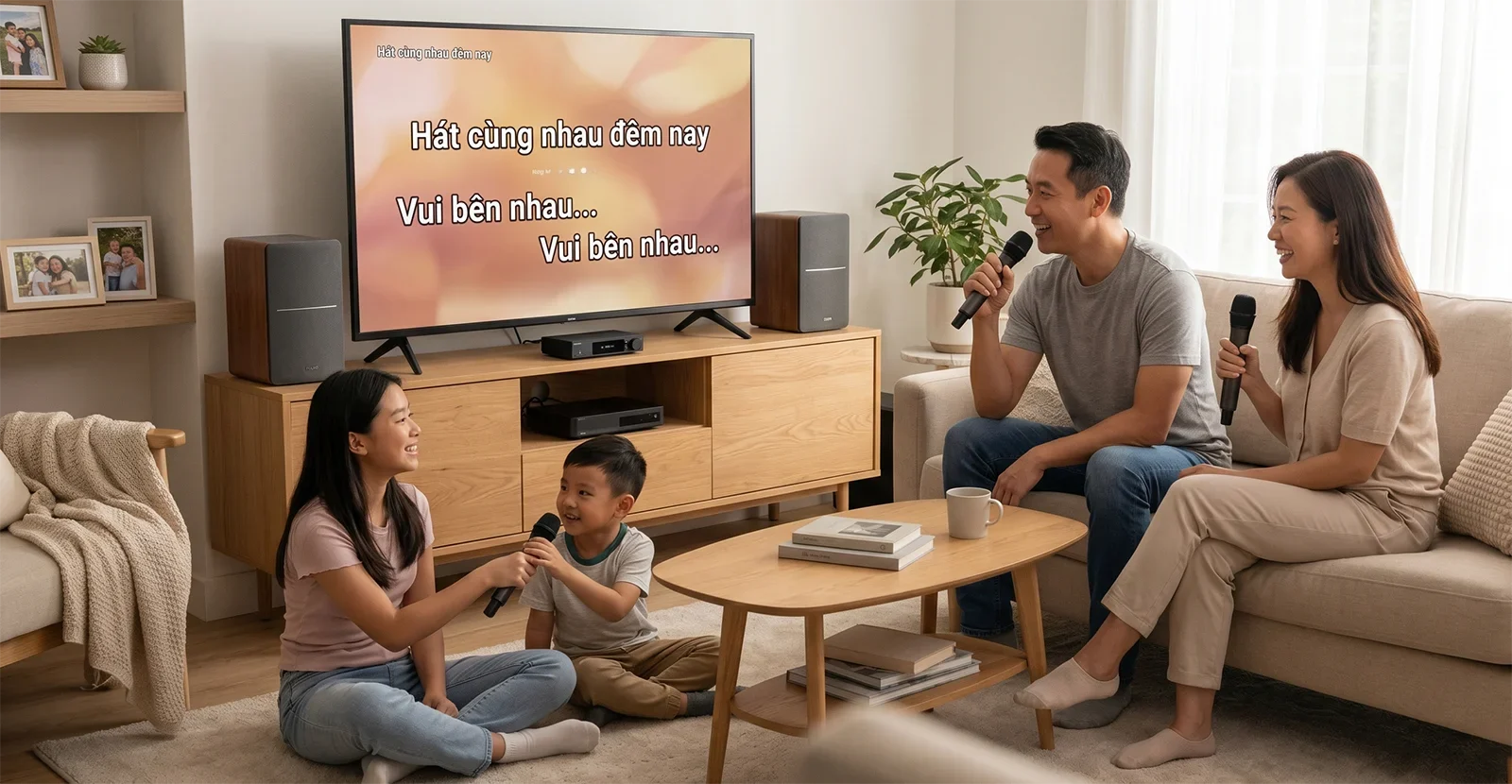
This is where all-in-one karaoke systems usually pull ahead. Fewer separate parts usually means fewer setup decisions, fewer cables, fewer opportunities for confusion, and a more repeatable routine.
That matters in real homes. If parents, children, guests, or less technical users need to turn the system on and sing without asking for help, simplicity has real value. A system that sounds good but feels annoying to start may not get used often.
Component systems ask more from the user. That does not make them worse. It simply means the buyer should be honest about who will manage the setup, how often it will be used, and whether the extra control will still feel worth it after the first few weeks.
If you want to understand the setup side more clearly, our step-by-step home karaoke setup guide shows what a cleaner long-term karaoke routine can look like.
Visual Clutter Matters in Shared Rooms
A karaoke system does not live only on a spec sheet. It lives in a room with furniture, a TV, walking space, family traffic, and daily life. An all-in-one system often creates less visual clutter because fewer separate pieces need to be placed, connected, and stored.
A component system can look and perform better when planned well, but it also needs more room for speakers, wiring, stands, amplifiers, mixers, receivers, or other parts. In a shared living room, that extra flexibility can become visual and practical clutter if the setup is not designed carefully.
Upgrade Flexibility Only Matters If You Will Use It
Component karaoke systems often look stronger for long-term value because you can improve one part at a time. If the microphones no longer meet your needs, you can upgrade the microphones. If the speakers are not enough for the room, you can change the speakers. If you want more control, you can improve the mixer or amplifier path.
That flexibility is valuable for hands-on buyers. But it is not valuable for everyone. Many home buyers are better served by a system that feels simple and satisfying now rather than one bought mainly for future upgrades that may never happen.
Maintenance and Troubleshooting Are Part of the Decision
All-in-one systems usually reduce maintenance because fewer separate pieces need to work together. If something goes wrong, there are fewer connections to check and fewer settings to blame.
Component systems offer more control, but they also create more places for problems to happen: cables, connections, gain levels, speaker matching, microphone receivers, amplifier settings, and source routing. This is manageable for buyers who enjoy control, but it can frustrate households that just want karaoke to be easy.
| Factor | Why It Matters | Common Mistake |
|---|---|---|
| Room fit | Helps the system feel natural in the space instead of awkward or overbuilt | Assuming the more complex option is automatically better |
| Daily workflow | A simpler routine makes karaoke easier to repeat and share | Ignoring how much setup friction the household will tolerate |
| Visual clutter | Shared rooms usually work better when the setup stays cleaner | Choosing separate pieces without planning where they will live |
| Upgrade flexibility | Component systems can evolve gradually over time | Paying for modularity you may never use |
| Maintenance | More parts can mean more troubleshooting | Buying flexibility without accepting the responsibility that comes with it |
Best Fit for Different Home Use Cases
Choose an All-in-One Karaoke System If You Want Simplicity
Best for: Casual singers, family rooms, shared spaces, apartments, condos, first-time buyers, and households that want karaoke to be easy to start and easy to repeat.
Not ideal if: You already know you want more control over separate parts, expect to upgrade piece by piece later, or enjoy shaping the setup more actively over time.
An all-in-one karaoke system usually wins by removing friction. It shortens the path from setup to actual singing, creates less visual clutter, and makes more sense in homes where convenience matters as much as sound customization.
This is often the smarter choice when karaoke is meant to feel social, low-stress, and family-friendly. If the system is easy enough for everyone to use, it will usually get used more often.
Choose a Component Karaoke System If You Want More Control
Best for: Hands-on users, larger rooms, frequent singers, evolving setups, and buyers who want more say in how the system develops over time.
Not ideal if: Your main priority is faster setup, simpler family use, or a cleaner routine that other people in the house can follow without much explanation.
A component karaoke system is built for flexibility first. It can make more sense when the room is larger, the system is used more regularly, or the buyer expects to refine the setup later.
The trade-off is that flexibility comes with more decisions. You need to think about how the speakers, microphones, amplifier, mixer, cables, TV, and song source work together. If that sounds useful, component may be the better path. If that sounds tiring, all-in-one may be the wiser choice.
If This Is Your First Serious Karaoke System, Start With Routine
Best for: Buyers choosing their first more serious home karaoke setup and trying to decide whether convenience or modular growth matters more.
Not ideal if: You already know exactly how much control you want or already have a clear long-term upgrade plan.
If you are still unsure, start with your real routine. Who will use the system? How often will you sing? Will the setup stay in one room? Do you want something parents and guests can use easily? Or do you want a system you can tune, improve, and reshape over time?
In many cases, comparing portable vs. full-size karaoke systems also helps clarify what kind of setup style you actually want before going deeper into all-in-one versus component.
Budget, Room Size, and Setup Trade-Offs
An all-in-one karaoke system is often the better value when you care more about lower friction than long-term flexibility. It gives you a cleaner path into karaoke and usually makes the most sense when the room is shared, the setup should feel approachable, and the household does not want to manage separate pieces.
A component system becomes easier to justify when you know the extra control will actually be used. That may be because the room is larger, the system will be used more often, or the buyer already expects to refine the setup over time.
Overkill is real. If your real priority is easy family use, buying more complexity does not automatically create a better home experience. On the other hand, underbuying can also happen if your room, singing habits, or long-term expectations clearly call for more flexibility than a basic package can offer.
| Scenario | What Usually Works | When to Spend More | When Not To |
|---|---|---|---|
| Shared family room with casual karaoke | All-in-one system with lower setup friction | When the room or use case starts exposing real limitations | When you are buying extra flexibility “just in case” |
| Buyer wants cleaner long-term control | Component system with room to evolve | When you already know you will adjust or upgrade later | When the household mainly wants plug-and-play use |
| Large room with regular use | Component approach often makes more sense | When separate control and future changes are part of the plan | Before proving that a simpler setup will not already do enough |
| First serious home karaoke purchase | Start with the option that matches your routine best | When your real use case clearly calls for more flexibility | When research pressure pushes you past what you actually need |
Common Buying Mistakes to Avoid
Mistake 1: Assuming Component Automatically Means Better
A component system may offer more control, but that does not automatically make it better for every home. Many buyers are happier with an all-in-one system because it fits the room, the family routine, and the level of effort they actually want to give karaoke.
More control only helps if you want to use that control.
Mistake 2: Buying Mainly for Future Upgrades
Upgrade potential sounds smart during research, but it becomes less useful if your real priority is a setup that feels fast, clean, and easy right now. A system that fits your room and routine today usually creates a better home experience than one bought mainly for future possibilities.
Mistake 3: Underestimating Setup Friction
Separate parts can offer valuable flexibility, but they also bring more decisions, more maintenance, and more chances for the system to feel annoying in daily life. If the household wants karaoke to feel simple, easy to share, and low-stress, that matters just as much as technical flexibility.
Mistake 4: Ignoring How the Setup Will Look and Live in the Room
A component system may be easier to customize, but the pieces still need somewhere to go. Speakers, cables, stands, receivers, amplifiers, and microphones all affect the room. If the setup feels messy or intrusive, it may become harder to enjoy.
Mistake 5: Choosing a Setup Only One Person Can Use
A family karaoke system should not depend on one technical person every time someone wants to sing. If guests, parents, children, or less technical users will use the system, daily usability should be part of the buying decision.
How to Choose the Right Karaoke System in 60 Seconds
- Start with the room. Is this a shared family space, standard living room, small home, or larger dedicated area?
- Decide who will use it. If many people need to operate it easily, simplicity matters more.
- Choose your priority. Do you want lower friction now or more control later?
- Think about visual clutter. Will separate pieces feel natural in the room or become annoying?
- Set the budget around real use. Do not pay for upgrade flexibility unless you expect to use it.
- Be honest about maintenance. More parts can mean more control, but also more responsibility.
For most home buyers, start with the option that fits your routine best, not the one that sounds more advanced during research.
Frequently Asked Questions
Is an all-in-one karaoke system better for beginners?
For many beginners, yes. An all-in-one karaoke system usually reduces the number of decisions, cables, and adjustments needed to start singing. That makes it easier to use confidently at home. It may not offer the same long-term flexibility as separate components, but it often creates a smoother first experience.
Can a component karaoke system work in a small home?
Yes, a component karaoke system can work in a small home if the buyer values flexibility enough to manage the extra parts. A smaller space does not automatically require an all-in-one system. The real question is whether separate components will still feel practical to place, use, and maintain in everyday life.
Does a component karaoke system always sound better?
No. Sound quality in real home use depends on room fit, setup quality, microphones, speaker choice, tuning, and how the system is actually used. A component system may offer more control, but it does not automatically guarantee a better experience if the household mainly values simplicity and repeatable use.
Should I buy for current needs or future upgrades?
Start with your current needs unless you already know your setup will grow soon. A system that fits your room and routine now usually creates a better home experience than one bought mainly for future possibilities. Upgrade potential matters only when you realistically expect to use that flexibility.
Which is better for family karaoke?
For casual family karaoke, an all-in-one system is often better because it is easier to start, easier to share, and creates less setup friction. For families that sing often and want more control over sound, speakers, microphones, and future upgrades, a component system may be better.
Which has better long-term value?
A component system can have better long-term value if you plan to upgrade piece by piece and are comfortable managing separate parts. An all-in-one system can have better value if your main goal is convenience, cleaner setup, and a system the whole household will actually use often.
Final Recommendation
If your priority is convenience, speed, and a cleaner everyday routine, an all-in-one karaoke system is usually the smarter buy. If your priority is long-term flexibility, more control over separate parts, and a setup that can evolve in stages, a component karaoke system often makes more sense.
The key trade-off is simple: all-in-one is usually easier to live with, while component is usually easier to reshape later. The better choice is the one that matches your actual room, singers, and daily routine — not the one that sounds more impressive while you are still researching.
Need help narrowing it down for your room, budget, and family use?
Start with the complete home karaoke guide, compare portable vs. full-size karaoke systems, or go deeper with our step-by-step home karaoke setup guide.
Contact Tittac for help choosing the right karaoke setup for your room, budget, and singing style.