
In home karaoke, watts describe electrical power, while dB describes audio level and level change. Watts can help a system stay clean and controlled, but dB-related behavior is usually closer to what your ears actually experience in the room.
Written by Toan Ho — Tittac editorial team.
Who this guide is for: Home karaoke users who want to understand loudness and power without turning the topic into a spec race.
How this guide was prepared: This guide was written for real home karaoke use, where amplifier power, speaker behavior, room size, vocal clarity, and listening distance all affect how loud and comfortable a system feels.
dB and watts are two of the most common audio terms home karaoke users see, but they are also two of the easiest to misunderstand. Many people assume watts tell them how loud a system will be, while dB sounds like a more technical side note. In real rooms, that misunderstanding often leads to wrong expectations.
The useful way to separate them is simple: watts help explain power and reserve, while dB helps describe audio level, level change, and perceived output. They are connected, but they do not answer the same question. For broader plain-English context around how technical audio ideas affect real home singing, see our Karaoke Technical Guides.
Quick Answer: Watts do not directly tell you how loud a karaoke system will feel. They describe electrical power and help explain whether the system has enough reserve to stay clean and controlled. dB is more closely tied to level and loudness-related change, so it is usually more useful when thinking about what your ears experience. In a real home karaoke room, the final result depends on power, speaker sensitivity, room behavior, listening distance, and how music and live vocals interact.
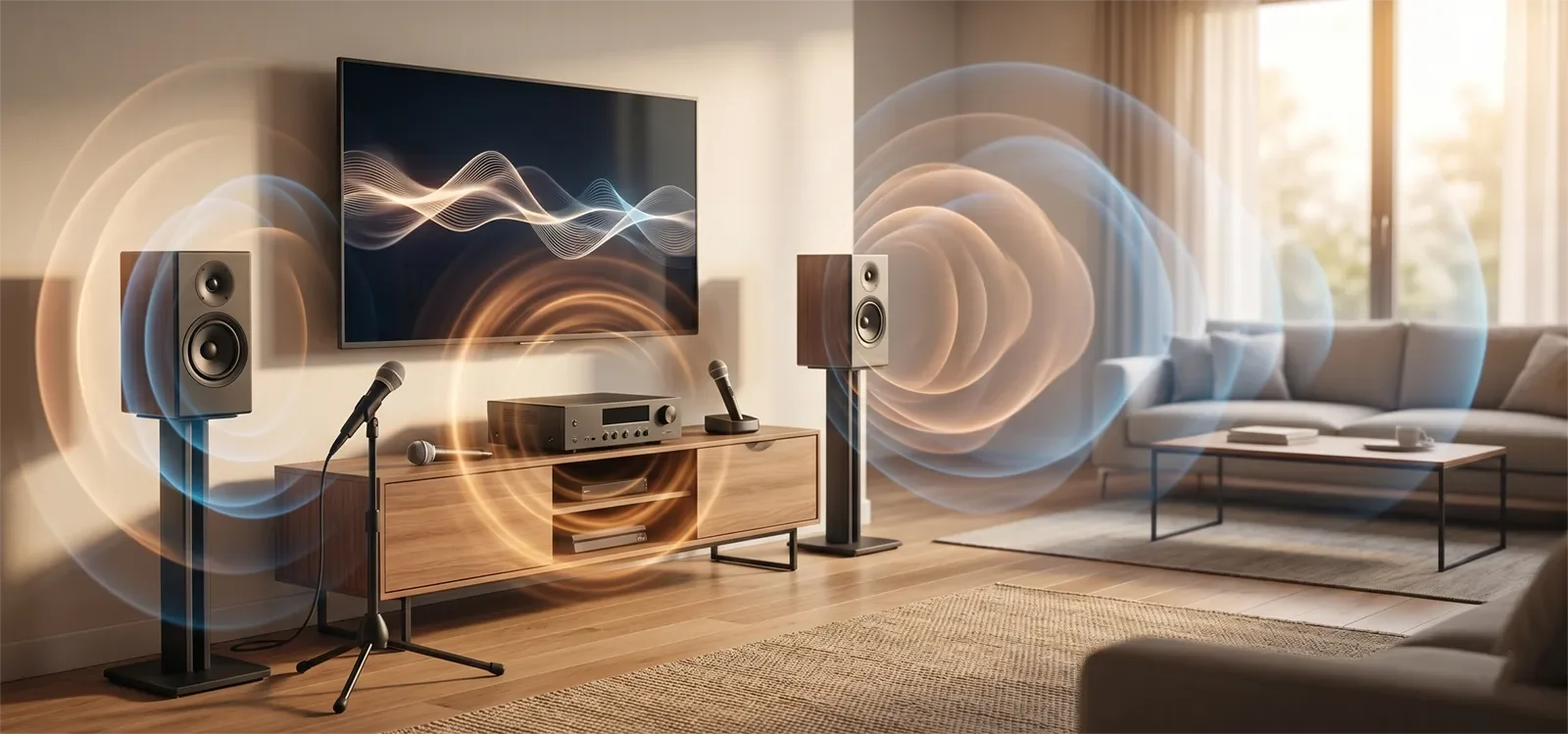
Table of Contents
What dB and watts actually mean in karaoke
Watts and dB describe different parts of a karaoke system. Watts describe power on the electrical side. dB describes level-related behavior on the audio side. That difference matters because one helps explain system capacity, while the other is closer to how sound is experienced in the room.
For home karaoke, the system is not only playing music. It is also supporting live vocals through microphones. That means the system has to stay clear, stable, and comfortable while music and voice are active at the same time. A watt number can suggest how much power is available, but it does not tell you by itself whether the vocal will sit clearly above the music or whether the room will feel balanced.
This is why dB and watts should not be treated as two competing ways to say the same thing. Watts help describe the support behind the sound. dB helps describe the level side of what you hear.
Why watts do not directly equal loudness
The most common mistake is assuming more watts automatically means a much louder karaoke system. More usable power can help, but the relationship is not that simple. Power is only one part of the chain.
In the same system, more power can increase output. But in real comparisons, you are rarely comparing only power. You are also comparing speaker sensitivity, amplifier behavior, cabinet design, room size, placement, and listening distance. Those factors can change how loud or effortless a system feels at home.
That is why a system with a bigger watt number can still feel less lively than another system with better speaker behavior or a better room match. The bigger number may look stronger on paper, but the room decides what the listener actually experiences.
If you want the safer plain-English explanation of power labels themselves, continue with RMS vs Peak Power Explained. That article helps separate steady-use power from headline power claims before you compare systems.
Why dB is closer to what you hear
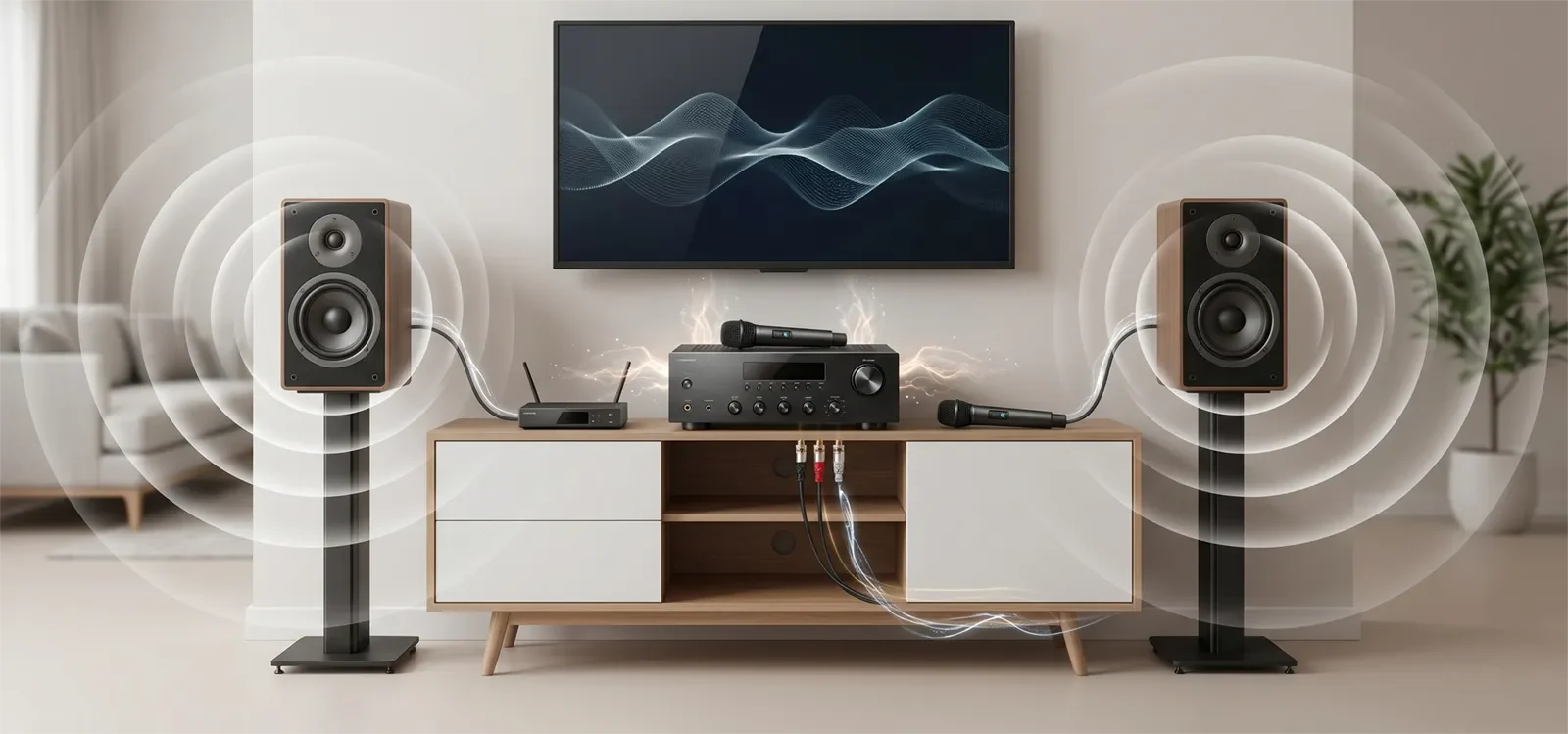
dB is useful because it speaks the language of level and level change. When people ask whether a karaoke system will feel loud enough, what they usually care about is not the watt number itself. They care about the audible result: how full the room feels, how clear the vocal is, and whether the sound stays comfortable instead of strained.
That makes dB-related thinking more practical than raw watt comparison. It helps you focus on the output side of the system, not just the power going into it.
However, dB is not always one simple number. It can appear in different audio contexts, including sound pressure level, digital level, speaker sensitivity, and other measurements. The number only becomes useful when you understand what kind of dB reference is being used.
If you want the broader explanation of those different dB terms, see dB vs dBFS vs SPL vs LUFS Explained. That guide explains why the same “dB” label can mean different things depending on the audio context.
What changes in real home karaoke use
In real home karaoke, watts mainly affect how comfortably the system can support the sound. When there is enough usable power, the system is less likely to feel strained during musical peaks, louder singing moments, or busy songs. The vocal has a better chance of staying clear without the whole system sounding pushed.
dB-related behavior affects the result you notice more directly. It helps explain whether the system turns power into usable output efficiently, whether the room feels full at normal volume, and whether small changes in level are actually meaningful to the listener.
This is why speaker sensitivity matters so much in the loudness conversation. Two speakers can receive the same power but produce different real-world output. For a deeper explanation of that part of the chain, read Understanding Speaker Sensitivity for Karaoke.
The practical result is simple: a karaoke system should not be judged by watts alone. It should be judged by how cleanly and comfortably it performs in the room where people will actually sing.

Common misunderstandings
The first misunderstanding is treating watts as a direct loudness promise. Watts matter, but they do not automatically tell you how loud the system will feel from the normal singing position. They are better understood as part of the system’s support and reserve.
The second misunderstanding is treating all dB numbers as if they mean the same thing. They do not. A dB number related to speaker sensitivity is not the same as a dB number related to digital audio level or sound pressure in the room. The label matters, but the reference matters even more.
The third misunderstanding is asking, “Which matters more?” as if one term should replace the other. The better answer is that they matter in different ways. Watts help explain how much power the system can draw from. dB helps explain level, change, and output-related behavior.
The fourth misunderstanding is assuming a louder system is automatically a better karaoke system. For home singing, loudness without vocal clarity can become tiring quickly. A good karaoke system should feel clear, balanced, and controlled, not just loud.
The practical rule to remember
The easiest rule is this: read watts as power reserve, and read dB as the level side of what you hear.
That rule keeps the conversation grounded. Instead of asking only which system has more watts, ask whether the system can stay clear and comfortable in your room when music and vocals are both active. That question is much closer to real karaoke performance.
For most home users, the goal is not to win a specification contest. The goal is a system that feels full enough for the room, keeps the vocal easy to hear, and does not become harsh or tiring during a full singing session.
Conclusion
dB and watts are not interchangeable. Watts describe electrical power and help explain system reserve. dB describes level-related behavior and is usually closer to how loudness and output are understood from the listening side.
The practical takeaway is clear: watts still matter, but they do not tell the whole loudness story. In home karaoke, what matters most is how the full system behaves in the room, how clearly the vocal sits above the music, and how comfortably the sound fills the space without feeling strained.
Frequently Asked Questions
Do more watts always make a karaoke system sound louder?
No. More watts can help a system stay cleaner and more controlled, but they do not automatically tell you how loud the system will feel in a real home. Speaker behavior, room size, placement, and listening distance all affect the final result.
Is dB more important than watts for home karaoke?
dB is often closer to what people mean when they ask about loudness, but that does not make watts useless. Watts help explain power reserve. dB helps describe level and level change. A good karaoke system needs both enough usable power and good output behavior.
Why can a lower-watt karaoke system feel louder than a higher-watt system?
A lower-watt system can feel louder if its speakers are more efficient, its placement works better, or the room supports the sound more naturally. Raw watt numbers do not account for all of those real-world factors.
Should I ignore watts when comparing karaoke systems?
No. Watts still matter because they help explain whether the system has enough clean reserve. The mistake is using watts as the only loudness shortcut. They should be read together with speaker behavior, room fit, and real listening comfort.
Why does dB seem confusing in audio specs?
dB is confusing because it can describe different audio references depending on the context. It may refer to speaker sensitivity, sound pressure level, digital signal level, or other level-based measurements. The number only makes sense when you know what it is measuring.
If the word “dB” still feels confusing because it appears in several audio contexts, the next best guide is the dB family explanation.
Continue with the dB family guide here