
RMS power is usually the more useful number for understanding real home karaoke performance because it points closer to steady, usable power. Peak power describes a short burst, not how clean, stable, or comfortable the system will feel during a full singing session.
Power labels confuse many home karaoke users because they sound more precise than they feel in the room. A big watt number can look impressive, but it does not automatically tell you whether the system will stay clean, balanced, and comfortable when music and microphones are running together.
That is why RMS and peak power matter less as bragging numbers and more as clues about system behavior. In home karaoke, the better question is not “Which number is bigger?” but “Which number tells me more about real use?” For broader plain-English context around how technical ideas affect home singing systems, see our technical guide to karaoke system behavior.
Written by Toan Ho — Tittac editorial team.
Who this guide is for: Home users who want to understand RMS and peak power without turning the decision into a wattage race.
How this guide was prepared: This guide was written by focusing on the real listening meaning of RMS and peak power in everyday home karaoke use, not by treating watt labels as promises on their own.
Quick Answer
RMS and peak power do not describe the same thing. In plain English, RMS is the more useful shorthand for steady, usable power that better reflects how a karaoke system behaves through a normal session. Peak power describes a short burst or upper moment, but it does not tell you how stable, clean, or comfortable the system will feel over time. For most home karaoke users, RMS is the practical number to notice first. Peak power is not useless, but it is easier to overread and should not be treated as a shortcut for loudness, sound quality, or better real-world singing performance.
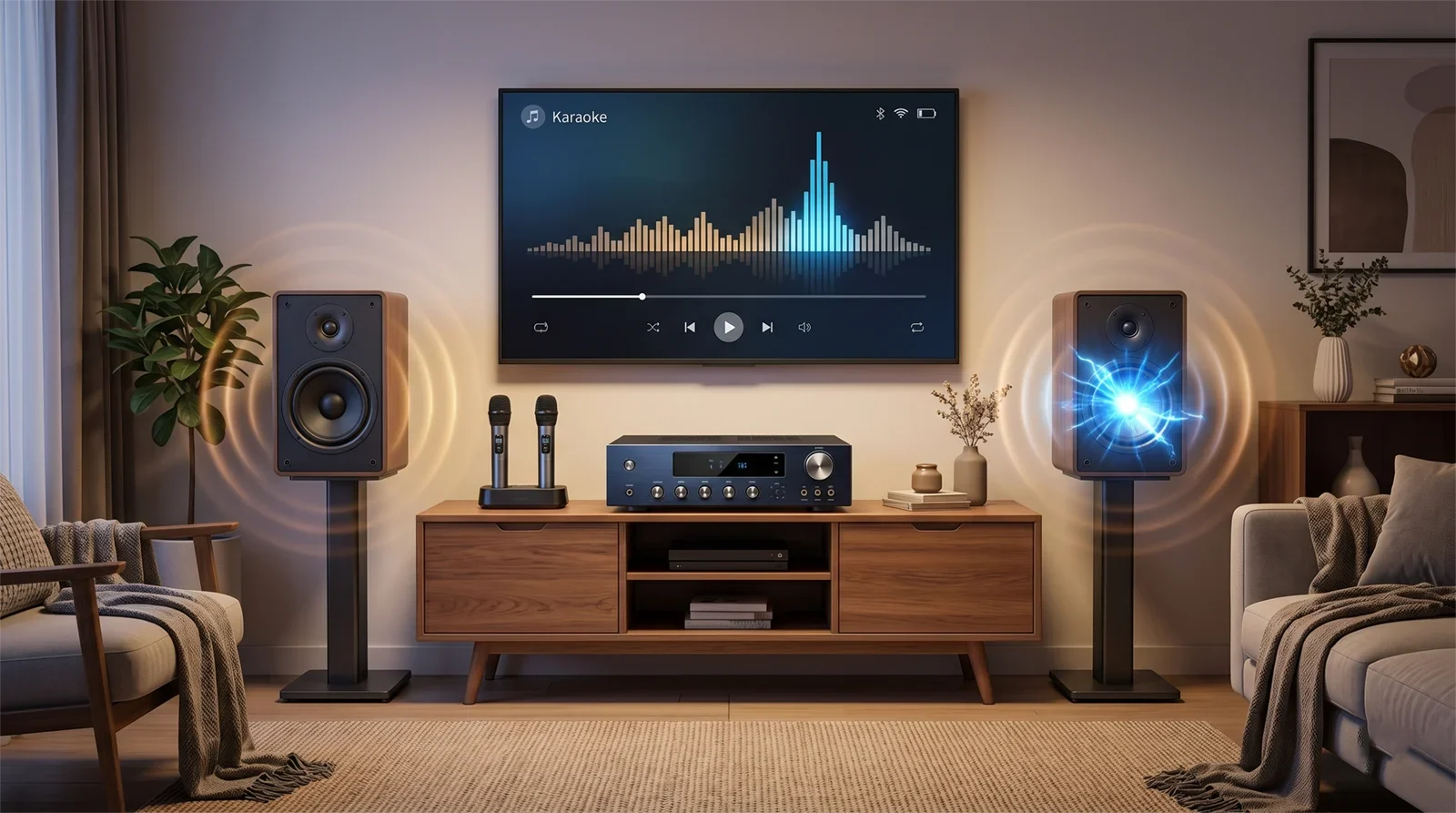
Table of Contents
What RMS and peak power mean
RMS and peak power both describe power, but they describe different parts of the story. In home karaoke language, RMS is usually the more helpful way to think about a system’s steady working ability. Peak power points to a short-term upper burst that may happen only for a moment.
That difference matters because karaoke is not a one-second event. You are asking the system to play music, carry live vocals, and stay controlled across a full session. The useful question is not whether the system can show a dramatic number for a brief spike. The useful question is whether it can keep sounding stable, clear, and comfortable while people are actually singing.
That is why this topic should be treated as a meaning guide, not a shopping trick. RMS helps you think about everyday behavior. Peak power helps describe a short upper limit. Once those roles are separated, the labels become easier to read without overreacting to the bigger number.
Why RMS is more useful for home karaoke
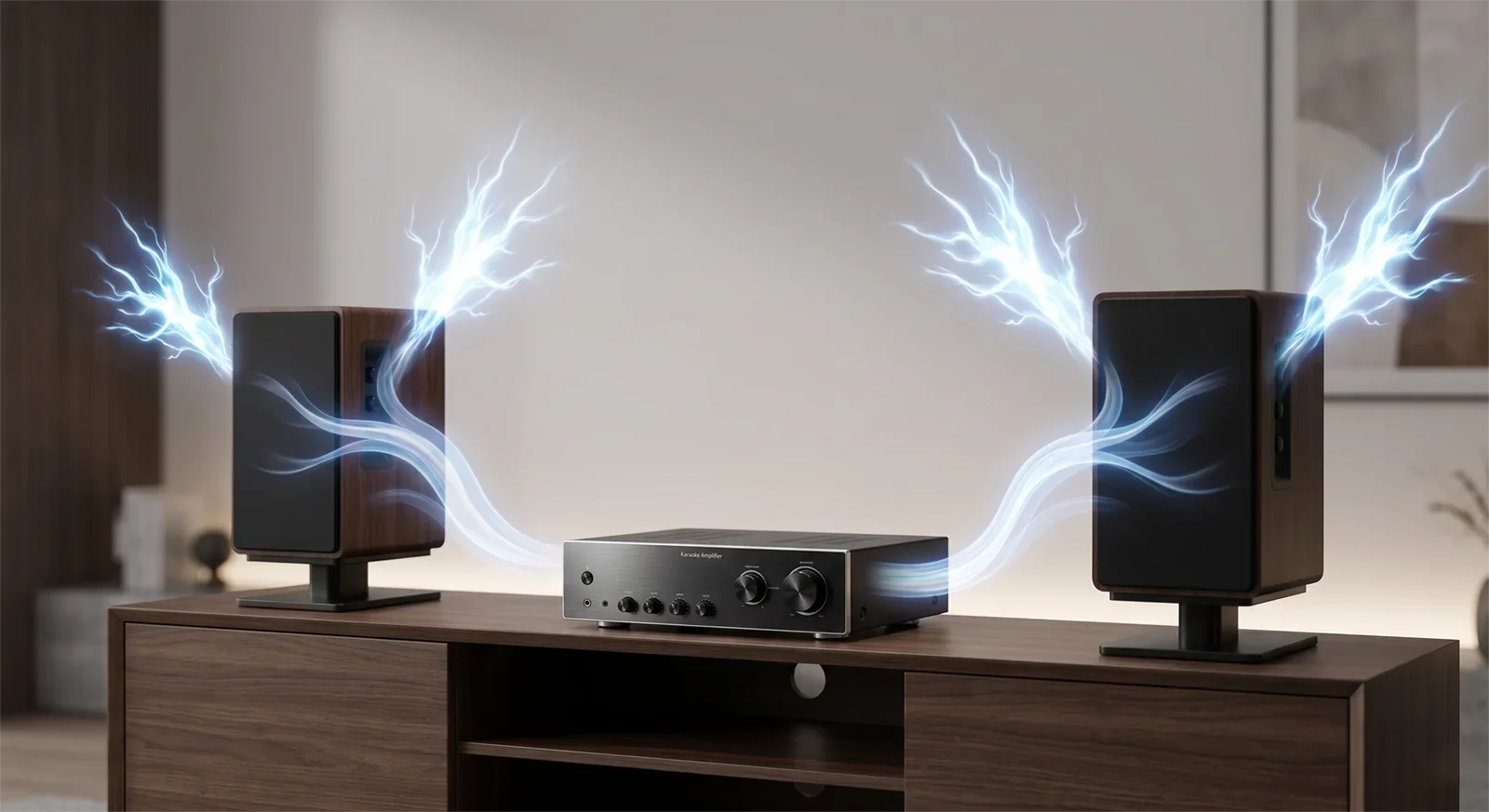
RMS is usually more useful because home karaoke depends on steadiness. A karaoke system has to handle backing music, live vocals, repeated songs, and changing singer levels over time. A number that points closer to usable ongoing power is more helpful than a number that mainly describes a brief moment.
When people focus on RMS instead of only looking at peak power, they usually ask better questions. Does the system stay composed at normal family-room volume? Do vocals remain clear over the music? Does the sound still feel comfortable after several songs? Does the system have enough usable reserve before it starts sounding strained?
Those questions connect RMS power to real listening behavior. RMS still does not tell the whole story by itself, but it is usually the better starting point for understanding how a karaoke system may behave in daily home use.
What peak power can and cannot tell you
Peak power is not meaningless, but it is easy to misuse. It can describe a short burst or upper moment, but it should not be read as the system’s normal working ability. A system can carry an eye-catching peak number and still feel limited, stressed, or less controlled once a real karaoke session settles in.
This is where many buyers get misled. They see the biggest number and assume it means louder, stronger, cleaner, or better. But peak power does not answer how the system behaves through repeated songs, live vocal peaks, and normal room conditions.
This is also where people start mixing up watt labels with loudness. If you want the cleaner explanation for why a bigger watt number does not automatically tell you what matters most in the room, continue with dB vs. Watts: What Actually Matters?.
What you hear in real use
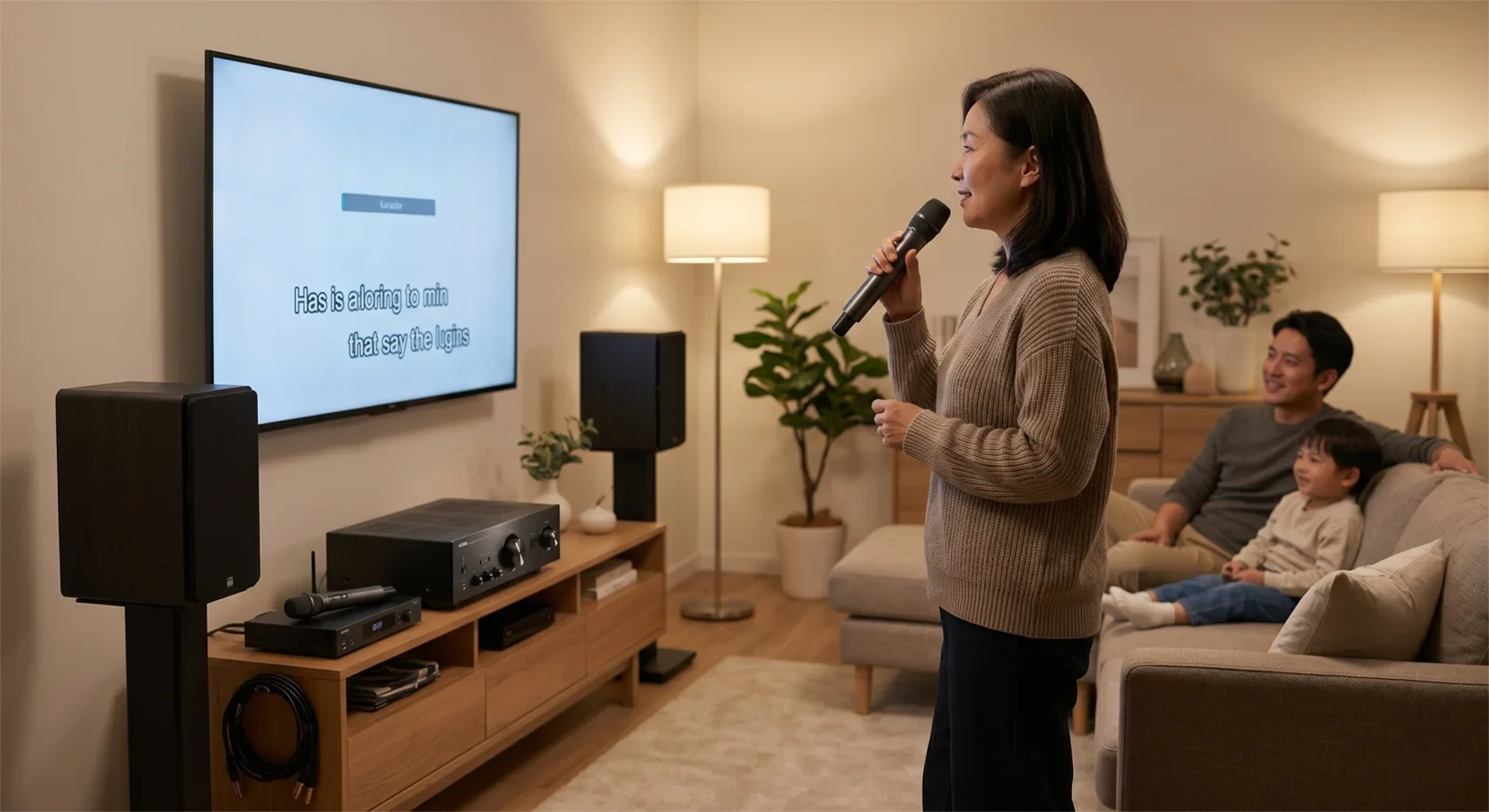
At home, RMS and peak power show up as a listening experience more than a math problem. When a system has enough realistic usable power for the way it is being used, it usually feels more relaxed. Vocals sit more naturally over the music, the sound feels less forced, and longer karaoke sessions are easier on the ears.
When the numbers are misunderstood, people often expect more from the system than the room experience delivers. That is when they start saying things like “I thought this would sound bigger” or “the number looked huge, but the result still feels ordinary.” The problem is often not that the label was fake. The problem is that the label was read as a promise of the whole experience.
Power terms should always be read alongside the rest of the system picture. For example, how easily a speaker turns power into audible output also shapes what you hear at home. That is where understanding speaker sensitivity for karaoke becomes useful, because sensitivity helps explain why two systems with different power labels may still feel surprisingly different in the room.
What people often misunderstand
The biggest misunderstanding is treating peak power as a shortcut for “better.” It is not. Peak power can describe a real momentary condition, but it does not tell you how well the system will behave through normal singing, repeated songs, and everyday room use.
Another common mistake is assuming RMS alone settles everything. It does not. RMS is the more practical number to notice first, but it is still only one part of the larger picture. It does not automatically tell you speaker efficiency, room interaction, vocal balance, tuning quality, or how comfortable the system will feel in your specific space.
People also overreact to raw watt comparisons between products that may not even be presenting the same kind of rating. That is where confusion starts. A bigger printed number feels simple, but it can push people toward the wrong conclusion if they assume every watt figure means the same thing in real use.
The simplest practical rule to remember
If you want one rule that keeps this topic useful, use this one: read RMS as the better clue for everyday home karaoke behavior, and treat peak power as supporting context rather than the headline. That habit keeps you from chasing dramatic numbers that may not change the actual experience very much.
In practical terms, stop asking, “Which number looks strongest?” and start asking, “Which number helps me predict a cleaner, steadier session at home?” That small shift leads to better interpretation, less spec anxiety, and fewer false expectations.
It also helps you stay grounded when comparing systems, because the goal in home karaoke is not winning a watt contest. The goal is easier control, clearer vocals, less strain, and a system that feels believable in real family use.
Conclusion
RMS and peak power are not enemies, but they are not equal guides. Peak power can describe a short upper moment. RMS is usually the better shorthand for how usable and steady the system is likely to feel across normal home karaoke sessions.
The practical takeaway is simple: do not let the bigger number control your interpretation. Read RMS first, keep peak power in context, and judge power terms by how well they help explain real listening behavior at home rather than how dramatic they look on a page.
Frequently Asked Questions
Is RMS more useful than peak power for home karaoke?
Yes, in most cases. RMS is usually the more practical clue for how a system will behave during normal singing and music playback over time. Peak power may describe a short upper burst, but it does not say as much about day-to-day session comfort, control, or stability.
Does higher peak power mean a karaoke system will sound louder?
Not by itself. Peak power is too limited to act as a reliable loudness prediction on its own. What you hear at home also depends on speaker behavior, room conditions, listening distance, system tuning, and how cleanly the setup handles ongoing music and vocals together.
Should I ignore peak power completely?
No. Peak power still has meaning as part of the technical picture, especially when understood as a brief moment rather than a steady-use promise. The key is to keep it in the background instead of treating it as the main shortcut for judging real karaoke performance.
Why do watt numbers create so much confusion?
Because people naturally compare the biggest number first, and many listings do not make the type of rating clear enough. Once RMS and peak power are separated into their actual roles, the labels become easier to read without turning them into exaggerated conclusions.
If this topic helped clarify the power side of the picture, the next useful step is understanding why watt numbers still do not tell the whole loudness story.