
Speaker sensitivity describes how easily a speaker turns amplifier input into audible volume. In home karaoke, that matters because a more sensitive speaker can often feel louder, more open, and less strained at normal singing levels, while a less sensitive speaker may need more amplifier support before the room feels equally alive.
Who this guide is for: Home karaoke users who want to understand why some speakers feel louder, easier, and more responsive than others even when the systems look similar on paper.
How this guide was prepared: This guide was written from a home-use perspective, focusing on how speaker sensitivity affects perceived loudness, amplifier effort, vocal clarity, and real listening results in everyday karaoke rooms.
Speaker sensitivity is one of those specs that sounds technical but shows up in a very real way at home. Two karaoke systems can seem similar on paper, yet one may feel more open, easier, and more lively at normal singing volume while the other feels like it needs more effort to wake up.
That is why sensitivity matters in home karaoke even if you are not trying to think like an engineer. It helps explain why some speakers feel louder and more relaxed with the same level of amplifier support, especially in small and medium rooms where comfort, vocal clarity, and usable loudness matter more than raw numbers. For broader plain-English context around how technical ideas shape real home singing, see our Karaoke Technical Guides.
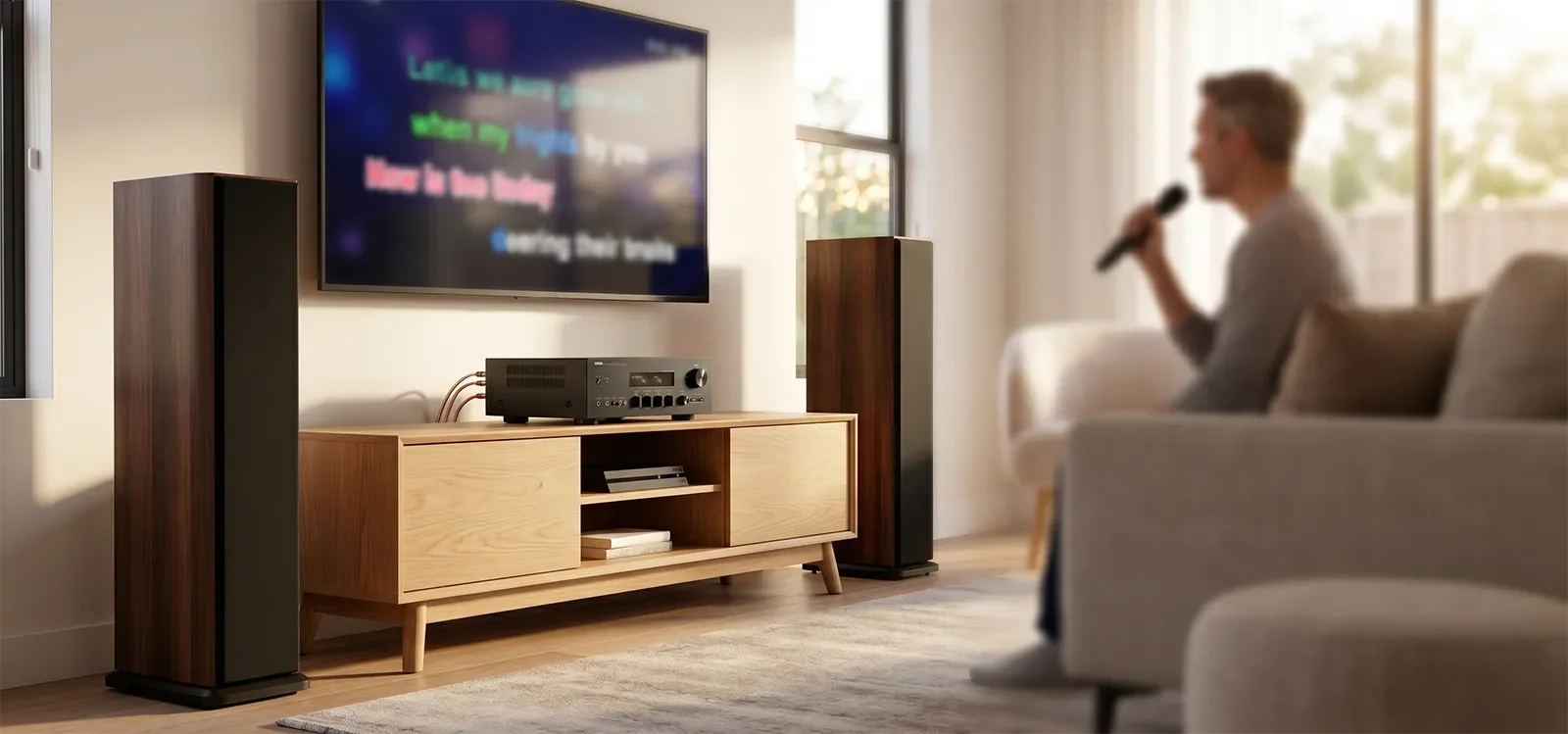
Table of Contents
Quick Answer
Speaker sensitivity describes how easily a speaker turns amplifier input into audible volume. In home karaoke, that matters because a more sensitive speaker can often sound louder and more effortless with the same amplifier support, while a less sensitive one may need more help before the room feels equally alive.
That does not mean sensitivity tells you everything about sound quality, vocal smoothness, or room behavior. It is better understood as a clue about efficiency and system demand. For most home users, the practical value of sensitivity is simple: it helps explain perceived loudness and why some systems feel easier, cleaner, and less strained at everyday singing levels.
What speaker sensitivity actually means in home karaoke
In plain English, speaker sensitivity tells you how easily a speaker produces audible sound from the amplifier input it receives. For karaoke at home, that matters because the system is not just playing background music. It also has to carry vocals clearly, keep the mix feeling alive, and stay comfortable through multiple songs and different singers.
A more sensitive speaker often reaches satisfying room volume with less effort. That does not automatically make it the better speaker in every way, but it does help explain why one system can feel more responsive and more relaxed at the same general listening level.
So sensitivity is best read as an efficiency clue. It helps you understand how hard the system may need to work before the room feels full enough for enjoyable home karaoke.
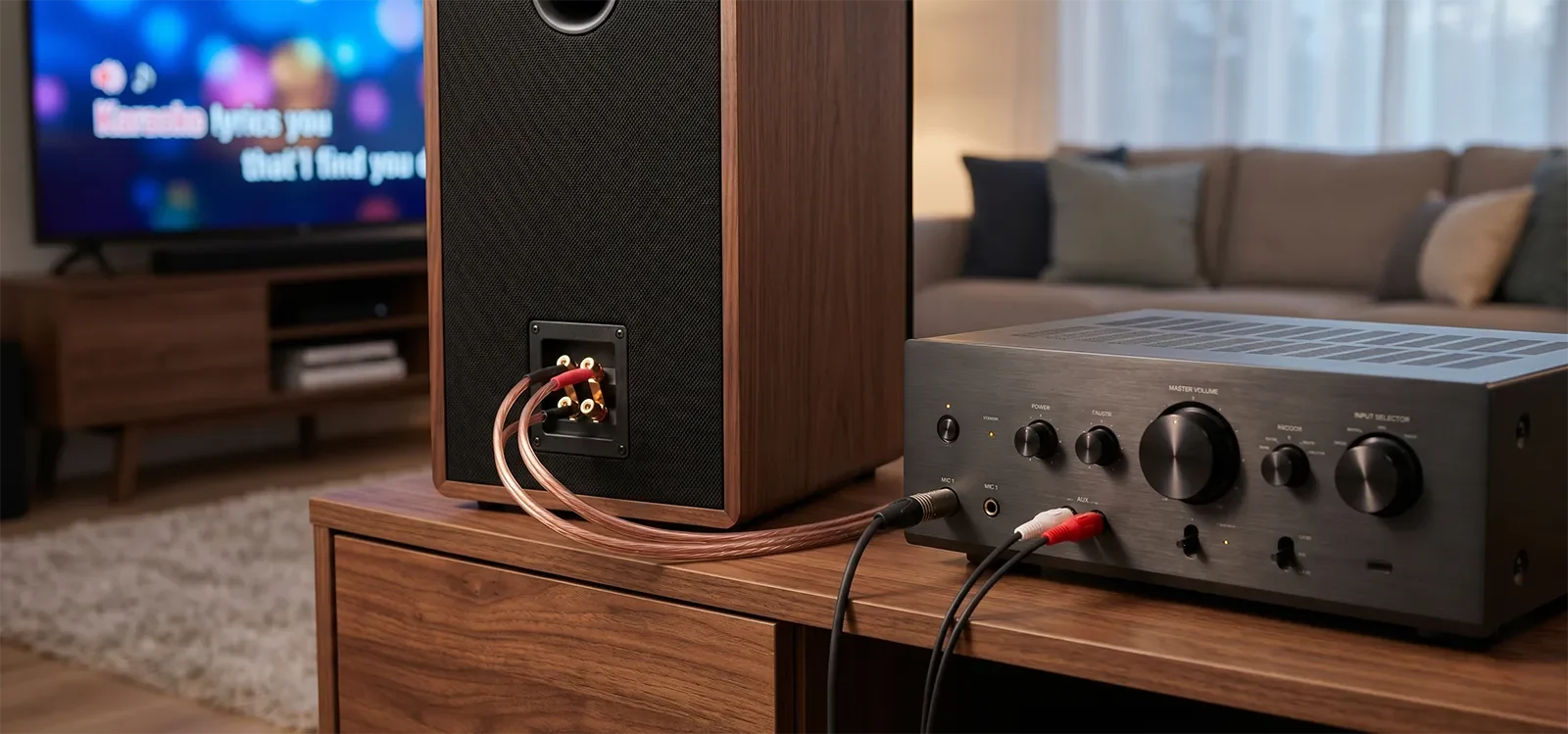
What sensitivity changes in system behavior
Sensitivity changes how much help a speaker needs from the rest of the system. A speaker that is easier to drive can make modest amplifier support feel more usable, while a less sensitive speaker may need more push before the same room starts to feel lively and balanced.
That affects system behavior in practical ways. When the speaker reaches comfortable loudness more easily, the setup may feel less strained during energetic songs, easier to manage in family spaces, and more stable when music and vocals are both active. This is one reason people often confuse watt labels with real loudness. If you want the broader explanation behind that confusion, read dB vs Watts: What Actually Matters?.
Sensitivity also helps explain why amplifier support cannot be judged by watt language alone. The speaker’s behavior changes how far that amplifier effort actually goes in the room.
What users hear in real use
At home, sensitivity usually shows up as feel. A system with more usable efficiency can sound more awake at ordinary volume, with vocals sitting more naturally above the music and less need to push everything harder just to make the room feel engaged.
That does not mean the sound will automatically be smoother or more flattering. But it can mean the system feels less forced, less flat, and easier to enjoy over a full karaoke session. In small and medium rooms, that often translates into better day-to-day comfort instead of just occasional loud moments.
This is also why sensitivity should be read alongside power terms, not separately. If you want the plain-English difference between steady power meaning and headline numbers, see RMS vs Peak Power Explained.
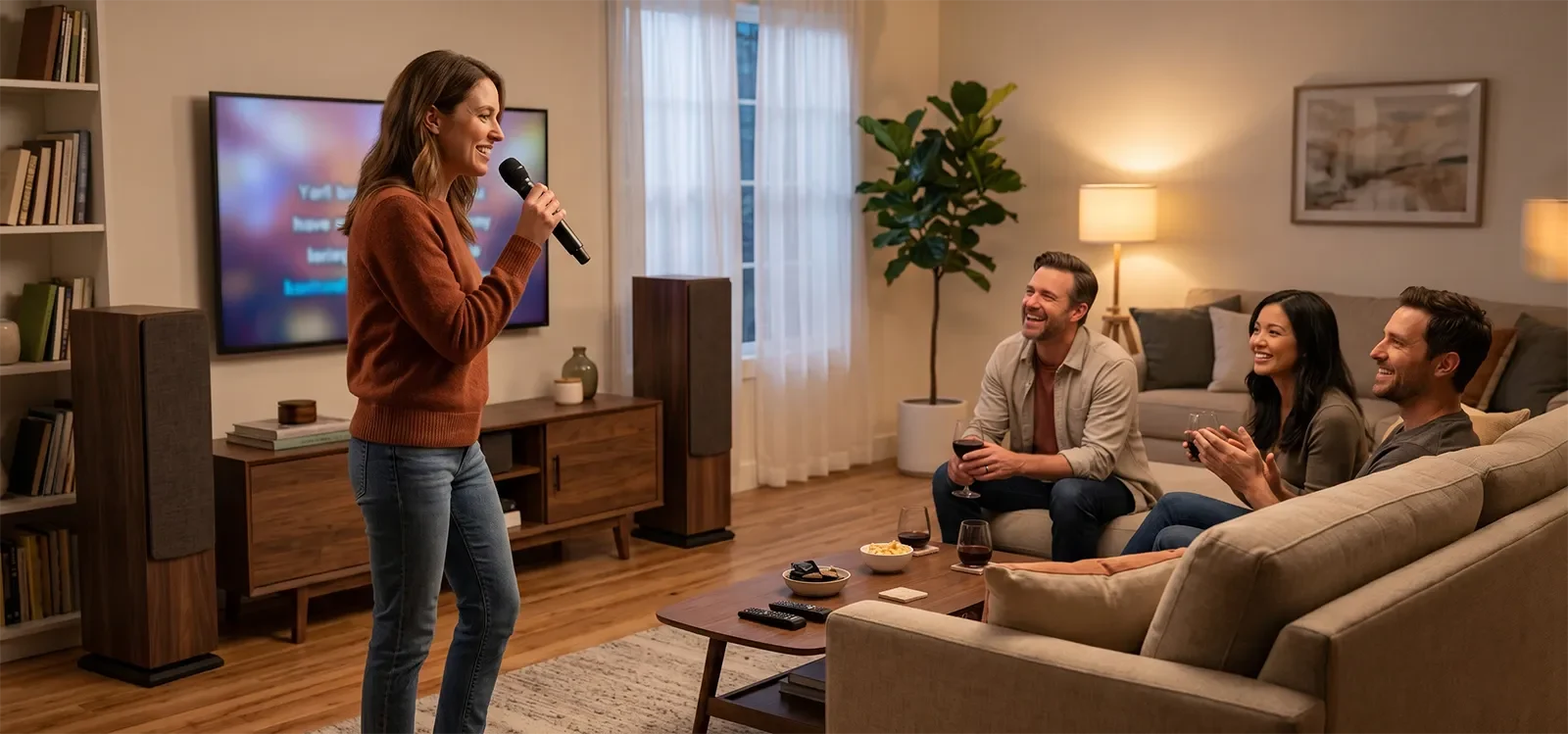
What people often misunderstand
The biggest misunderstanding is thinking higher sensitivity automatically means better karaoke sound. It does not. Sensitivity says something useful about how easily a speaker produces volume, but it does not fully describe vocal tone, harshness, bass balance, feedback behavior, or how the room changes what you hear.
Another common mistake is treating sensitivity like a shopping shortcut instead of a listening concept. That usually leads people to over-focus on a single spec and under-focus on what actually matters at home: whether the system feels comfortable, whether vocals stay clear, and whether the speaker behaves well in the room where people actually sing.
People also overreact to sensitivity without thinking about system matching. The more useful mindset is not “higher must be better,” but “what does this tell me about effort, loudness feel, and the kind of support this speaker may need?”
The simplest practical rule to remember
The simplest rule is this: use sensitivity as a clue about how easily a speaker may fill your room, not as a final verdict on sound quality. That keeps the spec useful without turning it into the whole decision.
For most home karaoke users, the everyday takeaway is simple: a more sensitive speaker may help the system feel louder and easier with the same amplifier support, while a less sensitive one may ask more from the amplifier before it feels equally alive. That is the real value of the concept.
So instead of chasing sensitivity as a bragging point, use it to set better expectations about perceived loudness, amplifier effort, and how naturally the setup may behave in your room.
Conclusion
Speaker sensitivity matters because it helps explain why some karaoke systems feel more effortless than others, even when the room and general volume target seem similar. It is not a full description of sound quality, but it is a useful way to understand how efficiently a speaker turns amplifier input into real audible output.
The practical takeaway is to treat sensitivity as a listening and system-behavior clue. It helps you think more clearly about perceived loudness, amplifier demand, and room expectations without turning one spec into the whole story.
Frequently Asked Questions
Is speaker sensitivity the same as loudness?
No. Sensitivity helps explain how easily a speaker produces audible output, but loudness in a real room still depends on amplifier support, room behavior, distance, and how the whole karaoke system works together. It is related to loudness, but it is not the whole loudness story.
Does higher sensitivity mean I need less amplifier support?
In general, it means the speaker may reach satisfying volume more easily with the same amplifier support. That can make a system feel more relaxed and more efficient at home. But it does not mean amplifier matching stops mattering or that every high-sensitivity speaker will sound better.
Why does sensitivity matter in a small home karaoke room?
Even in a smaller room, sensitivity affects how easily the system feels alive at normal singing levels. That can influence vocal presence, comfort, and how hard the setup seems to work during longer sessions. It matters not just for loudness, but for overall ease and listening feel.
Should I judge karaoke speakers by sensitivity alone?
No. Sensitivity is useful because it explains perceived loudness and system effort, but it does not replace listening judgment, room awareness, or balanced system matching. It works best as one practical clue inside a bigger home-use picture, not as a single answer.
Need help understanding the right karaoke setup for your home? Call/Text English: 800-928-4331 | Call/Text Vietnamese: 800-640-5888.
Clearer loudness thinking makes the rest of the system easier to interpret.