
Karaoke speakers and music speakers can both play songs well, but they are not always designed around the same job. Music speakers often focus on smooth listening, while karaoke-friendly speakers usually put more attention on vocal clarity, midrange presence, and control when microphones are active.
Written by Toan Ho — Tittac editorial team
Who this guide is for: Home users who want to understand why some speakers feel more helpful for singing even when other speakers sound smoother for music alone.
How this guide was prepared: This guide was written by focusing on how speaker voicing affects vocal clarity, midrange presence, feedback-friendliness, and real home-use singing comfort.
Karaoke speakers and music speakers can both sound good, but they do not always help a singer in the same way. Many home users notice that one setup makes the voice feel easier to hear, easier to follow, and easier to control, while another sounds pleasant for casual listening but less helpful once real microphones and real singing enter the room.
That difference matters because home karaoke is not passive listening. It is a vocal-first situation where the speaker has to support lyrics, pitch, backing track energy, microphone behavior, and room sound at the same time. For broader plain-English context around how technical choices affect real home singing, see our Karaoke Technical Guides.
Table of Contents
Quick Answer
Karaoke speakers often sound different from music speakers because they are usually chosen or voiced with more attention to live vocals, lyric clarity, and practical control when microphones are active. Music speakers may sound smoother or more relaxed for passive listening, but karaoke use often benefits more from a speaker that keeps voices understandable, present, and easier to manage in the room.
That does not mean karaoke speakers are automatically better in every situation. It means the priorities are different. In home karaoke, the more useful speaker is usually the one that supports the singer first without making the system feel harsh, thin, or unstable.
What each option actually changes
The biggest difference is not the label on the speaker. It is voicing and priority. A music speaker is often judged by how smooth, pleasant, or relaxed it sounds during normal listening. A karaoke-friendly speaker is judged more by whether the singer stays easy to hear, whether lyrics remain understandable, and whether the system still feels controlled once microphones are involved.
That usually means the vocal range matters more in karaoke use. When the midrange is presented in a way that keeps words clear and the singer more centered in the mix, home karaoke often feels easier and more enjoyable. When that area is too recessed or too soft for live singing, the backing track may sound nice on its own, but the singer can start disappearing into it.
So this is not really a question of which speaker is “better” in the abstract. It is a question of what the speaker is helping you do. For karaoke, the main job is not only to play music attractively. It is to support a real voice in a real room.
The real trade-offs in home karaoke
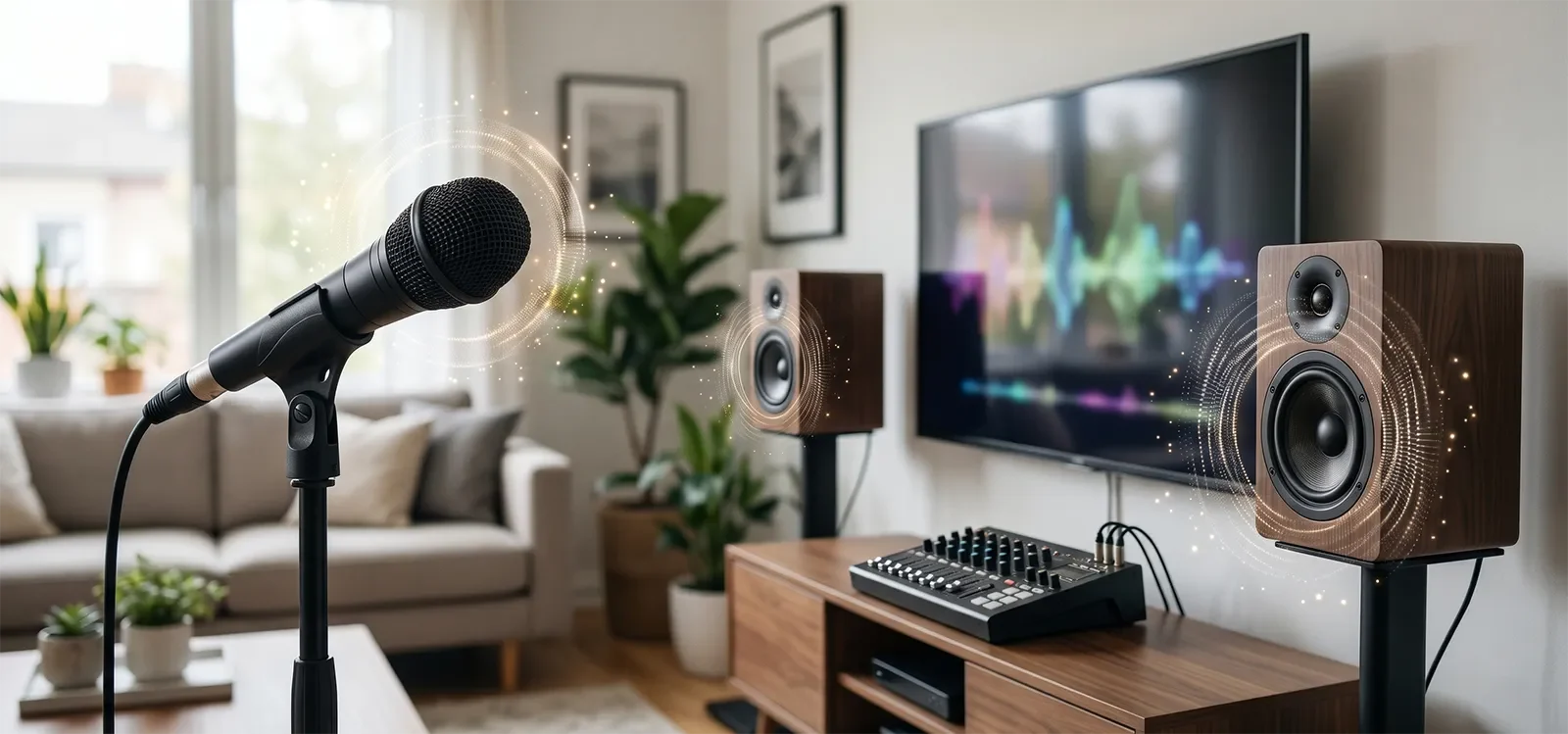
The main trade-off is between passive-listening smoothness and vocal-first usefulness. A speaker that feels softer or more relaxed with music can be enjoyable for everyday playback, but that same presentation may make the singer feel less defined once the room, microphone, and backing track all compete for attention.
On the other hand, a speaker that helps vocals cut through more clearly may feel more direct or forward. That can be a practical advantage in karaoke, especially when singers have different skill levels or stand at slightly different distances from the microphone. It can also make the whole system easier to live with because people do not have to fight the mix as much just to hear themselves.
This is also where speaker behavior and perceived loudness start overlapping. A speaker can seem easier to hear not only because of raw output, but because its presentation makes the vocal region more usable in the room. For that part of the picture, see Understanding Speaker Sensitivity for Karaoke.
Which option makes more sense for most homes
For most living-room and family karaoke setups, the safer default is the speaker behavior that helps voices stay clear and manageable. That does not mean the sound should become sharp or tiring. It means the singer should remain easy to follow without constantly raising the microphone, pushing effects, or forcing the whole system louder just to restore clarity.
In practical home use, vocal-first behavior often matters more than perfect music-only smoothness because karaoke is interactive. People move around, sing different genres, and use the room in less-than-perfect ways. A speaker that keeps the vocal more readable tends to produce a more forgiving and more repeatable home karaoke experience.
That is why the better choice for most frequent singers is usually the one that helps the voice hold its place in the track. If the balance between music and vocals is already unstable, even a nice-sounding speaker can become frustrating in actual use. For the next layer of that listening relationship, see How to Balance Music and Vocals in Karaoke.
When music speakers can still be the smarter choice
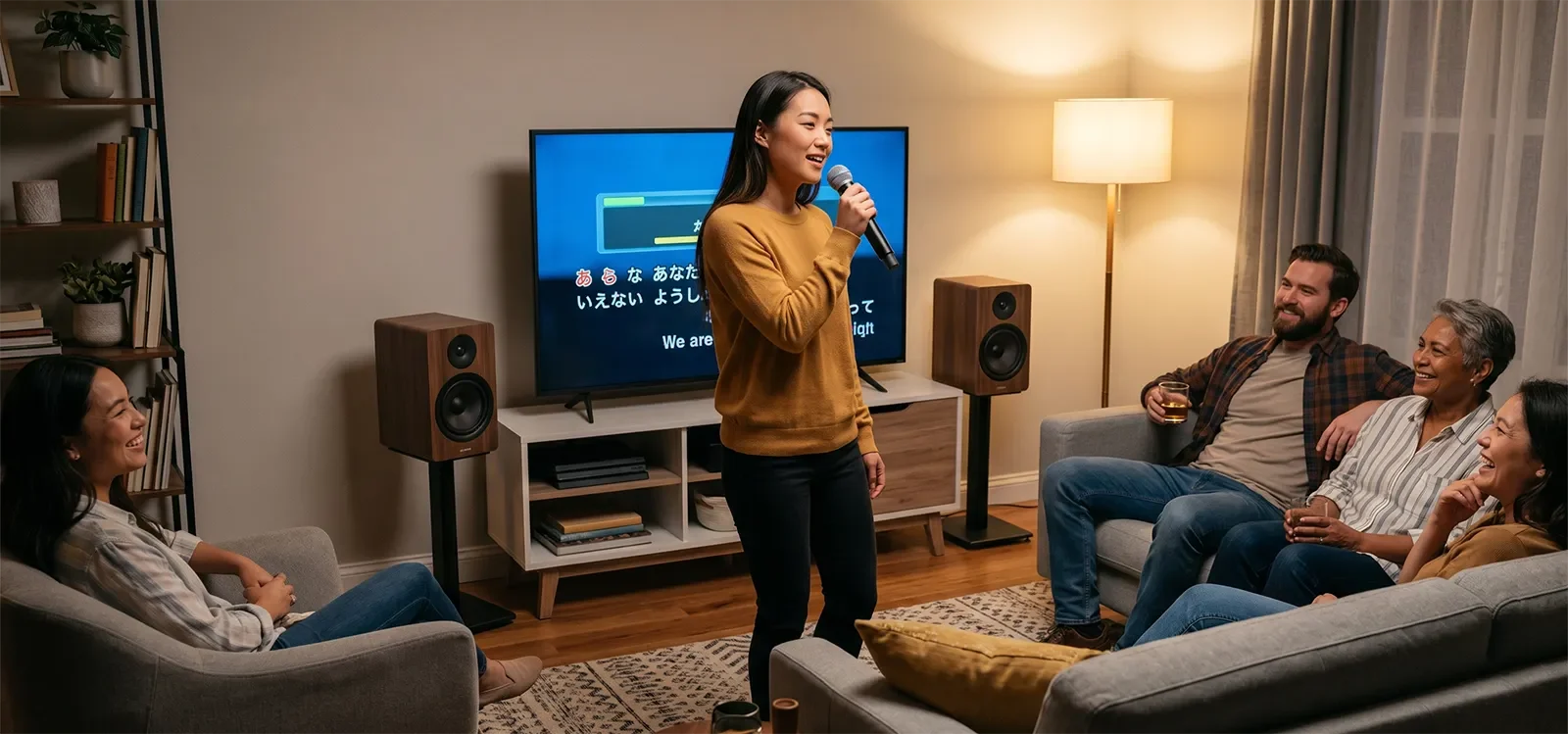
Music speakers can still make sense when karaoke is only occasional and the main goal of the system is relaxed everyday listening. In that case, a speaker chosen more for smooth playback may still work well enough for singing, especially if the room is controlled and expectations stay realistic.
They can also be a reasonable choice when the user already likes the current music presentation and does not often run into problems such as buried vocals, unstable clarity, or a constant need to push the singer harder just to stay on top of the track. If those problems are not really happening, the more music-first route may already be serving the home well.
So the smarter choice depends less on category label and more on frustration point. If the real problem is that vocals keep getting lost or feel harder to manage once microphones come out, karaoke-friendly voicing usually fits better. If the real system goal is mostly music with occasional singing, the trade-off may point the other way.
A simple decision rule to remember
If you want one simple rule, use this: choose the speaker behavior that makes singing easier, not just the one that sounds prettiest when no one is holding a microphone. That keeps the decision tied to the real job the system needs to do at home.
Another useful way to think about it is this: if your main frustration is unclear vocals, buried lyrics, or feedback-sensitive behavior once the room gets active, then a more karaoke-friendly presentation usually makes more sense. If your main priority is passive music enjoyment and singing is secondary, then a more music-first speaker may already be enough.
In other words, the better answer is not “karaoke speakers” or “music speakers” by default. It is whichever voicing priority matches how your household actually uses the system.
Conclusion
Karaoke speakers sound different from music speakers because they are often trying to solve a different problem. Music speakers often prioritize enjoyable playback for listening. Karaoke-friendly speakers prioritize helping a live voice stay clearer, more stable, and easier to manage in ordinary home rooms.
The practical takeaway is to judge speakers by the role they need to play. If home karaoke is the main use case, vocal clarity, midrange usefulness, and feedback-friendly behavior usually matter more than purely smooth music presentation. That is the trade-off that shapes the real difference.
Frequently Asked Questions
Can regular music speakers still work for karaoke at home?
Yes. Many homes use music speakers for karaoke with acceptable results. The real issue is whether they keep the singer clear and comfortable enough once microphones are active. If vocals stay readable and the room remains easy to control, they may already work well enough.
Do karaoke speakers always sound harsher than music speakers?
No. Some simply sound more direct or more helpful in the vocal range, which can feel different from smooth music listening without actually being harsh. In karaoke use, that added directness may make lyrics and pitch easier to follow rather than making the sound worse.
Why does the midrange matter so much for karaoke?
Because much of the human voice lives there. Small changes in that part of the sound can affect how clearly a singer cuts through the backing track. In home karaoke, midrange behavior often matters more than people expect because it influences words, pitch feel, and vocal confidence.
Is feedback control only about speaker type?
No. Feedback also depends on microphone handling, room reflections, placement, and level balance. But speaker behavior still matters because a more karaoke-friendly presentation can make the system easier to manage overall, especially when live vocals are the center of the experience.
Need help understanding the right karaoke setup for your home? Call/Text English: 800-928-4331 | Call/Text Vietnamese: 800-640-5888.
Speaker behavior makes more sense once you understand why some systems feel louder and easier with the same amount of effort.
Continue with speaker sensitivity here.