
Professionals tune karaoke systems by following a listening order, not by guessing at random controls. The goal is to build a clean baseline first, make the vocal easy to sing through, judge the room honestly, and only then use smaller refinements to improve tone, comfort, and repeatability.
Who this guide is for: Home karaoke users who want a clearer, more reliable tuning method without getting lost in knobs, menus, EQ curves, or pro-audio language.
How this guide was prepared: This guide was written around real home karaoke listening priorities: clean level flow, vocal clarity, room behavior, singer comfort, and repeatable sound across normal songs and voices.
Professional karaoke tuning is not really about secret settings. It is about knowing what to judge first, what to judge second, and what to leave for later. That order matters because a karaoke system can sound worse when the user starts correcting details before the foundation is stable.
In home karaoke, better tuning usually comes from method. Build the baseline first. Listen to the vocal before chasing tone. Pay attention to the room before blaming the gear. Then use small refinements only after the important relationships already work. For broader plain-English context around how technical ideas affect home singing, see our Karaoke Technical Guides.
Table of Contents
- Quick Answer
- Why professionals build a baseline before detail
- Why vocal clarity comes before tone shaping
- Why room judgment comes before blaming the gear
- Why restraint matters after the main priorities are settled
- A reusable listening order for home karaoke
- What home users should not copy from pro tuning
- Conclusion
- Frequently Asked Questions
- Related Posts
Quick Answer
Professionals tune karaoke systems by following a sequence: clean baseline first, vocal clarity second, room behavior third, and fine tone or effect adjustments last. In home use, this means checking whether the microphone signal is clean, whether the singer sits naturally over the music, whether the room is creating harshness or boominess, and whether each adjustment improves the system across more than one song.
The goal is not a flashy sound for one short demo. The goal is a repeatable sound that stays clear, comfortable, and easy to sing through across different voices, songs, and normal listening positions.
Why professionals build a baseline before detail
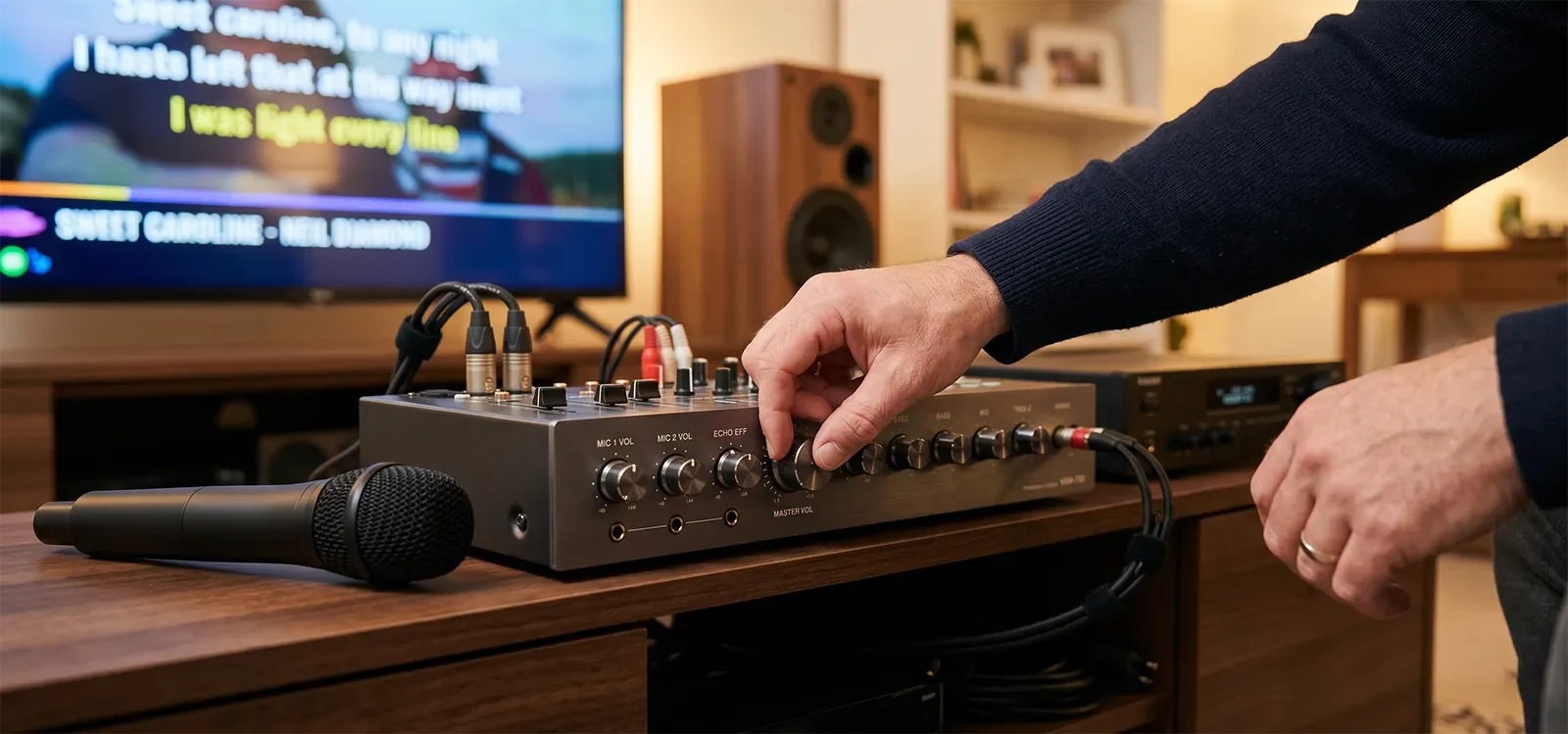
Better-tuned home karaoke systems usually get the baseline right before they try to sound polished. In plain English, the microphone enters the system cleanly, the singer does not get buried by the track, the overall level feels believable, and the system already sounds usable before anyone starts chasing finer tone decisions.
Professionals care about the baseline because every later judgment depends on it. If the level flow is unstable, EQ becomes a workaround. If the vocal starts weak and gets forced forward later, the sound can become strained instead of natural. If the system already feels edgy before the mix is shaped, smaller tone decisions become hard to trust.
This is why gain structure matters so early in the method. The system should not begin too weak, too hot, or too uneven and then depend on later controls to repair the foundation. If you want the focused plain-English version of that topic, see What Gain Structure Means in Home Karaoke.
Why vocal clarity comes before tone shaping
Once the baseline feels stable, professionals usually judge vocal clarity before they worry about finer tone. In home karaoke, that means asking whether lyrics are easy to follow, whether the singer sits naturally over the track, and whether the system already feels comfortable before trying to make it sound bigger, brighter, or more dramatic.
The reason for that order is simple. If the vocal is unclear, the problem is not always tone. It may be a level relationship problem, a masking problem, a microphone habit problem, or a room problem. Chasing tone too early can change the character of the sound before the real source of the difficulty has been identified.
That is why experienced tuning often sounds organized before it sounds impressive. The first priority is not making the voice hyped. The first priority is making it readable, believable, and easy to stay with across more than one song. Once that relationship feels right, later detail choices become much easier to judge.
If you want the companion article that isolates that relationship more directly, see How to Balance Music and Vocals in Karaoke.
Why room judgment comes before blaming the gear
After the baseline and vocal relationship make sense, professionals pay attention to the room before assuming the gear is the main problem. Home karaoke happens in living rooms, open layouts, reflective walls, tile floors, low ceilings, and imperfect speaker positions. Those conditions shape what people hear more than many home users expect.
If one area of the room sounds boomy, another sounds thin, and another feels harsh, the system may not need bigger control changes first. It may be revealing room behavior. In that situation, more treble, more bass, or more effect can make the sound more dramatic without making it easier to sing through.
This is why professionals treat the room as part of the tuning method, not as background information. A room can exaggerate bass, smear vocals, sharpen high frequencies, or make feedback easier to trigger. Before making a large setting change, it helps to ask whether the problem is happening everywhere or mostly in one position.
If you want the broader plain-English foundation for that part of the process, see How Room Acoustics Affect Karaoke Sound.
Why restraint matters after the main priorities are settled
Restraint matters in professional tuning, but not as the first idea. It works best after the important priorities are already in place. Once the baseline is clean, the vocal relationship feels right, and the room has been judged honestly, smaller moves usually work better than dramatic ones.
This is one reason better-tuned systems often sound calmer than people expect. A clearer karaoke system is not always the one with the brightest vocal, the deepest bass, or the heaviest effects. It is the one where the core relationships already make sense, so later refinements do not have to fight the mix.
In home karaoke, restraint protects repeatability. A forgiving system lets different singers move through normal songs without collapsing into harshness, mud, feedback, or constant re-correction. Professionals are not trying to create a spectacular moment from one short phrase. They are trying to preserve a result that still works across a full session.
A reusable listening order for home karaoke
A professional-style listening order works well at home because it keeps judgment organized. Start with one familiar song and one familiar voice at realistic home volume. First, check whether the microphone signal feels clean, believable, and controlled before any effect becomes important.
Next, judge whether the vocal sits naturally over the music. Do not ask whether it sounds impressive yet. Ask whether lyrics are easy to follow and whether the singer feels supported instead of pushed backward or pulled too far forward. Only after that relationship feels right should finer tone decisions carry more weight.
Then pay attention to the room. Walk the space and notice whether the sound stays reasonably consistent, or whether certain areas become harsh, boomy, splashy, or strangely weak. If the problem changes dramatically depending on where you stand, the room is part of the issue.
Once those broader judgments make sense, smaller refinements to tone or effect become easier to trust because they are no longer trying to solve the wrong problem first. The useful habit is to keep the order intact: baseline, vocal clarity, room judgment, then refinement. That sequence is what makes the method transferable from one home setup to another.
What home users should not copy from pro tuning
Home users should not copy professional tuning by trying to make every control more complicated. The useful part is the listening order, not the appearance of complexity. A home karaoke system does not need endless adjustment to sound good. It needs the right problems handled in the right order.
Do not start with aggressive EQ just because professional systems use EQ. Do not add more effect just because a demo sounds exciting for a few seconds. Do not assume a louder vocal is always a clearer vocal. And do not keep changing the system after it already sounds balanced across normal songs.
The professional habit worth borrowing is discipline. Listen first. Identify the real issue. Make a small adjustment. Recheck the whole system. Then stop when the system is clear, comfortable, and repeatable enough for real singing.
Conclusion
Professionals tune karaoke systems by protecting the right priorities in the right order. The trade-off is straightforward: chasing dramatic sound too early can make a system feel exciting for a moment, but a method-based listening order creates sound that stays clearer, calmer, and easier to sing through in real home use.
The practical takeaway is to judge the system in sequence. Build a clean baseline first, listen for vocal clarity before fine tone, respect what the room is doing, and use smaller refinements only after the main relationships already feel settled.
That listening order is what makes professional tuning useful at home. It turns tuning from random knob-turning into a repeatable way to make the system easier to sing with.
Frequently Asked Questions
Do professionals start with EQ first when tuning karaoke?
Usually no. They tend to begin with the baseline first: clean signal flow, believable level relationships, and a vocal that already feels usable in the mix. If those priorities are unstable, EQ often becomes a workaround instead of a true improvement.
Why does vocal clarity come before tone shaping?
Because if the vocal is hard to follow, the problem may be balance, masking, microphone technique, or room behavior rather than fine tone. Professionals usually want to know that the singer is readable and naturally placed first. Only after that do smaller tonal refinements become easier to judge accurately.
How important is the room in a professional-style home tuning method?
The room is very important. Room behavior affects clarity, comfort, bass buildup, brightness, and how evenly the system works across the space. If the room is exaggerating problems, a professional-style method notices that before making large control changes.
What is the most useful professional habit home users can borrow?
The most useful habit is following a listening order. Start with baseline stability, then judge vocal clarity, then judge the room, and only after that make smaller refinements. This prevents random reactions and makes it easier to hear what actually improved the system.
Can a home karaoke system be tuned well without professional tools?
Yes. Professional tools can help, but home users can still make major improvements by listening in the right order. A clean baseline, clear vocal balance, realistic volume, careful room judgment, and small changes can make a home karaoke system much easier to sing through.
Need help understanding the right setup for your home? The clearest next step is learning how clean level flow shapes every later tuning decision.
Continue with gain structure here.