
Japanese massage chairs and Chinese massage chairs are not different simply because of where they are made. The real difference usually comes down to massage feel, engineering priority, feature strategy, build confidence, service support, and long-term ownership expectations.
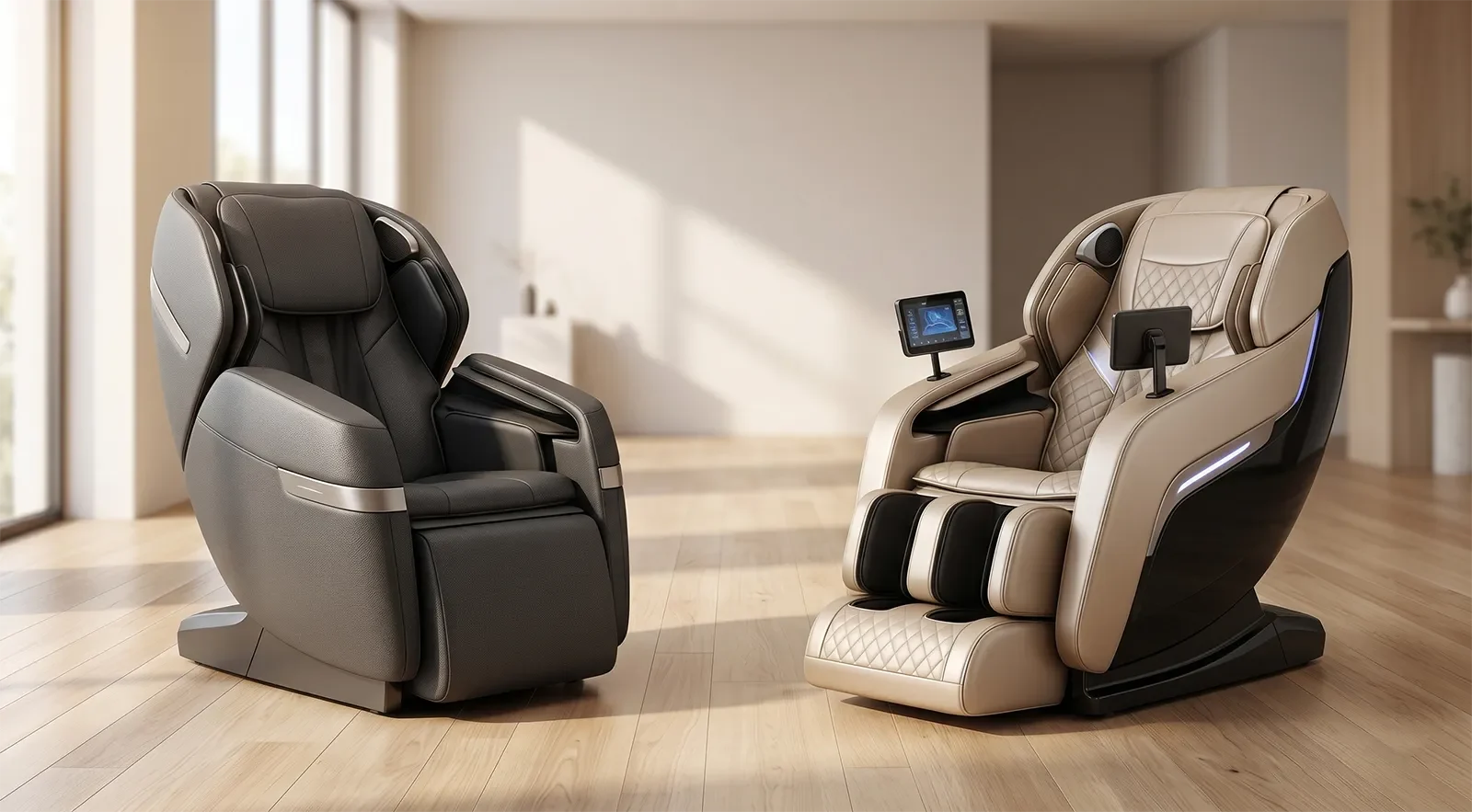
Who this guide is for: Shoppers comparing Japanese massage chairs and Chinese massage chairs before choosing a premium home massage chair, especially buyers who care about massage realism, reliability, advanced features, and long-term value.
How this guide was prepared: This guide was prepared from Tittac showroom experience, buyer questions, product comparisons, and practical differences seen across Japanese-made, Japanese-engineered, and Chinese-made massage chairs in the home massage chair market.
Many buyers ask one simple question: “Should I buy a Japanese massage chair or a Chinese massage chair?” The honest answer is that both can be good, but they are usually good for different reasons. Japanese chairs often appeal to buyers who value precision, massage realism, refined engineering, and long-term confidence. Chinese chairs often appeal to buyers who want more features, stronger visual impact, larger touchscreens, modern styling, and competitive value.
The mistake is treating country of origin as the whole answer. A Japanese chair can still be the wrong fit for your body. A Chinese-made luxury chair can still be powerful, comfortable, and well supported. The smart way to compare is not “Japan good, China bad.” The smart way is to ask which chair gives you the better massage, better fit, better service, and better ownership experience for your budget.
If you are still choosing your overall budget and chair type, start with How to Choose the Best Massage Chair for Your Home. If you are shopping in the premium range, also read Best Luxury Massage Chairs from $7,000 to $15,000.
Table of Contents
- Quick Answer
- The Main Difference Between Japanese and Chinese Massage Chairs
- Where Japanese Massage Chairs Are Usually Strong
- Where Chinese Massage Chairs Are Usually Strong
- Massage Feel: Which One Feels Better?
- Features and Technology Comparison
- Build Quality, Reliability, and Long-Term Confidence
- Price and Value Comparison
- Which One Should You Buy?
- How to Compare Them in a Showroom
- Where Tittac Fits
- FAQ
- Final Recommendation
Quick Answer
Japanese massage chairs are usually the better choice for shoppers who value massage realism, precision, refined roller movement, long-term confidence, and a less gimmicky experience. Chinese massage chairs are often the better choice for shoppers who want more visible features, advanced screens, full-body systems, modern styling, strong value, and a more technology-heavy chair for the money.
For premium buyers, the best decision is not based on country alone. Choose the chair that fits your body, reaches the areas you care about, feels comfortable after more than a quick test, has clear warranty support, and matches how your family will actually use it.
The Main Difference Between Japanese and Chinese Massage Chairs
The biggest difference is usually product philosophy. Many Japanese massage chairs focus on controlled massage feel, body mechanics, pressure accuracy, and long-term engineering discipline. They often try to feel more intentional than flashy. Many Chinese massage chairs focus on advanced feature packages, larger designs, touchscreens, voice control, full-body coverage, and stronger value at a lower or similar price.
This does not mean every Japanese chair is simple or every Chinese chair is overly flashy. The market is more mixed than that. Some Chinese-made chairs are very advanced and well built. Some Japanese-branded chairs may include components or assembly outside Japan. Some chairs are Japanese-engineered but not fully Japanese-made. For a clearer breakdown of these labels, read Made in Japan vs Japanese Technology vs Japanese Brand.
The better question is: what kind of ownership experience do you want?
- If you want a chair that feels refined, precise, and built around massage quality, Japanese-made or Japanese-engineered chairs often deserve serious attention.
- If you want the most features, the most visual technology, and strong full-body coverage for the price, Chinese-made chairs may offer more options.
Where Japanese Massage Chairs Are Usually Strong
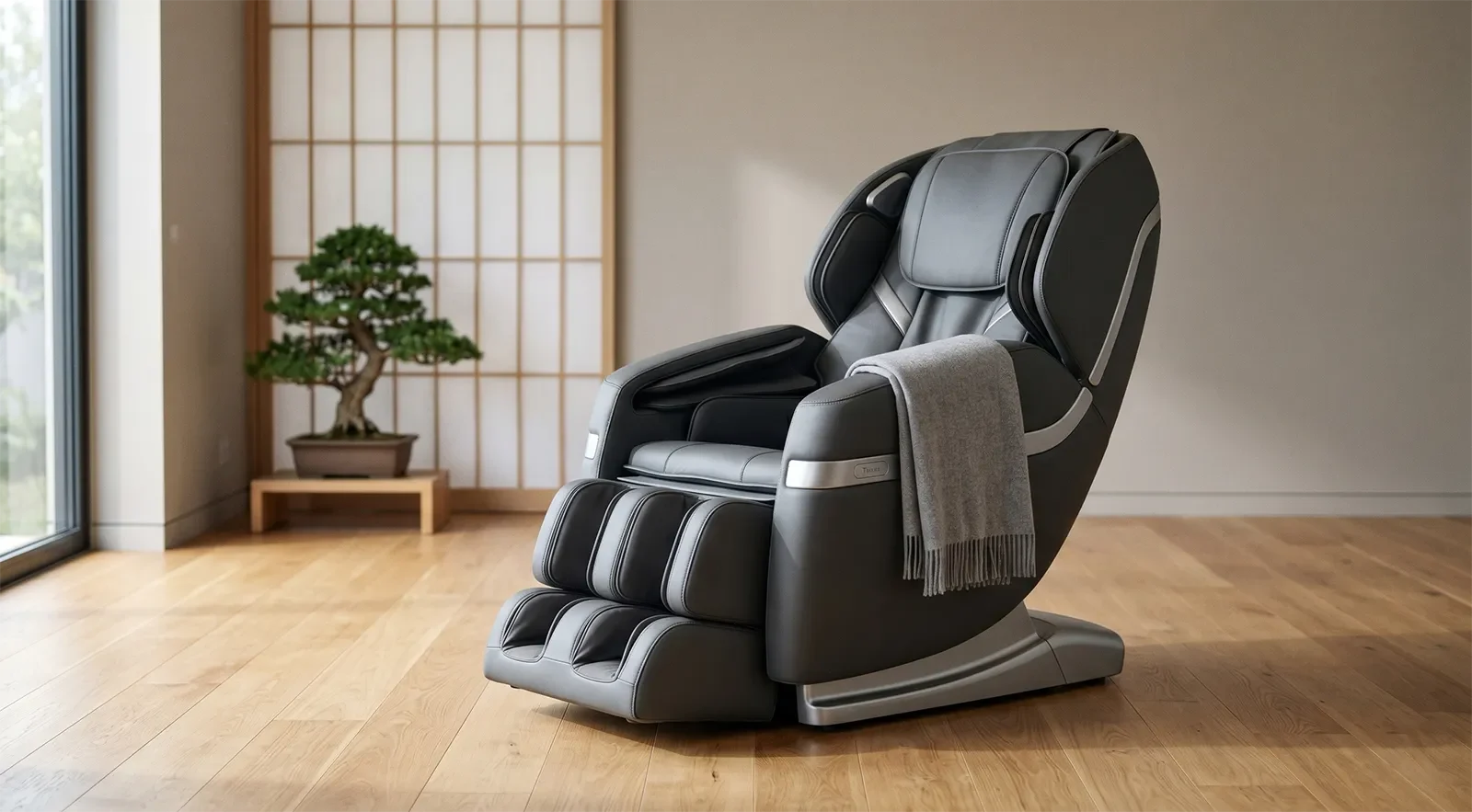
Massage Realism
Japanese massage chairs are often known for a more controlled and realistic massage feel. The roller movement may feel less random and more intentional, especially around the neck, shoulders, back, and lower back. For buyers who care more about the massage itself than the entertainment features, this can be a major advantage. For a deeper explanation, see Why Japanese Massage Chairs Feel Different.
Engineering Discipline
Many shoppers trust Japanese products because they associate Japan with precision, consistency, and long-term reliability. In massage chairs, that reputation matters most when the chair feels smooth, controlled, quiet, and carefully programmed.
Less Gimmick, More Purpose
Japanese chairs often do not try to win by having the biggest screen or the longest list of marketing features. The best Japanese chairs tend to focus on what the body actually feels: roller depth, shoulder placement, back coverage, pressure control, and comfort over repeated use.
Strong Fit for Premium Buyers
For shoppers spending $7,000 to $15,000, Japanese-made or Japanese-engineered chairs can be especially appealing. At that level, buyers are not just paying for features. They are paying for trust, refinement, and the confidence that the chair will still feel good years later.
Where Chinese Massage Chairs Are Usually Strong
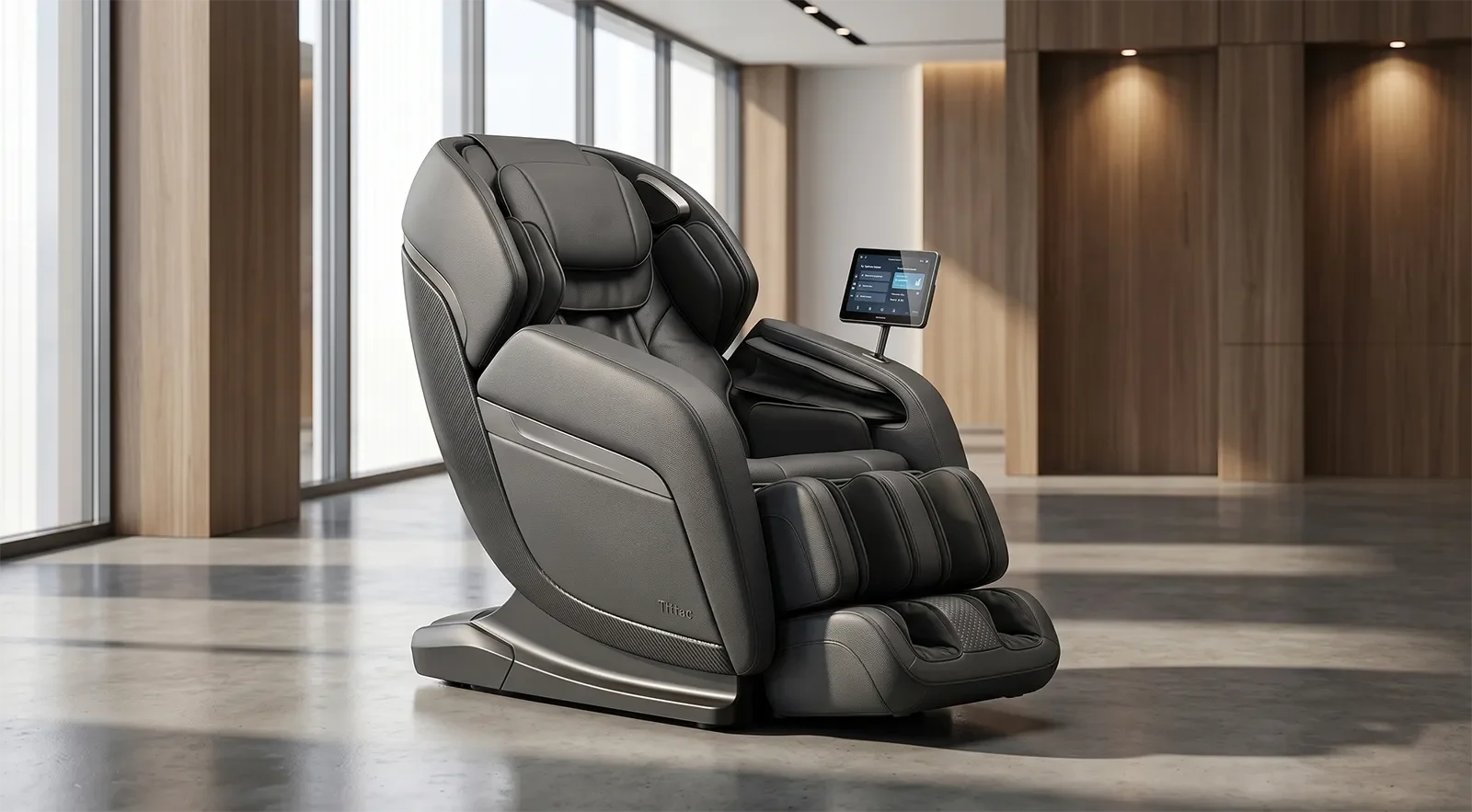
More Features for the Money
Chinese-made massage chairs often include more visible features at a lower price point. You may see large touchscreens, voice commands, Bluetooth speakers, heated areas, airbags, foot rollers, calf systems, LED lighting, app control, and many automatic programs.
For buyers who like technology and want a chair that feels modern, this can be attractive. In many cases, a Chinese-made chair may look more advanced on paper than a Japanese chair at the same price.
Strong Full-Body Coverage
Many Chinese-made chairs focus heavily on full-body coverage. They may include extensive air compression, calf kneading, foot rollers, arm massage, shoulder airbags, hip compression, and long-track designs. For shoppers who want the chair to feel like a full-body relaxation station, this can be a real advantage.
Modern Styling
Chinese-made chairs often have bold, futuristic designs. Some buyers like that look, especially if the chair is going into a modern living room, entertainment area, or home theater space. The visual impact can make the chair feel high-tech and impressive.
Better Entry Point for Mid-Range Buyers
If the budget is under $5,000, Chinese-made chairs often provide more options. This does not automatically make them better, but it means buyers can often get more features at a more accessible price. For a deeper budget-focused guide, read Best Massage Chairs Under $5,000.
Massage Feel: Which One Feels Better?
For many serious buyers, massage feel is where Japanese chairs have the strongest advantage. A good Japanese chair may feel smoother, more precise, and more natural. The pressure may feel better controlled, and the programs may feel more focused on body relief rather than feature demonstration.
Chinese-made chairs can also feel very good, especially in higher-end models. Some offer strong 4D massage, deep pressure, long tracks, and impressive foot and calf systems. The concern is that some models may feel strong but less refined. They can impress quickly but may feel too aggressive, too busy, or less natural after a longer session.
This is why a showroom test matters. Do not judge either category by reputation alone. Sit in the chair long enough to know how it feels after your body relaxes. A chair that feels exciting for two minutes may not be the chair you want to use every night.
Features and Technology Comparison
4D Massage
Both Japanese and Chinese massage chairs can offer 4D massage. The label alone does not decide quality. A good 4D chair should feel smooth, adjustable, and natural. A weak 4D chair may simply feel stronger without feeling smarter.
If 4D massage is important to you, compare how the chair changes depth, speed, rhythm, and consistency — not just whether the product page says “4D.”
Foot and Calf Massage
Chinese-made chairs often compete strongly here because many models include aggressive foot rollers, calf airbags, calf kneading, or extended leg systems. Japanese chairs may offer a more restrained experience, depending on the model. The better choice depends on whether you prefer stronger foot work or smoother overall balance.
Screens, Voice Control, and Entertainment
Chinese chairs usually lead in visible technology. Larger screens, voice control, speakers, app features, and lighting are common. These features can be convenient, but they should not distract from the massage itself. A luxury chair should not need a big screen to feel premium.
Build Quality, Reliability, and Long-Term Confidence
This is where many buyers lean toward Japanese massage chairs. Japanese-made and Japanese-engineered products often carry stronger trust with buyers who care about durability, precision, and long-term use. For Vietnamese families especially, Japanese products often feel safer because of existing trust built through cars, appliances, electronics, and wellness products. If your family is comparing this category specifically, read Best Japanese Massage Chairs for Vietnamese Families.
That said, build quality should still be checked chair by chair. Some Chinese-made luxury chairs are well constructed and supported by reputable sellers. Some lower-quality chairs, regardless of country, may look impressive at first but feel less solid over time.
Before buying, ask these questions:
- Who handles warranty service?
- Is in-home service available?
- Are parts available if something needs repair?
- What is actually covered by the warranty?
- Does the seller have real experience supporting massage chairs?
For a full checklist, read Massage Chair Warranty & In-Home Service: What to Check Before You Buy.
Price and Value Comparison
Chinese massage chairs often win on feature-per-dollar value. If you want the most features for the price, a Chinese-made chair may look very attractive. This is especially true in the under-$5,000 and mid-range categories.
Japanese massage chairs often win on confidence-per-dollar for premium buyers. They may not always include the flashiest feature list, but the value comes from massage refinement, engineering trust, and long-term ownership confidence.
In simple terms:
- Chinese massage chairs often give you more visible features for the money.
- Japanese massage chairs often give you more confidence in massage feel and refinement.
The better value depends on what you care about most. If you want a feature-rich chair at a lower budget, Chinese-made options may make sense. If you want a premium chair that feels more carefully engineered and less gimmicky, Japanese-made or Japanese-engineered options may be worth the higher price.
Which One Should You Buy?
Choose a Japanese Massage Chair If...
- You care most about massage feel and realism
- You want smoother, more controlled roller movement
- You trust Japanese engineering and long-term reliability
- You prefer a refined chair over a flashy feature list
- You are shopping in a premium budget range
- You want a chair that feels purpose-built for daily use
Choose a Chinese Massage Chair If...
- You want more features for the money
- You like large screens, voice control, and modern styling
- You want strong foot, calf, airbag, and full-body coverage
- You are shopping under $5,000 or in the mid-range category
- You want a chair that looks high-tech and impressive
- You are buying from a seller with clear service support
Choose Based on the Chair, Not Only the Country
The best answer is not always Japanese or Chinese. The best answer is the chair that fits your body, feels good after a real test, has the right pressure range, comes with clear service support, and matches your home and budget.
If two chairs are close, choose the one you would actually use more often. A chair with better daily comfort is more valuable than a chair with a better spec sheet.
How to Compare Them in a Showroom
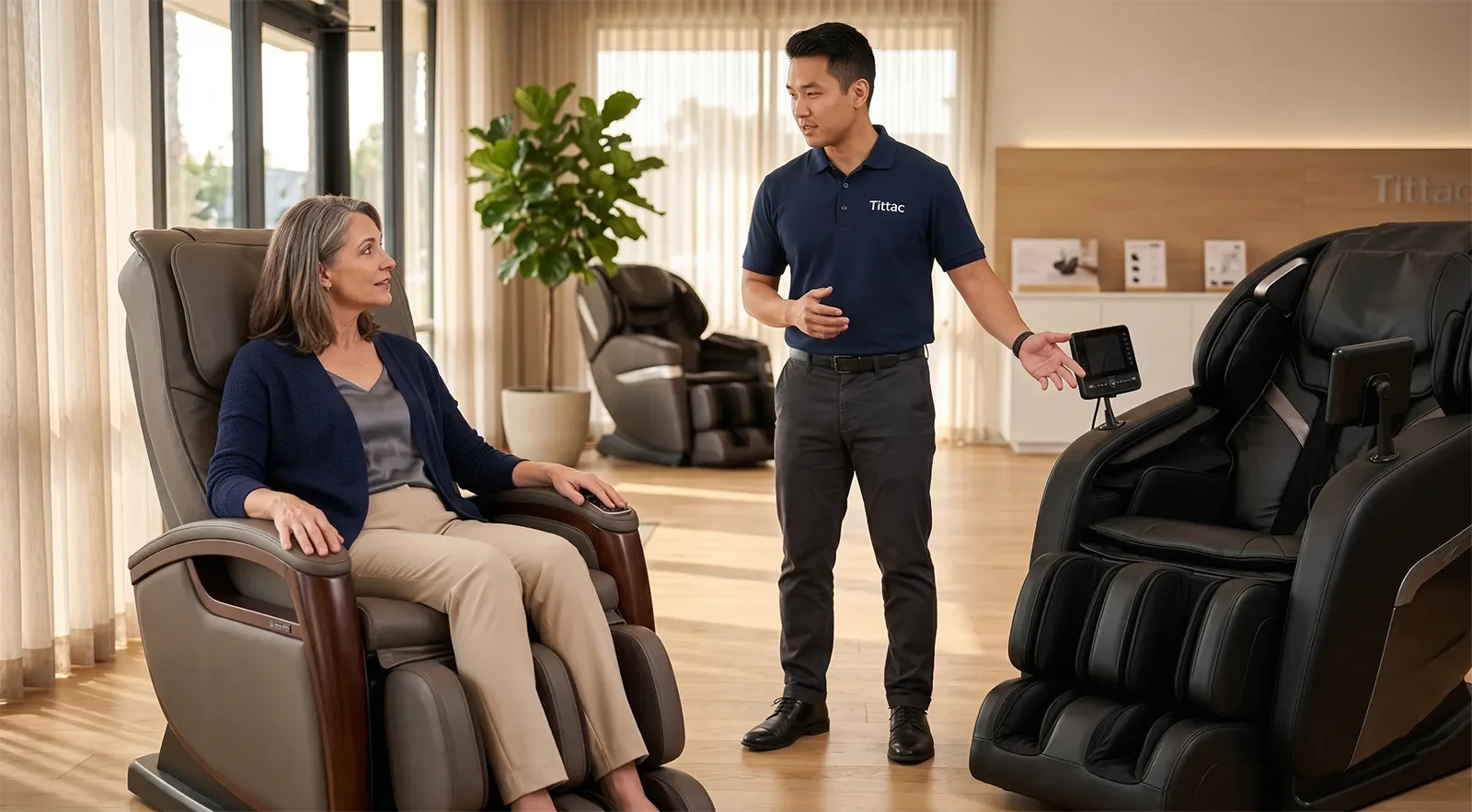
When comparing Japanese and Chinese massage chairs in person, do not rush. Sit in each chair long enough to feel the difference between first impression and real comfort.
Use this checklist:
- Does the shoulder scan place the rollers correctly?
- Does the neck massage feel natural or too sharp?
- Does the lower-back massage reach the right spot?
- Is the pressure adjustable enough for different family members?
- Does the chair feel smooth or mechanical?
- Are the foot rollers comfortable or too aggressive?
- Does the chair sound quiet and refined?
- Are the controls easy enough for daily use?
- Does the design fit your home?
- Is the warranty and service process clear?
A good showroom comparison will usually make the answer obvious. Some buyers immediately prefer the refined feel of a Japanese chair. Others prefer the features and full-body experience of a Chinese-made model. The right decision should feel clear in your body, not just on paper.
Where Tittac Fits
Tittac helps buyers compare massage chairs by feel, fit, budget, and long-term ownership value. For customers who prefer Japanese-made or Japanese-engineered massage chairs, we help explain what makes that category different and when it is worth paying more. For customers considering Chinese-made luxury chairs, we focus on whether the chair is comfortable, well supported, and truly worth the price.
Our goal is not to push one country label over another. The goal is to help you choose the chair that makes sense for your body, your family, your home, and your budget.
You can explore current options in our massage chair collection or visit Tittac to compare Japanese and Chinese massage chair options in person.
FAQ
Are Japanese massage chairs better than Chinese massage chairs?
Japanese massage chairs are often better for buyers who prioritize massage realism, precision, engineering refinement, and long-term confidence. Chinese massage chairs can be better for buyers who want more features, larger screens, full-body systems, and strong value for the price.
Are Chinese massage chairs low quality?
No. Some Chinese-made massage chairs are well built, feature-rich, and comfortable. The quality depends on the specific brand, model, components, warranty, and seller support. The safest approach is to test the chair and confirm service support before buying.
Why do many Vietnamese buyers prefer Japanese massage chairs?
Many Vietnamese buyers already trust Japanese products because of their reputation for precision, durability, and long-term reliability. For massage chairs, that trust often matters because the product is expensive, mechanical, and expected to last for years.
Do Japanese massage chairs have fewer features?
Some Japanese chairs may have fewer visible entertainment or technology features than Chinese-made chairs, but that does not always mean they are less advanced. Many focus more on roller control, massage programming, and refined body feel instead of flashy add-ons.
Which is better for under $5,000?
Under $5,000, Chinese-made massage chairs often offer more options and more features for the money. Japanese-made or Japanese-engineered chairs are more commonly considered in higher price ranges where massage refinement and long-term confidence become bigger priorities.
Which is better for $7,000 to $15,000?
In the $7,000 to $15,000 range, Japanese-made or Japanese-engineered chairs deserve serious consideration because buyers are often paying for massage feel, refinement, and ownership confidence. However, some Chinese-made luxury chairs can still be strong choices if they fit well, feel good, and come with reliable support.
Final Recommendation
Japanese massage chairs are usually best for buyers who want a refined, realistic, confidence-driven massage experience. Chinese massage chairs are usually best for buyers who want more features, stronger visual technology, and better feature value for the money.
The smartest choice is not based on the country label alone. Test the chair, compare the massage feel, check the body fit, understand the warranty, and choose the model you will actually enjoy using for years.