
Japanese massage chairs feel different because many of them are built around a different priority: refined massage feel first, feature list second. The difference is usually felt in the roller movement, pressure control, body scanning, rhythm, quietness, and the way the chair tries to follow the body rather than simply push harder.
Who this guide is for: Shoppers who have tried a Japanese massage chair, Japanese-engineered massage chair, or Japan-inspired premium chair and want to understand why the massage often feels smoother, more precise, or less gimmicky than many feature-heavy chairs.
How this guide was prepared: This guide was prepared from Tittac showroom experience, customer questions, premium massage chair comparisons, and practical evaluation of massage feel, roller behavior, body fit, Japanese origin claims, and long-term ownership expectations.
Many shoppers notice something when they test a good Japanese massage chair: it may not always look the flashiest, but the massage can feel more controlled. The chair may not shout through a giant screen or oversized feature list. Instead, the difference is felt in smaller details — how the rollers find the shoulders, how pressure builds gradually, how the chair moves through the back, and how the massage feels after ten minutes instead of only the first two.
This is why many buyers, especially Vietnamese families who already trust Japanese products, take Japanese massage chairs seriously. But the word “Japanese” can mean several things. A chair may be Made in Japan, Japanese-engineered, Japanese technology, or simply a Japanese brand. Those are not the same. For a deeper explanation, read Made in Japan vs Japanese Technology vs Japanese Brand.
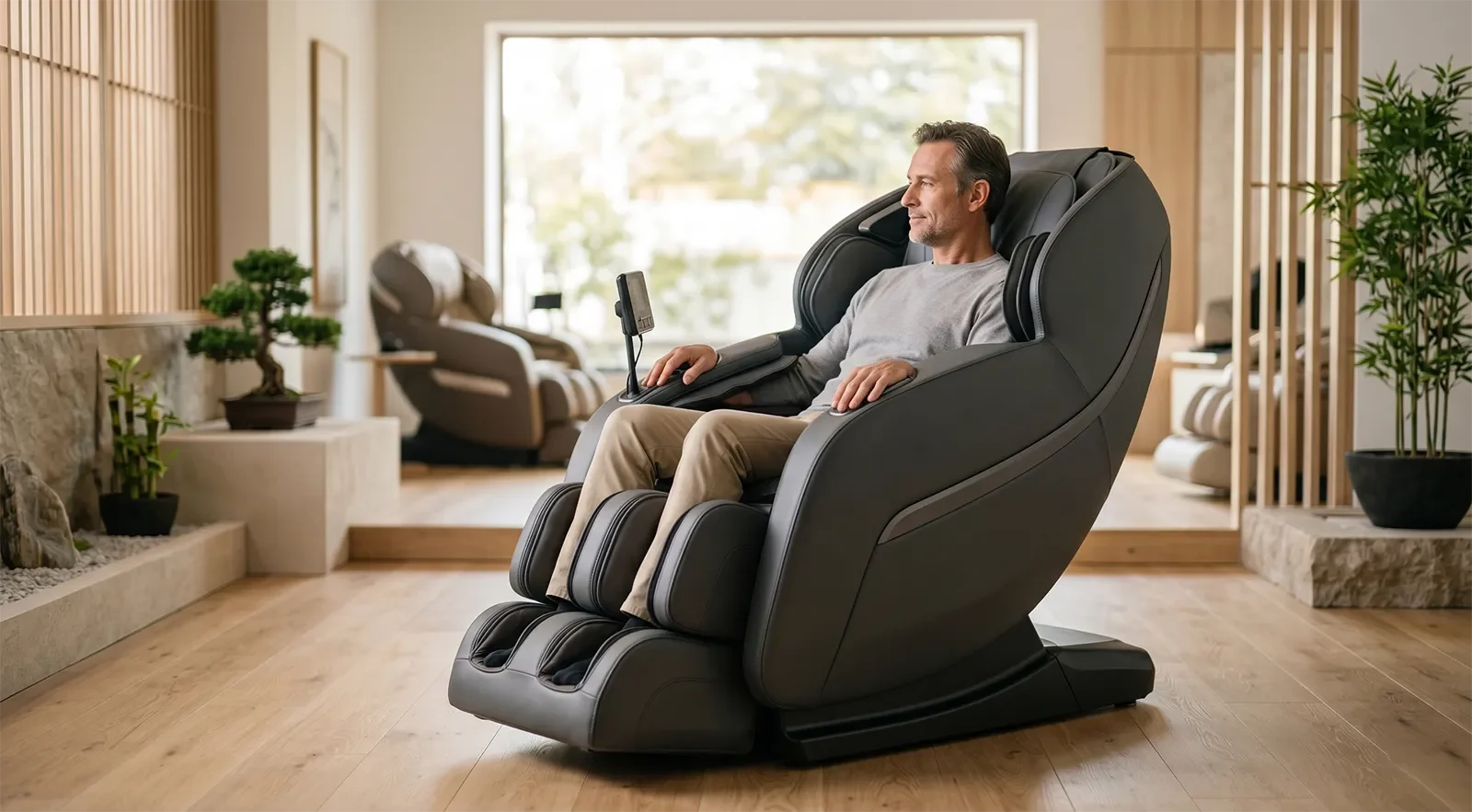
Table of Contents
- Quick Answer
- The Main Reason Japanese Massage Chairs Feel Different
- Roller Movement Feels More Controlled
- Pressure Is Often More Refined
- Body Scanning and Shoulder Positioning Matter
- Massage Rhythm Feels Less Random
- Less Gimmick, More Body-Focused Design
- Does Different Always Mean Better?
- Who Should Choose a Japanese Massage Chair?
- How to Test the Difference in Person
- Where Tittac Fits
- FAQ
- Final Recommendation
- Related Guides
Quick Answer
Japanese massage chairs often feel different because they tend to focus on smoother roller movement, more precise pressure control, better massage rhythm, quieter operation, and a more refined body feel. Instead of trying to impress only with large screens, loud features, or aggressive pressure, many Japanese-made or Japanese-engineered chairs are designed to make the massage feel more intentional and natural.
This does not mean every Japanese chair is automatically better. A chair still has to fit your body, match your pressure preference, and come with clear warranty and service support. But when a Japanese chair is well designed, the difference is usually felt in comfort, control, and long-term usability rather than just the feature list.
The Main Reason Japanese Massage Chairs Feel Different
The main difference is design philosophy. Many Japanese massage chairs are built around massage quality first. The chair is judged by how the body feels during the session, not only by how many features can be listed in the brochure.
That changes the whole experience. A feature-heavy chair may try to impress with a large touchscreen, voice control, many automatic programs, speakers, lights, and dramatic full-body compression. A Japanese-style premium chair often tries to impress in a quieter way: smoother rollers, more careful pressure, more accurate positioning, and a massage pattern that feels less mechanical.
For buyers who only compare specs online, this difference can be hard to see. For buyers who test chairs side by side, the difference is often obvious. One chair may feel busy. Another may feel more controlled. One may push hard. Another may work more patiently through the body.
Roller Movement Feels More Controlled
The roller system is the heart of a massage chair. If the rollers feel rough, random, or poorly positioned, the chair will not feel premium no matter how many features it has.
Good Japanese massage chairs often feel different because the roller movement is more disciplined. The rollers may move with better timing, smoother transitions, and more careful attention to the neck, shoulders, back, and lower back. Instead of simply pressing hard, the chair tries to create a massage pattern that feels intentional.
This matters most in difficult areas like the neck and shoulders. A poorly tuned chair can feel sharp or awkward in those spots. A better chair can feel more precise, working around tension without making the user feel attacked by the machine.
If you are comparing advanced roller systems, also read Best 4D Massage Chairs.
Pressure Is Often More Refined
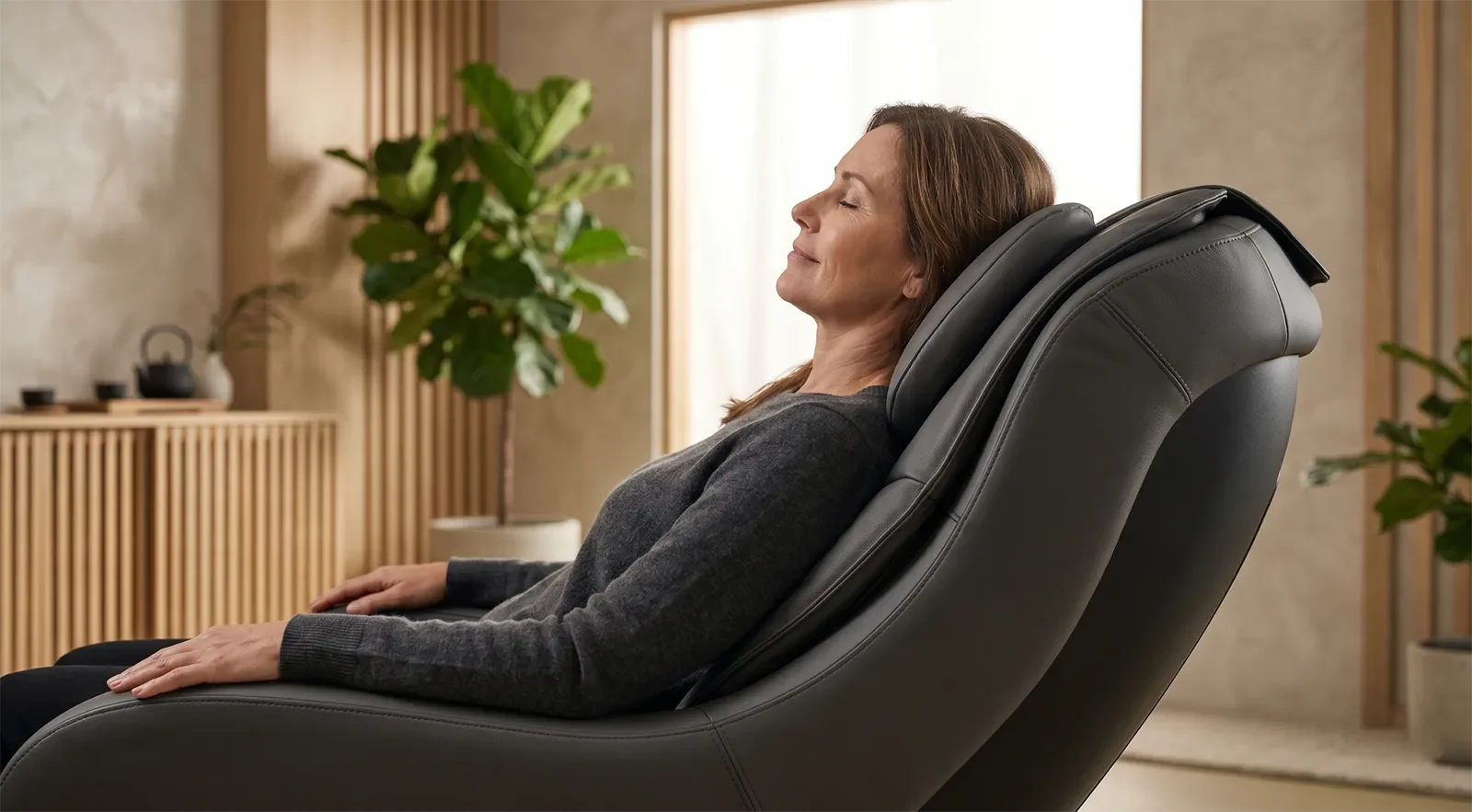
Many shoppers think a stronger massage is automatically better. That is not true. A massage chair can be strong and still feel crude. A better chair gives you control. It can go deeper when needed, but it can also stay smooth, gradual, and comfortable.
This is one reason Japanese massage chairs often feel different. The best ones do not rely only on intensity. They focus on how pressure enters the body, how it changes through the program, and whether the pressure feels useful after several minutes.
That matters for family use. A younger person may want deeper pressure. Parents may want something gentler. Older adults may need a softer massage that still feels effective. A chair with refined pressure control can serve more people in the home without feeling too aggressive.
Body Scanning and Shoulder Positioning Matter
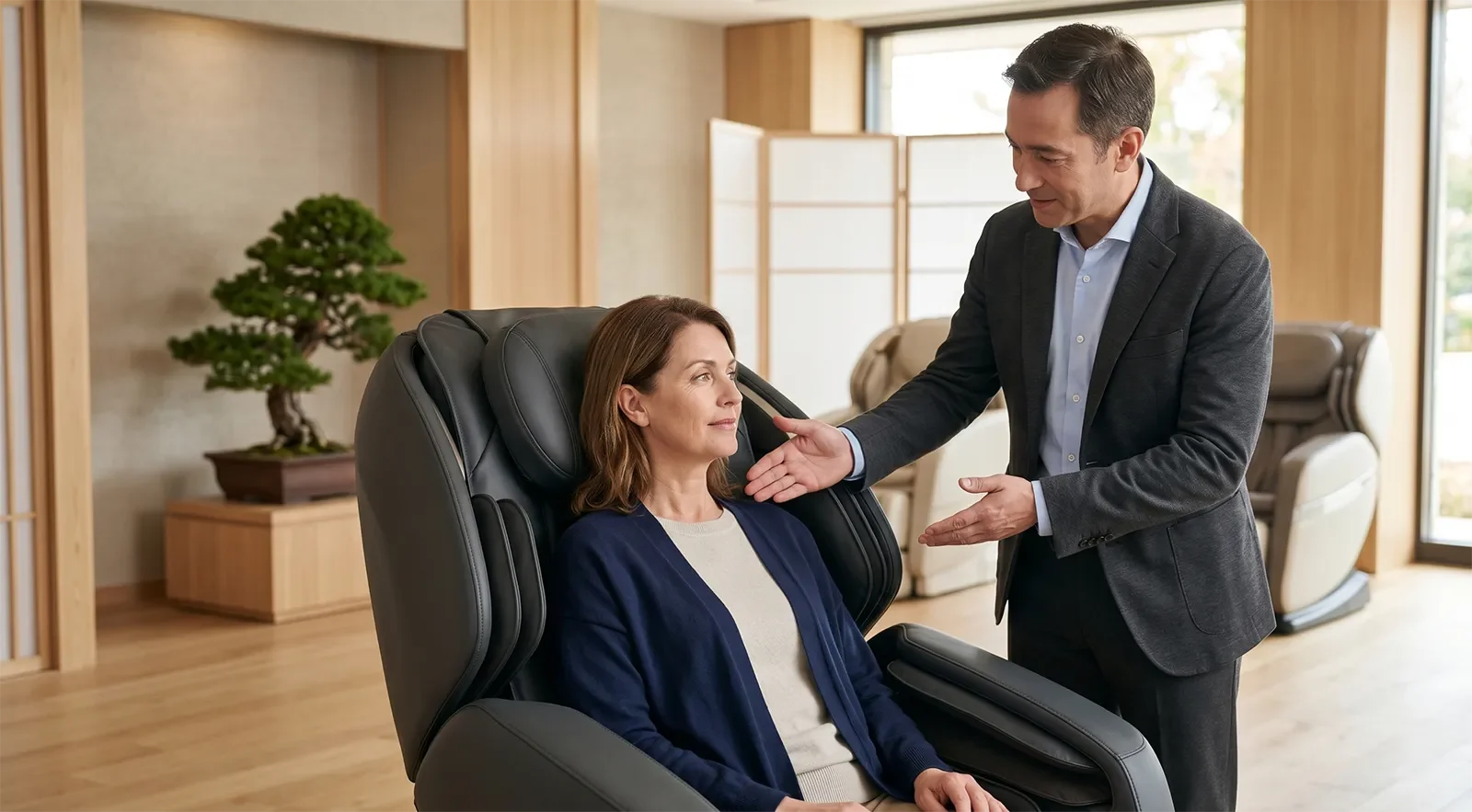
A massage chair does not feel good if it starts in the wrong place. Body scanning helps the chair locate the user’s shoulders and adjust the massage path. When scanning is weak, the rollers may miss the right area, press too high, or fail to reach the lower back correctly.
Japanese-style premium chairs often place more importance on this kind of body-matching experience. The goal is not just to run a program. The goal is to make the program feel like it belongs to the person sitting in the chair.
This is especially important for families because different people may have different heights, shoulder widths, and pressure tolerance. A chair that fits one person beautifully may feel wrong for another. That is why testing matters more than the label.
Massage Rhythm Feels Less Random
One of the hardest things to explain about massage chairs is rhythm. Some chairs feel like they are doing many things at once, but the massage does not feel calm or purposeful. Other chairs feel more organized. The rollers, airbags, recline, and program timing work together instead of competing for attention.
This is where many Japanese massage chairs create a different impression. The massage may feel quieter, more patient, and more structured. It may not feel as dramatic in the first minute, but it can feel better over a full session.
That is important because a massage chair should not only impress during a showroom demo. It should feel good enough to use repeatedly at home. A good rhythm makes the chair easier to live with.
Less Gimmick, More Body-Focused Design
Some massage chairs try to win attention with visible technology: large touchscreens, speakers, app controls, lights, voice commands, and many automatic programs. These features can be useful, but they do not automatically make the massage better.
Japanese massage chairs often feel different because the best models are less dependent on gimmicks. They may still include modern features, but the main value is usually in the massage system itself. The chair earns trust through feel, not decoration.
This difference matters for premium buyers. At higher price points, the chair should not need to distract you with a long feature list. It should make the body say, “This feels better.”
For a broader premium-budget comparison, read Best Luxury Massage Chairs from $7,000 to $15,000.
Does Different Always Mean Better?
No. A Japanese massage chair is not automatically better for every buyer. The best chair depends on your body, budget, home, and expectations.
A Japanese chair may feel more refined, but another chair may offer stronger foot massage, more full-body airbags, a larger design, a lower price, or features your family prefers. Some Chinese-made luxury massage chairs can also feel very good when they are well designed and well supported.
The mistake is buying only by country label. A Made-in-Japan chair can still be the wrong fit. A Japanese-technology chair can still be vague if the seller cannot explain what part is actually Japanese. A Chinese-made chair can still be a good value if the massage feels right and the warranty is clear.
For a balanced comparison, read Japanese Massage Chairs vs Chinese Massage Chairs.
Who Should Choose a Japanese Massage Chair?
A Japanese massage chair or Japanese-engineered chair is usually a strong match for buyers who care more about refined massage feel than flashy features. It is also a strong match for families who want long-term confidence and a chair that feels carefully built.
This type of chair may be right for you if:
- You want smoother, more controlled roller movement.
- You care about neck, shoulder, back, and lower-back comfort.
- You prefer a refined massage over aggressive pressure.
- You are buying for parents or older family members.
- You trust Japanese engineering and want clearer long-term confidence.
- You are shopping in the premium price range and want the chair to feel worth it.
For Vietnamese and Vietnamese-American families, Japanese chairs often feel especially appealing because the trust already exists. But the final decision should still be based on the real user’s comfort. If the chair is for parents, let them test it whenever possible.
For a family-focused guide, read Best Japanese Massage Chairs for Vietnamese Families.
How to Test the Difference in Person
The difference between Japanese and non-Japanese massage chairs is easiest to understand in a showroom. Do not test only one chair for two minutes. Compare several chairs long enough for the first impression to fade.
Use this checklist:
- Does the chair scan your shoulders accurately?
- Does the neck massage feel smooth or sharp?
- Does the lower-back massage reach the right area?
- Does the pressure build naturally or suddenly?
- Do the rollers feel controlled or random?
- Can the chair go gentle enough for parents or seniors?
- Can it go deep enough for users who want stronger pressure?
- Does the chair sound quiet and refined?
- Are the controls easy enough for daily use?
- Is the warranty and service process clear?
The best Japanese massage chair should not only feel good at the beginning. It should still feel good after several minutes. A refined chair usually becomes more convincing as the body relaxes.
If you are still building your overall buying criteria, start with How to Choose the Best Massage Chair for Your Home.
Where Tittac Fits
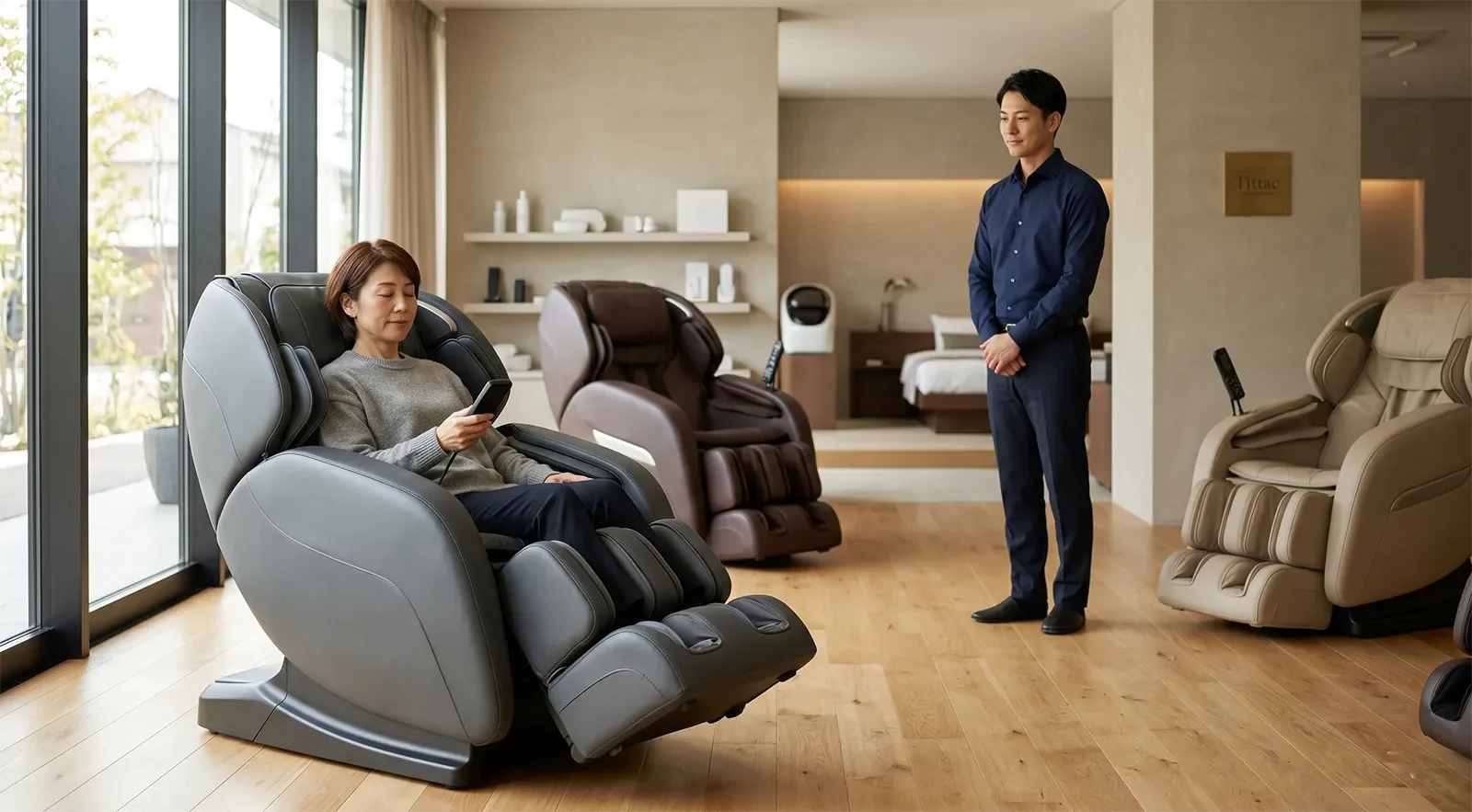
Tittac helps customers compare massage chairs by real massage feel, body fit, Japanese origin clarity, service support, and long-term value. Some customers come in looking specifically for Japanese-made or Japanese-engineered chairs. Others simply want to understand why one chair feels smoother than another.
Our goal is to help you feel the difference, not just read the difference. A chair may say Japanese, luxury, 4D, or premium, but the body knows quickly whether the massage feels right.
You can explore current options in our massage chair collection or visit Tittac to compare massage feel, fit, and comfort in person.
FAQ
Why do Japanese massage chairs feel different?
Japanese massage chairs often feel different because many are designed around smoother roller movement, refined pressure control, better massage rhythm, accurate body scanning, and a more body-focused experience instead of only a long feature list.
Are Japanese massage chairs always better?
No. Japanese massage chairs are often strong in refinement and massage feel, but the best chair still depends on body fit, pressure preference, warranty, service support, and budget.
Does Japanese technology mean the chair is made in Japan?
No. Japanese technology does not automatically mean the chair is made in Japan. It may refer to Japanese engineering, components, programming, massage concepts, or design influence. Buyers should ask what part of the chair is actually Japanese.
Why do Vietnamese families often like Japanese massage chairs?
Many Vietnamese families already trust Japanese products for precision, durability, and long-term reliability. That trust carries into massage chairs, especially when buying for parents or long-term family use.
Should I choose a Japanese massage chair over a Chinese massage chair?
Choose a Japanese massage chair if you value refined massage feel, smoother control, and long-term confidence. Choose a Chinese-made chair if you want more visible features, stronger full-body systems, or better feature value for the price. The best choice should be tested in person.
What should I test first in a Japanese massage chair?
Test shoulder accuracy, neck comfort, lower-back reach, pressure control, footrest fit, ease of controls, quietness, and whether the massage still feels good after several minutes.
Final Recommendation
Japanese massage chairs feel different because the best ones focus on what the body actually feels: smoother rollers, better pressure control, more careful rhythm, accurate positioning, and a less gimmicky massage experience. That difference matters most for buyers who want a refined chair they can use regularly for years.
Still, do not buy by the Japanese label alone. Ask whether the chair is Made in Japan, Japanese-engineered, Japanese technology, or simply Japanese-branded. Then test the chair with your own body. The right chair should prove itself through comfort, fit, massage feel, service support, and long-term confidence.