
If singing is the main reason you are buying, a karaoke system is usually better than a home theater setup. A home theater can play music loudly, but karaoke needs more than playback: it needs clear microphone handling, vocal balance, easy control, and a setup that feels natural when family members take turns singing.
Written by Toan Ho — Tittac editorial team.
Who this guide is for: This guide is for buyers deciding between a karaoke system and a home theater setup for singing at home, especially if they want to avoid buying the wrong type of system for the way their family actually uses the room.
How this guide was prepared: This guide was prepared around the practical factors that matter most in real home use: room fit, microphone handling, vocal balance, daily setup flow, mixed family use, and long-term value.
A karaoke system and a home theater system may sit in the same living room, but they are built for different jobs. A karaoke system is usually designed around live vocals, microphone use, and easier singing control. A home theater system is usually designed around movie playback, TV dialogue, surround effects, and cinematic sound.
The mistake is assuming that “better sound” automatically means “better for singing.” It does not. The better choice depends on what your room is mainly for, how often karaoke actually happens, and whether your household wants a simple singing setup or a movie-first system that can be adapted occasionally.
If you want the bigger framework first, start with our complete home karaoke system guide. Then use this guide to decide whether your room should be built karaoke-first, theater-first, or carefully as a hybrid setup.
Table of Contents
Quick Answer
Choose a karaoke system if singing is the real priority, your family wants easy microphone use, and you want a setup that feels natural for live vocals at home. Choose a home theater setup if movies and TV clearly come first and karaoke is only an occasional extra use.
For most homes that plan to sing regularly, a karaoke system is usually the safer choice because it is built around microphones, vocal balance, and family-friendly control. A home theater can sometimes be adapted for karaoke, but it often requires more care with connections, input switching, microphone mixing, and sound balance.
The cleanest rule is this: buy for the activity your room must do well every week, not the activity that only sounds more flexible while shopping.
What Matters Most When Choosing Between Karaoke and Home Theater
Start With the Main Purpose of the Room
The right answer starts with how the room is actually used. A movie-first living room and a singing-first family room may look similar, but they ask for different things. A movie-first room needs clear dialogue, cinematic effects, surround feel, and strong playback. A singing-first room needs microphones, vocal clarity, music balance, feedback control, and a workflow that different family members can use without stress.
If your household mainly watches movies, streams TV, and only sings once in a while, a home theater setup may still make sense as the main foundation. If karaoke happens regularly, the room should be judged by how comfortably it handles live vocals, not only by how powerful it sounds during movie playback.
Microphone Handling Is the Biggest Difference
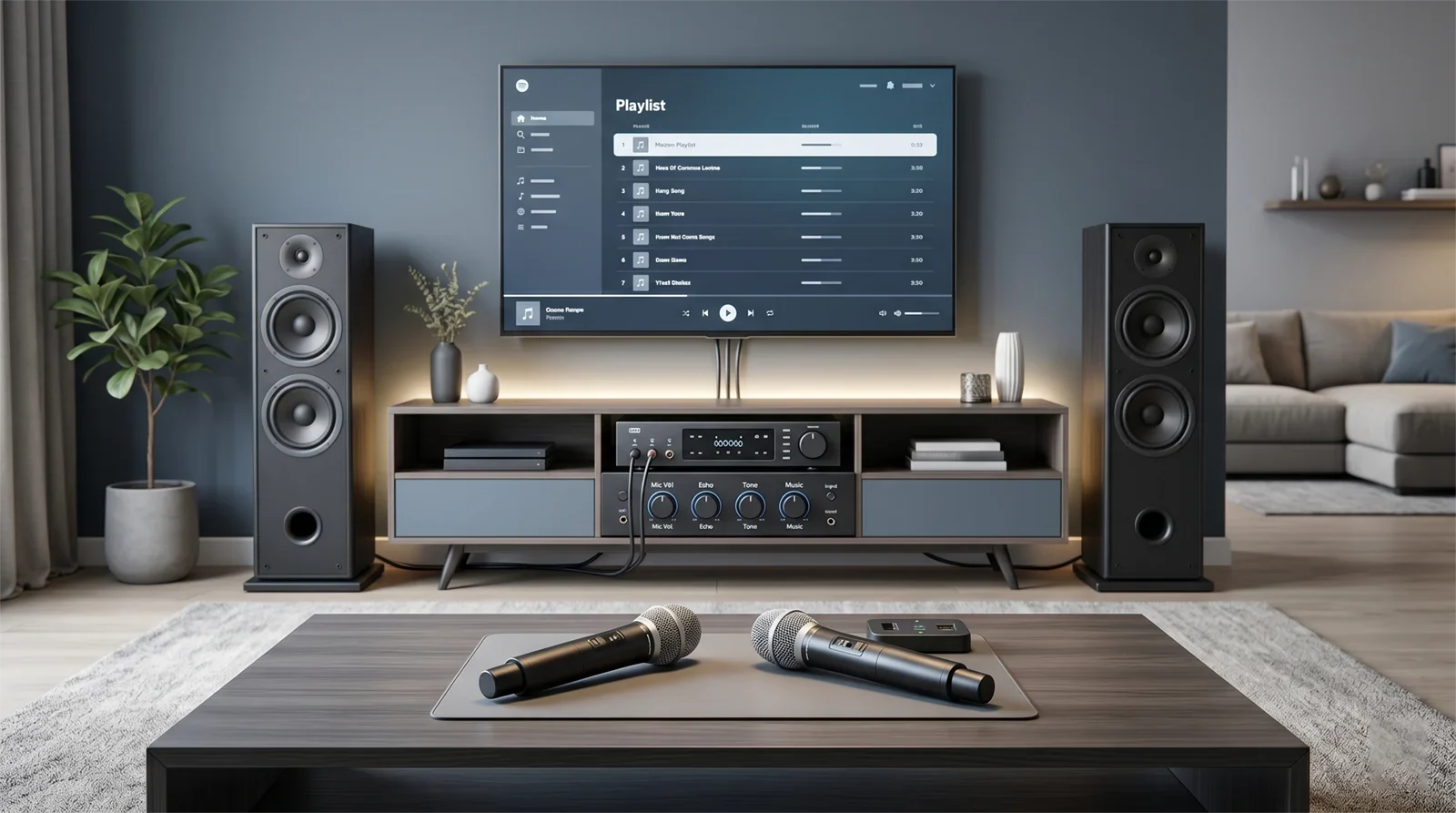
A karaoke system treats microphones as part of the core experience. The system is expected to handle live voices, music volume, echo or reverb, microphone level, and singer comfort. That is why a karaoke-first setup usually feels more natural once people actually start singing.
A home theater system is not usually built around live microphones. Even if you can make sound come out, the experience may still feel awkward if vocals are too quiet, too loud, delayed, harsh, or hard to control. For karaoke, microphone handling is not a small add-on. It is the center of the experience.
Vocal Balance Matters More Than Movie Sound Quality
Movie sound and karaoke sound are not judged the same way. A home theater may sound excellent with films and still feel wrong for singing if the vocals do not sit clearly with the music. Karaoke needs the singer’s voice to feel present, comfortable, and easy to hear without overpowering the room.
This is where many buyers get surprised. They assume a more expensive movie system will automatically improve karaoke. Sometimes it helps with playback, but it does not automatically solve microphone tone, echo, feedback, or vocal balance. If you are still deciding what a good singing-first system should include, read our guide on what makes a good karaoke system for home.
Daily Workflow Decides Whether the System Gets Used
The best system is not only the one that sounds good. It is the one your family can use without confusion. A karaoke system usually wins when the goal is simple, repeatable family use: turn it on, choose songs, pick up the microphones, adjust the volume, and sing.
A home theater route can work, but it often asks more from the user. The routine may involve extra inputs, extra devices, extra adapters, or one person in the house who understands the signal path. If the setup feels too complicated, people may stop using it even if the equipment itself is good.
Long-Term Value Depends on the Main Job
Long-term value is not just about how many things a system can technically do. It is about whether the system still feels right after the novelty wears off. If singing is regular, a karaoke system usually ages better because it was bought for the main job. If movies and TV are the true priority, a home theater setup may be the better long-term foundation.
The key is staying honest. Buying a theater-first system for a karaoke-first home usually creates frustration. Buying a karaoke-first system for a movie-first room may also feel wrong. The best value comes from matching the system to the room’s real purpose.
| Factor | Why It Matters | Common Mistake |
|---|---|---|
| Main room purpose | Clarifies whether the setup should prioritize singing or cinematic playback | Assuming one system type handles both jobs equally well |
| Microphone handling | Live vocals need stable control, comfort, and proper mixing | Treating microphones like a minor add-on |
| Vocal balance | Karaoke needs the singer’s voice to sit clearly with the music | Judging karaoke only by speaker power or movie sound |
| Daily workflow | A simpler routine gets used more often by more people | Ignoring setup friction because the room already has speakers |
| Long-term value | Protects you from buying the wrong system for the main use | Paying for flexibility that does not improve real life at home |
Best Fit for Different Home Use Cases
Choose a Karaoke System If Singing Comes First
Best for: Homes where singing happens regularly, families want easy microphone use, and the goal is a setup that feels natural for live vocals without too much troubleshooting.
Not ideal if: Your room is clearly movie-first, karaoke is rare, and your household would rather keep one entertainment system centered around films and TV.
A karaoke system usually works better for singing because it is built around the parts that matter most during real use: microphone comfort, vocal balance, echo control, easier adjustment, and repeatable family workflow. If karaoke is the real job, a karaoke system is usually the cleaner answer.
This is especially true for families who sing often, host relatives, use YouTube karaoke, or want a setup that parents, guests, and less technical users can enjoy without needing someone to manage the system all night.
Choose a Home Theater If Movies and TV Come First
Best for: Homes where movies, streaming, sports, and TV are the main priority, and karaoke is only an occasional extra use.
Not ideal if: You expect frequent family singing, want microphones to feel easy and natural, or do not want karaoke to depend on extra adaptation each time.
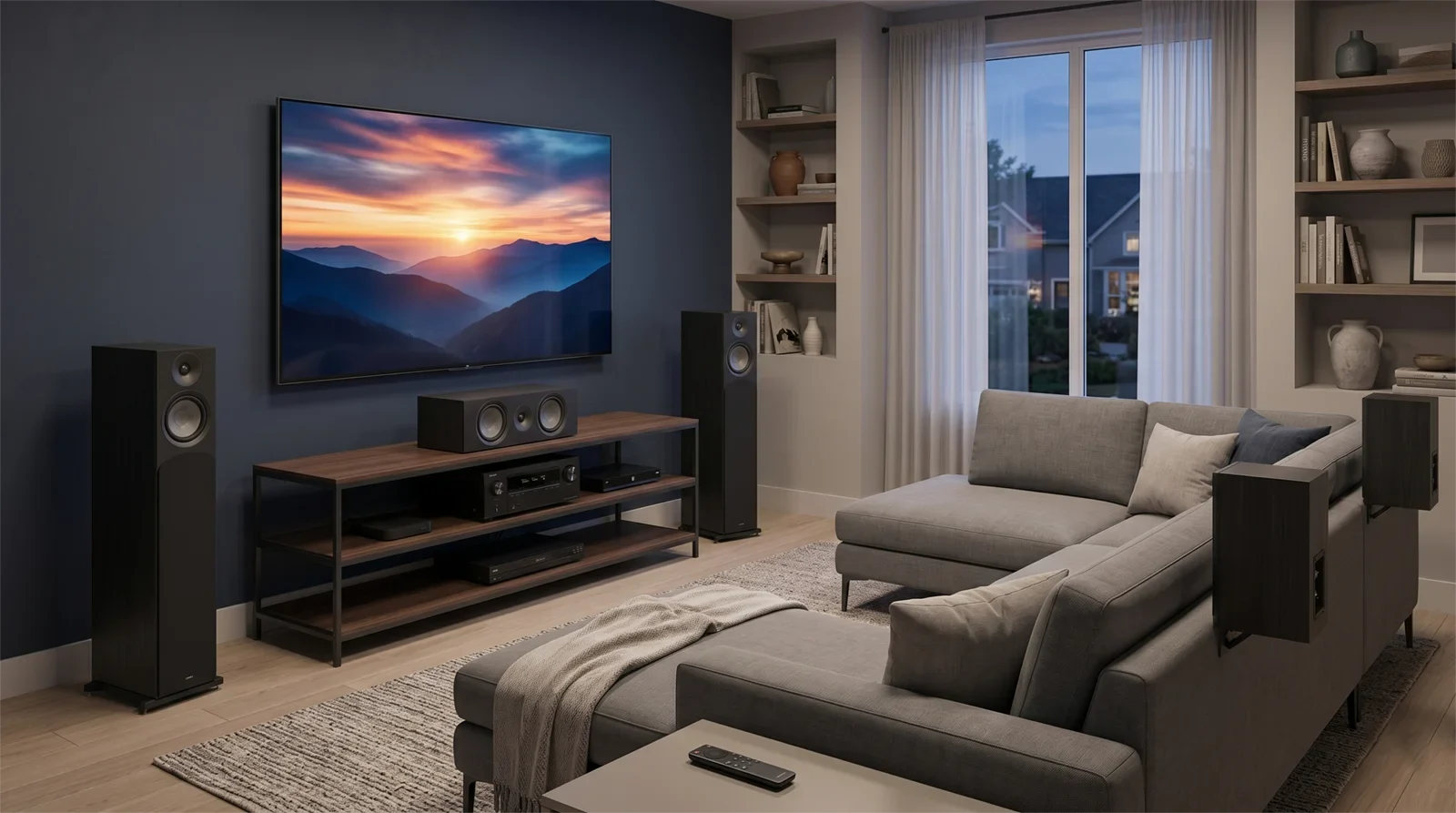
A home theater system makes the most sense when cinematic playback is still the main job. If that is how the room is used most of the time, it may be smarter to keep that foundation and only add karaoke carefully when needed.
The important warning is that “can connect” does not always mean “feels good for karaoke.” A theater-based karaoke setup should be judged by microphone ease, vocal balance, and daily workflow, not only by whether the speakers can play music loudly.
Consider a Hybrid Setup Only If the Workflow Stays Simple
Best for: Buyers who use the same room for both entertainment and singing, but do not want two completely separate systems.
Not ideal if: The connection path becomes confusing, the family avoids using karaoke because it takes too many steps, or one person must always troubleshoot the setup.
A hybrid setup can work when the room is already built around a home theater and karaoke is occasional or moderate. But it only works well when the signal path stays clean. If every karaoke session requires switching inputs, adjusting too many settings, or guessing why the microphones sound wrong, the hybrid setup is not really convenient.
If you are considering that path, read how to connect karaoke to a home theater receiver before deciding. The connection method matters as much as the equipment category.
Budget, Room Size, and Setup Trade-Offs
A karaoke system is often the better use of budget when singing is the real priority. You are spending on microphone handling, vocal balance, and a simpler live-use experience instead of hoping a movie-first setup will somehow feel natural for karaoke later.
A home theater setup becomes easier to justify when the room is truly movie-first and karaoke is occasional. In that case, adapting the existing room may make more sense than building a separate karaoke-first setup. But if karaoke is expected to become frequent, forcing a theater system to do the job may cost more time, frustration, and add-on equipment than buyers expect.
Room size also matters differently for each system. A home theater setup often focuses on seating position, surround placement, and cinematic coverage. A karaoke setup has to consider where singers stand, where microphones are used, how vocals project into the room, and whether the system remains comfortable when people move around.
| Scenario | What Usually Works | When to Spend More | When Not To |
|---|---|---|---|
| Regular family singing | Karaoke-first setup with easier mic and vocal control | When karaoke is a recurring part of home life | When you are trying to protect a movie-first workflow that is not the real priority |
| Mainly movies and TV | Home theater as the primary system | When cinematic playback is clearly the top priority | When you expect karaoke to become frequent soon |
| Occasional singing with existing theater gear | Hybrid setup if the signal path stays simple | When the room already works well and karaoke is light use | When the karaoke path creates confusion every time |
| First-time buyer who wants low stress | Choose the system built for the job you care about most | When regular family use depends on easy operation | When flexibility sounds good but complicates daily life |
Common Buying Mistakes to Avoid
Mistake 1: Assuming Better Movie Sound Means Better Karaoke
This is the most common mistake. A home theater may sound excellent with movies and still feel awkward once microphones enter the picture. Playback sound and live vocal sound are not the same job. Judge the system by the activity you care about most.
Mistake 2: Treating Microphones Like an Afterthought
Microphones are not a small accessory in karaoke. They shape the whole experience. If mic use feels awkward, inconsistent, delayed, or buried under the music, the system is not really solving the karaoke problem, even if the speakers are powerful.
Mistake 3: Forcing One System to Do Everything
A hybrid setup can work, but only when the routine stays manageable. If the system becomes hard to explain, hard to switch, or hard to balance, the flexibility is not helping. The smarter question is not “Can one setup do everything?” It is “Which use case has to feel best every week?”
Mistake 4: Spending the Budget on the Wrong Strength
A movie-first buyer should not overspend on karaoke features they rarely use. A singing-first buyer should not spend most of the budget on surround effects while leaving microphones and vocal control weak. Budget should follow the real job of the room.
Mistake 5: Ignoring Who Will Actually Use the System
A system that only one person understands may not be the best family system. If parents, guests, children, or less technical users will sing, the setup should feel easy to turn on, adjust, and enjoy. Convenience is not a small detail. It often decides whether the system gets used.
How to Choose the Right Direction in 60 Seconds
- Start with the main use. Does the room mostly host singing, or mostly movies and TV?
- Decide how often karaoke will happen. Regular singing usually deserves a karaoke-first setup.
- Think about who will use it. If the whole family needs to operate it, choose the simpler workflow.
- Judge the microphone experience. If live vocals matter, do not treat microphones as an add-on.
- Set the budget around the main job. Spend on the features your room will actually use most.
- Consider hybrid only if it stays easy. If the connection path becomes confusing, it is not a practical upgrade.
If you only remember one thing, remember this: buy for the job your room actually does most often, not the one that only sounds more flexible during shopping.
Frequently Asked Questions
Can I use a home theater system for karaoke?
Yes, you can sometimes use a home theater system for karaoke, but the experience depends on how microphones are connected, how vocals are mixed, and whether the setup stays easy to control. Sound coming out is not the same as having a comfortable karaoke experience.
Is a karaoke system better than a home theater for singing?
For regular singing, yes. A karaoke system is usually better for singing because it is designed around microphones, live vocals, vocal balance, and easier user control. A home theater is usually better when movies, TV, and cinematic playback are the main priority.
Can a karaoke system be used for movies?
A karaoke system can often play movie or TV audio, but that is not usually its main strength. If movies are the main use, a home theater may still be better. If singing is the main use and movies are secondary, a karaoke system may be the better compromise.
When does a hybrid karaoke and home theater setup make sense?
A hybrid setup makes sense when the room is already built around home theater and karaoke is occasional or moderate. It works best when the connection path is simple, microphone control is manageable, and the household does not have to relearn the setup every time someone wants to sing.
Which option is easier for beginners?
If the beginner’s goal is singing, a karaoke system is usually easier because it is built around microphones and vocal balance from the start. If the beginner’s goal is movies and TV first, a home theater setup may be the better base, but karaoke may take more care to add well.
Which option is better for family use?
For families that sing often, a karaoke system is usually better because it is easier for different people to use, pass microphones, adjust vocals, and keep the night moving. For families that mostly watch movies together and sing only occasionally, a home theater setup may make more sense.
Final Recommendation
If singing is the main reason you are buying, choose a karaoke system. It is built around microphones, live vocals, and easier family use, which makes the experience feel more natural from the start. If movies and TV clearly come first, choose a home theater setup and only adapt it for karaoke if the connection path stays simple.
The main trade-off is simple: karaoke systems are usually better at singing, while home theaters are usually better at cinematic playback. A hybrid path can work, but only if it stays easy enough that the room still feels comfortable to use in real life.
Need help narrowing it down for your room, budget, and family use?
Start with the complete home karaoke guide, compare your goals in what makes a good karaoke system for home, or go deeper with how to connect karaoke to a home theater receiver.
Contact Tittac for help choosing the right karaoke setup for your room, budget, and singing style.