
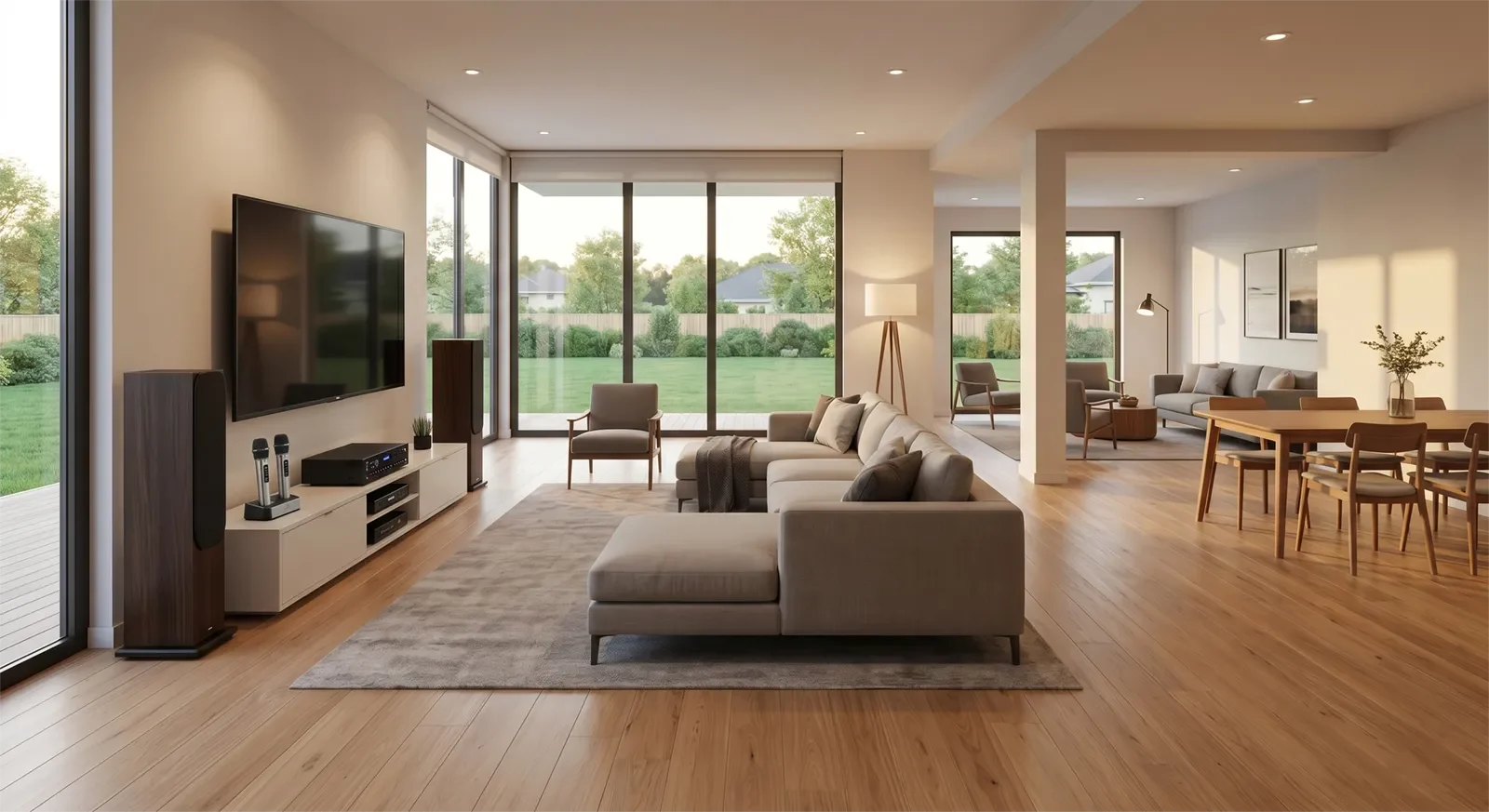
If your large living room or open floor plan spreads seating across multiple zones, choose a full-size home karaoke system with cleaner coverage, stronger vocal control, and more usable headroom. If karaoke still stays centered around one TV wall, a strong all-in-one karaoke system can still be the better fit.
Written by Toan Ho — Tittac editorial team.
Definition: In this guide, an open floor plan or large living room means a home karaoke space where sound has to cover a wider shared family area, connected seating zones, or a room that is not fully contained by walls.
Quick Answer
A large-room karaoke decision is usually not about buying the biggest system. It is about choosing the home karaoke system that keeps vocals clear, music balanced, and coverage even across the main singing zone.
Choose a full-size home karaoke system if your room opens into other zones, your seating is spread out, or your family sings often enough that cleaner coverage and steadier vocal performance will be easy to notice. Choose an all-in-one karaoke system if the room is large on paper but karaoke still happens mainly around one TV wall and your priority is a simpler daily workflow.
Who this guide is for: Home karaoke buyers choosing a system for a large living room, open floor plan, or shared family space where sound needs to travel farther without becoming harsh, thin, or uneven.
How this guide was prepared: This guide was built around the practical buying factors that matter most in bigger shared rooms: coverage across the main seating area, vocal clarity, everyday ease of use, placement flexibility, budget efficiency, and upgrade path in real home use.
Need help choosing the right system for your home? Visit our Garden Grove showroom or contact Tittac for help in English or Vietnamese.
If you want the broader buying framework first, start with How to Choose the Best Karaoke System for Your Home. Then use this page to decide whether your room truly needs a full-size home karaoke system or whether an all-in-one karaoke system is still the smarter fit.
Table of Contents
- What Matters Most When Choosing a Karaoke System for an Open Floor Plan or Large Living Room
- The Best Fit for Different Home Use Cases
- Budget, Room Size, and Setup Trade-Offs
- Common Buying Mistakes to Avoid
- How to Choose the Right Karaoke System in 60 Seconds
- Frequently Asked Questions
- Final Recommendation
What Matters Most When Choosing a Karaoke System for an Open Floor Plan or Large Living Room
Coverage matters more than raw power claims
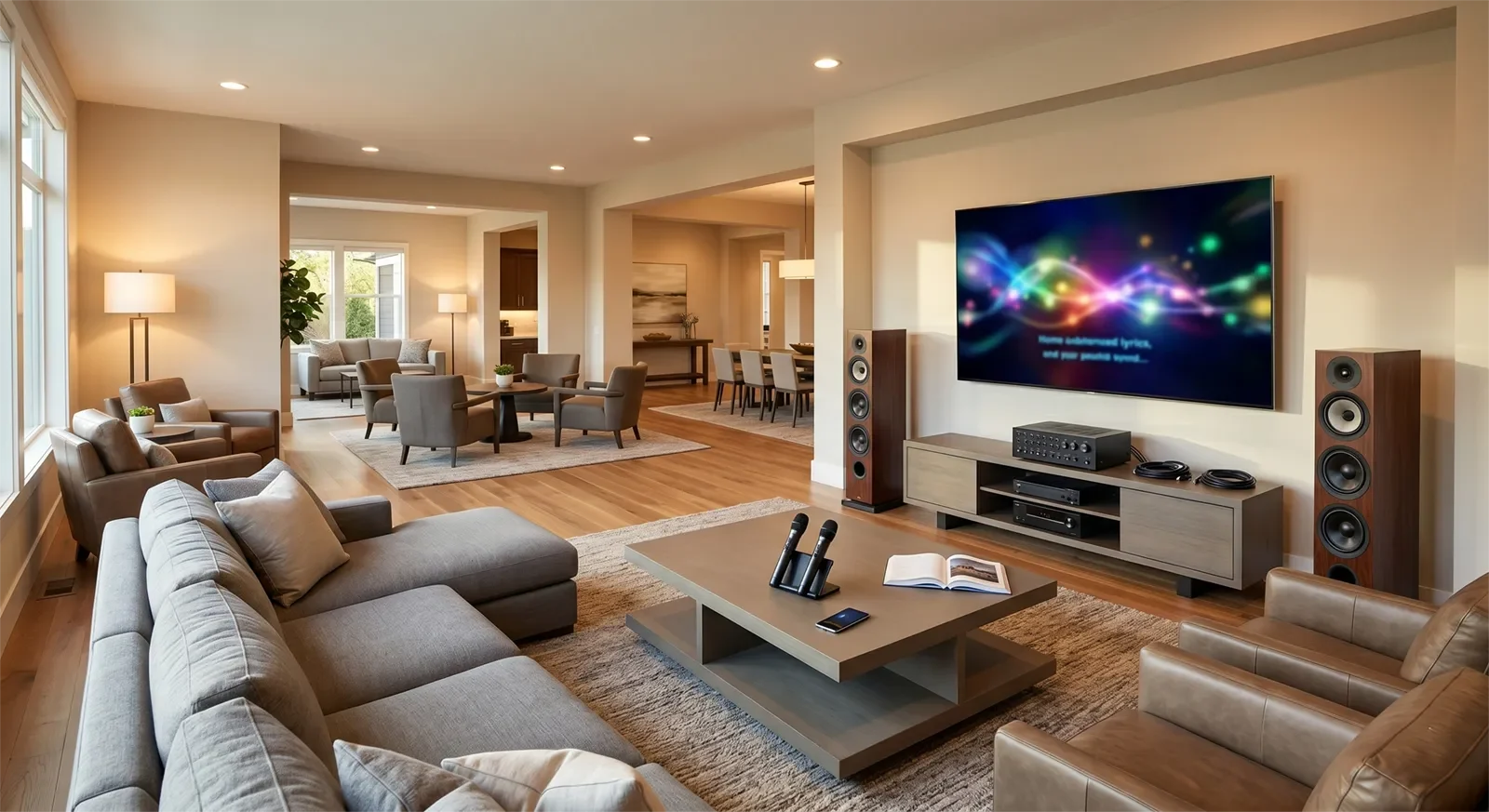
The first question is not how big the room looks. It is where people will actually sing, sit, and listen. In an open room, sound has to travel farther and stay balanced across a less contained space. That makes coverage more important than raw watt claims.
A good large-room karaoke system is not defined by the biggest number on a spec sheet. It is defined by how evenly it covers the main singing zone without making vocals feel thin, harsh, or strained.
This is why room label alone can mislead buyers. A living room may look large, but if everyone still gathers near one TV wall, the better answer may be a well-matched home karaoke system with good control rather than a much bigger system. If your home is compact instead of open, compare this decision with our guide to karaoke systems for condos and small homes.
Daily usability matters in a shared family room
A large family room still has to function like a family room. If the home karaoke system is frustrating to turn on, adjust, explain, or place around furniture and walkways, it usually gets used less. In real homes, usability matters almost as much as sound.
Think about who uses the system most. Is karaoke occasional weekend fun, regular family singing, or something that comes out whenever guests visit? In bigger shared rooms, the best home karaoke system is usually the one that stays predictable. People should be able to hear the backing track clearly, hold the microphone comfortably, and sing without constant level fixes.
Clean headroom helps vocals stay stable
Large-room buyers often worry about underbuying, so they focus on power first. The better question is whether the home karaoke system stays composed when the room gets active. Clean headroom matters because it helps vocals stay clear when singers get louder or multiple people rotate through the room.
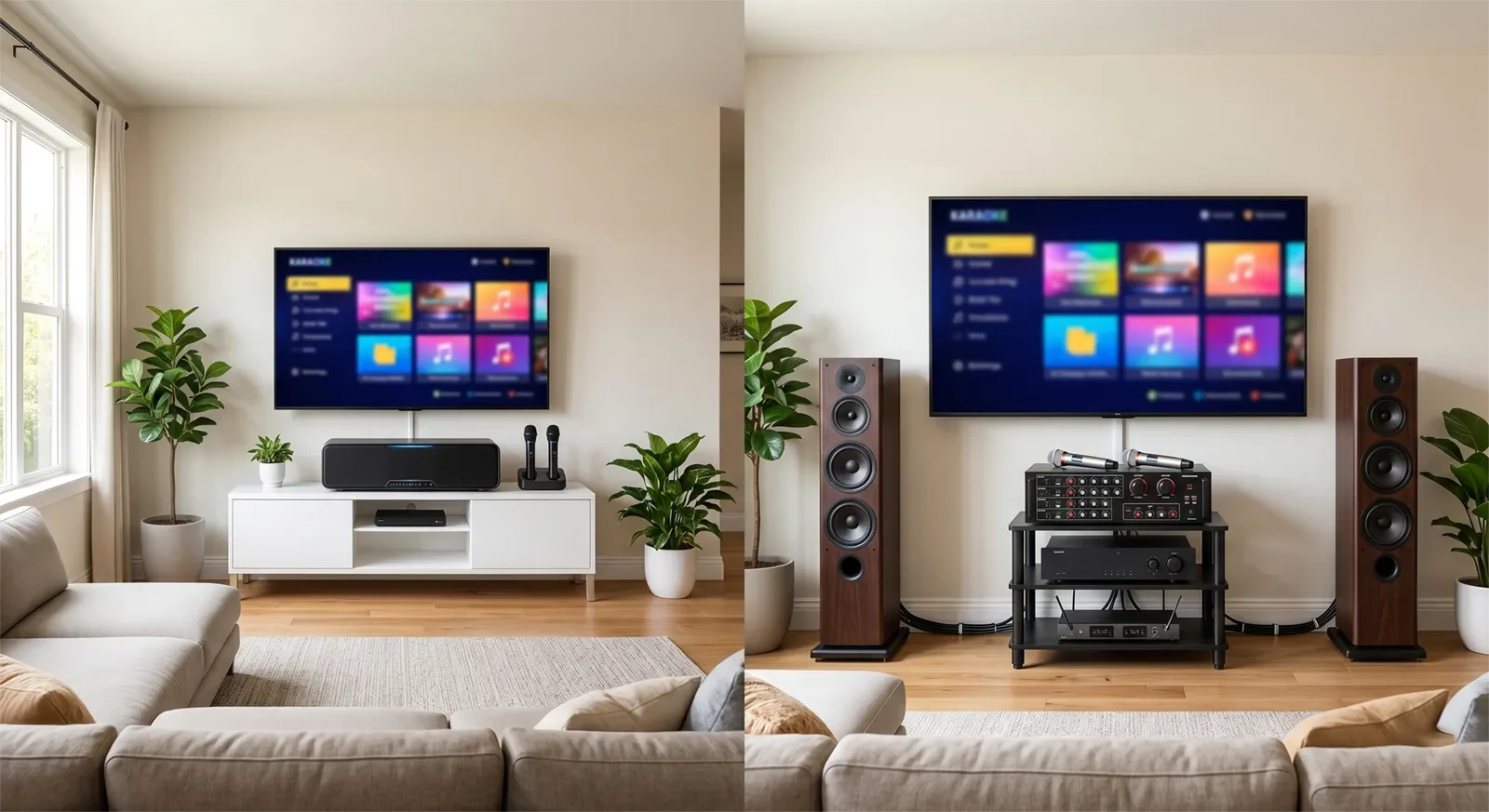
If your family sings only occasionally and wants a simpler daily experience, an all-in-one karaoke system may already be enough. If your household sings weekly, hosts often, or expects more consistent performance across a wider room, moving up to a full-size home karaoke system is usually the better investment.
Placement flexibility affects real performance
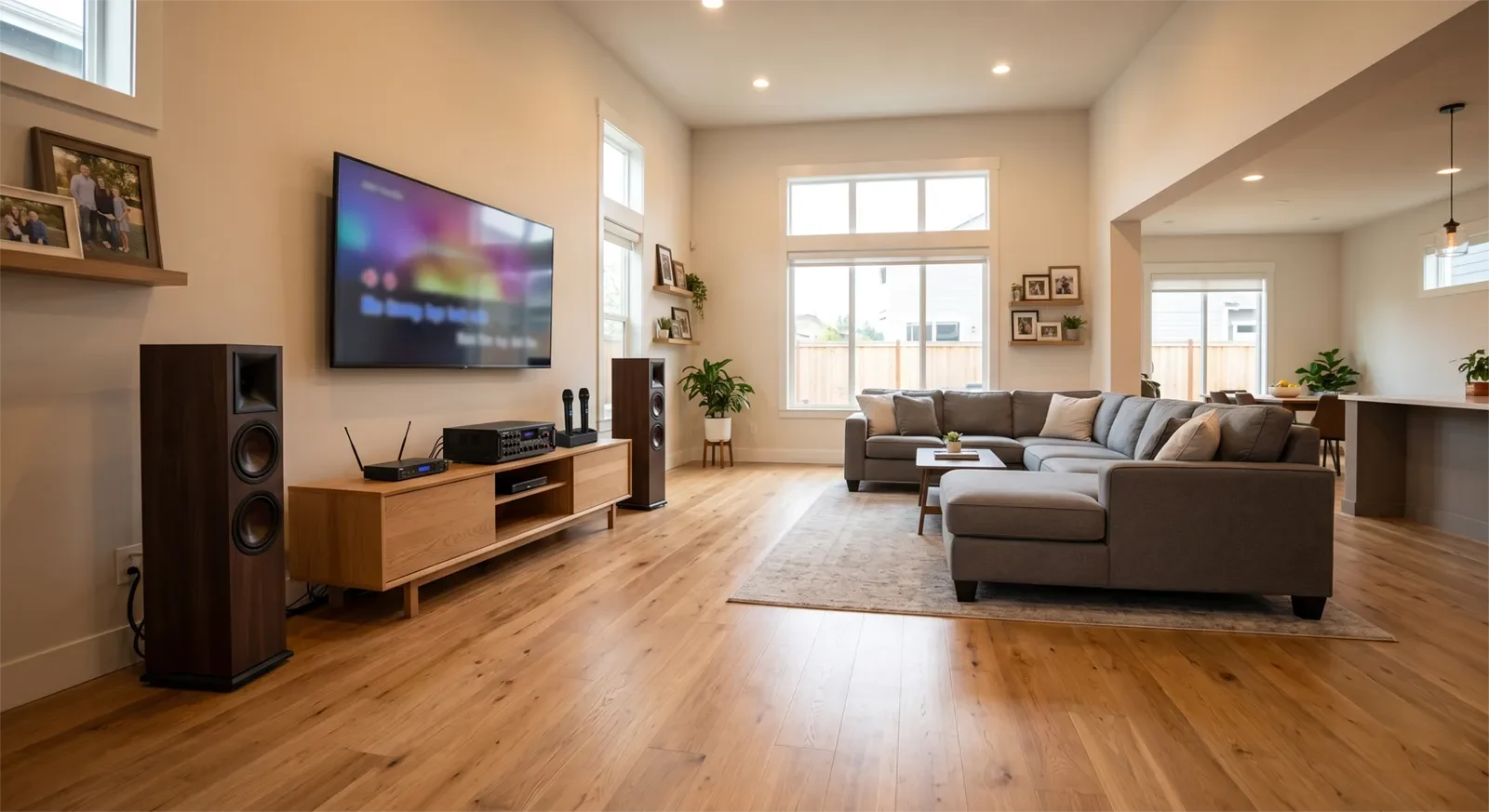
A stronger system does not help much if it is hard to place well. In open living rooms, placement flexibility matters because the home karaoke system has to fit around the TV wall, seating layout, walkways, and the spot where singers naturally stand. Buyers who ignore placement often blame the system when the real issue is how the room is being used.
| Factor | Why it matters | Common mistake |
|---|---|---|
| Coverage across the main seating area | Helps vocals and music feel balanced from more than one listening position | Buying only by output claims instead of real room use |
| Day-to-day usability | A system that feels easy gets used more often | Choosing gear that feels annoying in a shared room |
| Clean headroom | Keeps sound from feeling strained when people sing harder | Assuming louder automatically means better |
| Placement flexibility | Makes the system easier to fit around the TV wall, seating, and walkways | Ignoring where the singer will actually stand |
| Upgrade path | Helps you spend where it matters without overbuying now | Paying for a much bigger system before the room proves it needs one |
The Best Fit for Different Home Use Cases
Best for casual family use
Best for: Homes where karaoke is part of family time, the room is fairly large but the main singing zone still stays near one TV wall, and the priority is a simple, low-stress experience.
Not ideal if: Your room is very open, people listen from several connected zones, or your household already cares a lot about stronger vocals and steadier sound over longer sessions.
Why this fit makes sense: A strong all-in-one karaoke system can work well when the room is shared but the real karaoke use still stays centered. It usually makes the most sense when convenience and lower visual clutter matter as much as sound quality.
Best for regular home singing
Best for: Families who sing often, use karaoke regularly on weekends, or want better microphone behavior and stronger vocal stability as several people rotate through the room.
Not ideal if: You want the most compact plug-and-play workflow possible and do not want to think much about placement or ongoing adjustments.
Why this fit makes sense: In a large living room, regular use exposes weak systems quickly. The problem is usually not that the room is not loud enough. It is that vocals begin to disappear, music gets harder to balance, or the sound starts to feel strained. A full-size home karaoke system usually makes more sense here.
Best for wide open rooms with multiple listening zones
Best for: Open floor plans with wider seating spread, connected living and dining areas, or households where people expect the room to sound good from more than one listening position.
Not ideal if: The room looks large in photos but the actual karaoke use still stays fairly compact and centered.
Why this fit makes sense: This buyer should prioritize coverage and control first. That usually points toward a full-size home karaoke system with better placement flexibility and less strain as sound moves across the room. The goal is consistency, not dramatic loudness.
Budget, Room Size, and Setup Trade-Offs
In many large living rooms, the smartest buy is not the biggest one. A well-matched home karaoke system that covers the main family zone evenly is often enough, especially if karaoke still happens in one central area. This is where buyers save money by staying honest about how the room is actually used rather than how it looks.
Spending more becomes reasonable when the room is truly open, the seating spread is wider, the family sings often, or weaker systems begin to sound strained once the session gets lively. Overbuying is real, though. If the main listening area is still concentrated near one TV wall, paying for much more system than you can place well or use comfortably does not automatically create a better result. If you are still deciding between form factors, compare portable vs. full-size karaoke systems.
| Scenario | What usually works | When to spend more | When not to |
|---|---|---|---|
| Large living room, but karaoke stays near one TV wall | Strong all-in-one karaoke system or simpler full-size home karaoke system | When vocals start feeling thin or the room spreads wider than expected | When use is occasional and the main zone is still compact |
| Large shared room with weekly family singing | Full-size home karaoke system with better control | When several people sing often and you want steadier performance | When you are chasing output numbers more than real room needs |
| Open floor plan with connected seating zones | Full-size home karaoke system with better coverage and smarter placement | When listeners sit across multiple areas and the room feels uneven | Before you test whether better placement would solve most of the problem |
| Big room used mostly for casual entertaining | Simple, reliable home karaoke system that is easy to run | When parties are frequent and the system starts to feel strained | When you want maximum gear for a room that still sees light use |
Common Buying Mistakes to Avoid
Buying by watt claims first
The most common mistake is treating a large room like a simple power problem. A bigger room does need more clean capability, but the result people actually notice is coverage and control. The better question is whether the home karaoke system stays clear and balanced where people really sing and listen.
Ignoring daily family workflow
A system can be technically stronger and still be the wrong fit if it is awkward to place, annoying to operate, or difficult for other family members to use. In a shared living room, convenience is not a small issue. It directly affects whether the system feels worth owning.
Overbuying or underbuying out of fear
Some buyers underbuy and end up with a home karaoke system that never feels settled in the room. Others overbuy before proving the room truly needs that much system. The smarter approach is to size the purchase to the real use case. If karaoke is casual and centered, buy enough. If the room is truly wide and family use is regular, spend where it improves clarity, control, and consistency.
How to Choose the Right Karaoke System in 60 Seconds
- Start with the real use case, not the room label. Ask where people will actually stand, sit, and listen.
- Decide whether your priority is easier daily use or stronger coverage across a wider space.
- Choose between an all-in-one karaoke system and a full-size home karaoke system based on that real use pattern.
- Set a budget based on what the room actually demands, not on fear of underbuying.
- Leave room to upgrade only if your family will truly notice the difference over time.
If you only remember one thing, remember this: In a big shared room, the best home karaoke system is the one that stays even, clear, and easy to use where your family actually sings.
Frequently Asked Questions
Do open floor plans always need a full-size home karaoke system?
No. Some open rooms still work well with an all-in-one karaoke system if the singing area stays centered and the main listening zone is not too spread out. A full-size home karaoke system makes more sense when coverage, control, and regular family use matter more.
Can an all-in-one karaoke system work in a large living room?
Yes. It can work well when the room is large but the actual karaoke use still happens around one main TV wall and convenience matters more than maximum coverage. It becomes less ideal when the room opens widely into other zones and you start noticing weaker vocal balance or uneven sound.
Is spending more mainly about getting louder sound?
No. In this kind of room, spending more is usually about cleaner headroom, more even coverage, and a home karaoke system that feels less strained during real use. Better control is usually more valuable than simply making the room louder.
What matters most if the room is big but still shared with family?
Usability, placement, and coverage. A home karaoke system that sounds good but feels annoying in a shared living room is rarely the best buy. The right system should fit the room naturally and still feel easy for everyone in the house to use.
Final Recommendation
If your large living room still centers karaoke around one main seating area and use is mostly casual, start with an all-in-one karaoke system or a simpler full-size home karaoke system that stays easy to place and easy to use. If your room opens wider, your family sings often, or you care more about cleaner vocals and steadier performance across the room, move toward a full-size home karaoke system.
The real goal is not maximum gear. It is enough coverage, enough control, and enough daily ease to make karaoke feel good in a real home. Buy for the main singing zone, the way your family actually uses the room, and the level of performance you will truly notice over time.
Need help narrowing it down for your room, budget, and family use?
Start with How to Choose the Best Karaoke System for Your Home, compare portable vs. full-size karaoke systems, or go deeper with our living room karaoke setup guide.