
The best karaoke setup for a living room keeps the TV easy to read, places speakers in front of the singers, protects normal walking space, and uses moderate sound settings that stay comfortable for both singers and listeners. In most homes, the right setup is not the biggest one. It is the one that fits the room naturally and can be used again without moving half the house.
Who this guide is for: Home users setting up karaoke in a shared living room who want clear sound, comfortable layout, and a setup that still works for daily family life.
How this guide was prepared: This article was rebuilt as a living-room karaoke setup guide. It focuses on room layout, speaker direction, TV sightline, singer position, walking space, comfort, and repeatable use instead of turning the topic into a buying guide or a deep technical article.
Living room karaoke works best when the room still feels like a living room before and after people sing. Most families do not want a permanent stage in the middle of the house. They want the TV to stay useful, the sofa to stay comfortable, the walkways to stay clear, and the karaoke system to sound good without taking over the room.
That is why living room karaoke should start with layout before loudness. If the singer cannot see the lyrics, the speakers are aimed poorly, or cables cross the main walkway, even a strong system can feel annoying to use. If you want the full signal-flow setup before working on the room layout, start with the Step-by-Step Home Karaoke Setup Guide.
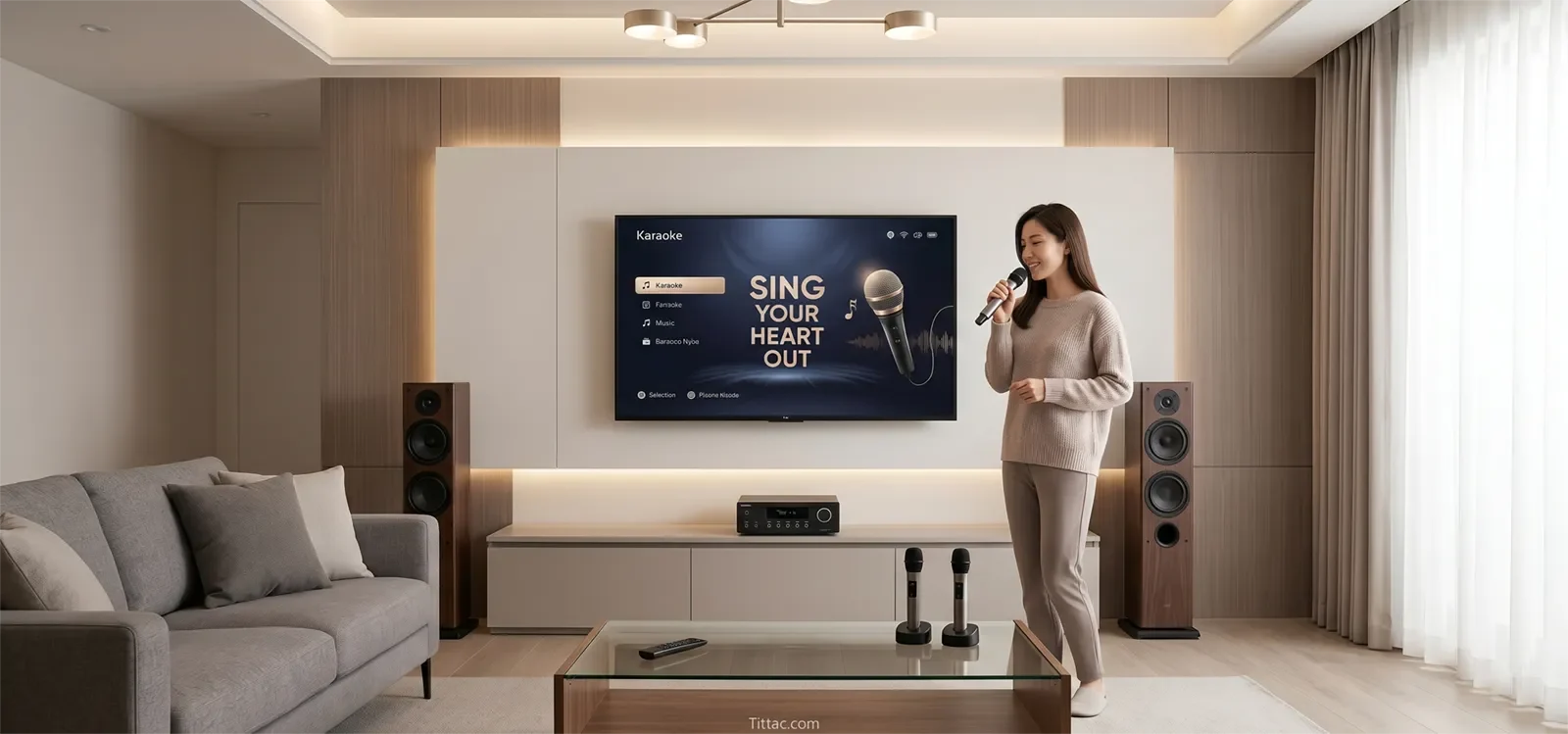
Table of Contents
Quick living room setup rule
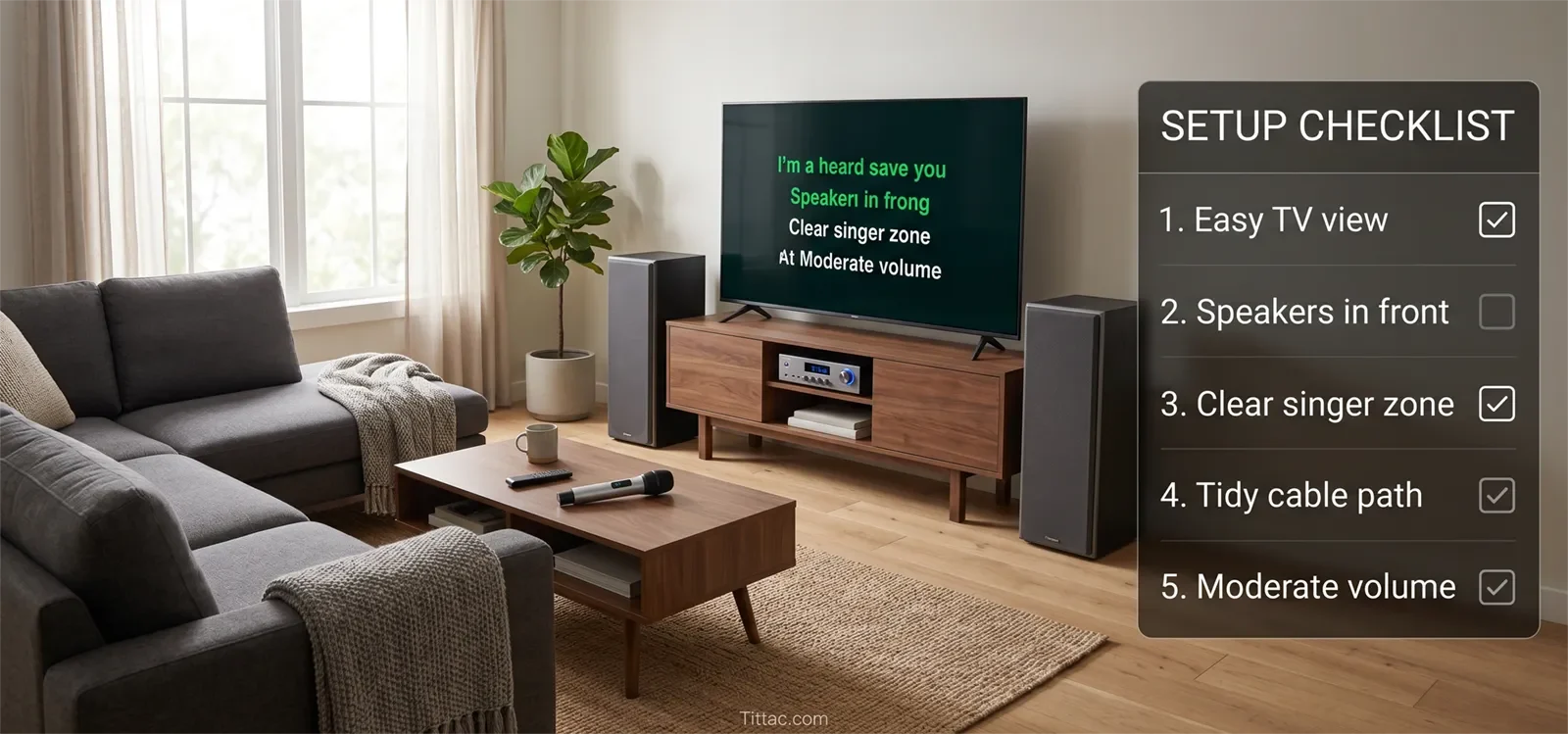
For most living rooms, build the karaoke setup around one visual center, one clear singer zone, and one stable speaker direction. The TV should be easy to read, the singer should not stand directly in front of the speakers, and the main walking paths should remain usable.
A good living room karaoke setup usually follows this pattern:
- TV as the visual anchor: lyrics stay easy to read from the singer position.
- Speakers in front of the singers: sound projects into the room instead of back into the microphones.
- Simple singer zone: one or two people can stand comfortably without blocking the room.
- Usable seating: guests can watch, listen, and relax without crowding the performance area.
- Clean cable path: wires stay away from normal walkways as much as possible.
This setup does not need to look dramatic. It needs to feel natural, safe, and easy to repeat.
Real constraints of a living room karaoke setup
A living room is not a dedicated karaoke room. It has to work for TV watching, family time, guests, kids, furniture, and daily movement. A karaoke setup succeeds when it works with the room instead of forcing the room to become something else.
The first constraint is sightline. If singers cannot see lyrics comfortably, they start twisting sideways, walking into poor positions, or holding the microphone at awkward angles. In most homes, the TV is already the natural visual anchor, so the karaoke layout should support that.
The second constraint is walking space. Living rooms usually have a sofa, coffee table, media cabinet, and a few paths people use every day. If the karaoke setup blocks those paths or runs cables across them, the room feels inconvenient even if the sound is acceptable.
The third constraint is sound behavior. Living rooms often have reflective surfaces, uneven furniture placement, and seating that is closer to one speaker than the other. A setup that looks balanced on paper can still sound uneven in the real room.
The fourth constraint is family comfort. Karaoke does not have to feel like a lounge system at full volume. For home use, vocal clarity, comfortable music level, and feedback control usually matter more than extreme loudness.
The goal is not to create a perfect stage. The goal is to create a clear, comfortable karaoke area inside the room you already use every day.
Best layout for most living rooms
For most homes, the best layout starts with the TV, then builds the singer zone and speaker placement around it. Do not start by placing speakers randomly and forcing the singer to adjust later.
A practical living room layout usually looks like this:
- Keep the TV as the center point. Singers should face the TV naturally without turning their body sideways.
- Create a small singer zone between the TV and seating area. Leave enough room for one or two singers.
- Place speakers forward of the singer zone when possible. This helps reduce feedback and improves vocal clarity.
- Keep seating behind or around the singer zone. Guests should hear the mix without sitting directly in front of one speaker.
- Keep walkways open. Avoid running cables across the path between the sofa, hallway, kitchen, or stairs.
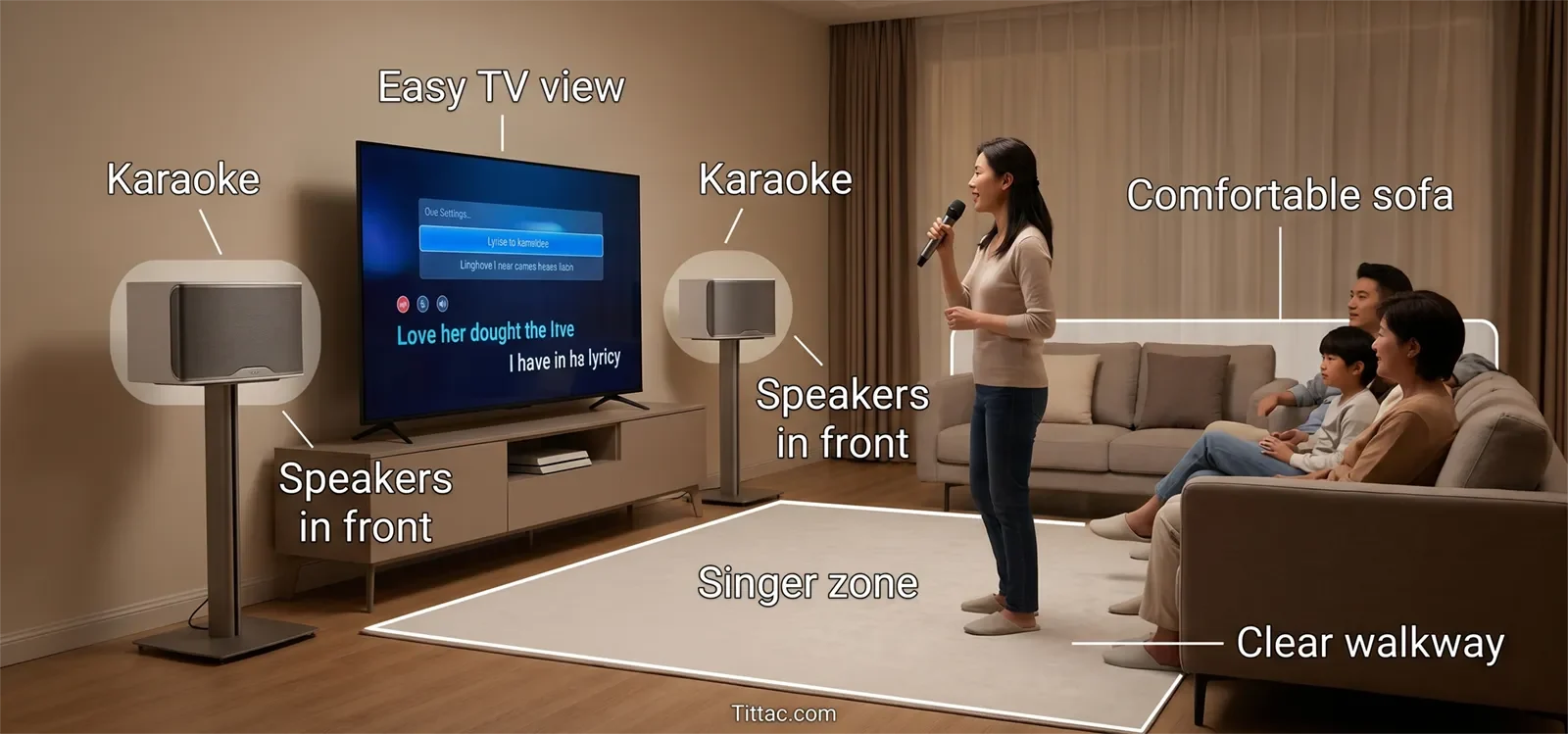
This layout keeps the room useful. People can still sit comfortably, walk through the space, and enjoy karaoke without feeling like the living room has been taken apart.
If your living room is small, keep the setup compact and disciplined. Avoid spreading speakers too wide, using too many stands, or letting the coffee table take over the singer zone. If the room is larger or open-concept, define the karaoke area clearly instead of trying to fill every corner with sound.
If you are unsure whether your room needs a compact system or a more capable setup, compare room-size needs in Best Karaoke System for Small Rooms vs Large Rooms.
Speaker, TV, and singer placement
Living room karaoke gets easier when the TV, speakers, and singer position all support one simple flow. The singer should see the lyrics, hear the music, and use the microphone without standing in the worst spot for feedback.
TV placement
The TV should be readable from the normal singing position. Avoid placing singers so far away that they squint, or so close that they block the screen for everyone else. A comfortable lyric view makes the whole session feel more natural.
Speaker placement
Speakers should usually sit in front of the singers, not behind them. When microphones point toward speakers, feedback becomes more likely and the room gets harder to control.
Aim the speakers toward the main listening area, not directly into the microphones. Keep them stable and avoid hiding one speaker behind furniture. If speaker placement is the main issue in your room, use How to Position Speakers for Karaoke as the next guide.
Singer position
The singer should stand in a small, obvious area where the TV is easy to see and the microphone is not aimed directly at the speakers. For duets, leave enough space for two people to stand without crowding each other or stepping into cable paths.
Seating and comfort
The sofa and chairs should stay relaxed and usable. Guests should not have to move every time someone sings. If one seat is too close to a speaker or blocked by the singer zone, adjust the layout before raising the volume.
Cables and storage
A living room setup becomes easier to use when microphones, chargers, remotes, and cables have a fixed place. Keep the main equipment near the TV console or media area when possible. A clean setup is safer, looks better, and is more likely to get used often.
If your living room connects to bedrooms, stairs, shared walls, or nearby units, sound control becomes more important. In that case, Karaoke Setup for Apartments and Noise Control can help even if you are not in an apartment.
When portable or simpler gear makes more sense
Not every living room needs a larger or more built-out karaoke system. In many homes, a simpler setup is the smarter choice.
Portable or simplified gear often makes more sense when the room is tight, furniture-heavy, used constantly, or difficult to rearrange. If karaoke requires moving the coffee table, dragging cables across the room, and rebuilding the layout every time, the setup may be too much for the space.
A simpler setup is usually better when:
- The living room is small or crowded.
- The household sings occasionally, not every week.
- The family wants easy setup and cleanup.
- Visible gear would make the room feel cluttered.
- There is no clear permanent singer zone.
- The room already sounds harsh or reflective at higher volume.
This does not mean the experience has to feel weak. A compact system that fits the room honestly can sound clearer and feel more enjoyable than a larger system that constantly needs correction.
The best living room karaoke setup is the one people actually want to use. If simpler gear makes the room easier to start, easier to clean up, and easier to live with, it may be the better setup for that home.
Frequently Asked Questions
Can a living room karaoke setup still look normal every day?
Yes. In most homes, the room can still look normal if the karaoke setup is built around the TV and existing furniture. Use short cable paths, stable speaker positions, and one organized place for microphones, remotes, and accessories.
Where should the singer stand in a living room karaoke setup?
The singer should usually stand slightly behind the speaker line while facing the TV comfortably. This keeps lyrics easy to read and reduces the chance that microphones point directly into the speakers.
Should living room karaoke be loud to feel fun?
No. Karaoke usually feels better at home when vocals are clear and the room stays comfortable at moderate volume. If the sound only feels exciting when it becomes harsh or tiring, the issue is usually layout, balance, or effects, not lack of loudness.
When is a simpler karaoke setup better for a living room?
A simpler setup is better when the room is tight, heavily used, or hard to rearrange. If a larger setup blocks walking space, creates clutter, or makes startup feel like a chore, a compact and repeatable setup is usually better.
How do I reduce feedback in a living room karaoke setup?
Keep microphones away from the direct speaker path, avoid pointing microphones at speakers, place speakers forward of the singer when possible, and use moderate microphone volume. Placement usually solves feedback more cleanly than turning controls randomly.
If you are still deciding whether your living room needs a compact system or a more capable one, the next step is matching the system size to the room before you buy or rearrange more furniture.
Compare Small-Room vs Large-Room Karaoke Systems