
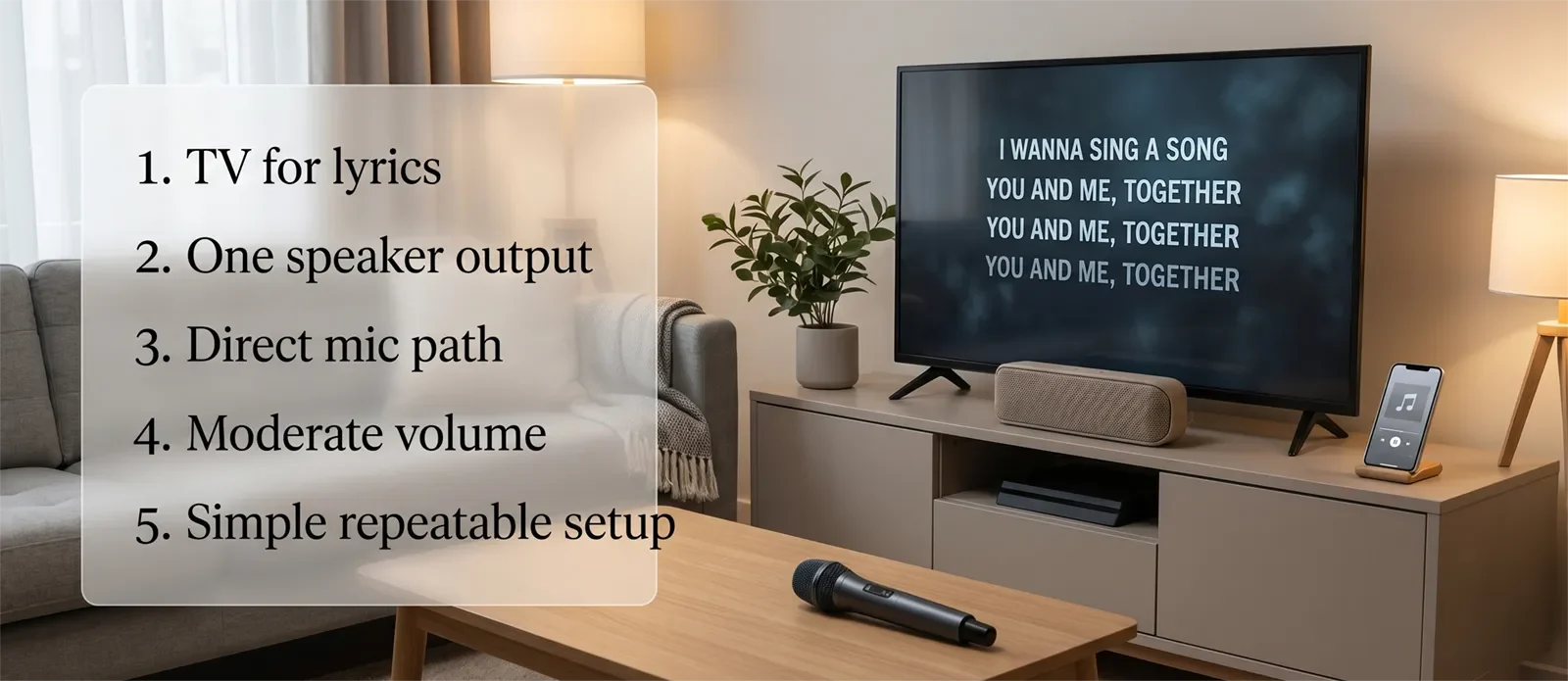
A karaoke setup with only a TV and a portable speaker can work well for casual home singing when the setup stays simple: use the TV for lyrics, send the music to one main portable speaker, keep the microphone path direct, and avoid expecting small gear to perform like a full karaoke system.
Who this guide is for: Home users who want the lightest possible karaoke setup for small rooms, casual family singing, flexible spaces, or beginner-friendly use without building a full multi-device karaoke station.
How this guide was prepared: This guide focuses on one setup question only: how far you can reasonably go with a TV and portable speaker. It explains the practical signal path, room limits, and usage habits that make a minimal karaoke setup easier to repeat.
A TV-and-portable-speaker karaoke setup is attractive because it is simple. You do not need a large equipment rack, permanent speaker placement, or a full karaoke room. For many homes, that is exactly the point: quick lyrics on the screen, music through a portable speaker, and enough vocal support for relaxed singing.
The key is to keep the setup honest. A minimal setup can be clean and enjoyable, but it should not be judged like a full karaoke system with dedicated vocal processing, stronger speaker coverage, and more stable multi-mic control. If you want the broader home karaoke framework before going minimal, start with the Step-by-Step Home Karaoke Setup Guide.
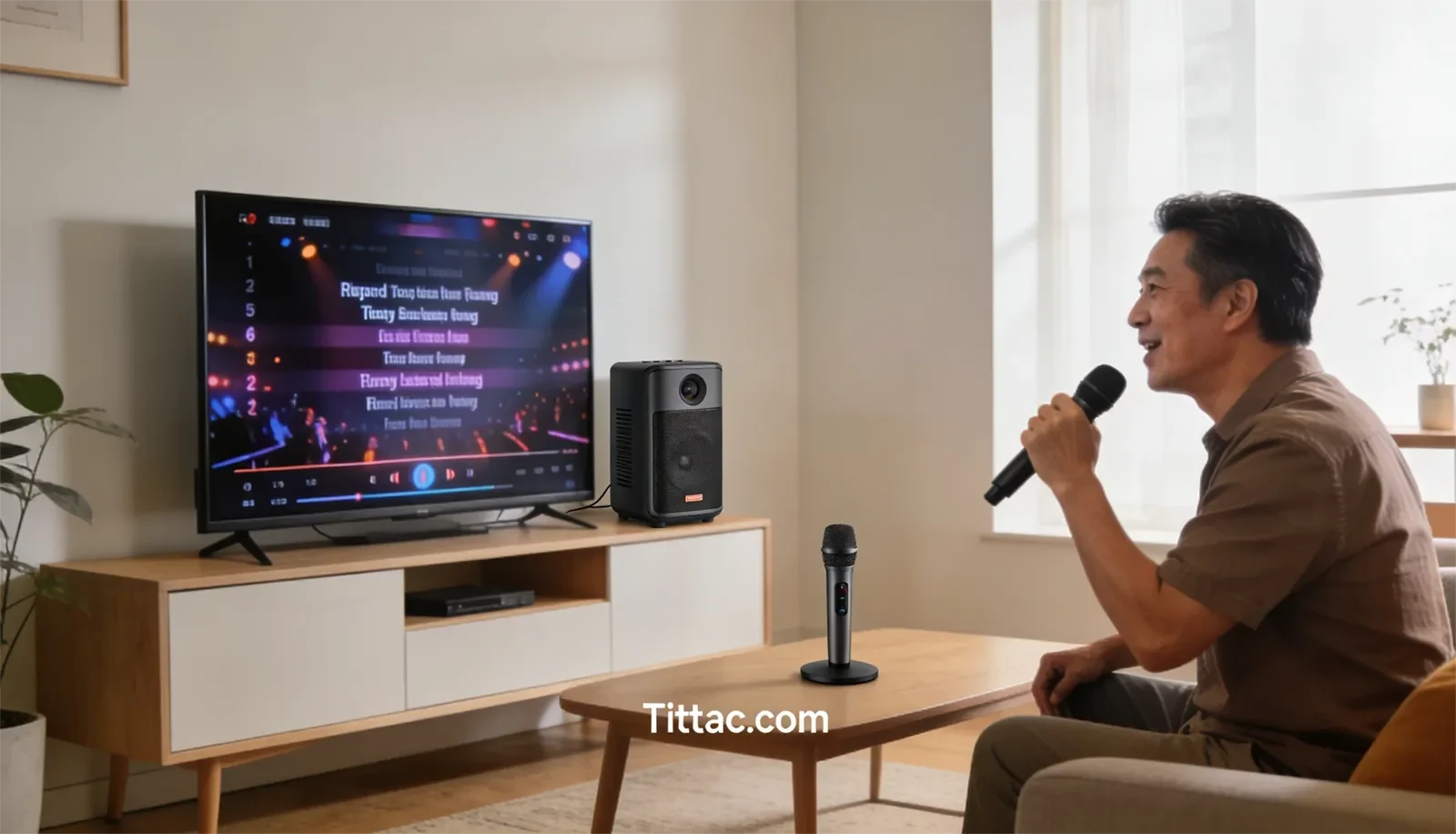
Table of Contents
Quick Answer
For most homes, a TV-and-portable-speaker karaoke setup works best when the TV handles lyrics, the portable speaker handles the main room sound, and the microphone path stays as direct as possible. This setup is best for casual singing, small rooms, moderate volume, and users who value convenience more than advanced vocal control or big-room coverage.
Real Constraints of Using Only a TV and Portable Speaker
A minimal karaoke setup feels appealing for a reason. It is smaller, faster, easier to move, and less intimidating than a full system. For beginners, small rooms, and occasional family singing, that can be the right choice.
But this setup only stays enjoyable when you understand its limits from the beginning.
Less Vocal Control
A portable speaker may play music well, but a minimal setup often gives you less control over microphone level, vocal tone, echo, reverb, and how the voice sits with the music. That does not make the setup bad. It means it should be judged by convenience, not by the standards of a dedicated karaoke system.
Limited Room Coverage
Portable speakers can sound satisfying in bedrooms, small living rooms, bonus rooms, or casual family spaces. But once the room opens up, more people gather, or the volume gets pushed too hard, the system can start to feel thin, strained, or less controlled.
A Simpler Signal Path Matters More
A TV-and-portable-speaker setup works best when the signal path is easy to follow. Once you start adding extra outputs, adapters, separate microphone workarounds, or inconsistent source changes, the “simple setup” can quickly become confusing.
Multi-Singer Use Is More Limited
This kind of setup may be fine for one or two casual singers. It is less ideal for several active microphones, louder parties, or rooms where people expect stronger vocal processing and better feedback control.
The trade-off is simple: a small setup can still be a good setup if it gives you clear lyrics, stable playback, moderate room sound, and a repeatable routine. The problem starts when expectations drift beyond what the system can comfortably support.
Layout, Equipment, and Behavior Guidance
The biggest mistake with a TV-and-portable-speaker setup is assuming fewer devices means no planning is needed. Small setups need clean layout because there is less room to hide routing mistakes.
Place the TV Where Singers Can Actually Read It
The TV should be easy to read from the real singing position, not only from the couch. If singers have to twist, squint, or stand awkwardly to see lyrics, the whole experience feels less natural even when the sound is acceptable.
Treat the Portable Speaker as the Main Room Sound Source
The portable speaker should be placed where it fills the listening area without firing directly back into the microphone area. In many small rooms, placing the speaker slightly off to the side works better than putting it directly in front of the singer.
Keep Each Device’s Job Clear
Even a minimal karaoke setup still needs the same basic roles covered:
- TV: Shows lyrics and on-screen navigation.
- Source: Provides the karaoke track, such as a Smart TV app, streaming device, phone, or tablet.
- Portable speaker: Plays the main room audio.
- Microphone path: Adds live vocals in the simplest practical way.
- Cables or adapters: Connect only the path your actual devices support.
Test Music Before Microphones
Always confirm the music path first. Make sure the TV content or source audio reaches the portable speaker clearly before adding microphones. This order prevents you from blaming the microphone side for a music-routing mistake.
If you want the full signal-order logic before scaling it down to this smaller format, use the Step-by-Step Home Karaoke Setup Guide. This article is the lean version of that bigger setup logic.
Keep Expectations Moderate
A minimal setup usually sounds better when the room stays moderate: moderate space, moderate volume, and moderate microphone demand. Once people expect big-party power from a compact portable layout, frustration rises faster than sound quality.
In many homes, the best results come from treating this setup as a convenience-first karaoke option. Keep it clean, keep it simple, and let it stay good at what it is meant to do: quick home singing without turning the room into a permanent audio project.
Best-Fit Setup Pattern for Most Homes
For most homes, the best-fit pattern is straightforward: the TV shows lyrics, the source provides the song, the portable speaker handles the main room audio, and the microphone path is added only after the music path is stable.
A practical setup flow looks like this:
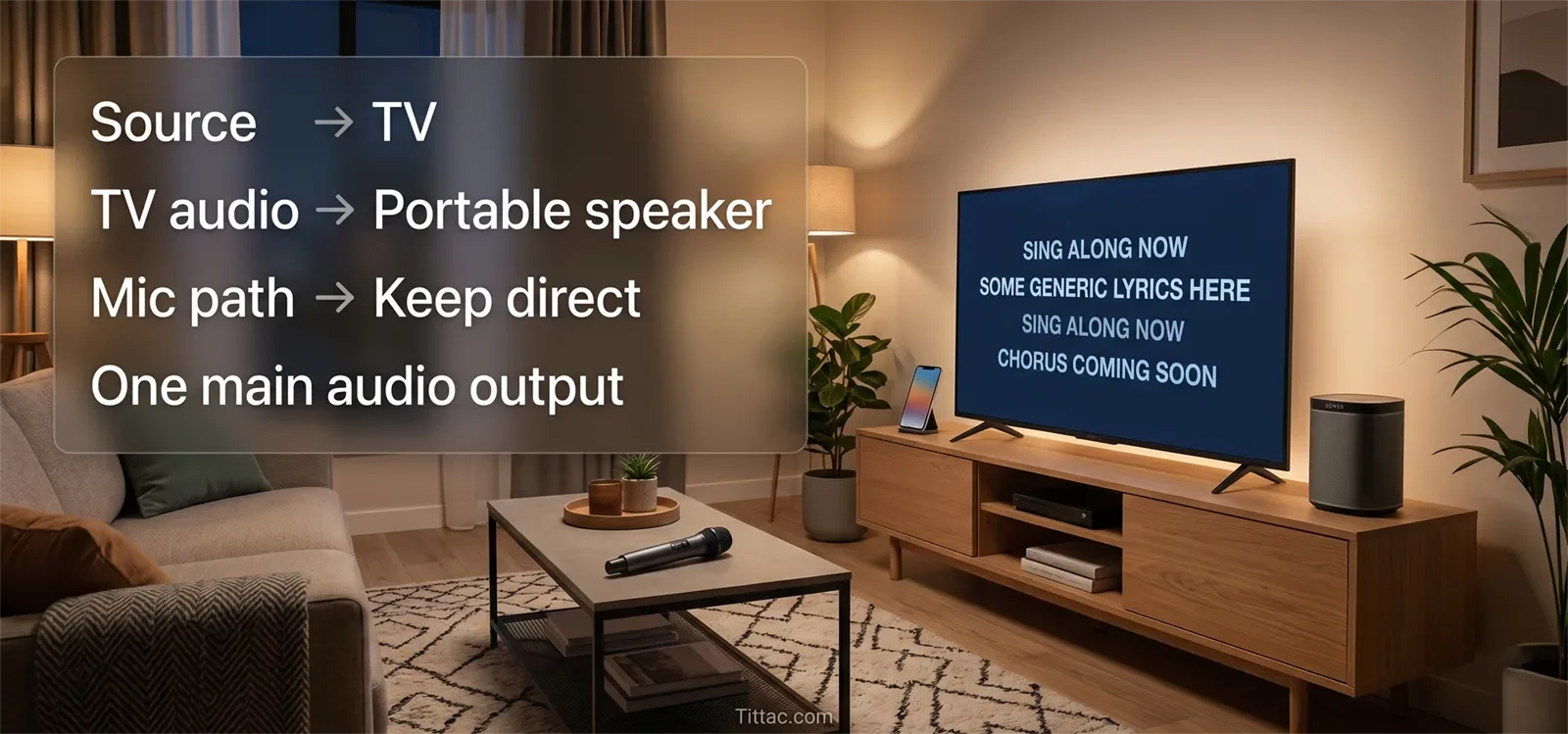
- Choose the source and confirm lyrics appear clearly on the TV.
- Send the TV or source audio to the portable speaker using the simplest supported path.
- Play one test song and confirm the speaker receives the music clearly.
- Add the microphone path only after music playback works.
- Raise volume gradually instead of forcing the room all at once.
- Keep one main audio output instead of mixing TV speakers and portable-speaker output unless you know the timing will stay clean.
This pattern works because it keeps one clear playback destination. Most home users are better off with one main speaker output that is easy to balance and troubleshoot.
This setup usually fits best in situations like these:
- Small living rooms: where singers and listeners are close together.
- Bedrooms or bonus rooms: where a full karaoke station would feel excessive.
- First-time karaoke users: who want low friction more than advanced control.
- Flexible spaces: where the speaker needs to be moved or stored after use.
- Occasional family singing: where convenience matters more than maximum output.
The strongest advantage of this layout is repeatability. You should be able to run the same basic order next week without rediscovering the system from scratch. When a minimal setup is done well, it stays easy.
When Portable or Simpler Gear Makes More Sense
Portable or simpler gear makes the most sense when the room values flexibility over maximum control. If your priorities are fast setup, easy storage, casual singing, and a system that does not dominate the room visually, this stripped-down format may be the smarter choice.
That is especially true for beginners. A minimal setup is less intimidating because it lets people start singing before they feel ready to learn a larger signal chain. It can also fit lower budgets, occasional use, and households where karaoke is a fun option rather than a regular weekend event.
Portable gear also makes sense when the room is not asking for too much. If you are singing with a few people at moderate volume in a controlled indoor space, simplicity can be a strength. A setup that people actually use often creates more singing than a more powerful setup that feels like work every time.
The right time to upgrade is usually when the simple setup no longer feels convenient. If the portable speaker feels too small, if group singing becomes harder to manage, or if you keep wanting cleaner voice-and-music balance, the setup may be reaching its natural limit.
At that point, the better question is not “How do I force this setup to do more?” It is “Would a slightly fuller system make karaoke easier?” For that comparison, read Portable vs Full-Size Karaoke Systems.
When This Setup Is Not Enough
A TV-and-portable-speaker setup is not the best choice for every home. It may be too limited if you regularly need stronger vocal control, multiple wireless microphones, larger room coverage, or smoother sound for parties.
Signs that the setup is no longer enough include:
- The speaker sounds strained at the volume your room needs.
- The voice never sits clearly with the music.
- Several singers want microphones at the same time.
- You keep fighting feedback or unstable mic sound.
- The setup changes every time because the routing is not clear.
- You want more consistent echo, reverb, or vocal tone control.
If those problems happen often, upgrading may not be about buying something “fancier.” It may be about making the experience easier. A fuller karaoke system can give the music, microphones, effects, and speakers a cleaner structure so you spend less time troubleshooting and more time singing.
Frequently Asked Questions
Is a TV and portable speaker enough for real karaoke at home?
Yes, it can be enough for casual karaoke in a small or moderate-size space. It works best when the room has a clear music path, a simple microphone path, and realistic expectations about volume and vocal control.
What usually goes wrong in a minimal karaoke setup?
The most common problems are unclear audio routing, wrong input selection, adding microphones before confirming the music path, and expecting a portable speaker to behave like a full karaoke system.
Should the TV speakers and portable speaker both play at the same time?
Usually no. For most home users, one main audio output is easier to manage. Using both TV speakers and a portable speaker can create timing differences, echo-like delay, or a confusing sound field unless the setup is carefully controlled.
Can this setup work for family karaoke night?
Yes, especially for relaxed family use, smaller groups, and moderate volume. It becomes less ideal when several singers need stronger microphone control or when the room needs more output than the portable speaker can comfortably provide.
When should I stop using a portable speaker and upgrade?
Think about upgrading when the setup stops feeling easy. That usually happens when the room needs more coverage, smoother vocal control, better multi-mic handling, or a more repeatable connection path.
What is the best way to avoid confusion with this setup?
Use the same order every time: confirm lyrics on the TV, confirm music through the portable speaker, then add the microphone path. Keeping that routine consistent prevents most beginner setup problems.
Want the fuller version of this minimal setup?
Open the Step-by-Step Home Karaoke Setup Guide