
The best massage chair for seniors is not the chair with the most features. It is the chair that feels easy to sit in, easy to get out of, gentle enough to use comfortably, simple enough to control, and supportive enough for real daily home use.
Who this guide is for: Older adults, adult children, and family members comparing massage chairs for senior comfort, safety awareness, easy controls, body fit, and realistic home use.
How this guide was prepared: This guide was organized around practical senior-use concerns: entry and exit, gentle intensity, simple controls, supportive recline, body fit, daily usability, and cautious safety framing. It does not give medical advice and does not promise health outcomes. Seniors with medical conditions, implants, circulation concerns, recent surgery, fragile bones, or pain that has not been evaluated should ask a qualified healthcare professional before using a massage chair.
If you are researching massage chairs for seniors, the most important question is not “How many features does it have?” The better question is: will this chair feel comfortable, safe to approach, easy to operate, and realistic for the older adult who will actually use it?
For senior use, a massage chair should not feel intimidating. It should not be difficult to enter, too aggressive on the body, or confusing to control. A chair can look advanced online and still be the wrong choice if the user needs help every time, avoids strong pressure, or feels unsteady getting in and out.
This guide focuses on senior-friendly comfort, fit, and usability. It does not replace a full safety guide, and it does not turn into a product roundup. The goal is to help families choose a chair that older adults are more likely to use with confidence.
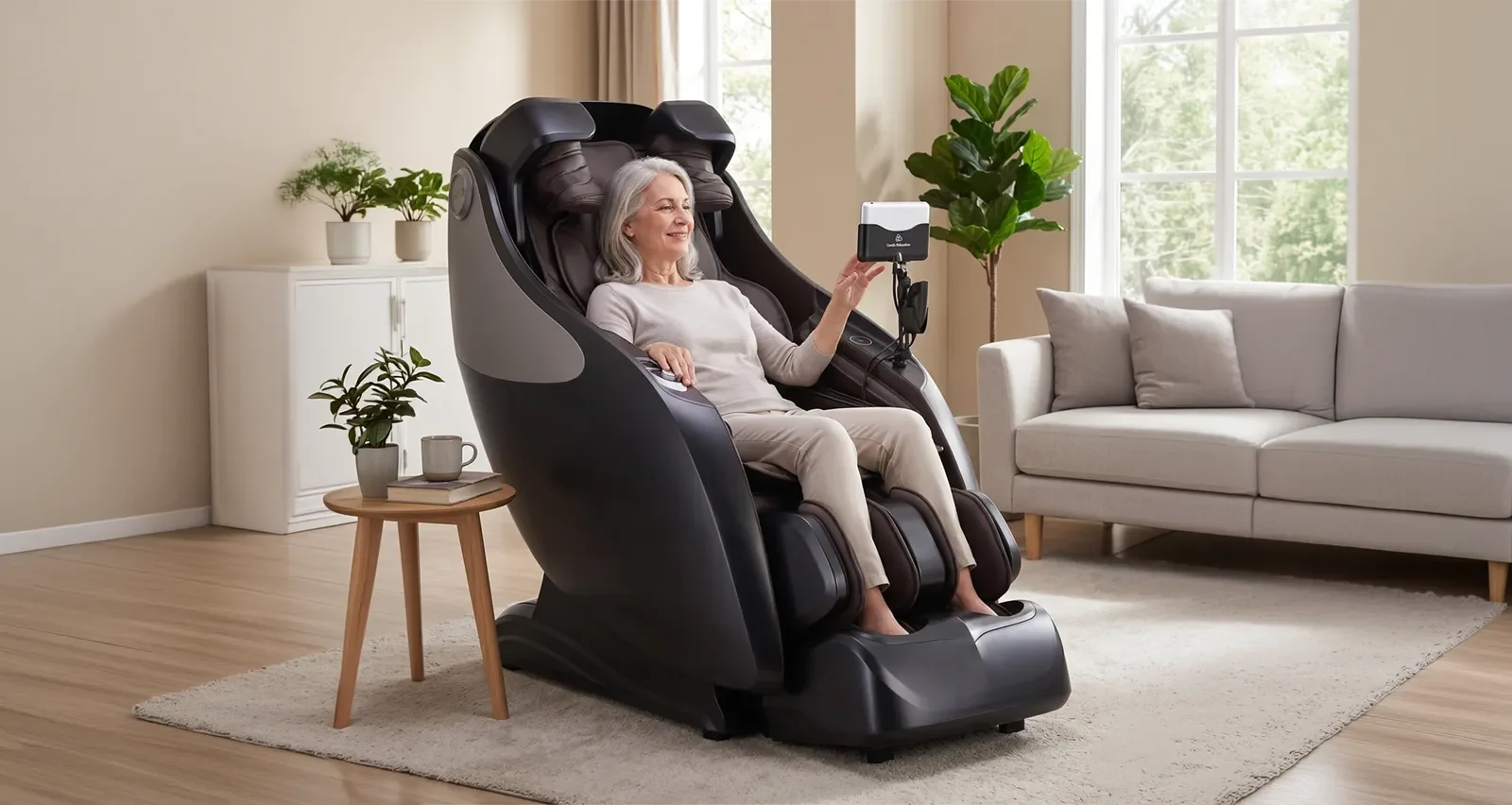
Table of Contents
- Quick Answer
- Why Seniors Need a Different Buying Lens
- 1. Easy Entry and Exit Matter First
- 2. Gentle Intensity Is More Important Than Maximum Power
- 3. Simple Controls Make the Chair More Usable
- 4. Body Fit Should Feel Natural, Not Forced
- 5. Recline Should Feel Supportive and Controlled
- What Families Should Prioritize First
- How to Test a Massage Chair for Senior Use
- Where Safety Caution Still Matters
- What This Page Does Not Own
- Frequently Asked Questions
- Related Guides
Quick Answer
The best massage chairs for seniors are usually the ones that prioritize easy entry and exit, gentle pressure, simple controls, supportive fit, and calm recline movement. Older adults often do better with a chair that starts softly, adjusts easily, and feels manageable without a complicated learning curve. A massage chair may support comfort and relaxation for some seniors, but it should never feel forceful, confusing, or hard to get out of. Senior-friendly design is about usability first, features second.
Why Seniors Need a Different Buying Lens
Massage-chair shopping often focuses on power, technology, and feature count. That can be the wrong starting point for older adults.
For seniors, the better buying lens is practical comfort. Can the user sit down without hesitation? Can they start a gentle session without stress? Can they stop the chair easily? Does the chair feel supportive instead of trapping the body? Does standing up afterward feel steady?
Those questions matter more than a long list of programs. A chair is not senior-friendly because it has many features. It is senior-friendly when the main user can approach it, understand it, relax in it, and get out of it with confidence.
If you are still comparing massage chairs more broadly for the home, start with How to Choose the Best Massage Chair for Your Home. This page focuses specifically on senior comfort and usability.
1. Easy Entry and Exit Matter First
Entry and exit should be the first senior-use test. A massage chair can feel comfortable during a session but still be a poor fit if sitting down or standing up feels awkward.
Pay attention to seat height, armrest shape, side clearance, footrest position, and how the chair feels before it reclines. The user should not feel like they have to climb into the chair, squeeze into it, or fight the footrest to get settled.
What to look for
- Approachable seat position: The user should be able to sit down without feeling like the chair is too low, too deep, or too enclosed.
- Comfortable arm area: The arms should not feel like a barrier when entering or exiting.
- Controlled recline: Recline should feel steady, not sudden or surprising.
- Easy return to upright: The user should feel confident getting back to a seated position before standing.
If the user hesitates before sitting down, that is not a small detail. It may decide whether the chair gets used regularly or avoided.
2. Gentle Intensity Is More Important Than Maximum Power
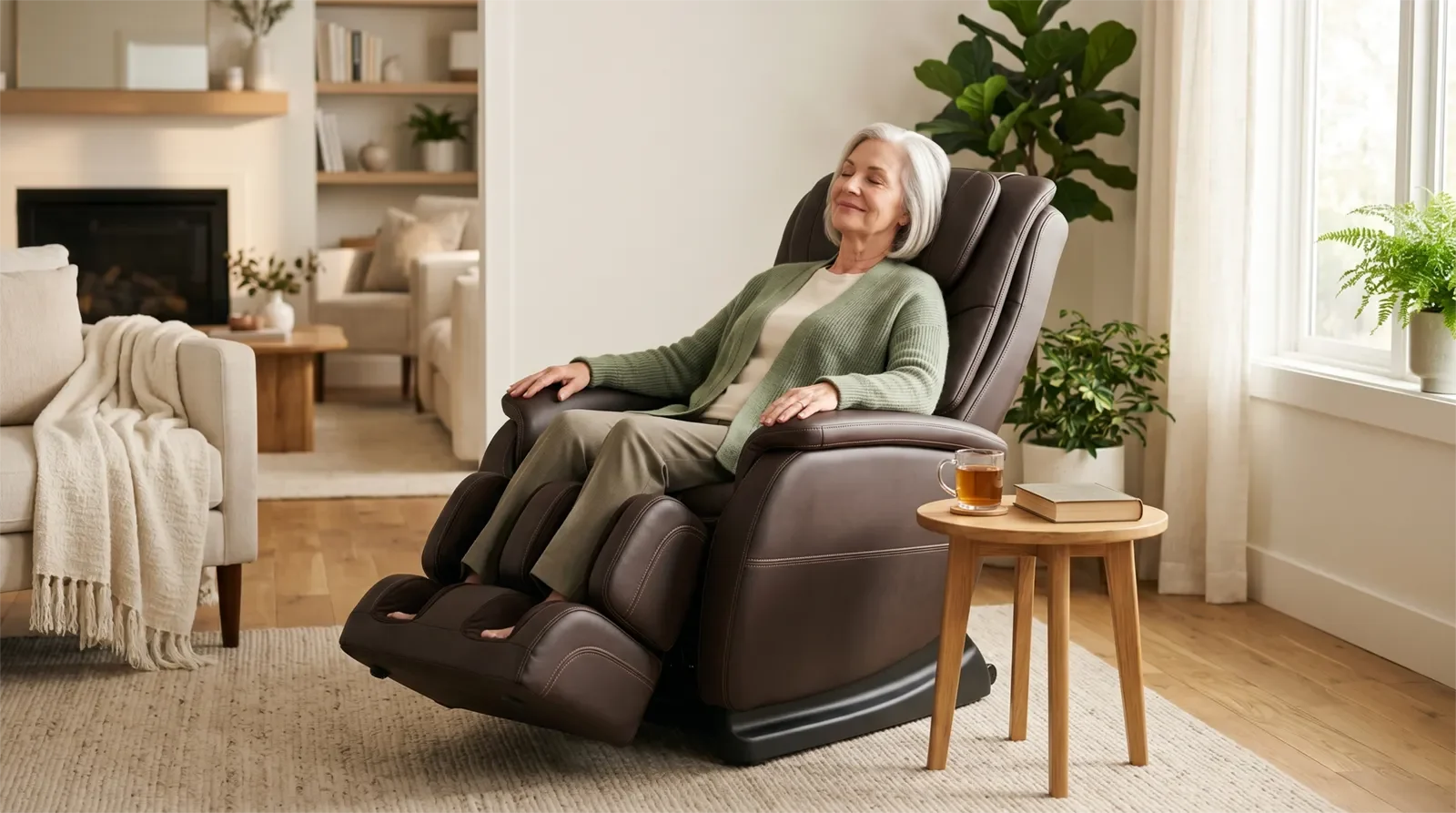
Many seniors prefer a chair that can stay comfortably gentle. Maximum intensity is less important than having pressure that can be reduced easily.
A chair that starts too strong can make the user tense up instead of relax. For older adults, a good massage chair should allow a soft beginning, gradual adjustment, and simple intensity control. The user should never feel like they have to “endure” the massage.
What families should check
- Does the chair have gentle programs?
- Can the intensity be lowered quickly?
- Does the massage feel smooth instead of harsh?
- Can the user stop the session easily?
- Does the chair feel comfortable at low settings, not only high settings?
A senior-friendly chair should feel useful even on gentle settings. If the chair only feels impressive when it is aggressive, it may not be the right match.
3. Simple Controls Make the Chair More Usable
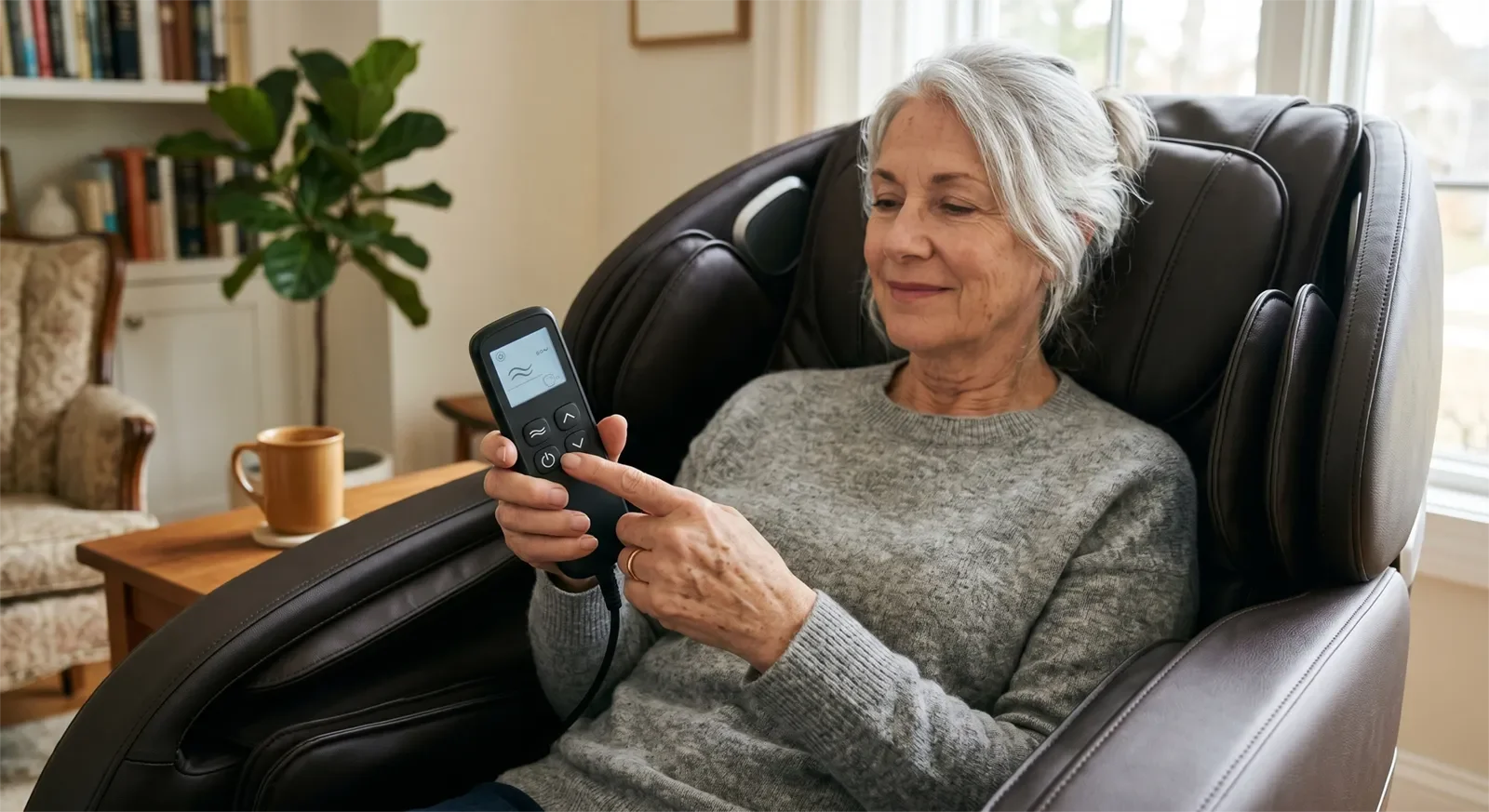
A complicated remote or screen can make a good chair feel frustrating. For many seniors, the best control system is not the one with the most menus. It is the one that makes the most common actions easy.
The main user should be able to understand basic functions such as start, stop, recline, return upright, adjust intensity, and choose a simple program. If those actions are hard to find, the chair may become dependent on another family member.
Good control design for seniors
- Clear labels
- Easy start and stop functions
- Simple program names
- Obvious intensity adjustment
- A clear way to return the chair upright
- Controls that do not require too many steps for a basic session
Family members can help during the first few uses, but the chair works best when the senior can operate it comfortably most of the time.
4. Body Fit Should Feel Natural, Not Forced
Body fit affects the entire massage experience. A chair that is too large, too deep, too narrow, or poorly matched to the user’s body may place rollers in the wrong areas or make the user feel unsupported.
For seniors, fit should feel calm and natural. The chair should support the back, shoulders, hips, legs, and feet without forcing the body into an uncomfortable position.
Key fit areas to check
- Shoulders and upper back: The chair should not miss the shoulder area or feel too tight around the upper body.
- Lower back: The massage path should feel supportive, not sharp or misplaced.
- Seat depth: The user should not feel swallowed by the chair.
- Leg and foot position: The footrest should support the legs without awkward stretching.
- Overall posture: The user should feel settled, not braced.
If the main user is petite, tall, sensitive to pressure, or has limited mobility, do not assume every massage chair will fit equally well. Fit should be tested before features are judged.
5. Recline Should Feel Supportive and Controlled
Recline can make a massage chair more relaxing, but only if the movement feels steady and manageable. Some seniors enjoy a deeper reclined position. Others may prefer a more upright or moderate recline.
The important point is control. The user should not feel surprised by the movement or unsure about returning upright. A supportive recline should help the body relax without making the user feel trapped or unstable.
For senior use, recline should be judged by comfort and control first. The position may sound impressive on a product page, but the real test is whether the older adult feels calm, supported, and able to return upright without stress.
What Families Should Prioritize First
When adult children shop for a parent or older relative, it is easy to focus on premium features first. A better order is:
- Entry and exit comfort
- Gentle usable intensity
- Simple controls
- Body fit
- Supportive recline
- Warranty and service clarity
- Bonus features
In the premium massage chair range, the best choice for seniors is not always the most advanced chair. It is the chair that makes the older adult feel confident using it regularly.
For many Vietnamese families, the right chair also needs to feel trustworthy, easy to explain to parents, and comfortable enough for long-term family use. If that is your situation, compare this guide with Best Japanese Massage Chairs for Vietnamese Families.
How to Test a Massage Chair for Senior Use
If possible, a senior should try the chair before buying. Online specifications cannot fully show whether the chair feels approachable, gentle, and easy to use.
During a demo, use this simple checklist:
- Can the user sit down without awkward movement?
- Does the chair feel comfortable before the massage starts?
- Can the user understand the basic controls?
- Can the massage start gently?
- Can intensity be lowered easily?
- Does the recline feel calm and controlled?
- Does the footrest feel natural?
- Can the user return upright without stress?
- Does standing up afterward feel steady?
- Would the user want to use this chair again tomorrow?
The last question is the most honest one. A senior-friendly chair should feel inviting enough to use again, not just impressive during a short test.
Where Safety Caution Still Matters
This page is about comfort, fit, and usability. It is not the full safety page, but safety still matters.
Older adults should use gentle settings at first and stop if a session causes pain, dizziness, unusual discomfort, numbness, or any feeling that something is wrong. Seniors with medical conditions, pacemakers or implanted devices, circulation issues, osteoporosis concerns, recent surgery, blood clot concerns, serious back problems, or unexplained pain should ask a qualified healthcare professional before using a massage chair.
For fuller guardrails, read Health and Safety Guide When Using a Massage Chair. This senior guide focuses on daily comfort and usability; the safety guide gives broader precautions for safer use.
What This Page Does Not Own
This page does not own the full medical-safety conversation, detailed troubleshooting, deep massage technology explanations, or product-roundup rankings. It stays focused on whether a massage chair feels comfortable, manageable, and realistic for senior use at home.
That scope matters. A chair is not senior-friendly just because it is expensive or feature-heavy. It is senior-friendly when the older adult can use it with comfort, confidence, and minimal frustration.
Frequently Asked Questions
Are massage chairs good for seniors?
Massage chairs can be useful for some seniors when the chair feels comfortable, gentle, easy to enter, easy to exit, and simple to control. The better question is not whether all seniors should use one, but whether a specific chair is appropriate for the individual user.
What should seniors look for in a massage chair?
Seniors should look for easy entry and exit, gentle intensity options, simple controls, supportive body fit, controlled recline, and clear warranty or service support. These basics usually matter more than a long list of advanced features.
Should seniors avoid strong massage settings?
Many seniors should start with gentle settings and only increase intensity if it remains clearly comfortable. A massage chair should not cause pain, bracing, dizziness, numbness, or discomfort. If there is any concern, stop using the chair and ask a qualified healthcare professional.
Is zero gravity good for seniors?
Some seniors may find zero gravity recline relaxing because it can create a supported resting position. Others may prefer a more upright posture. The important test is whether the recline feels calm, controlled, and easy to exit.
Are expensive massage chairs better for seniors?
Not automatically. A premium chair may offer better fit, smoother massage, stronger adjustment, and better support, but it is only better for a senior if it feels easy and comfortable to use. The chair must fit the person, not just the price range.
Should families test the chair with the senior before buying?
Yes, when possible. A showroom demo helps the user judge entry, exit, pressure, controls, recline, footrest comfort, and overall confidence better than online specifications alone.
Is this page enough for medical safety questions?
No. This page focuses on comfort, usability, and fit. For broader precautions and safer-use guidance, read Health and Safety Guide When Using a Massage Chair.
If you are choosing a massage chair for an older adult, start with comfort and confidence. The right chair should be easy to approach, gentle to use, simple to control, and supportive enough that the senior actually wants to use it again.
Choosing a massage chair for a parent or older family member? Visit the Tittac showroom to compare entry, exit, gentle pressure, recline comfort, controls, and body fit in person before making a premium purchase.
Contact Tittac or visit our showroom for help choosing a senior-friendly massage chair for your home.