
The best massage chair for your home is not the one with the longest feature list. It is the chair that fits your body, fits your room, feels realistic enough to use often, and gives you clear long-term confidence after purchase.
Who this guide is for: Home buyers who are seriously comparing massage chairs and want a clear way to choose a chair for long-term family use, not just a chair that looks impressive online.
How this guide was prepared: This guide was organized around real showroom-style buying decisions: body fit, massage feel, room fit, budget range, ease of use, country-of-origin expectations, warranty clarity, and long-term ownership support. It is written as a buying pillar, with narrower topics handed off to focused guides when a deeper comparison is more useful.
If you are trying to figure out how to choose the best massage chair for your home, start with the decision that matters most: will this chair still feel right after the excitement of buying it wears off?
Many shoppers get pulled into feature lists too early. They compare 2D, 3D, 4D, airbag counts, heat zones, voice control, touchscreen panels, zero gravity positions, and dozens of programs before they answer the simpler questions: Does the chair fit the main user? Does the massage feel natural? Will it overpower the room? Is the family comfortable using it? Is the store able to support the chair after delivery?
For a premium massage chair purchase, especially if you are comparing luxury massage chairs from $7,000 to $15,000, the goal is not to buy the most complicated chair. The goal is to buy the right chair once, use it often, and feel confident that the product, service, and support match the price.
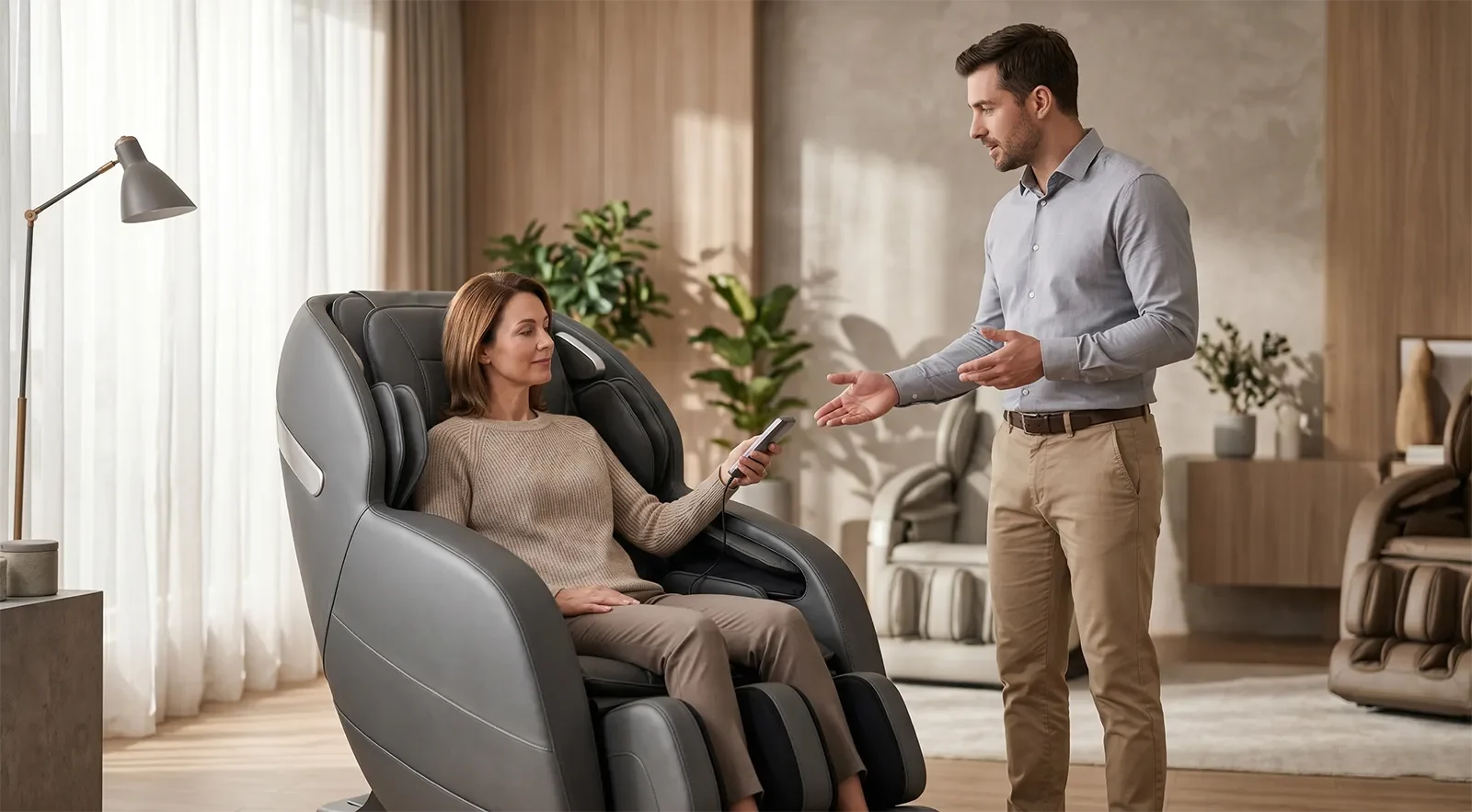
Table of Contents
- Quick Answer
- Start With the Right Buying Framework
- 1. Buy for the Main User First
- 2. Judge the Massage Feel, Not Just the Technology Name
- 3. Make Sure the Chair Fits the Body
- 4. Make Sure the Chair Fits the Room
- 5. Set a Budget That Matches Your Expectations
- 6. Understand Japanese, Japanese-Technology, and Chinese-Made Chairs
- 7. Choose Features That Affect Real Daily Use
- 8. Do Not Ignore Warranty and Service
- How to Build a Smart Shortlist
- Common Mistakes to Avoid
- Where to Go Next
- Frequently Asked Questions
- Related Guides
Quick Answer
The best way to choose a massage chair for your home is to decide in this order: main user, massage feel, body fit, room fit, budget, features, and service support. For most serious home buyers, the best chair is not the one with the most functions. It is the one that feels right on the body, fits the room naturally, is easy enough for the family to use, and comes from a seller that can clearly explain delivery, warranty, and service.
If you are shopping in the premium range, the difference is usually not just “more features.” A better massage chair should feel more refined, fit the body more accurately, use stronger components, offer better adjustment control, and give you more confidence that the chair can be supported after purchase.
Start With the Right Buying Framework
A massage chair is not a small accessory. It is a large home product that affects comfort, room layout, family use, and long-term confidence. That is why the buying order matters.
Use this framework before comparing model names:
- Main user: Who will use the chair most often?
- Massage feel: Does the chair feel natural, strong, soft, or too mechanical?
- Body fit: Does it fit the user’s height, shoulder width, back shape, and leg position?
- Room fit: Will it work in the actual room without creating daily friction?
- Budget fit: Are you shopping in a price tier that matches your expectations?
- Feature fit: Which features will actually change daily use?
- Ownership confidence: Do warranty, service, delivery, and support feel clear?
This order prevents a common mistake: buying a chair because it sounds powerful on paper, then realizing later that it does not fit the person, the room, or the way the family actually lives.
1. Buy for the Main User First
The first question is simple: who is this chair really for?
In many homes, the chair is technically “for the family,” but one person will use it the most. That person should drive the decision. A chair that works beautifully for the main user will usually be used more often and feel more worthwhile over time.
If one person will use it most
Focus on that person’s body shape, comfort preference, pain points, and massage intensity tolerance. Some users want a stronger deep-tissue feeling. Others want a smoother, more relaxing massage that they can use every day without feeling sore afterward.
Do not assume a stronger chair is always better. The right massage chair should feel effective, not punishing.
If multiple people will use it regularly
Choose a chair with a wider comfort range, easy controls, and enough adjustment flexibility for different users. In shared households, ease of use often matters as much as advanced features.
This is especially important for families buying for parents or older relatives. A chair may have many functions, but if the controls feel confusing or the massage is too aggressive, it may not get used as much as expected.
2. Judge the Massage Feel, Not Just the Technology Name
Technology names can help you understand a chair, but they cannot replace the actual massage feel. Two chairs can both advertise advanced massage systems and still feel very different on the body.
When testing or comparing a chair, pay attention to these questions:
- Does the massage feel smooth or rough?
- Does the pressure feel controlled or harsh?
- Does the chair find the shoulders and back accurately?
- Does the roller movement feel natural enough for long sessions?
- Does the chair relax the body, or does it make you tense up?
A premium chair should not only feel strong. It should feel controlled. Good massage quality is often about precision, rhythm, body mapping, and adjustment range, not just intensity.
If massage mechanism type becomes one of your main buying filters, continue with 2D vs 3D vs 4D massage chairs for a deeper explanation.
3. Make Sure the Chair Fits the Body
Body fit is one of the most important parts of choosing a massage chair, and it is also one of the easiest to underestimate.
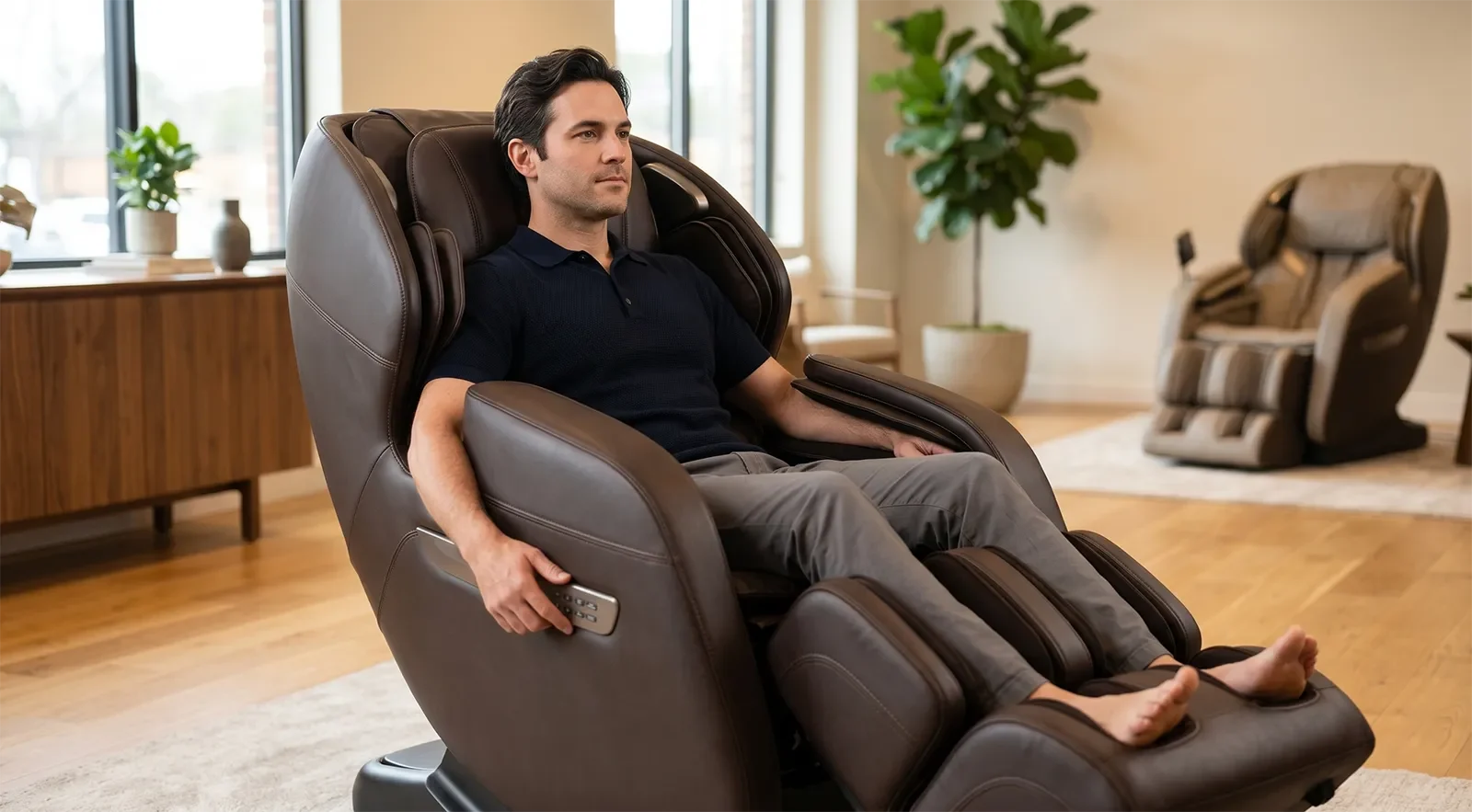
A chair can have excellent technology and still feel wrong if the rollers do not match the user’s back, if the shoulder area feels too narrow, if the footrest does not support the legs properly, or if the neck position feels awkward.
Check the back, shoulders, hips, and legs
When comparing chairs, think beyond height alone. A good fit depends on several body points working together:
- Shoulders: The chair should not feel too tight or miss the upper back.
- Back: The roller path should feel aligned with the spine and muscle areas.
- Hips: The seat should feel supportive without forcing the body into an awkward angle.
- Legs and feet: The ottoman should support the user comfortably, especially during longer sessions.
Do not buy only for the average user
If the main user is tall, petite, broad-shouldered, or has specific comfort needs, fit becomes even more important. A chair that works for an “average” user may not be the right chair for your household.
If height is already the main issue, move into this guide to massage chairs for tall people.
4. Make Sure the Chair Fits the Room
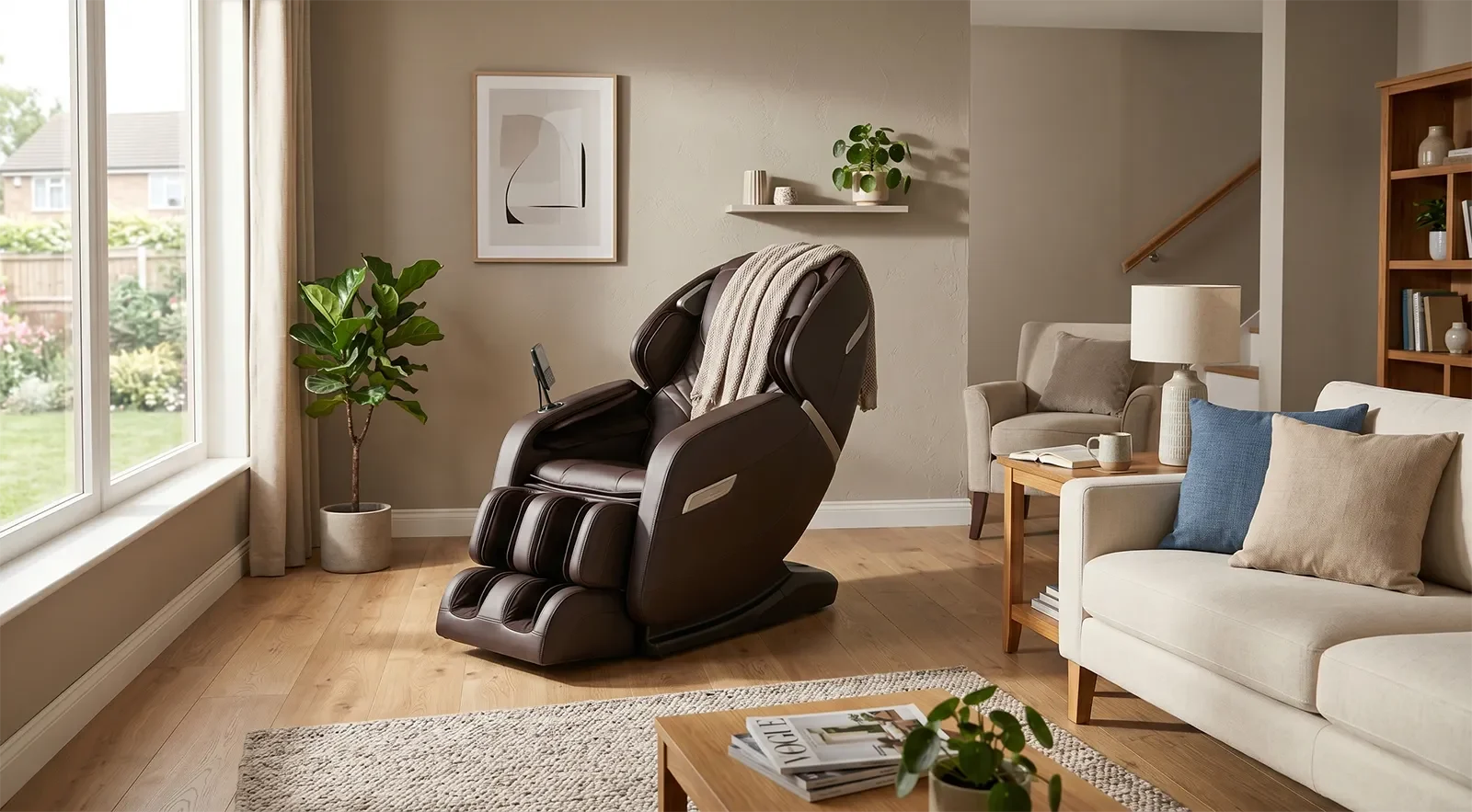
A massage chair can look reasonable in photos but feel much larger once it arrives at home. Before choosing a model, decide where the chair will actually live.
Ask yourself:
- Will it go in a living room, bedroom, office, loft, or media room?
- Will people need to walk around it every day?
- Will the chair look too bulky for the space?
- Can it recline properly without hitting a wall or furniture?
- Will the user feel relaxed in that location?
The right chair should feel like it belongs in the home. If the chair makes the room harder to use, the family may avoid using it even if the massage quality is good.
Small spaces need careful planning
In apartments, condos, bedrooms, and smaller living rooms, the best choice is not always the smallest chair. The better choice is the chair that gives the right balance of comfort, recline clearance, visual size, and walking space.
If space is your biggest concern, read best massage chairs for small spaces and apartments.
5. Set a Budget That Matches Your Expectations
Budget is not only about what you can afford. It is about what level of comfort, realism, durability, support, and confidence you expect from the purchase.
For many serious home buyers, a premium massage chair in the $7,000–$15,000 range is considered because they want more than basic vibration, simple rollers, or a chair that feels impressive for a few minutes but less convincing over time.
| Price Mindset | What to Think About |
|---|---|
| Entry-level shopping | Usually focuses on basic massage, lower upfront cost, and lighter expectations. |
| Mid-range shopping | Often balances more features with a still-limited budget. |
| Premium shopping | Should focus on massage realism, fit, comfort, build quality, support, and long-term use. |
| Luxury shopping | Should justify the price through refinement, design, control, stronger engineering, and ownership confidence. |
If you are shopping for a chair that your family may use for years, do not judge only by discount percentage. A large discount on the wrong chair is still the wrong chair. A better question is: does this chair feel worth owning after the sale price is forgotten?
If you are comparing a higher-end model and wondering whether the price is justified, read whether a $10,000 massage chair is worth it before deciding by price alone.
6. Understand Japanese, Japanese-Technology, and Chinese-Made Chairs
Many Vietnamese families naturally trust Japanese massage chairs or Japanese massage technology because Japan has a strong reputation for engineering, durability, and refined massage design. That trust is understandable.
At the same time, the modern massage chair market is more complicated than a simple “Japan is good, China is bad” comparison. Some chairs are made in Japan. Some use Japanese technology or Japanese design influence. Some premium Chinese-made chairs offer strong feature value, attractive design, and advanced controls. Some lower-quality chairs from any origin can still feel disappointing if the fit, service, or support is weak.
The smarter way to compare is this:
- Japanese-made chairs may appeal to buyers who value origin, refinement, engineering reputation, and long-term confidence.
- Japanese-technology chairs may offer some of that trust and massage philosophy while being built through a different manufacturing structure.
- Premium Chinese-made chairs may offer broader features, modern designs, and strong value when supported by a reliable seller.
Country of origin matters, but it should not be the only decision. The real test is how the chair feels on your body, how clearly the seller explains the product, and how confident you feel about service after purchase.
For a deeper side-by-side comparison, read Japanese Massage Chairs vs Chinese Massage Chairs.
7. Choose Features That Affect Real Daily Use
Massage chairs can include many features: zero gravity, body scanning, 3D or 4D rollers, heat, airbags, foot rollers, stretching programs, Bluetooth speakers, app control, touchscreen panels, voice control, and more.
Features are useful only when they improve how the chair feels or how often your family will use it.
Features that often matter most
- Roller system: Affects massage depth, movement, and realism.
- Body scanning: Helps the chair adjust to the user’s body.
- Zero gravity recline: Can improve relaxation and reduce pressure on the body.
- Foot and calf massage: Important for users who stand, walk, or work long hours.
- Heat: Useful for comfort and relaxation, especially in longer sessions.
- Stretch programs: Helpful for users who want a more full-body experience.
- Simple controls: Very important for parents, seniors, and shared family use.
Features that should not control the whole decision
Some features sound attractive but may not matter much after the chair is in the home. Built-in speakers, decorative lighting, voice commands, or a long list of automatic programs may be nice extras, but they should not outweigh massage quality, fit, and service confidence.
Use features to narrow your shortlist, not to distract from the core decision.
8. Do Not Ignore Warranty and Service
Warranty and service are not the exciting part of shopping, but they become very important after purchase.
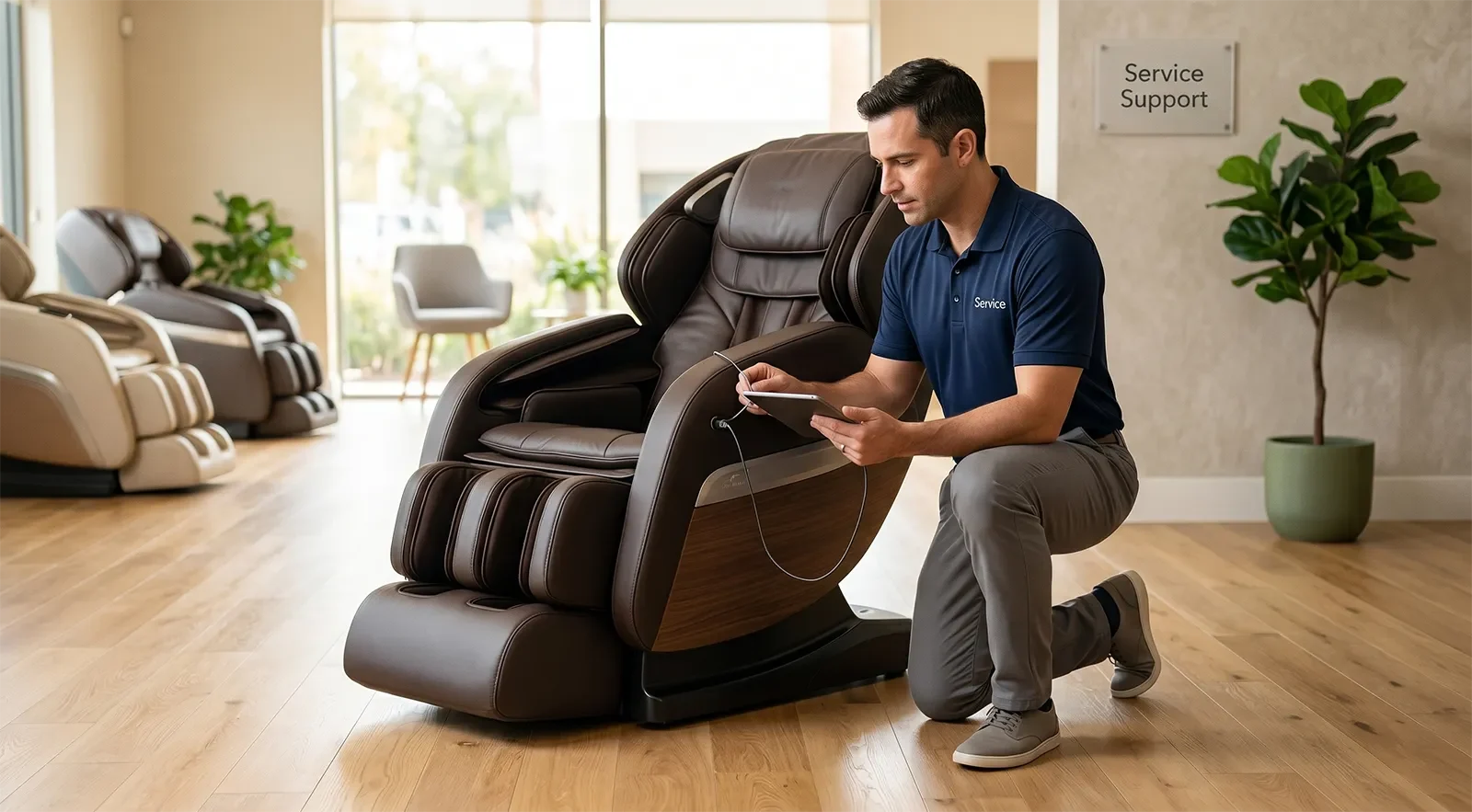
A massage chair is heavy, mechanical, electronic, and difficult for most buyers to service themselves. That means ownership confidence matters. Before buying, make sure you understand:
- What the warranty covers
- How long parts and labor are covered
- Whether in-home service is available or limited
- Who handles service communication
- What happens if the chair needs repair
- Whether the seller can explain the process clearly before you buy
A premium chair should come with premium clarity. If the warranty or service process feels vague before purchase, it will probably feel more stressful after purchase.
If long-term support is part of your decision, continue with massage chair warranty and in-home service.
How to Build a Smart Shortlist
Once you understand the main decision points, build a shortlist instead of comparing every chair at once.
- Choose the main user. Do not buy for an imaginary average person.
- Decide the massage feel you want. Strong, gentle, realistic, relaxing, or adjustable.
- Confirm body fit. Pay attention to shoulders, back, hips, legs, and footrest comfort.
- Confirm room fit. Make sure the chair works in the real space, not just on paper.
- Set a serious budget range. Match the budget to the ownership expectations.
- Pick three must-have features. Anything beyond that should be treated as a bonus.
- Check support confidence. Warranty, delivery, service, and seller clarity should all feel understandable.
If you are visiting a showroom, try not to test too many chairs without a plan. Sit in the chair long enough to notice comfort, pressure, noise, controls, foot position, and how your body feels after the first few minutes. The right chair should become clearer as you compare by feel, not just by spec sheet.
Common Mistakes to Avoid
Buying the chair with the most features
More features do not automatically mean a better chair. A chair with fewer but better-executed features can feel more premium than a chair overloaded with functions that do not improve daily use.
Ignoring the main user
If one person will use the chair most, that person’s fit and comfort should lead the decision. Buying for everyone equally can result in a chair that satisfies no one fully.
Choosing by country label only
Japanese origin, Japanese technology, and Chinese manufacturing can all mean different things. Use country-of-origin information as one factor, but do not let it replace testing the chair, reviewing support, and comparing real massage feel.
Underestimating room impact
A chair that technically fits may still feel too large or awkward in daily life. Always think about walking space, recline space, visual balance, and whether the chair location feels relaxing.
Looking only at the discount
A high discount can make a chair feel urgent, but it does not prove the chair is right. For a premium purchase, value should come from comfort, quality, service, and long-term use — not just the size of the markdown.
Where to Go Next
This page is the starting point. Once you know your biggest concern, move into the guide that owns that topic more directly.
- If you are comparing premium chairs by price tier, read Best Luxury Massage Chairs from $7,000 to $15,000.
- If you are wondering whether a high-end chair justifies the price, read Is a $10,000 Massage Chair Worth It?.
- If support is the main issue, read Massage Chair Warranty & In-Home Service.
- If origin and manufacturing matter to you, read Japanese Massage Chairs vs Chinese Massage Chairs.
If you are comparing premium massage chairs and still feel unsure, the most useful next step is usually a real demo. Sit in the chair, compare the massage feel, check the fit, ask about warranty and service, and make sure the chair feels like something your family will actually use.
Frequently Asked Questions
What matters most when choosing a massage chair for home?
The most important factors are body fit, massage feel, room fit, budget, ease of use, and ownership support. A massage chair should not be judged only by the number of features. It should fit the main user, feel comfortable in real sessions, work in the home, and come with clear warranty and service expectations.
Is a more expensive massage chair always better?
No. A higher price can bring better engineering, stronger massage control, more refined design, and better support, but only if those benefits match the buyer’s needs. The best chair is the one that justifies its price through real comfort, daily use, build quality, and long-term confidence.
Are Japanese massage chairs better than Chinese massage chairs?
Japanese massage chairs often have a strong reputation for engineering, refinement, and trust. However, some premium Chinese-made chairs can offer strong features and good value when backed by a reliable seller. The best approach is to compare massage feel, fit, warranty, and support instead of buying by country label alone. For a focused comparison, read Japanese Massage Chairs vs Chinese Massage Chairs.
Should I choose 2D, 3D, or 4D?
It depends on how much control and massage depth you want. 2D chairs are usually simpler, while 3D and 4D chairs can offer more depth and variation. If this is one of your main decision points, read 2D vs 3D vs 4D massage chairs.
How much space do I need for a massage chair?
It depends on the chair size, recline design, and room layout. Some chairs need more clearance than others. Before buying, measure the space, consider walking paths, and make sure the chair will not make the room feel crowded. For tighter rooms, see best massage chairs for small spaces and apartments.
Is it better to buy a massage chair online or try it in a showroom?
If possible, trying the chair in person is better for a premium purchase. A showroom demo helps you judge massage strength, body fit, comfort, controls, and overall feel in a way that online specs cannot fully show.
Why should warranty and service matter?
A massage chair is a large mechanical and electronic product. If something needs attention later, clear warranty terms and service support can make ownership much less stressful. For a premium chair, support clarity should be part of the buying decision. Read Massage Chair Warranty & In-Home Service for a deeper look at this part of the purchase.
Choosing the best massage chair for your home becomes much easier when you stop chasing every feature and focus on the real ownership decision: the right fit, the right feel, the right room match, the right support, and the right level of confidence for your budget.