
The best massage chairs for small spaces and apartments are not always the smallest models. The better choice is the chair that fits your room, reclines realistically, does not overpower the layout, and still feels comfortable enough to use every day.
Who this guide is for: Shoppers living in apartments, condos, townhomes, bedrooms, or smaller living rooms who want a massage chair that fits the space without making the home feel crowded.
How this guide was prepared: This guide focuses on small-space buying factors such as footprint, recline clearance, wall-hugging design, shared-room use, visual bulk, and apartment-friendly comfort. Product dimensions, recline behavior, and real room-use concerns are prioritized over broad feature hype.
Buying a massage chair for a smaller home needs a different kind of thinking. You are not just asking, “Which chair has the most features?” You are asking whether the chair will actually belong in the room after the excitement of purchase is over.
This page stays focused on room fit before purchase. For broader feature and value comparisons, start with how to choose the best massage chair for your home. For this guide, the main job is simpler: help you judge whether a massage chair can work in a tighter living space without creating daily frustration.
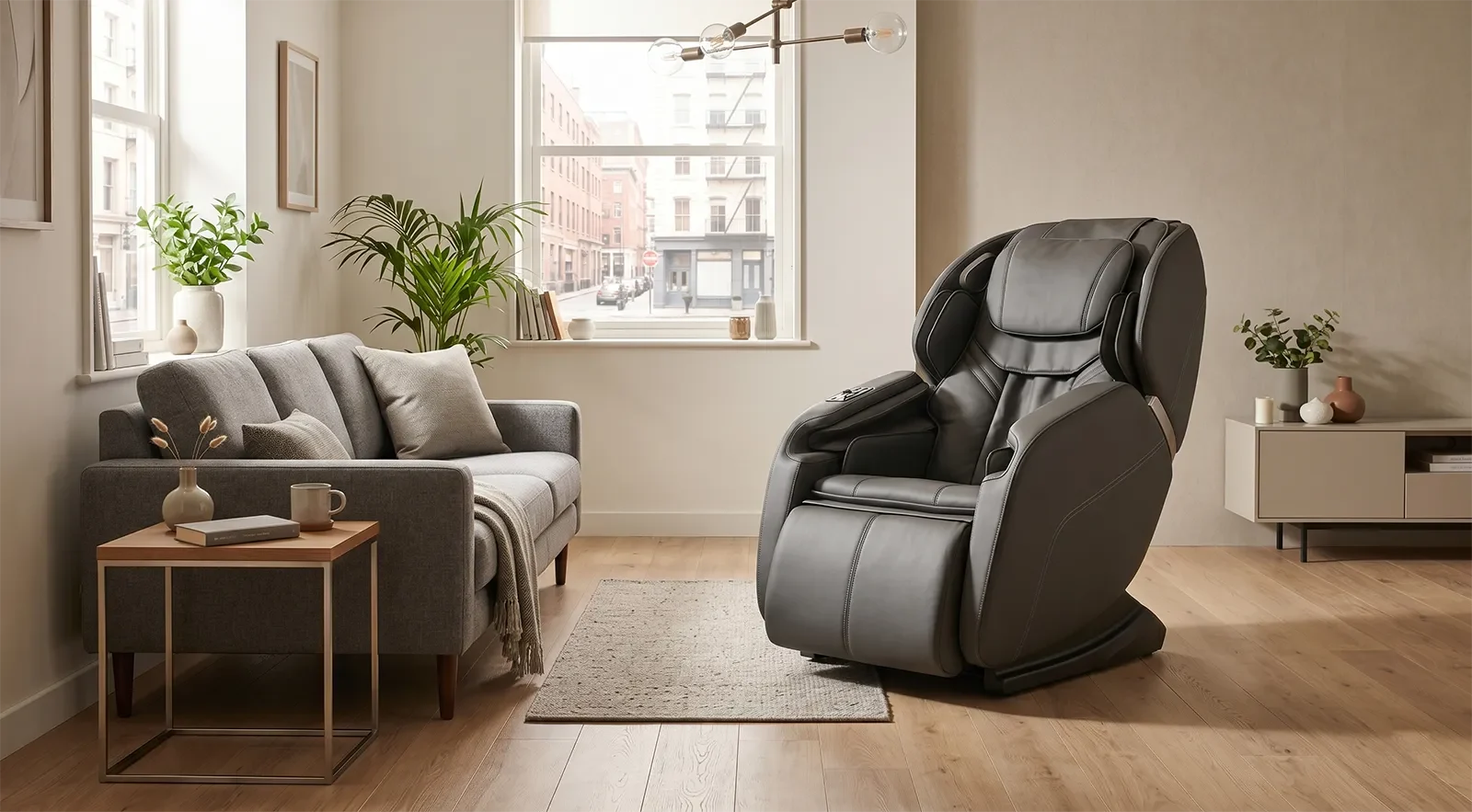
Table of Contents
- Why Small-Space Shopping Needs Its Own Buying Logic
- Start With Footprint, Not Feature Hype
- Why Wall-Hugging Recline Matters
- Shared-Space Suitability
- Noise Awareness in Apartments
- Placement Questions to Separate
- Delivery and Access Questions
- How to Build a Better Small-Space Shortlist
- Frequently Asked Questions
- Related Guides
Why Small-Space Shopping Needs Its Own Buying Logic
Small-space shoppers often make one of two mistakes. They either look only for the smallest chair, or they compare massage chairs as if every home has the same amount of open space. Neither approach is ideal.
A massage chair can be compact on paper but still feel bulky in a real living room. Another chair may be larger overall but use space more intelligently because of better recline movement or wall-hugging design. That is why the best massage chair for an apartment is not just about listed dimensions. It is about how the chair behaves inside the room.
This guide is not a full setup checklist or delivery guide. It is a pre-purchase room-fit guide. The goal is to help you avoid choosing a chair that looks impressive online but feels awkward once it becomes part of your daily home layout.
Start With Footprint, Not Feature Hype
For apartments and smaller rooms, footprint should come before feature comparison. A chair with advanced rollers, heating, air compression, and multiple programs still needs to fit the space first.
What footprint really means
- How much floor space the chair takes in its upright position.
- How much room it needs when reclining.
- Whether the chair blocks walkways, doors, cabinets, or furniture flow.
- Whether it visually dominates the room.
- Whether the space still feels livable after the chair is added.
In a smaller home, a massage chair should not feel like something you constantly have to walk around. It should feel intentionally placed. If the chair makes the room harder to use, even a strong massage experience may become less enjoyable over time.
Do not chase “compact” without checking comfort
A smaller massage chair is not automatically better. If the seat feels cramped, the shoulder position is wrong, or the leg area does not fit the user well, the chair may save space but fail at the reason you bought it.
The better question is: does this chair use space efficiently while still fitting the person who will use it most?
Why Wall-Hugging Recline Matters
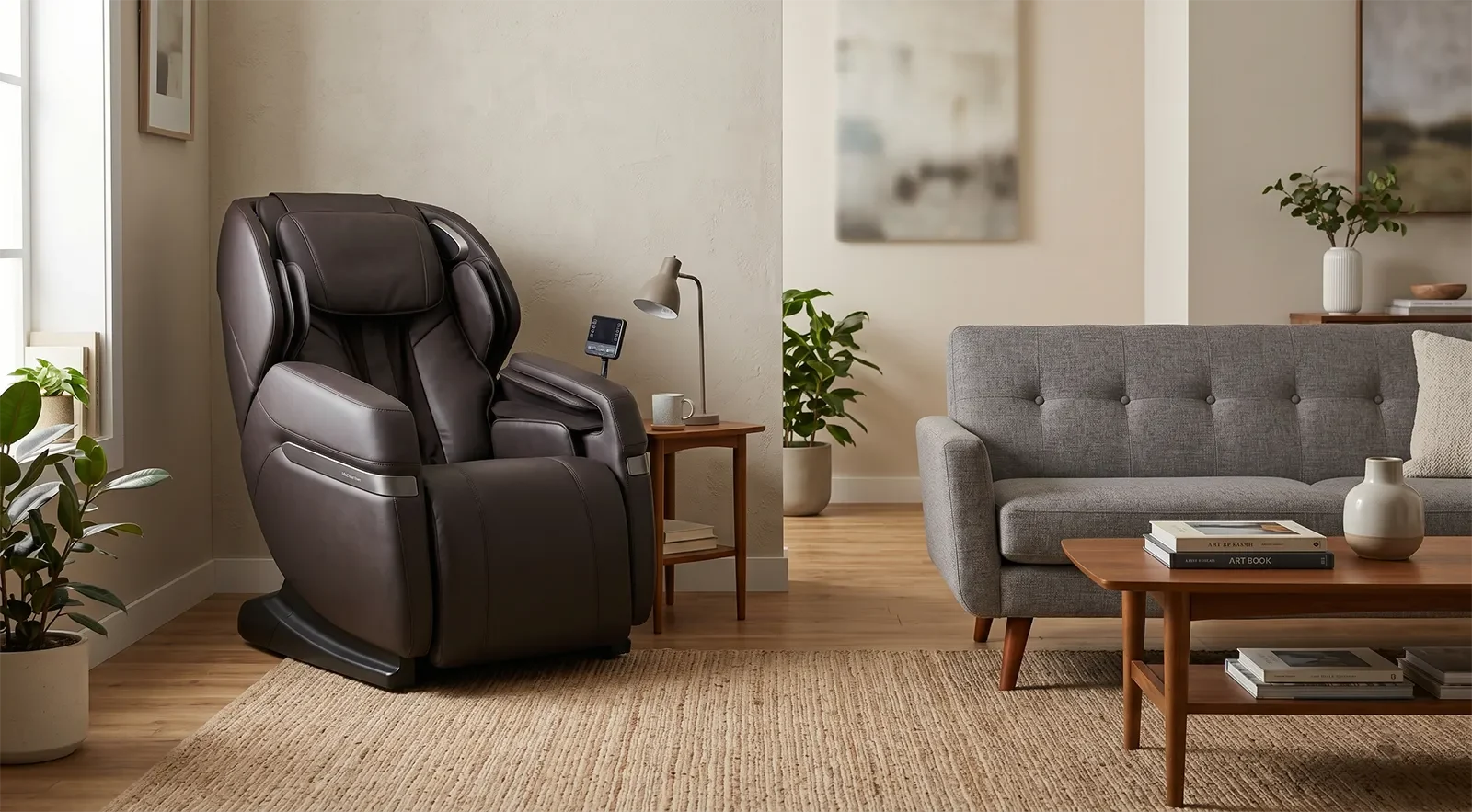
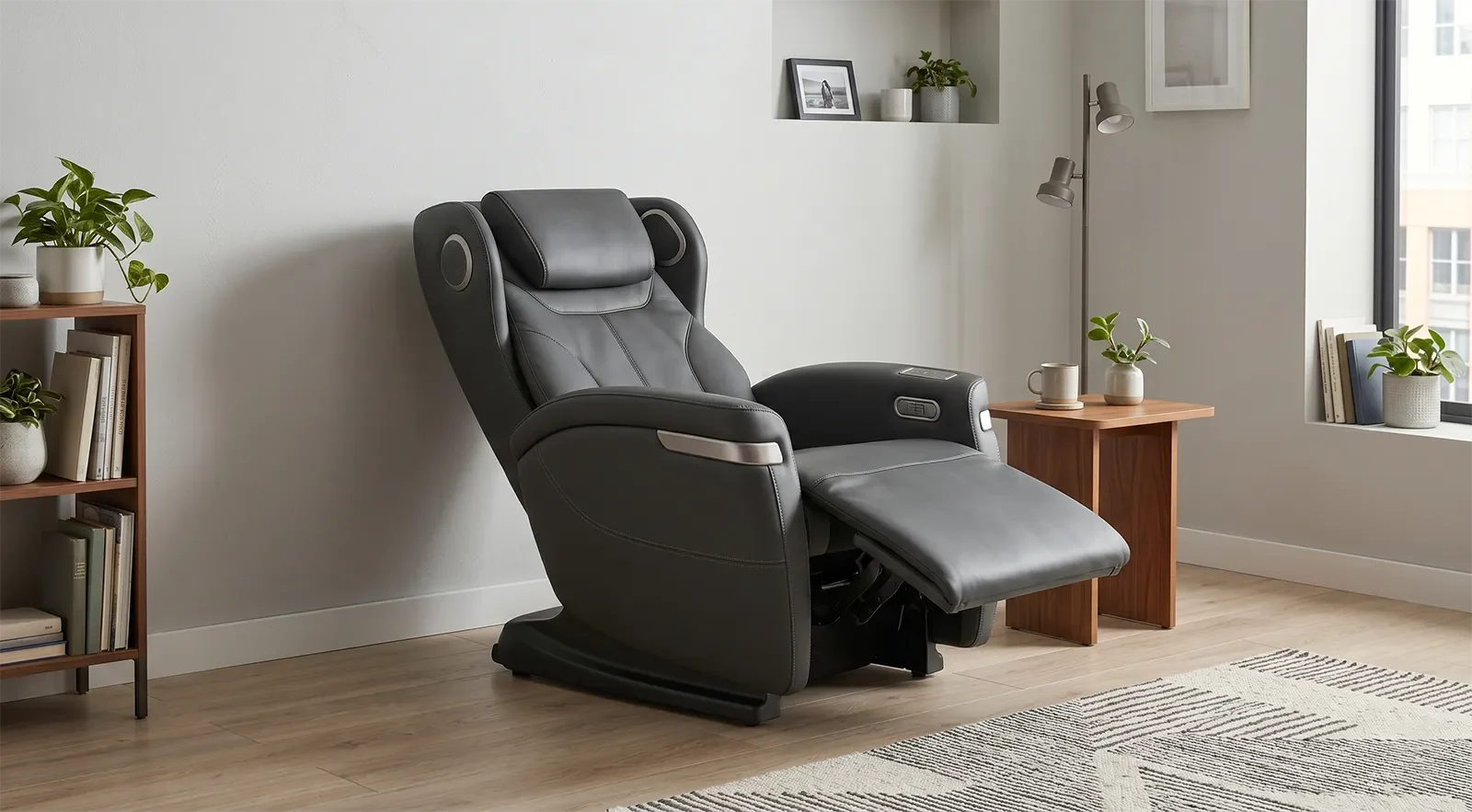
Wall-hugging recline is one of the most important features for small spaces. A wall-hugging massage chair is designed to move forward as it reclines, reducing the amount of space needed behind the chair.
This matters because many apartments and smaller living rooms do not have deep open space behind the chair. If a model needs too much rear clearance, it may have to sit far away from the wall, making the room feel crowded before the chair is even used.
What to check before buying
- How much distance the chair needs from the wall.
- Whether the chair moves forward during recline.
- Whether the footrest extends into a walkway.
- Whether the reclined position still works with nearby furniture.
- Whether the chair can stay in one practical location without constant adjustment.
A space-saving recline design does not make every chair apartment-friendly, but it can make a major difference in how realistic the chair feels in daily use.
Shared-Space Suitability
Many apartment buyers are not placing a massage chair in a separate wellness room. The chair may go into a living room, bedroom corner, home office, loft area, or mixed-use family space. That changes the buying decision.
In a shared room, the chair needs to work even when nobody is using it. It should not make the room feel like a showroom display or block the normal flow of the home.
| Small-Space Factor | What to Look For |
|---|---|
| Footprint | The chair feels proportionate to the room and does not take over the layout. |
| Recline clearance | The chair can recline without needing too much extra space behind it. |
| Front extension | The footrest does not block a walkway, TV area, bed path, or furniture access. |
| Visual bulk | The chair looks intentional in the room instead of oversized or awkward. |
| Shared-room comfort | The chair can be used without disrupting how the room normally functions. |
If you are comparing premium models, this is also where restraint matters. A chair in the luxury $7,000 to $15,000 range should still fit your home naturally. Premium should mean better fit, comfort, build quality, and service confidence — not simply a larger object with more buttons.
Noise Awareness in Apartments
Noise is easy to overlook during shopping, but it matters in apartments, condos, and shared living spaces. Massage chairs are not silent. Motors, rollers, air pumps, and mechanical movement can all create sound during use.
The question is not whether the chair makes any noise. The better question is whether the noise level feels reasonable for where you plan to use it.
When noise matters most
- You live in an apartment with neighbors nearby.
- The chair will be used in a bedroom or shared living room.
- Someone may watch TV, work, or rest nearby while the chair is running.
- You plan to use the chair early in the morning or late at night.
Noise awareness should not replace comfort and fit, but it should stay in the shortlist conversation. A chair that feels too noticeable in a small shared room may not get used as often as expected.
Keep Placement Questions Brief and Separate
At the shopping stage, you only need enough placement clarity to know whether the chair is realistic for your home. You do not need to solve every setup detail yet.
For this article, the useful pre-purchase questions are simple:
- Where would the chair most likely go?
- Can it recline there without blocking the room?
- Will people still move comfortably around it?
- Is there a nearby outlet that makes sense?
- Does the chair still look natural in that location?
If you are ready to think through exact room layout, clearance, power access, and daily placement, use the deeper guide on where to place a massage chair.
Keep Delivery and Access Questions as a Separate Handoff
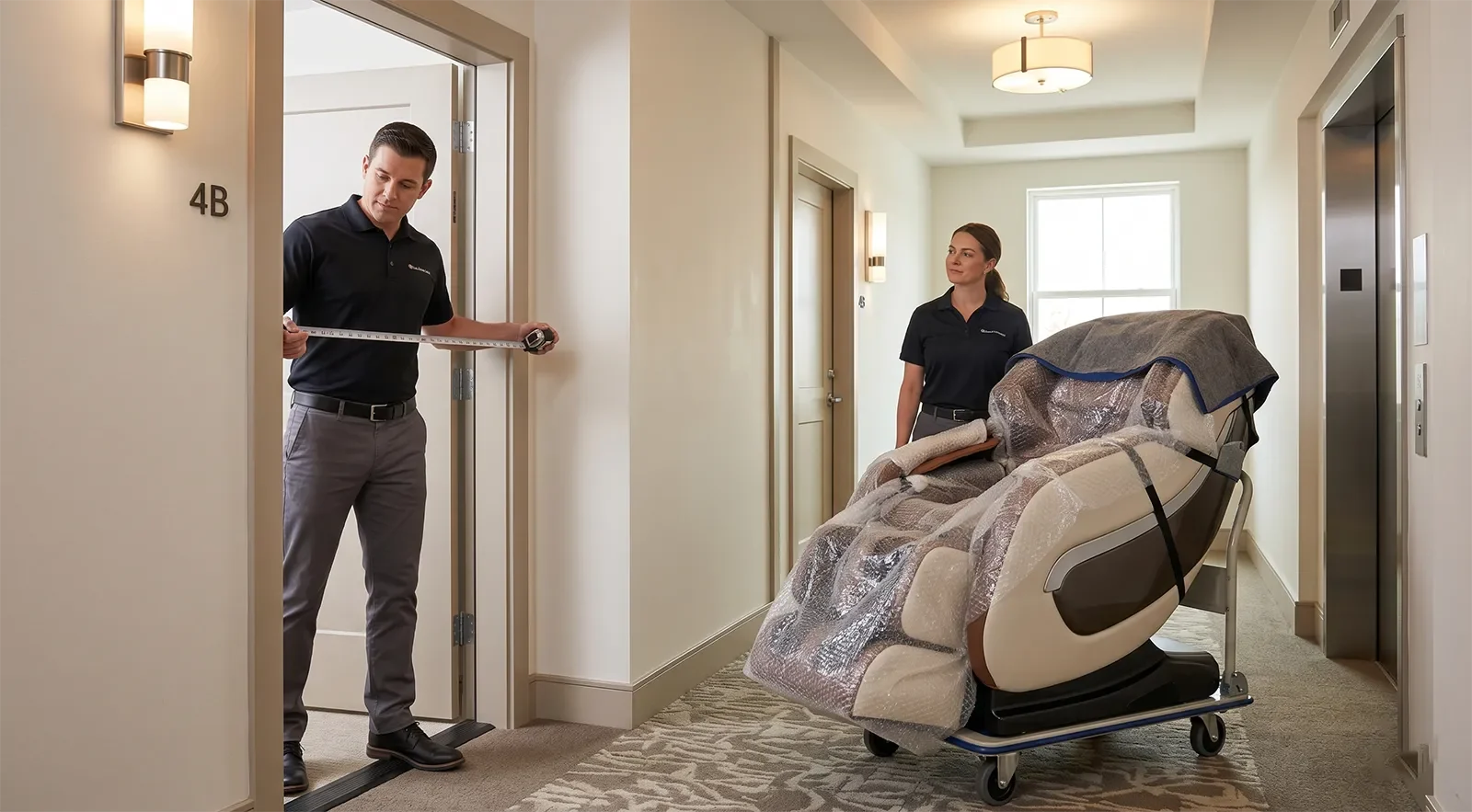
A chair can fit the room but still create access questions during delivery. Doorways, stairs, hallway turns, elevators, and entry paths matter, especially in apartments and townhomes.
That does not mean this page should turn into a delivery checklist. It simply means small-space shoppers should not ignore access completely.
Before you commit to a model, make sure the chair is not only room-friendly but also realistic to bring into the home. For the full logistics side, read delivery, doorways, and installation before buying a massage chair.
How to Build a Better Small-Space Shortlist
The best way to shop is to remove unrealistic options early. Use this sequence before getting pulled into feature-by-feature comparisons:
- Start with the room. Decide where the chair would realistically go.
- Check the footprint. Remove chairs that already feel too large for that space.
- Look at recline clearance. Give extra weight to wall-hugging or space-saving designs.
- Think about daily room use. Make sure the chair does not block movement, furniture, or shared activities.
- Consider visual weight. The chair should look intentional, not overwhelming.
- Keep noise awareness in mind. Especially for apartments, bedrooms, and shared rooms.
- Compare features last. Once the space fit is clear, advanced features become easier to judge.
This order protects you from buying a chair that is impressive in a showroom but frustrating at home. Fit comes first. Features only matter after the chair makes sense in the room.
What Small-Space Buyers Should Avoid
Small-space buyers should be careful with any chair that looks good only when judged in isolation. A massage chair lives inside a room, not on a spec sheet.
- Avoid choosing only by feature count.
- Avoid ignoring recline clearance.
- Avoid placing a large chair where it blocks natural movement.
- Avoid assuming “compact” means comfortable.
- Avoid buying before checking the main user’s body fit.
If the chair is for a shorter or smaller user, body fit becomes especially important. Shoulder mapping, seat depth, and footrest reach can affect whether the chair feels comfortable or too aggressive. If that is your main concern, compare it separately from room size instead of mixing both decisions together.
When a Small-Space Chair Is Worth Paying More For
A smaller home does not automatically mean you should buy the cheapest or simplest massage chair. In some cases, paying more makes sense if the chair gives you a better fit, smoother recline, stronger comfort, quieter operation, better warranty support, or a more practical long-term experience.
For premium buyers, the key is not to buy the biggest chair you can afford. The key is to buy the chair that fits your home and body well enough to be used consistently for years.
If you are comparing higher-end models and want to avoid making the decision only by price, warranty and service should also stay part of the conversation. A chair that fits a small room still needs dependable support after purchase.
Frequently Asked Questions
What makes a massage chair good for small spaces and apartments?
A good small-space massage chair has a realistic footprint, space-saving recline behavior, comfortable body fit, and a design that works in shared rooms without overwhelming the layout.
Is the smallest massage chair always the best choice?
No. The smallest chair is not always the best chair. It still needs to fit the user’s body, recline comfortably, and provide a massage experience that feels useful. A slightly larger chair with better recline design may work better than a very small chair that feels cramped.
Should I choose a wall-hugging massage chair for an apartment?
In many cases, yes. A wall-hugging or space-saving recline design can help a massage chair work better in apartments and smaller rooms because it reduces the amount of rear clearance needed.
Can a massage chair work in a living room?
Yes, but it should be chosen carefully. Look at visual bulk, walking space, recline clearance, noise awareness, and whether the chair still feels natural when the room is used for everyday living.
Is this guide the same as a room setup guide?
No. This guide helps you choose a massage chair before purchase based on room fit. For exact placement, outlet planning, and clearance tips, use the separate guide on where to place a massage chair.
Should I check delivery access before buying?
Yes. Room fit and delivery access are separate issues, but both matter. If you live in an apartment, condo, or townhome, check doorways, hallways, stairs, elevators, and turns before finalizing the purchase.
If you are choosing a massage chair for a smaller room, apartment, or shared living space, focus first on footprint, recline clearance, and how the chair will feel in daily use. For help comparing premium options that fit your home and your body, contact Tittac or visit the showroom for a more practical fit-based recommendation.