
Before buying a massage chair, measure the full delivery path, not just the room where the chair will sit. A chair can look perfect online but still become a problem if the boxed unit cannot pass through the front door, hallway turn, staircase, elevator, or final room entry safely.
Who this guide is for: Buyers who want to avoid delivery surprises by checking doorways, hallways, stairs, elevators, and installation access before purchasing a massage chair.
How this guide was prepared: This guide was prepared using practical delivery-planning logic, common manufacturer-style measurement guidance, and real home-installation considerations to help buyers check access before purchase.
This guide focuses on pre-purchase logistics only: doorway width, hallway clearance, tight turns, stairs, elevators, and install-day measurements. It does not choose the model for you, and it does not decide where the chair should sit after it arrives. If you are choosing for a smaller home, read the small-spaces massage chair guide. If you are deciding where the chair should sit inside the room, use the massage chair placement guide.
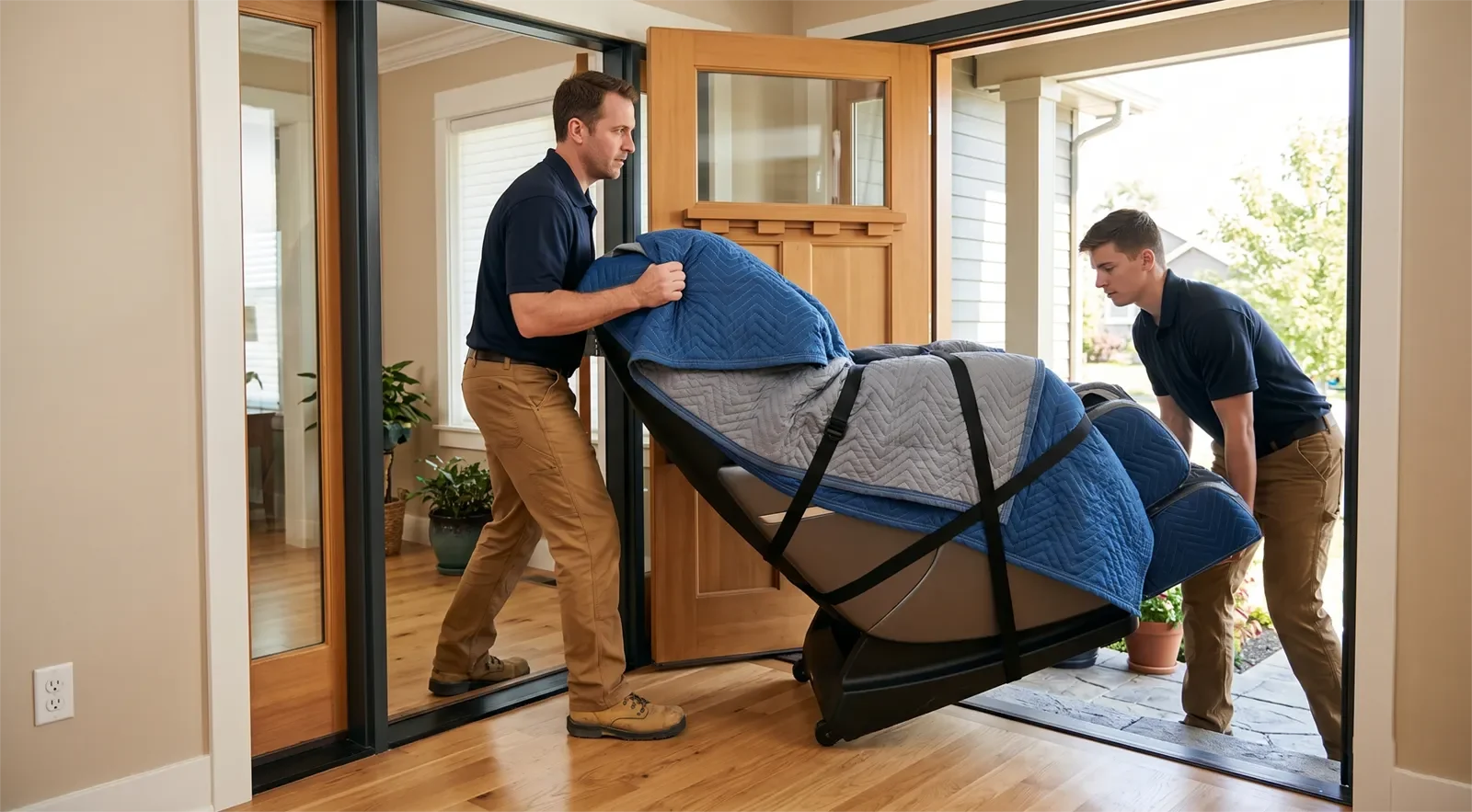
Table of Contents
- Quick Answer
- Think in Terms of the Full Delivery Path
- What to Measure Before You Buy
- Use Product and Delivery Dimensions Carefully
- Common Places Delivery Problems Happen
- What This Page Does Not Cover
- Pre-Purchase Delivery Checklist
- Why This Matters Before Purchase, Not After
- Frequently Asked Questions
- Related Guides
Quick Answer
Before buying a massage chair, measure the full path from the delivery entry point to the final setup area. Check the front door, interior doors, hallway width, tight turns, stair clearance, elevator access, and the final room entry. Then compare those measurements with the chair’s packaged, carton, or delivery-ready dimensions when available.
The most important number is not always the front door. The real problem is often the narrowest or most awkward point along the route, such as a hallway turn, stair landing, elevator interior, or smaller room doorway.
Think in Terms of the Full Delivery Path
The most common mistake is measuring one obvious doorway and assuming the rest will work. Massage chair delivery is a path problem, not a single-door problem.
A chair may pass through the front entrance but still fail at an interior hallway turn, upstairs landing, apartment elevator, bedroom doorway, or tight corner near the final room.
Start from the first access point
Begin at the first place where the chair enters the property. That might be the front door, garage, side gate, loading entrance, condo lobby, apartment elevator, or stairwell.
Trace the route to the final room
Follow the full route from entry to the room where the chair will be installed. Include porches, foyers, interior doors, hallway turns, staircases, landings, elevators, bedroom doors, office doors, and any tight transition points.
Find the tightest point
The narrowest or most awkward section of the route is usually the real decision point. A wide front door does not help much if the chair cannot turn into the hallway or pass through the final room entry.
What to Measure Before You Buy
The goal is not to collect random room numbers. The goal is to confirm whether the chair, in its delivery form, can move through your home without forcing risky last-minute decisions.
Doorway width and usable opening space
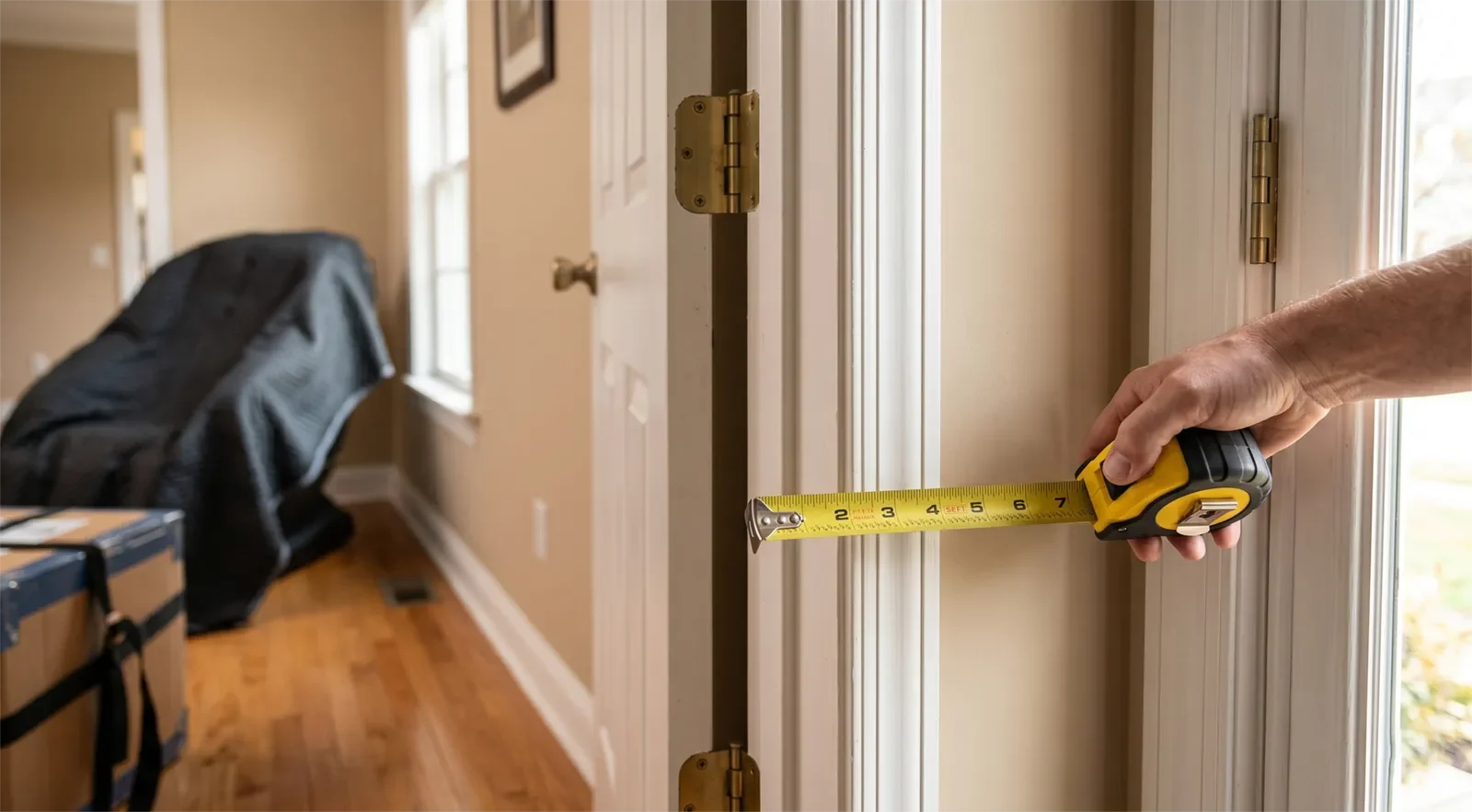
Measure the usable opening, not just the frame. Door swing, trim, handles, hinges, and nearby walls can reduce real clearance. If the door cannot open fully, measure the actual usable space.
Interior doors
Interior doors are often smaller than the front door. If the chair is going into a bedroom, office, den, upstairs room, or bonus room, measure every doorway it must pass through.
Hallway width
Measure the narrowest hallway section, not the widest part. A straight hallway can still become difficult if the delivery box is bulky or if furniture reduces usable space.
Corners and turns
Turns matter because a large chair or carton may need extra room to pivot. Pay attention to entry foyers, hallway corners, stair landings, and tight transitions into side rooms.
Stairs and landings
If the chair must go upstairs or downstairs, measure stair width and landing space. Stairs are not only about width. The delivery team also needs enough space to turn safely.
Elevator dimensions
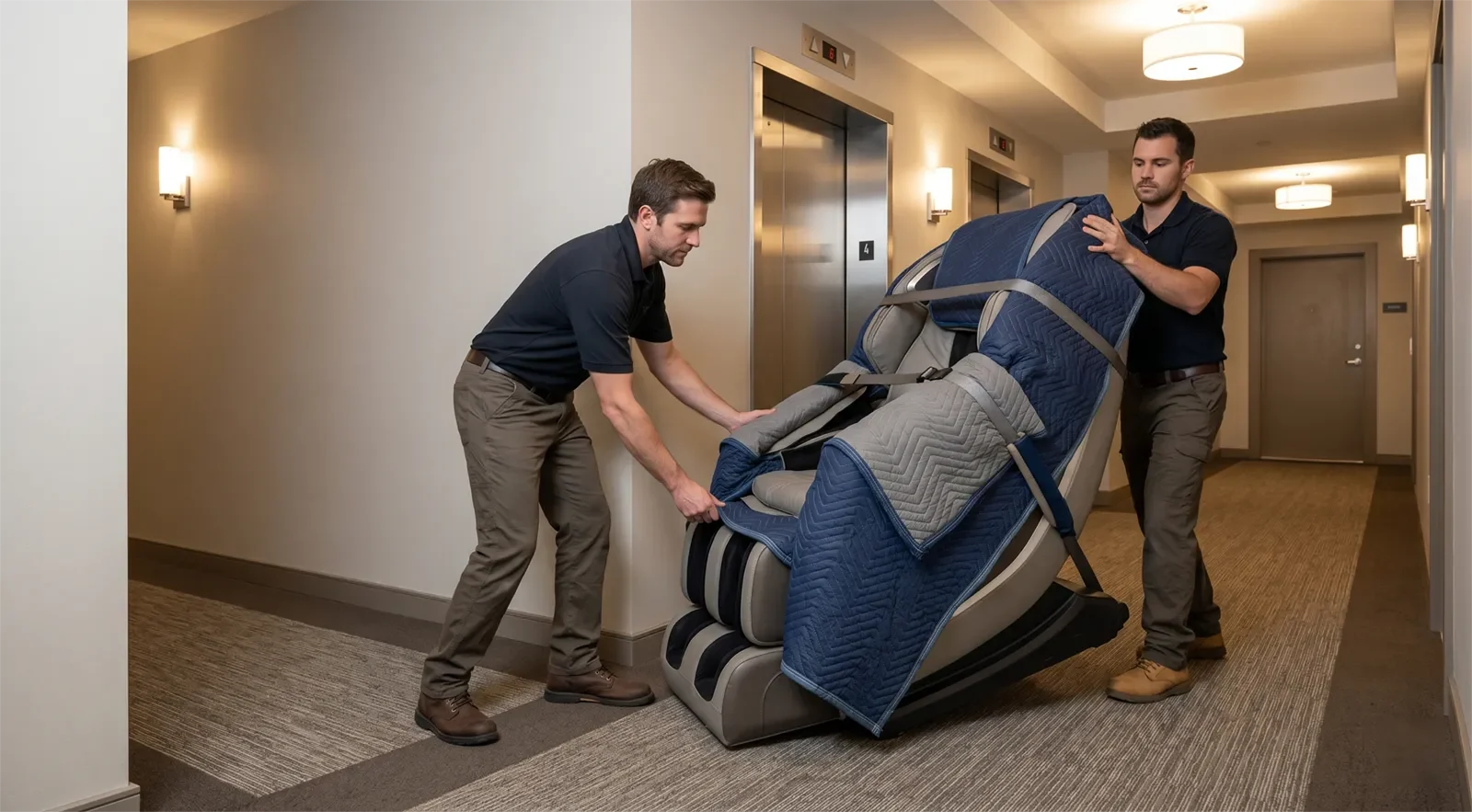
For apartments, condos, and multi-level buildings, measure both the elevator door opening and the inside elevator space. The elevator may be the limiting factor even if the hallway to your unit looks workable.
Final installation area
Once the chair reaches the room, you still need enough space to set it down, position it, and allow the chair to recline or slide properly. For that step, use the massage chair placement guide.
Use Product and Delivery Dimensions Carefully
Before buying, compare your route measurements with the chair’s official product, carton, or delivery dimensions when those are available. The delivered form matters because that is what has to pass through the home.
Do not rely only on the final chair footprint
A chair may look manageable on a showroom floor but have a very different boxed size or delivery profile. For logistics, packaged or delivery-ready measurements are often more useful than the final display footprint.
Allow room for real movement
A measurement that technically fits on paper may still be too tight in real life. Delivery crews need room to maneuver, angle, lift, and turn safely. If the numbers look uncomfortably close, treat that as a warning sign.
Ask about delivery requirements before purchase
Before ordering, confirm whether the chair arrives fully assembled, partially assembled, boxed, palletized, or prepared for white-glove installation. This can affect how much space is needed during delivery.
Common Places Delivery Problems Happen
Delivery problems often happen in ordinary places buyers forget to measure.
Interior doors smaller than the front door
The main entry may be wide enough, but bedroom, office, den, or upstairs doors may be tighter. If the chair is not going into the main living area, measure secondary openings carefully.
Sharp hallway turns
A hallway may be wide enough in a straight line but too tight at a turn. Measure turns with the chair’s delivery size in mind, not only walking space.
Stair landings
A staircase can look wide enough until the landing becomes the bottleneck. This is common in townhomes, split-level homes, and upstairs installations.
Apartment and condo access points
Shared buildings can add extra restrictions: elevator size, hallway turns, loading dock access, building delivery windows, parking rules, and management approval.
Final room clutter
Even if the chair can reach the room, furniture, rugs, tight layouts, or blocked wall outlets can make installation harder. Clear the path and the final setup area before delivery day.
What This Page Does Not Cover
This article covers delivery and installation logistics only. It does not own every related buying or setup question.
Small-space model selection
If your real question is which chairs are easier to buy for apartments, condos, or smaller rooms, read the guide to massage chairs for small spaces and apartments. That page owns compact-shopping logic.
In-room placement
If your main question is where the chair should sit after delivery, including wall clearance, outlet access, ventilation, and walking space, read the massage chair room placement guide.
Warranty and service expectations
If you are comparing support after purchase, including service expectations and coverage language, read the massage chair warranty and in-home service guide. That page owns support and service planning, not entry-path logistics.
Overall chair selection
If you are still deciding what type of massage chair makes sense for your home, body fit, budget, and long-term use, start with how to choose the best massage chair for your home.
Pre-Purchase Delivery Checklist
Use this checklist before buying, especially if the chair must go through tight access points or upstairs rooms.
- Measure the front door’s usable opening.
- Measure any interior door the chair must pass through.
- Check hallway width at the narrowest point.
- Check corners and turns that may limit maneuvering.
- Measure stair width and landing space if the chair goes upstairs or downstairs.
- Measure elevator door opening and interior elevator space if applicable.
- Compare your route measurements with official carton or delivery dimensions when available.
- Confirm whether the chair arrives assembled, boxed, or partially assembled.
- Clear the final room before delivery day.
- Confirm the final setup area has enough space, power access, and recline clearance.
Why This Matters Before Purchase, Not After
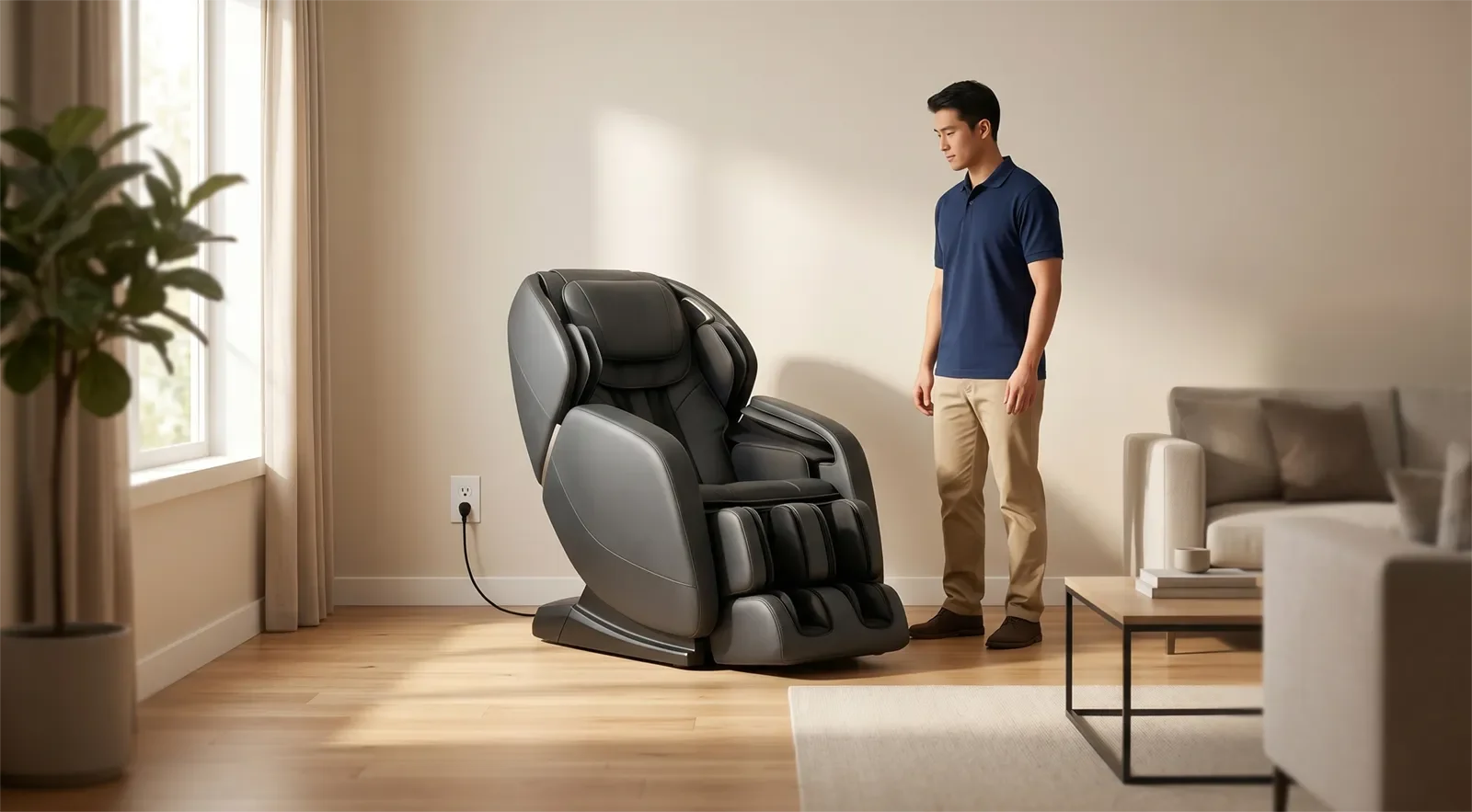
Delivery and installation problems are much easier to prevent than to solve on install day. Once the chair is already on the truck, tight access problems become more stressful, more expensive, and harder to handle calmly.
Checking measurements before purchase helps you avoid last-minute changes, failed delivery attempts, risky handling, or having to place the chair somewhere you did not actually want it.
This is especially important for larger premium massage chairs, upstairs rooms, older homes, townhomes, apartments, and condos where the access path may be less forgiving than the final room size suggests.
Frequently Asked Questions
Will a massage chair fit through my front door if the room itself is large enough?
Not necessarily. The front door is only one part of the delivery path. You also need to check interior doors, hallway width, turns, stairs, elevators, and the final room entry.
What matters more: chair size or box size?
For delivery logistics, the packaged or delivery-ready size usually matters most. The final in-room footprint does not always tell you whether the chair can safely pass through the access path.
What if I live in an apartment or condo?
Measure elevator access, hallway turns, shared-entry points, and the final unit entry. Also check building rules for delivery time windows, loading access, and whether large-item delivery needs approval.
Should I measure stairs if the chair is going upstairs?
Yes. Measure stair width, landing space, ceiling clearance where relevant, and any turns. A chair may fit the stair width but still be difficult to pivot at the landing.
Does this page tell me where to put the chair once it is inside?
No. This page is about getting the chair into the home and installed without access surprises. For room clearance, outlet access, ventilation, and traffic-flow decisions, use the room placement guide.
Should I ask about delivery before choosing a massage chair?
Yes. If your home has tight doors, stairs, elevators, or narrow turns, delivery access should be checked before purchase. The best chair on paper is not the right chair if it cannot be delivered safely into your home.
If you have already measured the delivery path, the next step is to confirm the final room setup. Use the massage chair placement guide to check wall clearance, power access, traffic flow, and everyday usability before delivery day.