
The best place for a massage chair is a stable, well-ventilated spot with enough recline clearance, safe power access, a clean cord path, and room to get in and out comfortably. Do not choose the location by upright footprint alone. A massage chair needs to fit the room while it is actually reclining, extending, and being used.
Who this guide is for: Buyers or owners trying to decide where a massage chair should go at home without creating clearance, power, cleaning, or traffic-flow problems.
How this guide was prepared: This guide was prepared using practical home-use setup logic, common manufacturer-style placement guidance, and real-room ownership considerations around clearance, power access, ventilation, and daily usability.
This guide focuses on room placement after the chair is inside the home. It covers clearance, outlet access, cord routing, airflow, walking paths, and practical room zones. If your concern is whether the chair can fit through doors, stairs, elevators, or hallways before delivery, use the delivery, doorways, and installation guide. If you are comparing compact models for a smaller home, read the small-spaces massage chair guide.
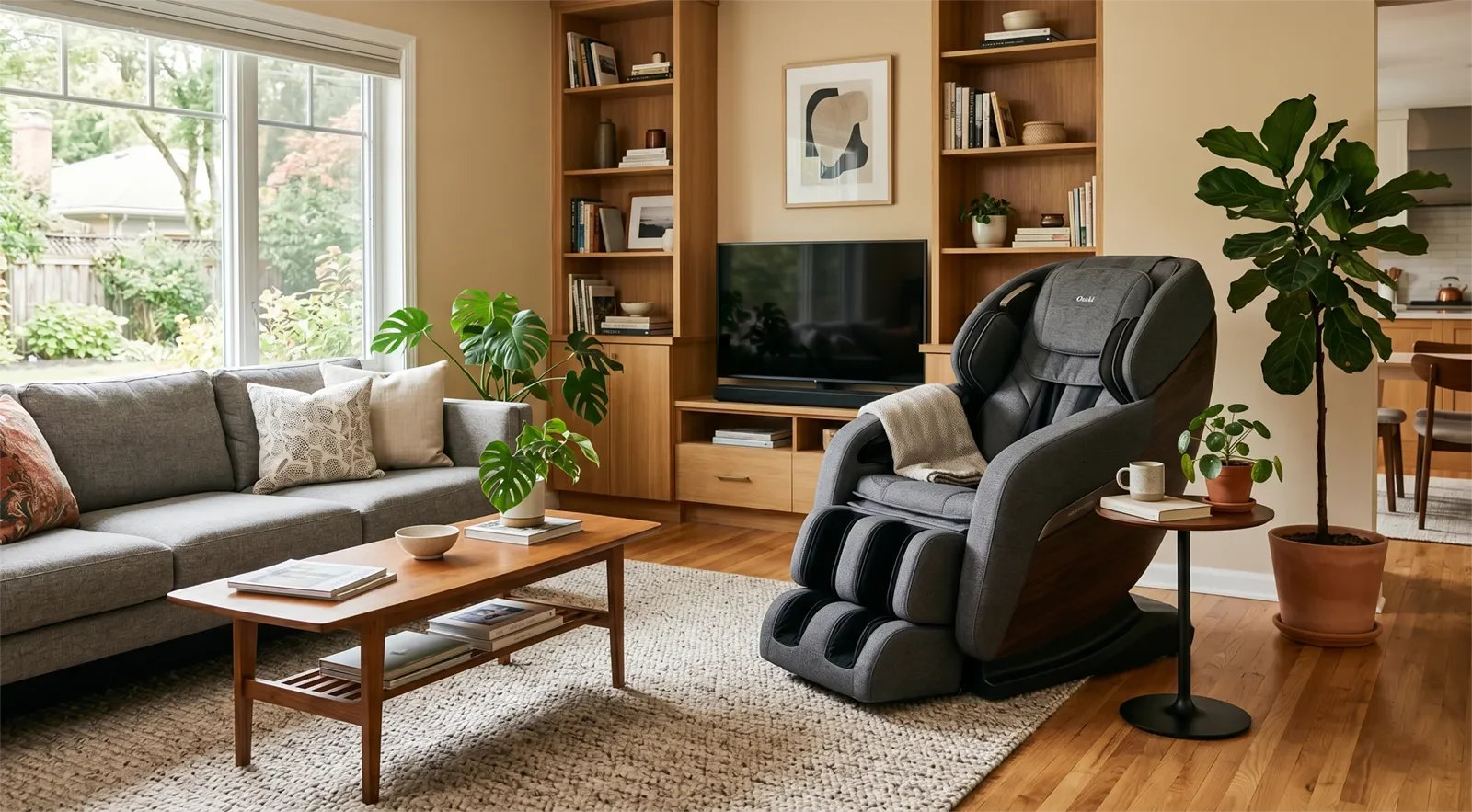
Table of Contents
- Quick Answer
- Start With Clearance, Not Just Footprint
- Choose a Spot With Simple, Safe Power Access
- Give the Chair Breathing Room
- Protect Traffic Flow in the Room
- Best Rooms and Zones for Placement
- What This Page Does Not Cover
- Simple Placement Checklist Before You Commit
- Frequently Asked Questions
- Related Guides
Quick Answer
Place a massage chair in a stable area with enough room to recline, extend the footrest, access power safely, and allow the user to sit down and stand up without feeling squeezed. Check wall clearance, nearby furniture, outlet location, cord path, ventilation, and walking space before deciding.
A good location should feel usable every day, not just technically possible. If the chair blocks a walkway, crowds a doorway, forces a messy extension-cord setup, or sits too tightly against furniture, it is probably not the best spot.
Start With Clearance, Not Just Footprint
The most common placement mistake is measuring only the chair’s upright footprint. A massage chair changes shape during use. The back may recline, the footrest may extend, and some models may slide or shift depending on the design.
Think about the chair in use, not just at rest
A chair can look like it fits when upright but become awkward once the leg rest extends or the back reclines. Before choosing the final position, plan for the chair in its active position, not only its parked position.
Leave room around the user too
Placement is not only about the machine. You also need enough room to get into the chair, stand up safely, and move around it without bumping into side tables, media units, walls, or other furniture.
Check side access, not only rear clearance
Even if the back has enough room to recline, the chair can still feel uncomfortable to use if one side is trapped too tightly. Try to leave enough practical access so the chair does not feel boxed in.
Zero gravity can change the space picture
If the chair includes a reclined zero gravity position, the body angle and chair movement can affect how much room feels comfortable in practice. For a simple explanation of that feature, read what zero gravity means in a massage chair.
Choose a Spot With Simple, Safe Power Access
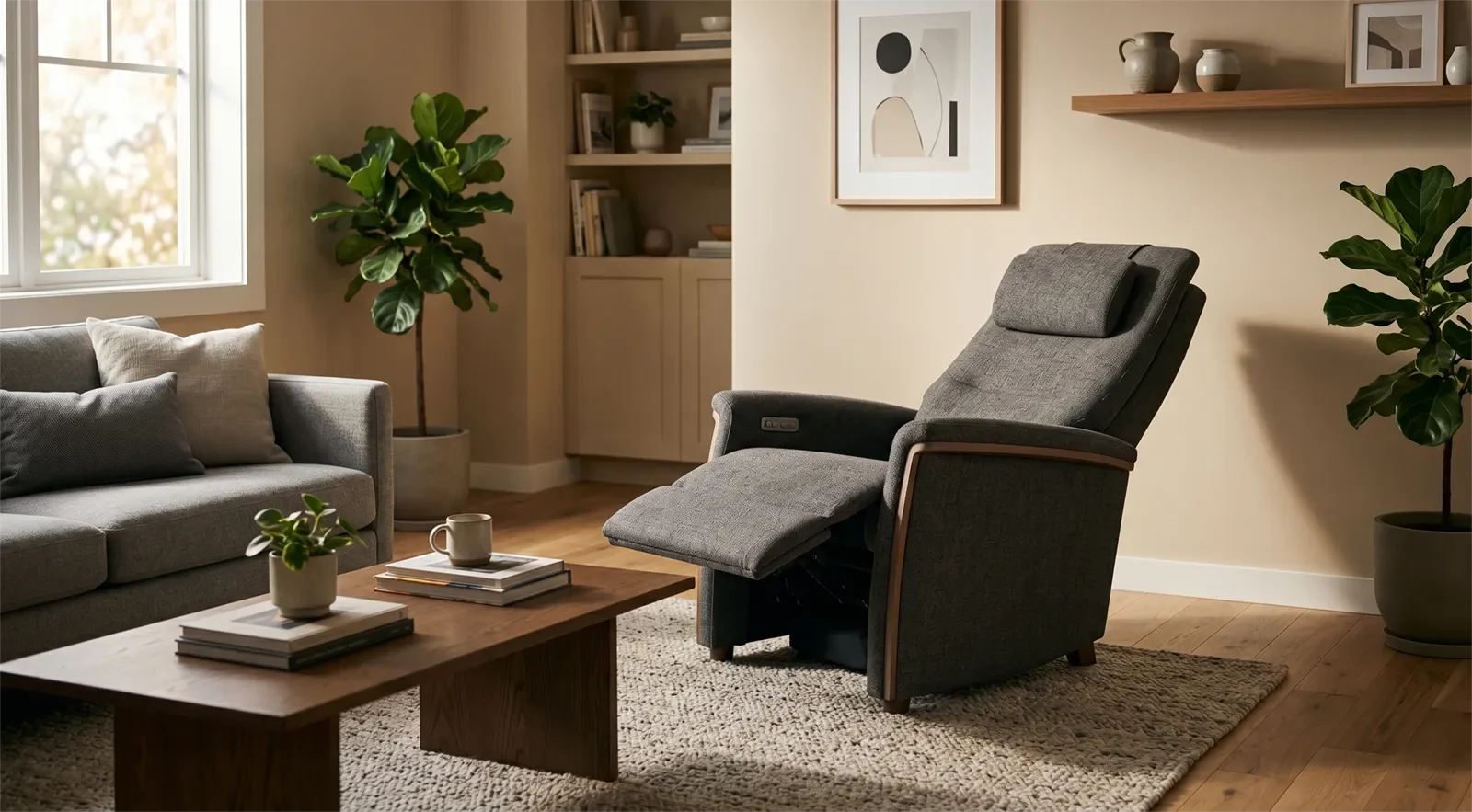
Power planning should be simple. A massage chair should have straightforward access to an appropriate outlet without forcing you to improvise.
Use a nearby outlet whenever possible
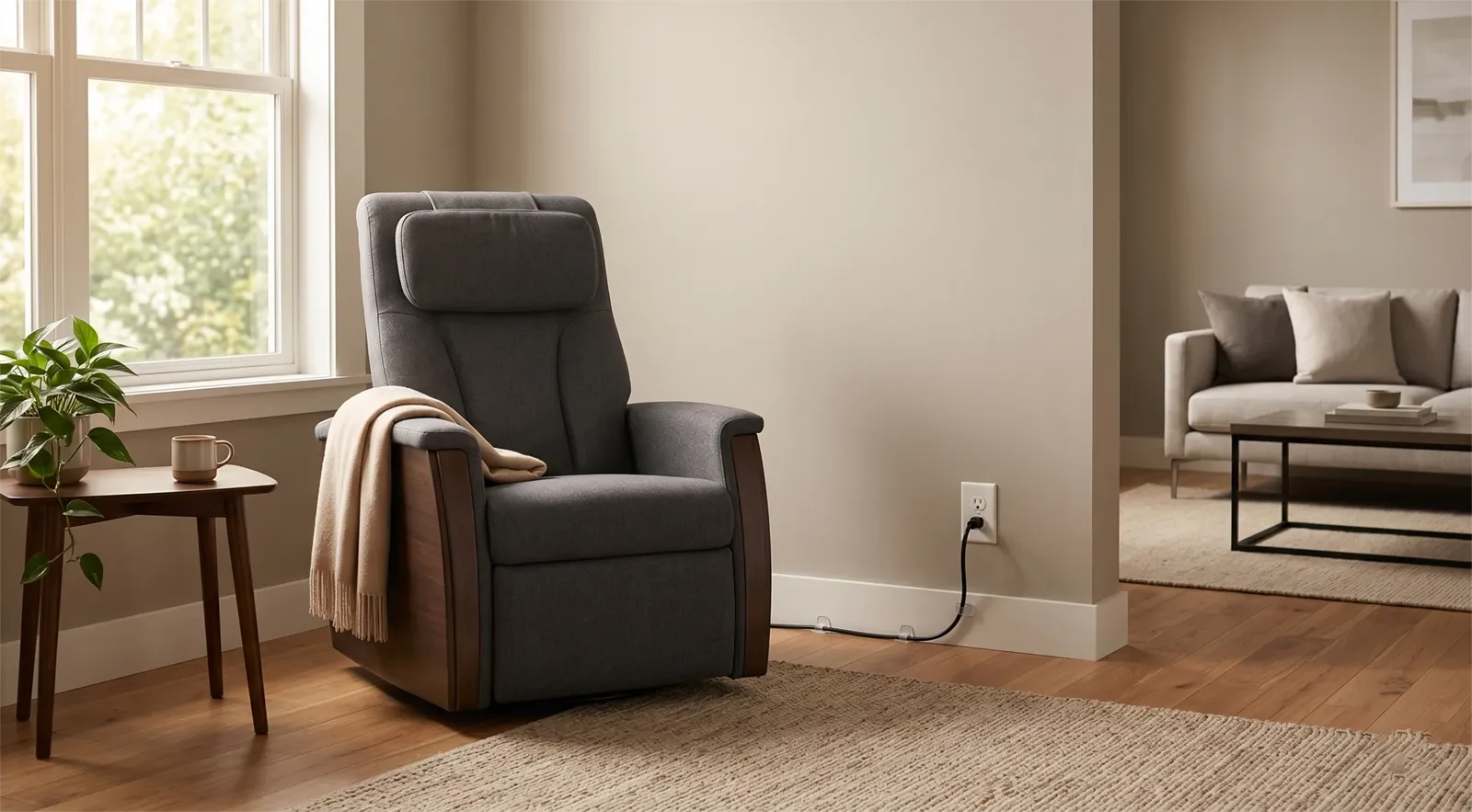
A nearby outlet keeps the setup cleaner and reduces cord strain. It also lowers the chance that someone will step on, pull, or trip over the cord during daily use.
Do not create a tripping hazard
A massage chair should not sit where the cord cuts across a main walking path. If the only way to power the chair creates a frequent trip point, that location is probably not the right one.
Avoid cramped power setups
Do not wedge the chair so tightly against furniture or walls that checking the plug, power switch, or cord path becomes difficult. A setup that is easy to inspect is easier to keep safe.
Follow the chair’s official power guidance
Use the manufacturer’s instructions for outlet, extension cord, surge protection, and power setup. If a location depends on a messy workaround, choose a better spot before the chair becomes part of the room.
Give the Chair Breathing Room
A massage chair is powered equipment, not just a regular recliner. It should not feel sealed into a tight furniture pocket where airflow, cleaning access, and normal movement are all difficult.
Avoid boxing the chair in
Placing a massage chair tightly between bulky furniture pieces can make the setup harder to use, harder to clean, and more annoying over time. Leave enough practical space around the chair so it feels like a usable part of the room.
Think about heat and sunlight
Avoid placing the chair where it sits in strong direct sunlight for long periods or too close to heat sources. This is not just a decor issue. Harsh sunlight and heat can make the area less comfortable and may contribute to faster surface wear over time.
Make cleaning around the chair realistic
If the chair is placed where dust collects but cleaning around the base, sides, and foot area is difficult, the setup may become neglected quickly. For long-term care habits, use the massage chair maintenance and cleaning guide.
Protect Traffic Flow in the Room
A good massage-chair location should let the room continue working as a room. This matters in living rooms, family rooms, lofts, bedrooms, and open-plan spaces where people still need to move naturally.
Do not block the main walking path
If people have to squeeze past the chair to reach the sofa, TV area, hallway, patio door, or bedroom door, the location will become annoying. A massage chair usually works better slightly off the main path instead of directly in it.
Think about daily use, not only visual fit
Some placements look acceptable when the chair is upright and unused but feel inconvenient once someone is actually sitting in it. Picture the chair reclined while other people still move through the room normally.
Keep entry and exit easy
The user should be able to sit down and stand up without twisting around furniture or stepping over cords. This matters even more for older adults or anyone who wants a chair that feels easy and safe to use.
Best Rooms and Zones for Placement
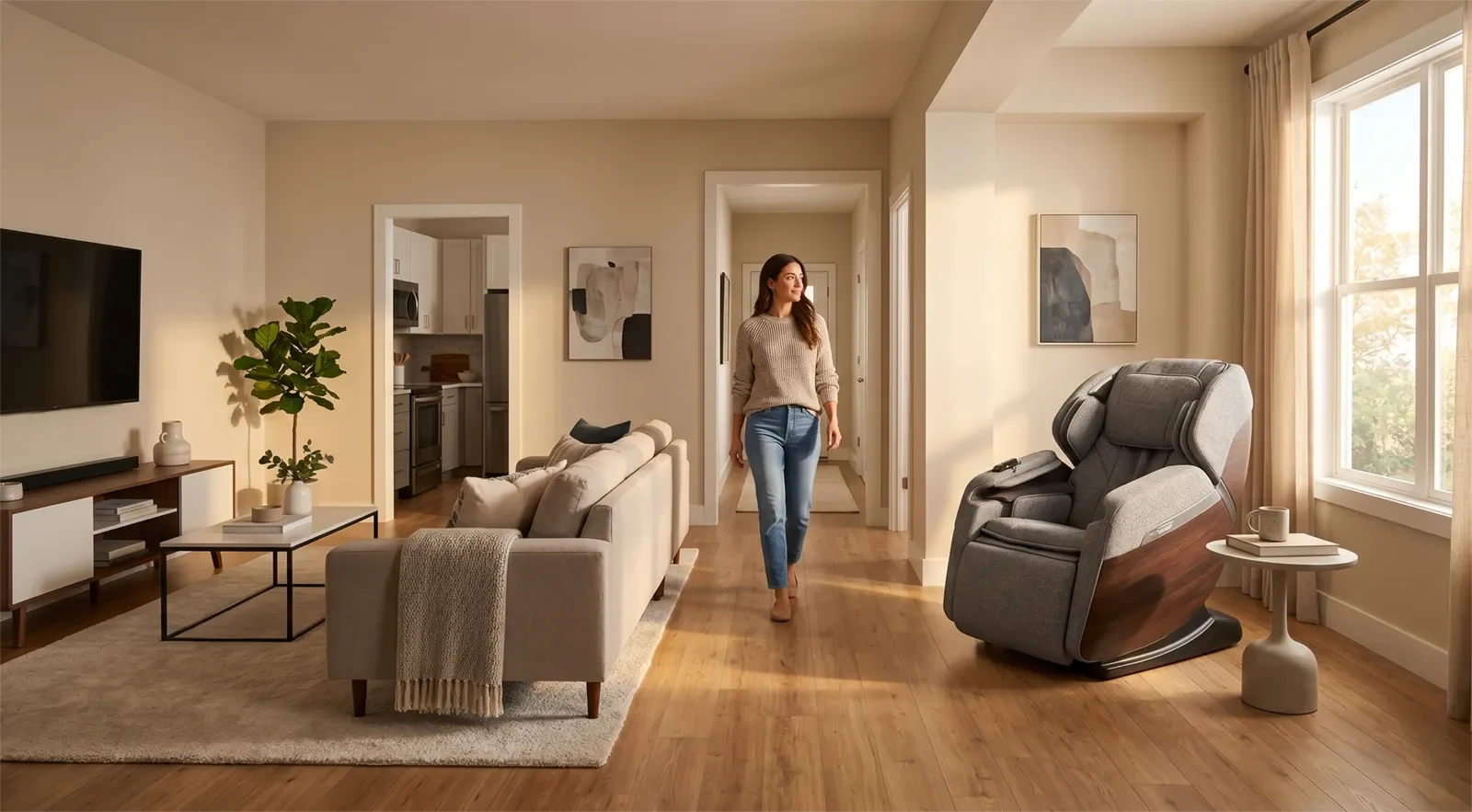
There is no single perfect room for every home. The best location is the one that balances comfort, clearance, power access, privacy, and normal room flow.
Living rooms and family rooms
Living rooms and family rooms often work well if the chair can sit near power, away from the busiest walking path, and with enough recline clearance. The main risk is placing the chair where it competes with the main seating area or blocks movement.
Bedrooms
A larger bedroom can work if the chair has room to recline without crowding the bed, dresser, closet, or doorway. The goal is to keep the room comfortable, not just technically able to hold the chair.
Home offices or spare rooms
A home office or spare room can be a good placement zone when the chair does not force an awkward multi-use layout. In many homes, a quieter secondary room gives better traffic flow and a calmer setup than a busy living room.
Avoid locations that feel forced
If the chair only fits by blocking a walkway, covering an outlet, crowding a door, or sitting too close to a wall, it may not be a good long-term location. The chair should feel like it belongs in the room, not like it was squeezed in after the fact.
What This Page Does Not Cover
This article owns placement rules only. Several related topics should stay on their own pages so the advice remains clear.
Small-space model selection
If your real question is which models are easier to fit into apartments, condos, or tighter rooms, read the guide to massage chairs for small spaces and apartments. That page owns compact-shopping logic.
Delivery path and installation access
If your concern is whether the chair can make it through the front door, hallway, stairs, elevator, or installation path, use the delivery, doorways, and installation page. Delivery fit and final room placement are related, but they are different decisions.
Safe-use boundaries
If you want broader caution guidance around using the chair safely after it is placed, read the health and safety guide when using a massage chair. This page is about where the chair should go, not the full safety hub.
Overall chair selection
If you are still deciding what kind of chair fits your home, body, budget, and long-term use, start with how to choose the best massage chair for your home.
Simple Placement Checklist Before You Commit
Before deciding on the final spot, walk through this checklist with the chair’s actual in-use movement in mind.
- Check the chair’s reclined and in-use clearance, not only the upright footprint.
- Make sure the outlet is close enough for a clean, safe power path.
- Avoid cord routing across walkways.
- Leave enough space to enter and exit the chair comfortably.
- Keep the chair out of the room’s main traffic path.
- Avoid tight furniture pockets with poor airflow or difficult cleaning access.
- Keep the chair away from strong direct sunlight and heat-heavy areas when possible.
- Make sure the final room still feels usable when the chair is reclined.
Frequently Asked Questions
Can I place a massage chair right against the wall?
Usually, no. Some models are designed to need less rear clearance, but you should still plan around the chair’s full reclined movement. Do not judge placement only by how the chair looks upright.
Is it okay to use an extension cord with a massage chair?
The safest setup is a simple, direct power connection that avoids cord strain and walking hazards. Follow the chair’s official manual guidance for power setup. If the chair location depends on a messy extension-cord workaround, choose a better location if possible.
What room is best for a massage chair?
The best room is the one that gives enough recline clearance, safe outlet access, decent airflow, easy entry and exit, and smooth traffic flow. For many homes, that may be a living room corner, family room edge, larger bedroom, home office, or spare room.
What if I am trying to fit a massage chair into a small apartment?
That is partly a placement question, but it is also a shopping question. Use the small-space and apartment guide to compare compact-fit logic instead of forcing a large chair into a room that does not support it comfortably.
Does placement affect massage chair maintenance?
Yes. A chair placed in a dusty, cramped, sunny, or hard-to-clean area may show wear faster and become less pleasant to maintain. Good placement makes routine cleaning and long-term care easier.
Should I choose the room before buying the chair?
Yes. Choose the likely room, check the outlet, measure in-use clearance, and think through traffic flow before buying. That prevents the chair from arriving and forcing a last-minute location change.
If you have picked the room but are not sure whether the chair can get there safely, the next step is to check the delivery, doorways, and installation guide before buying.