
2D, 3D, and 4D massage chairs do not simply mean “basic, better, best.” They describe how the rollers move, how deeply they can press, and how natural the massage feels while you are using the chair.
If you are comparing massage chairs, these labels can feel confusing because brands often make them sound more dramatic than they are. The practical question is not just whether a chair is 2D, 3D, or 4D. The better question is what you will actually feel in your back, shoulders, and daily routine.
Who this guide is for: Shoppers who keep seeing 2D, 3D, and 4D labels and want to understand what those terms change in real use before comparing massage chair models.
How this guide was prepared: This article was built by comparing how major massage chair brands describe roller depth, speed, and motion, then translating that language into practical home-use terms.
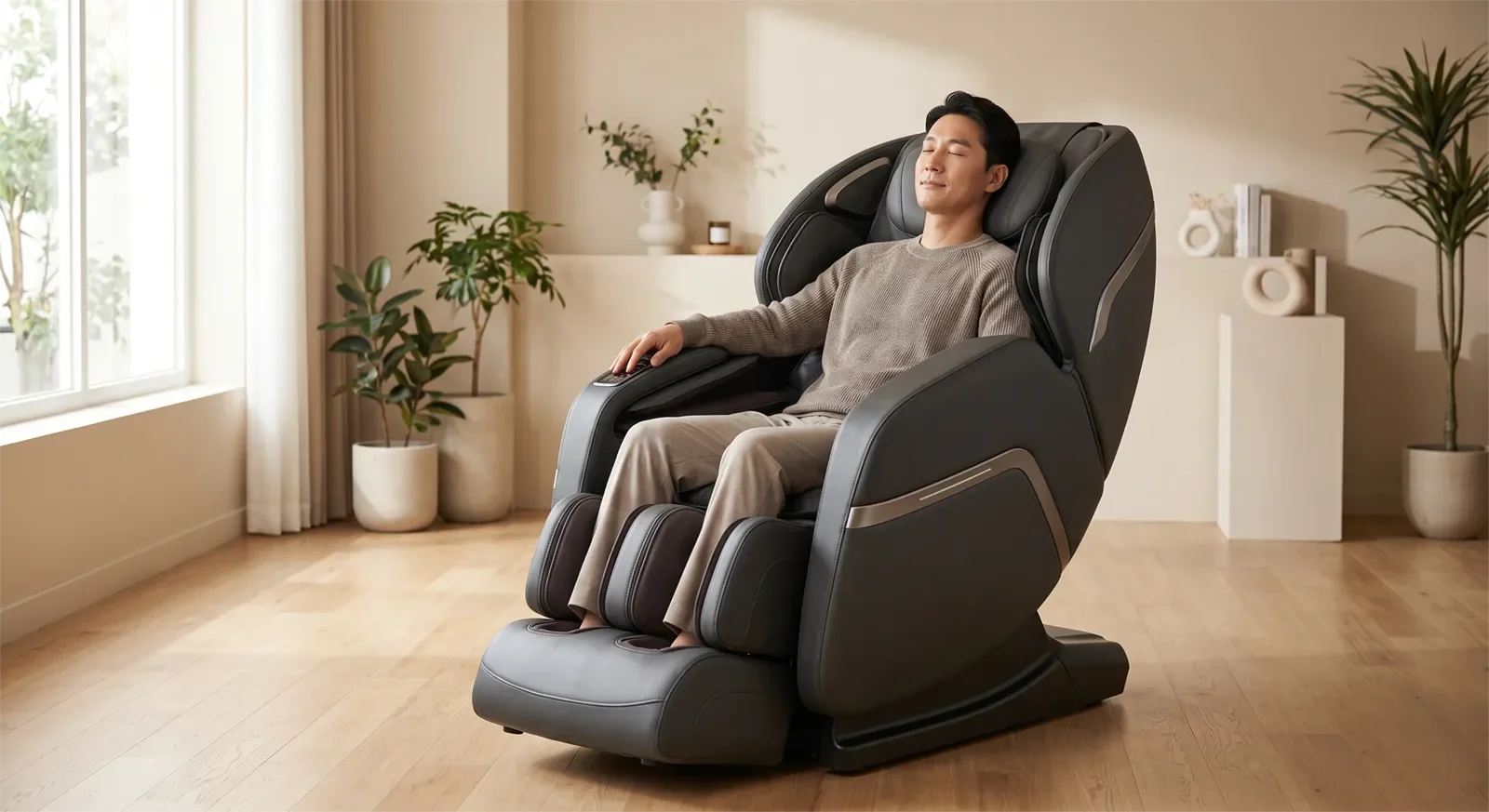
Table of Contents
Quick Answer
2D, 3D, and 4D massage chairs mainly differ in how the rollers move and how much the massage can change while it is happening. A 2D chair usually moves up and down and side to side, so the feel is simpler and more even. A 3D chair adds in-and-out depth, which makes pressure more adjustable and easier to notice. A 4D chair builds on 3D by adding more variation in speed, rhythm, and timing, so the massage can feel less mechanical and more hand-like.
For many shoppers, the biggest jump is from 2D to 3D because depth is easy to feel. The main appeal of 4D is refinement, pacing, and realism — not just stronger pressure.
What 2D, 3D, and 4D actually mean
These labels are easiest to understand if you think about the massage rollers as doing two jobs at once: traveling along your back and changing how they press into your body.
2D massage chairs
A 2D massage chair usually gives you the most basic roller motion. In simple terms, the rollers move along the back in a fixed path and create a consistent massage pattern. The feel is often smoother, simpler, and less aggressive. Many people describe it as enough for light daily relaxation, but not especially deep or detailed.
That does not mean 2D is “bad.” It just means the massage tends to feel more straightforward and less adjustable. If you prefer a lighter massage or do not want a chair that feels too intense, 2D can still make sense.
3D massage chairs
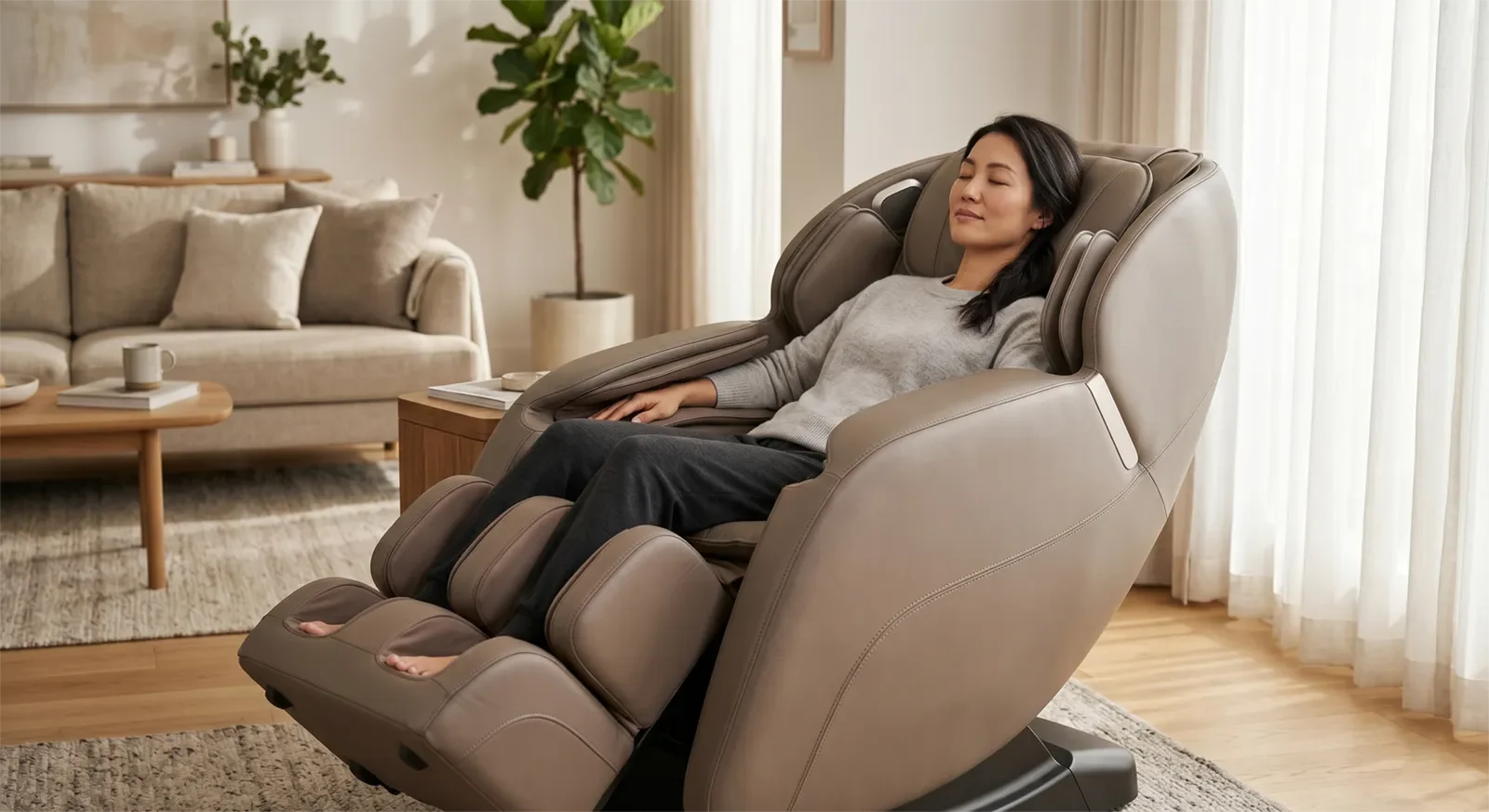
A 3D massage chair adds one very noticeable change: depth. The rollers can move farther in and out, which means the chair can press more directly into the back instead of staying at a flatter, more even level.
This is usually the first big jump that shoppers can clearly feel. Compared with 2D, 3D often feels:
- deeper
- more adjustable
- better at changing pressure
- more capable of feeling focused instead of broad and flat
If someone says a chair feels “more substantial” or “less surface-level,” they are often reacting to the difference between 2D and 3D.

4D massage chairs
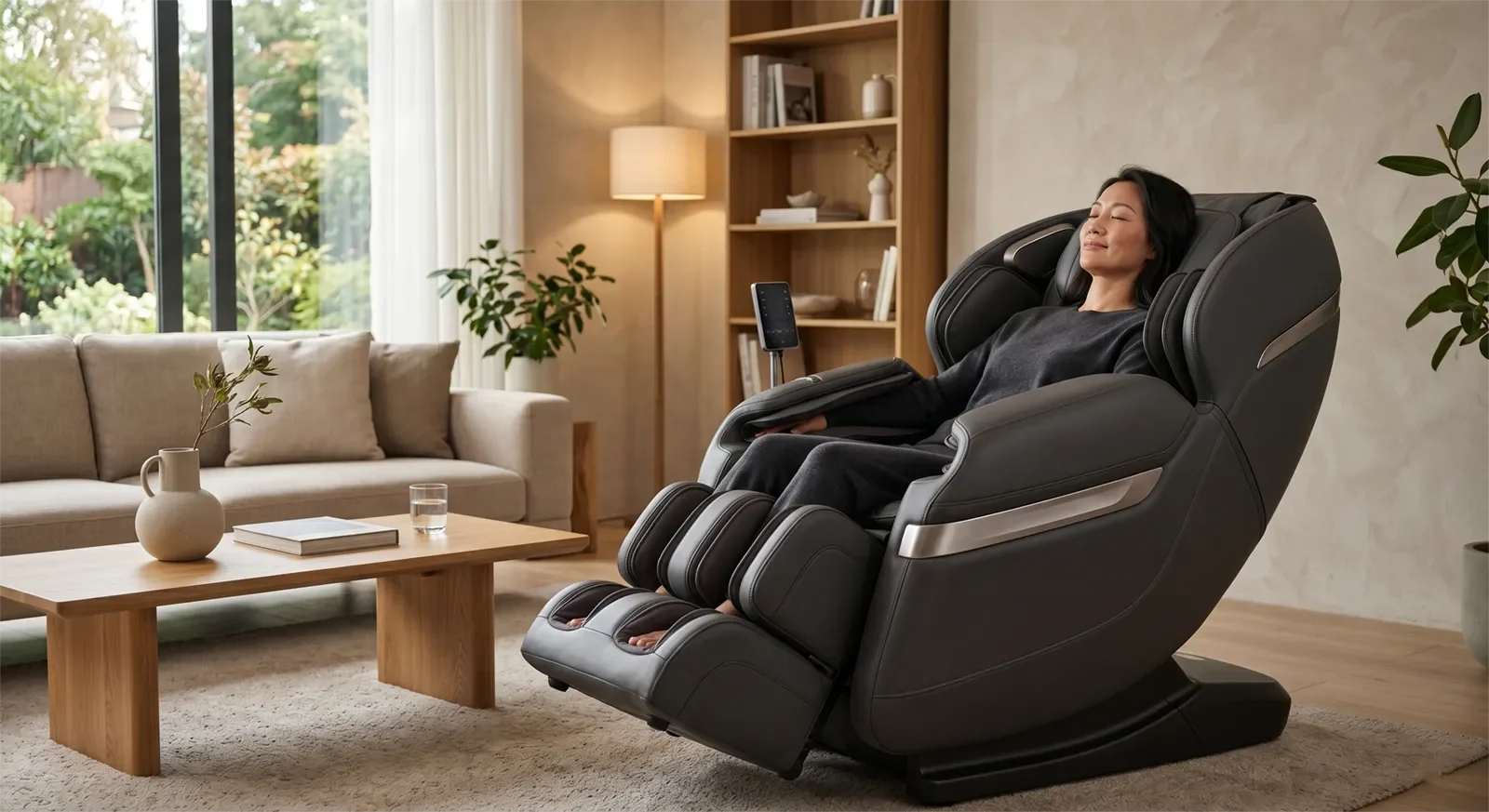
A 4D massage chair usually builds on 3D depth by adding more control over speed, rhythm, and timing. In real use, that often means the massage can slow down, linger, change pace more naturally, and feel less robotic.
That is why 4D is often described as more human-like. It is not just about pushing harder. It is about making the massage feel more varied and less predictable. Instead of a steady, mechanical pattern, the rollers can feel more like they are pausing, kneading, and changing tempo in a more lifelike way.
One important note: brands do not always tune 4D in exactly the same way. So “4D” usually points to a more nuanced massage style, but the actual feel can still vary from one chair to another.
What you will really feel at home
Spec language can make these categories sound abstract, but the real differences are easier to notice when you think about the experience in your living room instead of the feature list.
What 2D usually feels like
2D usually feels steady, basic, and more predictable. That can be a good thing if you want a gentle routine and do not want to keep adjusting depth. The trade-off is that it may feel less precise and less dynamic, especially if you want a massage that feels deeper or more hand-like.
What 3D usually feels like
3D often feels like the chair has more presence. The rollers can reach into the back more noticeably, and that change is often obvious even in a short demo. If you have ever sat in a chair and thought, “This one actually feels like it is getting in there,” you were probably noticing depth.
For many shoppers, 3D is where massage chairs start to feel more serious instead of simply relaxing.
What 4D usually feels like
4D tends to feel more refined rather than simply more forceful. The biggest difference is often not “wow, this is stronger,” but “this feels less mechanical.” A good 4D massage may feel like it changes pace more naturally, lingers where it should, and has more variation from one moment to the next.
That is why some people love 4D and others are less impressed. If you mainly care about adjustable depth, 3D may already do most of what you need. If you are sensitive to rhythm, pacing, and a more realistic massage feel, 4D can be genuinely noticeable.
Why 4D is not automatically better for everyone
It is easy to assume the higher number automatically means the better choice. In practice, that is too simple.
Here is the more useful way to think about it:
- 2D can make sense for lighter, simpler, less intense massage.
- 3D is often the sweet spot for shoppers who want a clearly deeper and more adjustable feel.
- 4D is often most appealing to people who want the massage to feel more nuanced, less robotic, and more realistic in pacing.
So the real question is not “Is 4D the best?” It is “Will I actually notice and value what 4D adds?” If the answer is yes, it can feel worth it. If the answer is no, a well-tuned 3D chair may already feel satisfying.
If you are comparing actual models instead of only learning the technology, see our guide to the best 4D massage chairs. That page focuses on shortlist behavior and buying decisions, while this page stays focused on what the dimension labels actually mean.
What these labels do not tell you
One of the biggest shopping mistakes is assuming 2D, 3D, or 4D tells you everything important about the chair. It does not.
These labels do not fully explain:
- how well the chair fits your height and shoulder position
- how accurate the body scan is
- how the track changes coverage and feel
- how the airbags, calf massage, and foot massage are tuned
- how comfortable the chair feels over longer sessions
For example, body scan is its own topic because it affects how accurately the chair maps your back and shoulders. That is different from whether the rollers are 2D, 3D, or 4D. If you want to understand that part next, read our explainer on massage chair body scan technology.
Likewise, AI marketing language is separate from roller-dimension labels. A chair can mention AI programs, auto-adjustment logic, or adaptive routines, but that does not change what 2D, 3D, or 4D means. For that topic, see AI massage chairs explained.
How to decide which level makes sense for you
If you are trying to translate this into a buying decision, use the feel-first version of the question.
2D may make sense if you want:
- a more basic daily massage feel
- lighter overall pressure
- less complexity
- a simpler starting point
3D may make sense if you want:
- a clearly noticeable jump in depth
- more control over pressure
- a stronger and more targeted back massage
- better odds of feeling the rollers work more directly
4D may make sense if you want:
- a massage that feels more lifelike in pacing
- more variation in rhythm and timing
- a less robotic feel
- more refinement, not just more force
If you are still deciding how this fits into the bigger purchase, our guide on how to choose the best massage chair for your home can help you weigh roller feel against body fit, room size, budget, warranty, and everyday use.
The most useful takeaway
The biggest mistake is treating 2D, 3D, and 4D as if they were a simple quality ladder. They are better understood as a feel ladder.
2D is more basic and even. 3D adds depth in a way many people notice immediately. 4D adds nuance, pacing, and a more hand-like feel that some shoppers care about a lot and others do not need. If you think in those terms, the labels become much easier to use.
Frequently Asked Questions
What does 4D massage chair mean?
In most cases, 4D means the chair adds more variation in speed, rhythm, and timing on top of 3D depth control. In plain English, that usually makes the massage feel less robotic and more hand-like rather than simply stronger.
Is a 4D massage chair always stronger than a 3D chair?
No. The main appeal of 4D is usually realism and nuance, not just maximum pressure. A 3D chair can still feel stronger in practice depending on how it is tuned and how much depth you use.
Is the jump from 2D to 3D more noticeable than the jump from 3D to 4D?
For many shoppers, yes. Going from 2D to 3D usually makes the depth difference obvious. Going from 3D to 4D is often more about rhythm, pacing, and a more natural feel, which can be noticeable but subtler.
Do 2D, 3D, and 4D labels tell me anything about AI or body scan quality?
Not by themselves. Those are separate features. Dimension labels describe roller motion and feel, while AI and body scan relate to automation, adaptation, and fit. You can learn more in our guides to AI massage chairs and body scan technology.