
Body scan technology helps a massage chair find your shoulder position and upper-back alignment before the session begins. When the scan is accurate, the rollers are more likely to hit the right zones instead of feeling too high, too low, or slightly off-target.
Who this guide is for: Buyers who want to understand why body scan matters for massage chair fit accuracy, especially around the neck, shoulders, and upper back.
How this guide was prepared: This article was prepared by reviewing how massage chair manufacturers and manuals describe body scan, shoulder detection, and manual adjustment, then translating those features into practical home-use terms.
If you have ever sat in a massage chair and thought, “This is close, but it is not quite hitting the right spots,” body scan is usually part of that story. A strong massage mechanism can still feel wrong if the chair starts too high, too low, or slightly out of line with your body.
This page stays focused on scan accuracy, shoulder mapping, and alignment. It does not treat body scan as the same thing as AI, roller strength, or general premium branding.
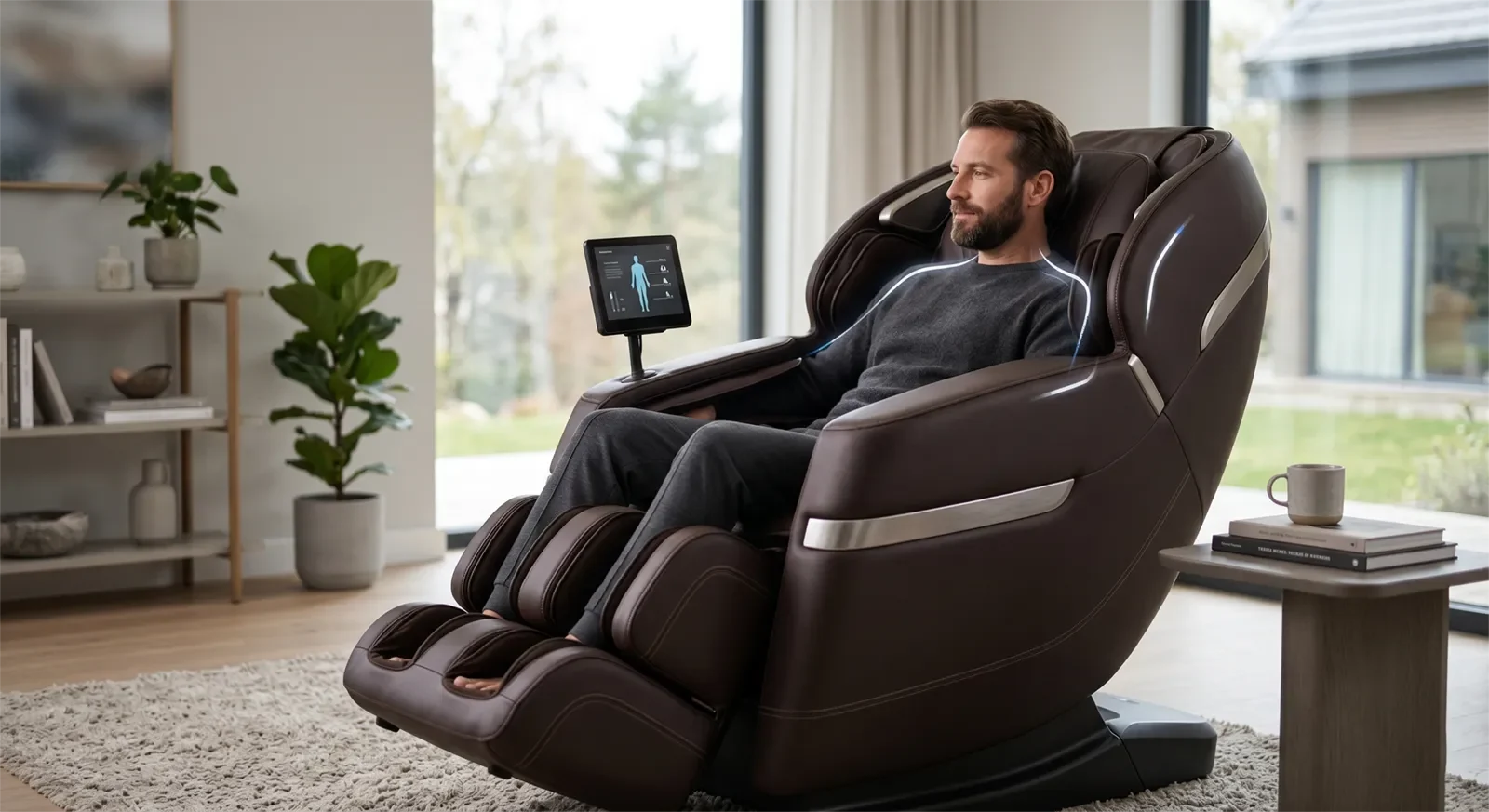
Table of Contents
- What Body Scan Technology Actually Does
- Why Shoulder Mapping Matters So Much
- How Body Scan Affects Real-Use Accuracy
- Why Manual Adjustment Still Matters
- What Body Scan Does Not Mean
- Who Tends to Notice Body Scan the Most?
- Why Some Chairs Feel More Accurate Than Others
- The Most Useful Takeaway
- Frequently Asked Questions
What Body Scan Technology Actually Does
Body scan is the chair’s way of figuring out where your body sits inside the massage area before the session starts. Most chairs do this at the beginning of an auto program, when the rollers or sensors move into position and read your upper-body alignment.
In plain English, the chair is usually trying to answer a few basic questions:
- Where are your shoulders?
- How tall is your upper body inside the chair?
- Where should the massage start and stop so it lines up better with your back?
That information helps the chair position the rollers more accurately. Without that step, the massage may still run, but it is more likely to feel generic instead of fitted.
Why Shoulder Mapping Matters So Much
Shoulder mapping is often the most important part of body scan because shoulder position helps set the vertical reference point for the whole upper-body massage. If the chair gets that point wrong, the rest of the session can feel shifted.
What Good Shoulder Mapping Changes
When the chair identifies shoulder height well, the rollers are more likely to land where you expect them to. That usually improves:
- neck and upper-back alignment
- where kneading or shiatsu patterns begin
- how natural the shoulder and upper-back zones feel
- overall confidence that the chair is working with your body instead of around it
What Poor Shoulder Mapping Feels Like
When scan alignment is off, users often notice it quickly. The massage may feel too high near the neck, too low across the shoulders, or just slightly wrong in a way that is hard to describe.
Even when the rollers are strong enough, the session can feel less satisfying because the target area is not lined up well. That is why body scan matters: it affects whether the massage actually lands in the right places.

How Body Scan Affects Real-Use Accuracy
Body scan matters most when you move past feature lists and think about what you feel in the chair.
1. Better Neck and Shoulder Placement
This is usually the first area where scan quality shows up. If the chair maps your shoulders well, the upper-body massage often feels more intentional and less generic.
2. More Consistent Auto Programs
Auto programs feel better when the chair starts from the right position. If the scan is accurate, the routine tends to feel more like it was placed on your body instead of simply playing through the same fixed path every time.
3. Less Need to Tolerate Small Misalignment
Many users can tell when a chair is almost right. A better scan reduces that problem. The goal is not perfection. The goal is to reduce the small but noticeable mismatch that makes a session feel less precise.
Why Manual Adjustment Still Matters
Even chairs with body scan do not always get everything perfect on the first try. That is why manual adjustment matters.
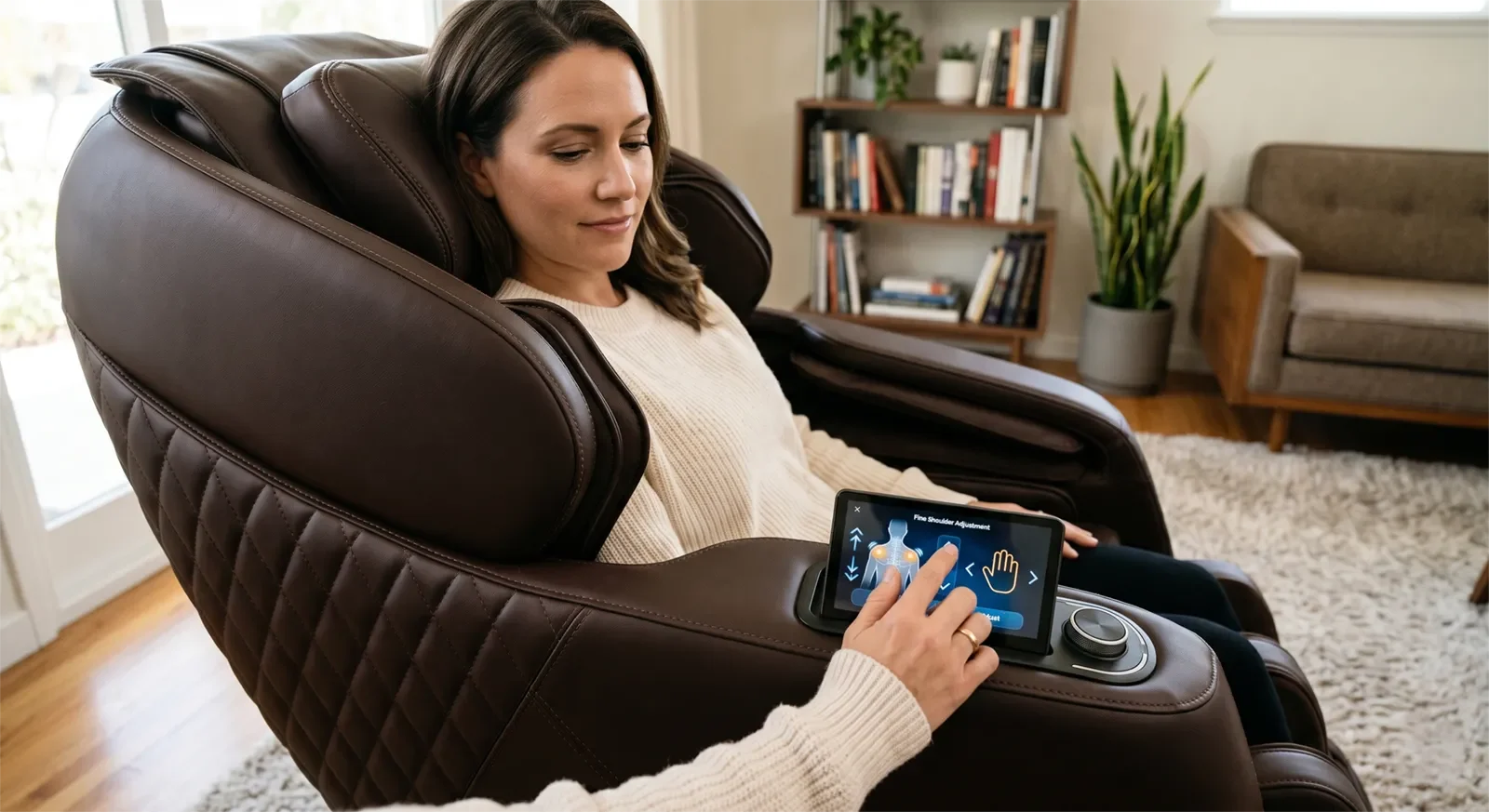
Many massage chairs let you confirm or fine-tune the shoulder position after the scan. This matters because bodies are different, sitting posture changes slightly from session to session, and even a decent scan can still be a little off.
When Manual Adjustment Helps Most
- when the rollers feel slightly too high or too low at the start
- when your shoulders are not sitting exactly where the chair expected
- when you want the upper-body focus to feel more accurate before the full session begins
In real use, a small manual correction can make a much bigger difference than many buyers expect. The better way to think about body scan is: scan first, then fine-tune if needed.
What Body Scan Does Not Mean
Because brands often group premium features together, body scan can get mixed up with other features that it does not actually own.
Body Scan Is Not the Same as AI
Body scan is mainly about fit and alignment. AI language usually refers to adaptive logic, auto-program behavior, or recommendation features. The two may appear together on the same product page, but they are not the same thing. For that broader feature family, read AI Massage Chairs Explained.
Body Scan Is Not the Same as Roller Strength or Massage Realism
A chair can scan you well and still feel lighter or more mechanical depending on its massage mechanism. Roller depth, speed, and rhythm belong more to the 2D, 3D, and 4D massage chair discussion.
Body Scan Is Not the Same as Size-Based Fit
Good shoulder mapping helps many users, but body scan alone does not guarantee that a chair is ideal for every height or body type. If you are comparing chairs because of overall size, comfort, and home fit, use How to Choose the Best Massage Chair for Your Home for the wider buying decision.
Who Tends to Notice Body Scan the Most?
Some people care about body scan more than others. You are more likely to notice it if:
- you are sensitive to neck and shoulder placement
- you have used chairs before and felt the massage was slightly off-target
- you want auto programs to feel more fitted
- you care more about alignment than just raw intensity
In other words, body scan tends to matter most for people who notice precision.
Why Some Chairs Feel More Accurate Than Others
Not all body scan systems feel the same in real use. That difference can come from several things working together:
- how well the chair detects shoulder height
- how well the scan is translated into roller positioning
- how easy it is to make a manual correction
- how well the rest of the chair is tuned around the scan result
That is why body scan should be judged by the outcome, not just the label. The question is not only “Does the chair have body scan?” The better question is: does the scan actually improve alignment in a noticeable way?
The Most Useful Takeaway
Body scan matters because massage chairs work best when they know where your body actually is. Shoulder mapping is the anchor point for that process. When it is off, the whole session can feel slightly misplaced. When it is right, the massage often feels more accurate, more natural, and easier to trust.
The key is to think of body scan as a fit tool, not a magic tool. A good scan improves alignment. A manual adjustment option helps finish the job. Together, those two things often matter more than the label alone.
Frequently Asked Questions
What is body scan in a massage chair?
Body scan is the chair’s way of detecting your shoulder position and upper-body alignment before the massage begins. It helps the chair place the rollers more accurately so the session feels better fitted.
Why does shoulder mapping matter in a massage chair?
Shoulder mapping matters because it helps set the starting reference point for the upper-body massage. If that point is off, the rollers can feel too high, too low, or slightly misaligned throughout the session.
Is body scan the same as AI in a massage chair?
No. Body scan is mainly about fit and shoulder alignment. AI is a broader label that usually refers to adaptive logic, sensors, or auto-program behavior. A chair can have both, but they are not the same feature.
Can body scan make a massage chair fit every body type?
Not by itself. Body scan can improve shoulder alignment, but overall fit still depends on chair size, track design, seat shape, recline angle, and whether the user feels properly supported.