
A massage chair can save more money than regular spa visits only if you use it often enough. The real comparison is not chair versus one massage session. It is a premium home purchase versus years of repeated appointments, travel time, scheduling, tips, and ongoing service spending.
Who this guide is for: Buyers deciding whether a home massage chair makes more long-term financial sense than continuing to pay for spa visits or in-person massage sessions.
How this guide was prepared: This guide was organized around long-term cost logic, real usage frequency, home convenience, premium chair ownership, and practical trade-offs. It does not claim a massage chair replaces every spa experience or every type of professional bodywork. The goal is to help buyers compare repeated spending against home ownership more honestly.
If you are comparing massage chairs vs visiting a spa, the right question is not simply which option feels better. The better question is: how often do you realistically want massage access, and how much are you already spending to get it?
For occasional users, spa visits may remain the more practical choice. For people who already pay for massage regularly, a home massage chair can start to make more financial sense over time because the cost shifts from repeated appointments to a long-term product in the home.
This matters even more for buyers considering a premium massage chair in the $7,000–$15,000 range. At that level, the chair should not be treated as an impulse purchase. It should be evaluated as a multi-year home investment based on use, convenience, comfort, fit, warranty support, and whether it meaningfully reduces repeated outside massage spending.
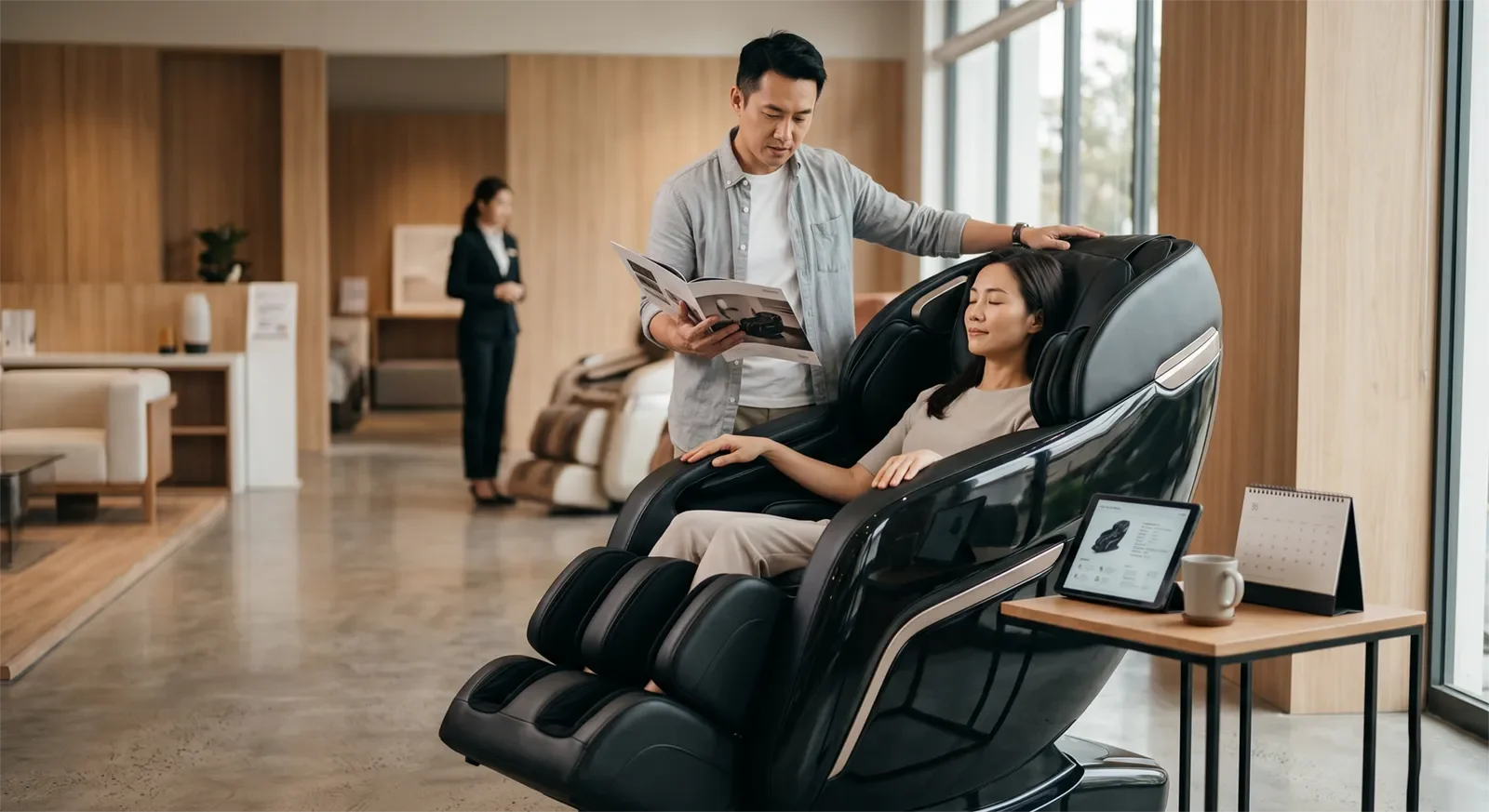
Table of Contents
- Quick Answer
- Start With the Real Comparison
- The Biggest Variable Is Frequency
- Think in Years, Not Single Visits
- Use Simple Break-Even Thinking
- Convenience Has Real Value Too
- A Chair Does Not Replace Every Spa Experience
- When a Massage Chair Usually Makes More Financial Sense
- When Spa Visits May Still Make More Sense
- How This Changes With Premium Massage Chairs
- Keep Financing, Timing, and Warranty Separate
- How to Make the Decision Honestly
- Frequently Asked Questions
- Related Guides
Quick Answer
A massage chair usually saves more money than spa visits only when you use massage often enough for repeated appointments to become a real long-term expense. If you only visit a spa a few times a year, buying a chair may not save money quickly. If massage is already part of your monthly or weekly routine, a home chair can become more economical over time because the main cost is paid through ownership instead of repeated visits. The honest decision depends on your real usage pattern, not an ideal version of how often you think you might use the chair.
Start With the Real Comparison
Massage chairs and spa visits are not identical. A spa visit gives you a human-service experience, a change of environment, and a scheduled appointment. A massage chair gives you immediate home access, repeat use, and convenience without needing to book a session.
That means the real comparison is not “Which one is better?” The real comparison is:
- How often do you currently pay for massage or spa visits?
- How much do you spend over a year?
- Would a chair reduce that spending?
- Would you use the chair often enough to justify ownership?
- Do you value at-home convenience enough for it to change your habits?
A massage chair can be a smart long-term purchase, but only when it matches the buyer’s actual routine. If the chair becomes an expensive object that rarely gets used, the savings argument falls apart.
The Biggest Variable Is Frequency
Frequency decides most of this comparison. The more often you use massage, the stronger the case for owning a chair becomes.
If you use massage occasionally
If you book a massage or spa visit only a few times a year, a chair may take a long time to make financial sense. In that case, paying only when you want a session can be more practical than buying a large home product.
If you use massage monthly
If massage is already a monthly habit, the decision becomes more interesting. Monthly spending may not feel high at first, but it repeats every year. A chair may begin to look more reasonable if you expect that habit to continue.
If you use massage frequently
If you already spend on massage often, a home chair can become much more compelling. Repeated appointments, travel, tips, and time can add up. A chair changes the model from paying per visit to having access at home.
If convenience would increase your usage
Some people do not get massage as often as they want because scheduling and travel get in the way. For those buyers, the value of a chair is not only savings. It is access. The chair may make massage easier to use more consistently because it is already in the home.
Think in Years, Not Single Visits
A massage chair should not be compared to one spa visit. It should be compared to repeated spending over time.
| Usage Pattern | Spa or Massage Visits | Home Massage Chair |
|---|---|---|
| Occasional use | Usually lower total spending because you pay only when you go. | Harder to justify purely on savings. |
| Monthly use | Spending stays predictable but repeats year after year. | May become easier to justify over a longer ownership period. |
| Frequent use | Recurring costs can build quickly. | At-home access may create stronger long-term value. |
| High convenience need | Requires appointments, travel, and time outside the home. | Available at home when you want to use it. |
The right question is not “Is a massage chair cheaper than a spa?” in general. The right question is “Compared with my real habits, which option makes more sense over the next several years?”
Use Simple Break-Even Thinking
You do not need a complicated formula to compare the options. Start with a simple estimate:
- How much do you usually spend per massage or spa visit?
- How many times do you go per month or year?
- How much do you spend on tips, travel, parking, or related costs?
- How many years do you expect that pattern to continue?
- How often would you realistically use a chair at home?
Then compare that total with the cost of owning the chair. A home chair does not need to replace every spa visit to make sense. It only needs to reduce enough repeated spending and add enough convenience to justify the purchase.
For example, if spa visits are rare, ownership may not break even quickly. If massage spending is already a steady part of your life, a chair may become easier to justify as a long-term home investment.

Convenience Has Real Value Too
Money is only part of the decision. Convenience also has value.
With spa visits, you need to schedule, travel, arrive on time, and pay for each session. That can be worth it if you enjoy the full experience. But it also creates friction.
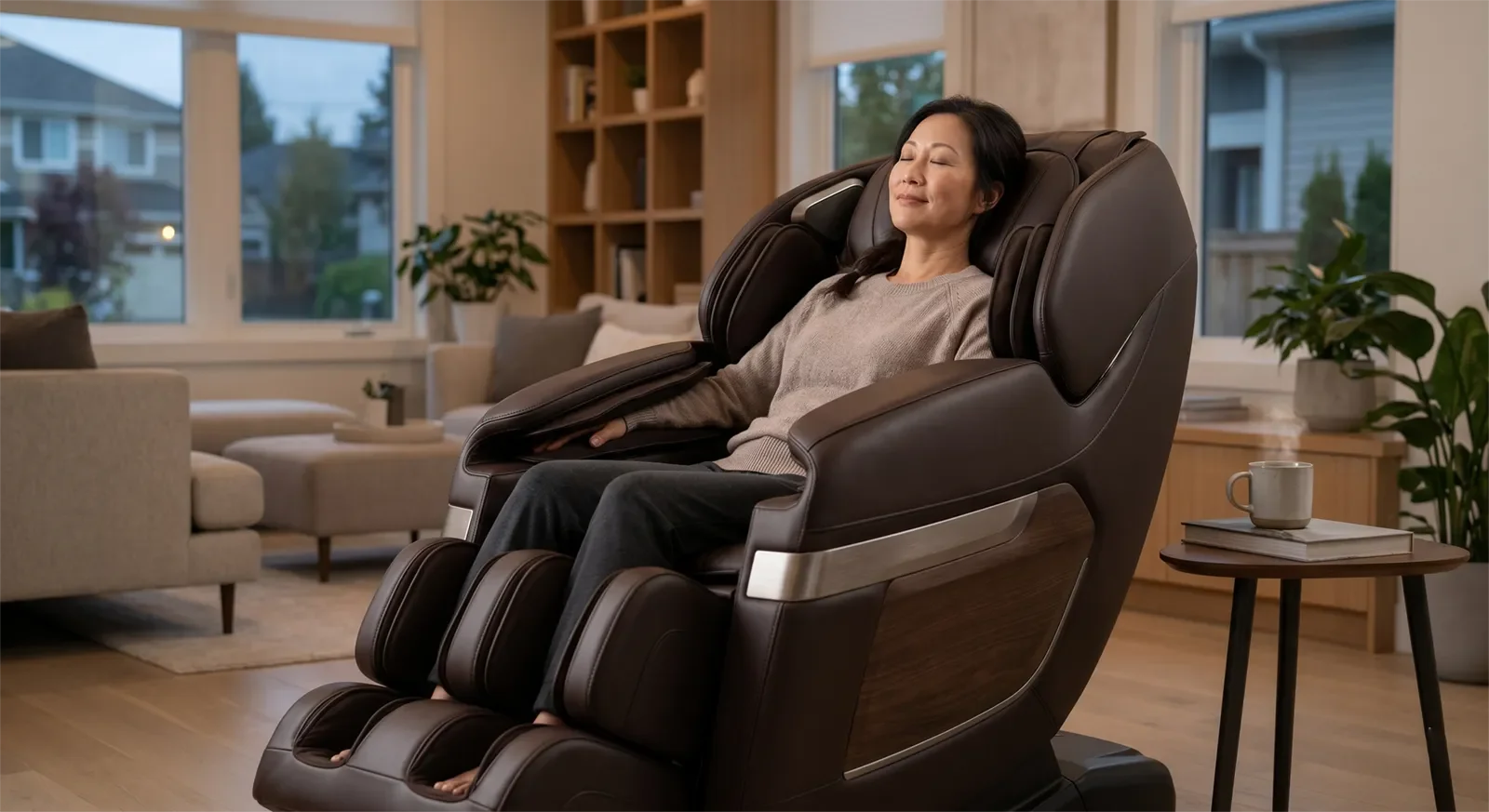
With a massage chair, the experience is available at home. You can use it after work, after standing all day, before bed, or whenever your schedule allows. For many families, that convenience changes how often the chair gets used.
Convenience does not automatically make a chair the better financial choice. But it can make ownership more valuable than the price comparison alone suggests.
A Chair Does Not Replace Every Spa Experience
This comparison needs to stay honest. A massage chair is not the same as a trained massage therapist, and it does not replace every reason someone visits a spa.
Some people value the human touch, the environment, the ritual, and the feeling of leaving home for a dedicated appointment. A massage chair cannot fully duplicate that. It can, however, reduce the need for some routine massage spending if your main goal is regular comfort and relaxation at home.
The better question is not whether the chair replaces every spa visit. The better question is whether it replaces enough routine visits to make ownership feel worthwhile.
When a Massage Chair Usually Makes More Financial Sense
A massage chair usually becomes the stronger long-term value when:
- You already spend regularly on massage or spa visits.
- You want massage access more often than your schedule allows.
- You prefer home convenience over repeated appointments.
- More than one person in the household will use the chair.
- You are evaluating the chair as a multi-year purchase.
- You choose a chair that fits the main users well enough to be used consistently.
The last point is critical. The savings argument only works if the chair gets used. A poorly fitted chair, overly aggressive chair, or confusing chair may not deliver the long-term value you expected.
When Spa Visits May Still Make More Sense
Continuing with spa visits may be the smarter choice when:
- You only use massage occasionally.
- You value the full spa environment more than home convenience.
- You do not want a large home product right now.
- You are not sure you would use the chair often.
- You prefer paying only when you book a session.
- You need professional bodywork that a chair cannot replace.
That does not mean a massage chair is a bad option. It simply means the financial case depends on actual behavior. If your usage is light, the chair may be more about convenience and lifestyle than direct savings.
How This Changes With Premium Massage Chairs
When you are considering a premium massage chair in the $7,000–$15,000 range, the decision should be more serious than a simple “spa replacement” calculation.
At this level, the chair should justify itself through more than access. It should offer better body fit, more refined massage feel, stronger adjustment, better comfort, clearer warranty support, and a realistic chance of being used often by the household.
A premium chair may make sense if it becomes part of your daily or weekly routine and reduces repeated massage spending over time. It may not make sense if you are only trying to justify the purchase with theoretical savings you are unlikely to realize.
The best premium purchase is not the chair that sounds cheaper than a spa on paper. It is the chair that your household actually uses enough to make the ownership value real.

Keep Financing, Timing, and Warranty Separate
Several related questions can affect the final purchase, but they should not take over this page.
Financing is a payment decision
Financing can change how the purchase feels month to month, but it does not decide whether ownership makes sense compared with spa visits. Payment structure should be judged separately from the chair-versus-spa value question.
Wellness expectations are a separate decision
Some buyers are comparing a chair to spa visits because they want help with stress, sleep, or recovery routines at home. That can be part of the ownership value, but it should be judged carefully without turning the chair into a medical promise.
Warranty is an ownership-confidence decision
Warranty and service do not replace the cost comparison, but they matter for a large home purchase. A premium chair should make sense not only financially, but also as a product you can own with support confidence.
How to Make the Decision Honestly
If you are stuck between buying a massage chair and continuing with spa visits, use this sequence:
- Look at your real massage spending. Do not guess. Estimate what you actually spend in a normal year.
- Decide how often you would realistically use a chair. Be honest, not optimistic.
- Separate routine comfort from special spa experiences. A chair may replace some visits, not all of them.
- Think in a multi-year horizon. A chair is a long-term purchase, not a one-session comparison.
- Make sure the chair fits the users. Poor fit weakens the savings case because it reduces use.
- Check warranty and service. Ownership value depends on support as well as comfort.
- Choose the path that matches your habits. The best financial choice is the one your real life will support.
If ownership is starting to make more sense, the next step is not rushing to buy. The next step is confirming whether a premium chair fits your household’s real usage, budget, comfort expectations, and support needs.
Frequently Asked Questions
Is a massage chair cheaper than visiting a spa long-term?
It can be cheaper long-term if you already spend regularly on massage or spa visits and use the chair consistently at home. If you only visit a spa occasionally, a chair may not save money quickly.
How often do I need to use a massage chair for it to make sense?
There is no single number that fits everyone. The more often you would otherwise pay for massage, the stronger the case for a chair becomes. Monthly or frequent users usually have a clearer ownership case than occasional users.
Does a massage chair replace professional massage?
No. A massage chair can provide convenient at-home massage, but it does not replace every benefit of professional bodywork or a full spa experience. It may reduce routine visits, but it does not need to replace every appointment to be valuable.
Should I include financing in this comparison?
Only as a separate payment question. Financing affects monthly cash flow, but the main comparison here is home ownership versus repeated spa spending.
Does buying a premium massage chair save more money?
Not automatically. A premium chair can offer better fit, comfort, and long-term satisfaction, but it only supports the savings argument if it gets used often enough. The chair must match your body, room, routine, and support expectations.
What should I do if ownership seems more logical?
If a home chair seems to make more sense than repeated spa spending, move into the chair-buying decision. Compare fit, massage feel, room size, warranty, service, and budget before choosing a model.
Massage chairs can save money compared with spa visits when the chair is used often enough to replace meaningful repeated spending. But the best decision is not based on theory. It is based on your real habits, your household’s likely use, and whether the chair you choose is comfortable enough to become part of your regular routine.
Trying to decide whether a massage chair makes more sense than regular spa visits? Visit the Tittac showroom to compare premium chair comfort, body fit, massage feel, and long-term ownership value before making the decision.
Contact Tittac or visit our showroom for help comparing premium massage chair options for your home.