
A massage chair may help some people unwind, feel less physically tense, and recover from the day more comfortably. But it should not be presented as a treatment for insomnia, a cure for stress, or a complete recovery solution.
If you are wondering can a massage chair help with stress, sleep, and recovery, the most realistic answer is practical, not dramatic. A massage chair may help your body slow down, relax, and transition out of work mode, workout mode, or general mental overload. Its value is usually in the routine it helps create: a short, comfortable pause that makes rest feel easier.
Who this guide is for: Readers who are less focused on pain and more interested in relaxation, decompression, or post-workout recovery support.
How this guide was prepared: This guide was prepared using cautious wellness guidance, plain-language clinical context, and practical home-user framing to set realistic expectations for relaxation, sleep support, and recovery without overpromising results.
Quick Answer
A massage chair may help with stress, sleep, and recovery by making it easier to relax, settle physical tension, and create a short wind-down routine after work, exercise, or a mentally heavy day. For some people, that can mean feeling calmer in the evening, less stiff after activity, or more ready for bed after a gentle session. But the effect is not guaranteed, and it should not be framed as treatment for insomnia, anxiety, chronic fatigue, injury recovery, or any medical condition. The most realistic view is that a massage chair can be a support tool for winding down and feeling better, especially when the session is short, comfortable, and used as part of a broader routine rather than as a fix-all.
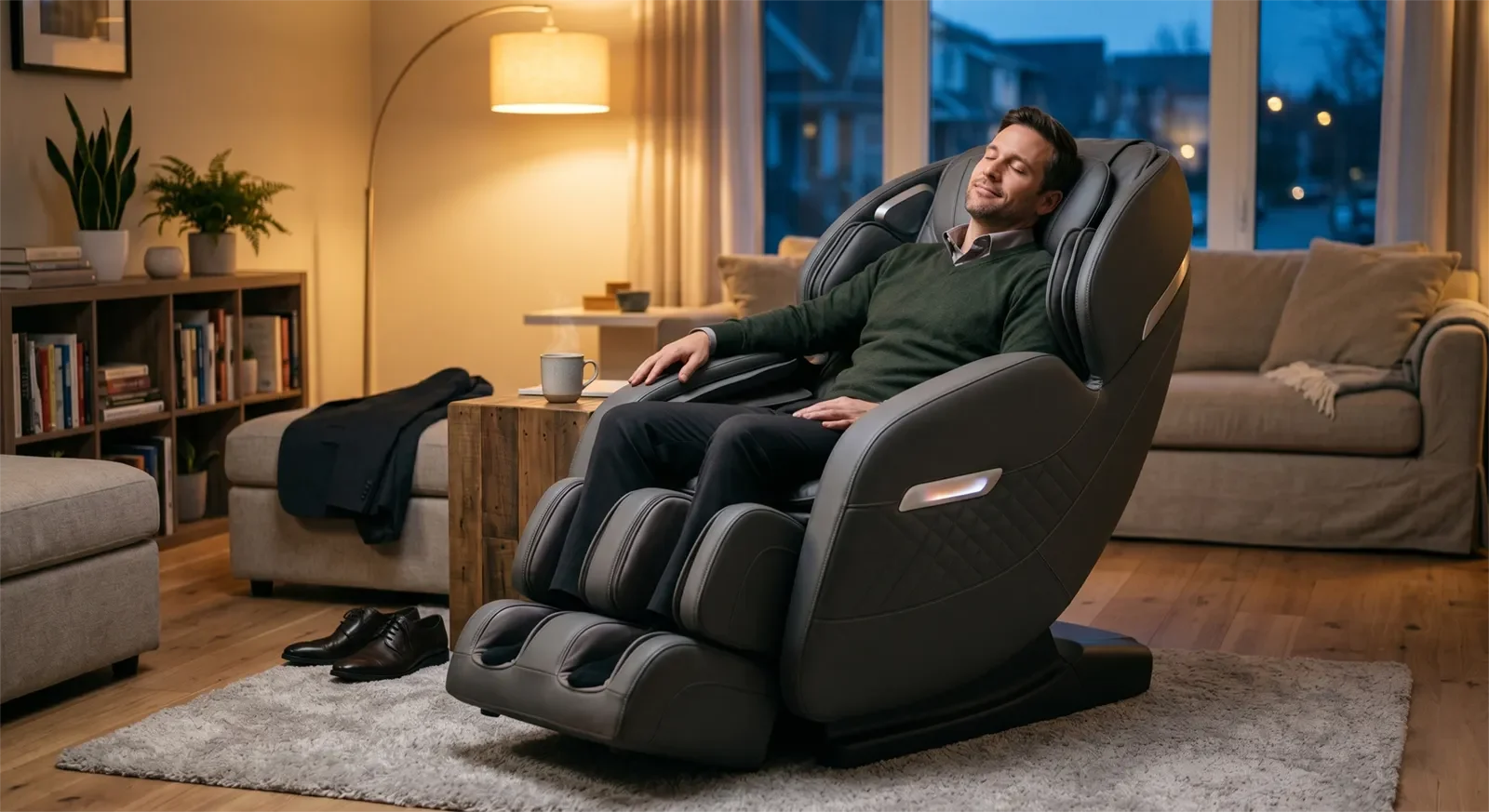
Table of Contents
How a massage chair may help with stress
It can create a clear pause in the day
One of the most useful things a massage chair can do is give people a defined moment to stop. That matters more than it sounds. Stress often builds because the body never fully shifts out of “go” mode. A short massage-chair session can create a transition point between work and evening, between errands and rest, or between a workout and the rest of the day.
It may reduce the physical feeling of being wound up
Stress often shows up in the body as tight shoulders, a stiff back, shallow breathing, or a general sense that everything feels “on.” A massage chair may help by easing some of that physical tension. For many users, the benefit is less about chasing a deep massage and more about feeling calmer, looser, and less compressed afterward.
It works best when the session feels calming, not intense
When stress relief is the goal, more intensity is not always better. Aggressive pressure can leave some people feeling overstimulated rather than restored. In practice, a gentler session often does more to help the body settle.
How it may support sleep — without becoming an insomnia claim
It may help you wind down before bed
A massage chair may support sleep in an indirect way by making it easier to unwind. If your body feels less tense and your evening routine becomes calmer, you may feel more ready for bed afterward. That is a useful sleep-support role, but it is different from treating insomnia or fixing every cause of poor sleep.
It may be most useful as part of a repeatable routine
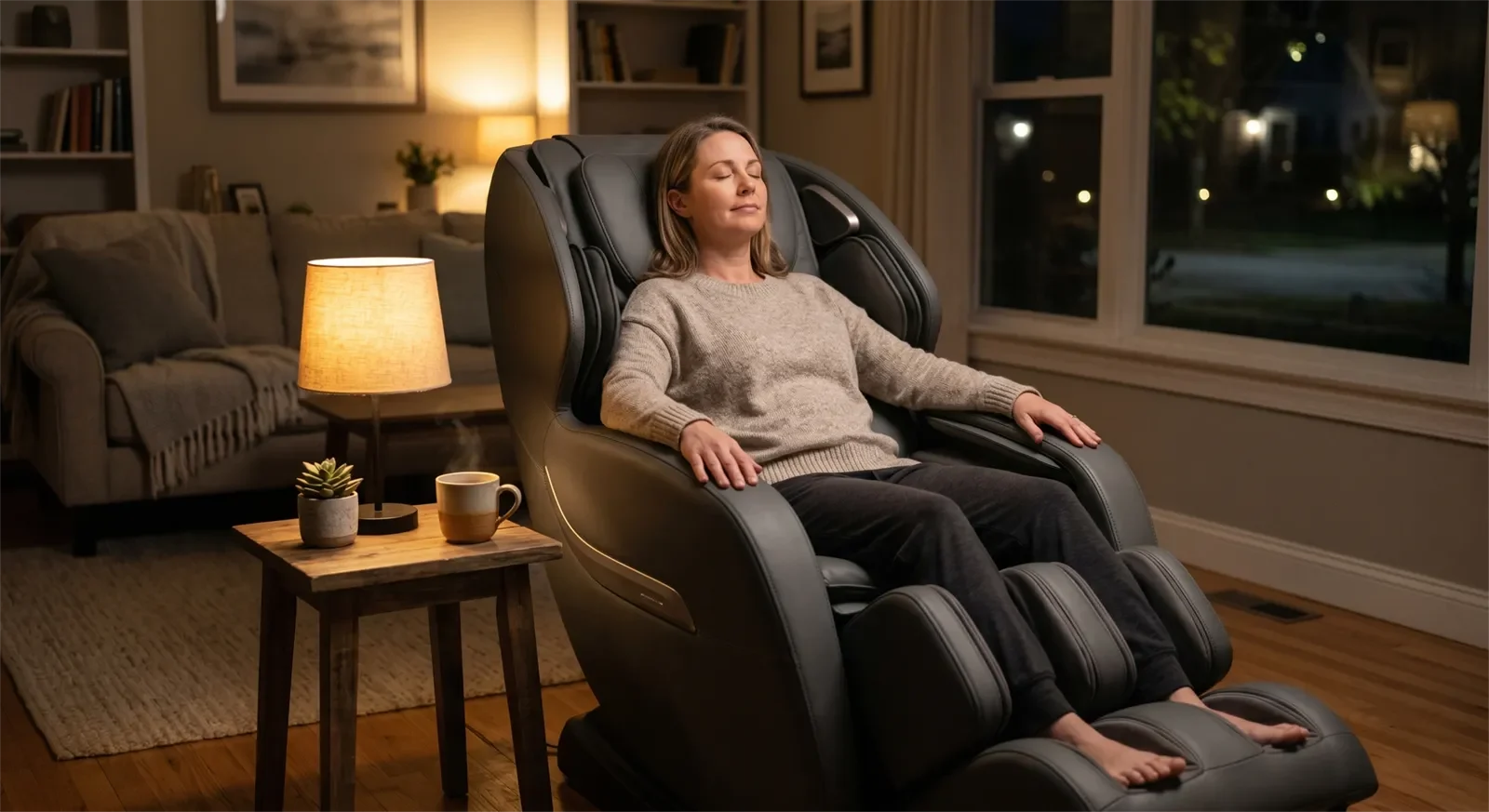
The chair usually helps more when it becomes part of a predictable wind-down pattern: lower the lights, step away from screens, use a short gentle session, then move toward bed. In that context, the chair supports relaxation. Used randomly or only when sleep has already been poor for weeks, it is less likely to change the overall pattern by itself.
It should not replace real evaluation for ongoing sleep problems
If you regularly struggle to fall asleep, stay asleep, or wake up exhausted, the next step is not just a longer massage-chair session. Sleep problems can have many causes, and a chair is not a treatment tool for all of them. This page intentionally stays on realistic sleep support, not insomnia treatment.
How it may support recovery
Recovery after everyday fatigue
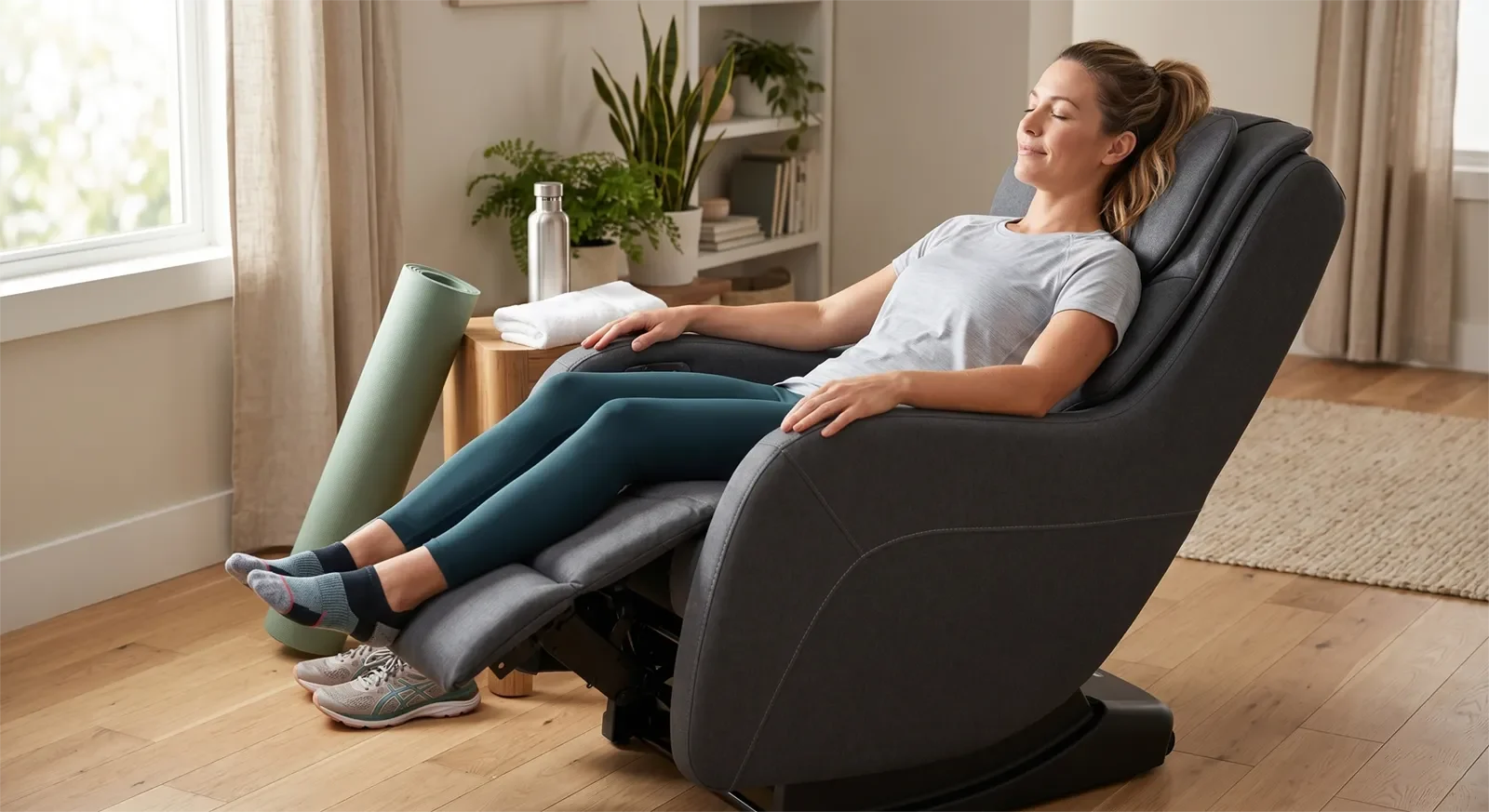
For many people, “recovery” does not mean elite training. It means feeling less beat up after long workdays, caregiving, commuting, yard work, or time on your feet. In that sense, a massage chair may help the body feel less tense and more settled after physical strain.
Recovery after workouts
Some users like massage chairs after exercise because they feel less stiff and more relaxed afterward. That can be a useful recovery ritual, especially if the session is comfortable and not too aggressive. But it should still be thought of as supportive recovery, not as proof of faster physical repair or better athletic performance.
Recovery depends on the whole routine, not the chair alone
A massage chair can be one helpful piece of a recovery routine, but sleep habits, hydration, movement, training load, and general stress still matter. The most balanced claim is that a chair may help you feel better during recovery, not that it guarantees better recovery outcomes on its own.
What tends to help most when stress, sleep, or recovery is the goal
- Short sessions that feel calming rather than intense.
- Gentle-to-moderate pressure instead of maximum settings.
- A supported reclined position that helps the body settle.
- Using the chair at consistent times, such as after work or earlier in the evening.
- Treating the session like part of a routine, not a rescue tactic.
- Stopping or reducing intensity if the session makes you feel more stimulated, sore, or restless.
For some users, recline plays a meaningful role in how relaxing the session feels. If you want that piece explained more clearly, read what zero gravity means in a massage chair. This page does not own that feature in depth, but body position can shape how restorative a session feels.
If you are still comparing chairs and want to understand fit, comfort, program design, and everyday home use, read how to choose the best massage chair for your home before choosing based only on relaxation claims.
What a massage chair cannot promise
- It cannot treat insomnia.
- It cannot remove every cause of stress or fatigue.
- It cannot replace broader recovery habits.
- It cannot guarantee faster healing or better athletic performance.
- It cannot serve as a full safety screen for whether massage-chair use is appropriate for you.
That is why this page avoids broad “benefits” language. A massage chair may help some people relax, sleep more comfortably, or recover from the day more pleasantly. Those are real but modest expectations, and they are more trustworthy than exaggerated wellness claims.
When to keep the safety question separate
This page does not duplicate full safety guidance. If your question is really about whether you should be using a massage chair at all, or how to approach it carefully in the beginning, use the correct owner pages instead of stretching this one too far.
For broader guardrails, go to our health and safety guide when using a massage chair. If you are new to chair use and want a more practical start, read how to use a massage chair safely in your first 30 days.
If the chair is for a parent, older adult, or someone sensitive to pressure, keep the routine gentle and simple. Our guide to massage chairs for seniors can help you think through comfort, ease of use, and safe expectations more carefully.
How to use a massage chair more effectively for wind-down and recovery
For stress after work
Use a short, gentle session soon after the day ends. Keep the room quiet, avoid multitasking, and let the chair be a transition instead of background noise while you scroll.
For sleep support
Use the chair earlier in the evening rather than right after you are already frustrated about sleep. A calm routine works better than a last-minute attempt to force sleepiness.
For post-workout recovery
Keep the session comfortable and avoid turning it into a punishment session for sore muscles. Recovery support usually works better when the chair helps you settle, not when it leaves you feeling more worked over.
For screen-related neck and shoulder tension
If your stress shows up mostly as tight shoulders, a stiff neck, or upper-back tension after computer work, the better next read is Neck & Shoulder Tension from Screens: A Daily 10-Minute Routine. That page keeps the focus narrower and more practical.
Frequently Asked Questions
Can a massage chair help you relax?
Yes, it may help many people relax by easing physical tension and creating a short pause in the day. That calming effect is one of the most realistic reasons people use massage chairs.
Can a massage chair help with sleep?
It may help some people wind down and feel more ready for bed, especially when used as part of a calm evening routine. But it should not be presented as a treatment for insomnia.
Is a massage chair good for recovery after exercise?
It may support recovery in a comfort sense by helping you feel less tense or stiff after activity. That is different from proving faster healing or better performance outcomes.
What if a massage session makes me feel more stimulated instead of relaxed?
That usually means the session is too intense, too long, or poorly timed for your goal. Back off the pressure, shorten the session, or move it earlier in the day instead of assuming more is better.
Should I use a massage chair right before bed?
Some people like using a gentle session before bed, while others feel too alert afterward. If sleep is the goal, test an earlier evening session first and keep the program short and calming.
Related Guides
- Health & Safety Guide When Using a Massage Chair
- How to Use a Massage Chair Safely in Your First 30 Days
- What Is Zero Gravity in a Massage Chair?
- Neck & Shoulder Tension from Screens: A Daily 10-Minute Routine
- How to Choose the Best Massage Chair for Your Home
Use the chair as a routine, not a cure
If you want to use a massage chair more intentionally for wind-down and recovery, start with a short, gentle routine and build from there. If you are comparing chairs for stress relief, sleep support, or everyday recovery, Tittac can help you think through comfort level, recline, pressure control, ease of use, and fit without turning wellness support into overpromised claims. Contact Tittac for practical massage chair guidance before you choose.