




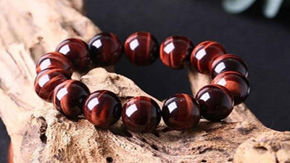

Healing jewelry comes in several main formats: bracelets, necklaces, pendants, rings, earrings, malas, charms, and talisman-style pieces. The best type is not the one that sounds the most powerful. It is the one you will actually wear comfortably, consistently, and in a way that fits your style, routine, and personal intention.
Who this guide is for: This guide is for readers who want a clear, practical overview of the main types of healing jewelry before choosing a bracelet, necklace, ring, mala, pendant, or smaller symbolic piece.
How this guide was prepared: This article was created as a format-first guide. It compares jewelry types by comfort, visibility, daily wear, styling flexibility, and symbolic use. It does not make medical claims, promise spiritual results, or replace narrower guides that cover specific stones, chakras, malas, or bracelet-versus-necklace decisions in more depth.
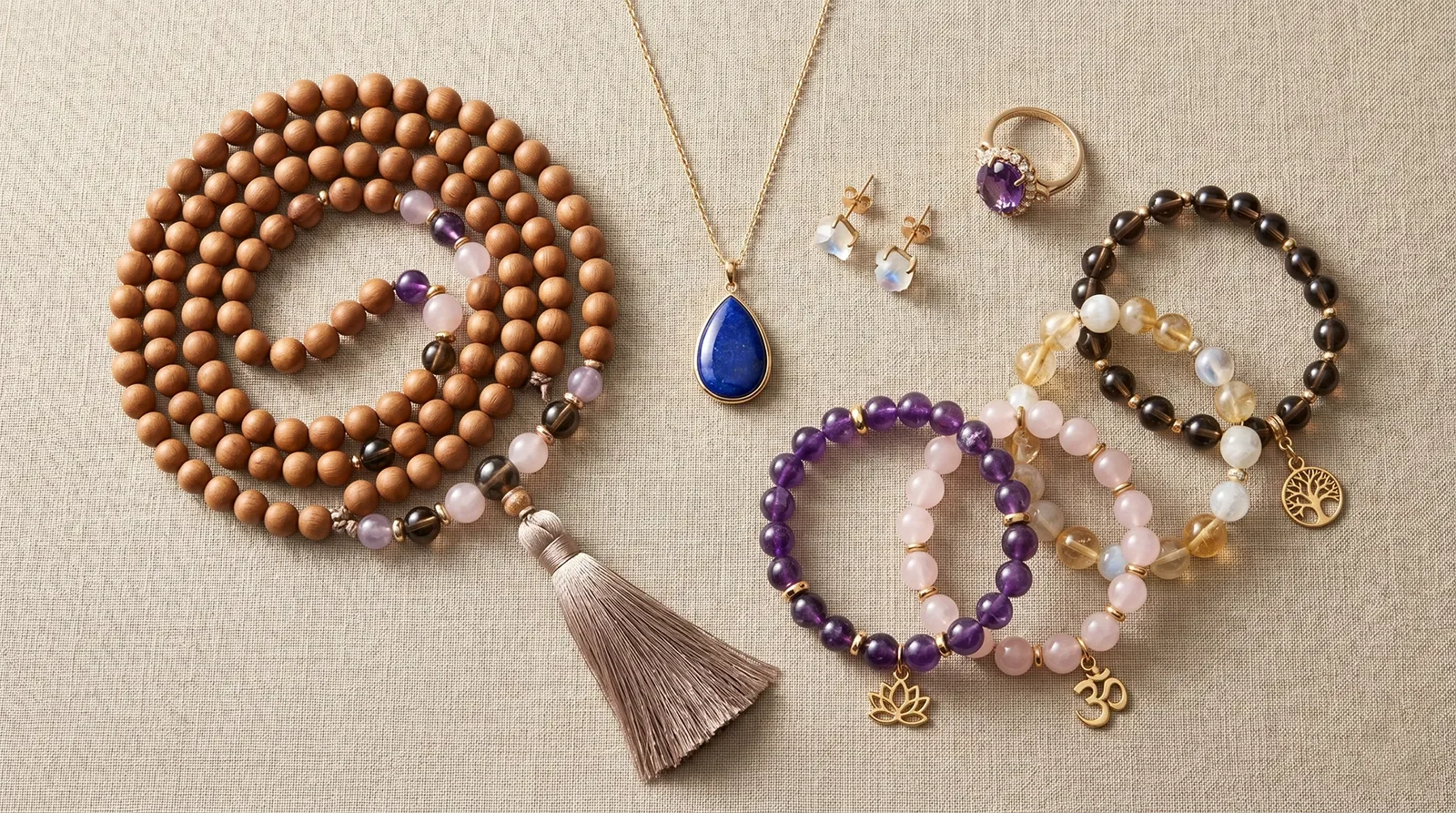
When people first explore healing jewelry, they often start by asking which stone to choose. That matters, but the format matters just as much. A bracelet feels different from a necklace. A ring feels different from a mala. A pendant may feel more personal, while a charm may feel lighter and easier to layer.
This guide explains the main types of healing jewelry so you can choose the form that fits your life first. If you are completely new to the topic, start with What Is Healing Jewelry?. If you are choosing your first piece, read How to Choose Your First Healing Jewelry Piece. If your main decision is wrist versus neck placement, go to Bracelet vs. Necklace Healing Jewelry.
Table of Contents
Quick Answer
The most common types of healing jewelry are bracelets, necklaces, pendants, rings, earrings, malas, charms, and talisman-style pieces. Bracelets are usually the easiest starting point because they are simple to wear and easy to notice throughout the day. Necklaces and pendants feel more centered and visible. Rings are subtle, tactile, and personal. Earrings are more style-forward and less touch-based. Malas are best understood as a distinct format connected with counting, reflection, or intentional practice. Charms and talismans are small, flexible pieces that can be layered or carried more discreetly.
The right format depends on five practical factors: comfort, visibility, durability, styling, and how you want to relate to the piece day to day.
Healing Jewelry Types at a Glance
| Jewelry Type | Best For | Main Advantage | What to Consider |
|---|---|---|---|
| Bracelets | Beginners, daily wear, visible reminders | Easy to wear, easy to see, simple to layer | More contact with desks, water, sleeves, and surfaces |
| Necklaces | People who prefer upper-body placement | Visible, stylish, and often less exposed than bracelets | Chain length, pendant weight, and neckline matter |
| Pendants | One focused stone, symbol, or centerpiece | Creates a clear focal point without needing a full beaded piece | Can feel too prominent if the size or chain is not right |
| Rings | Subtle daily symbolism and tactile wear | Small, personal, and easy to notice by touch | Fit, handwashing, typing, and daily hand use matter |
| Earrings | Style-focused wear and face-framing stones | Elegant, visible, and easy to match with outfits | Less useful if you want a piece you can touch or see often |
| Malas | Reflection, counting, meditation-inspired routines | Structured format with a distinct rhythm and purpose | Not the same as a casual bracelet or necklace |
| Charms and Talismans | Small symbolic pieces, layering, gifts | Flexible, lightweight, and easy to personalize | Meaning varies widely; keep expectations grounded |
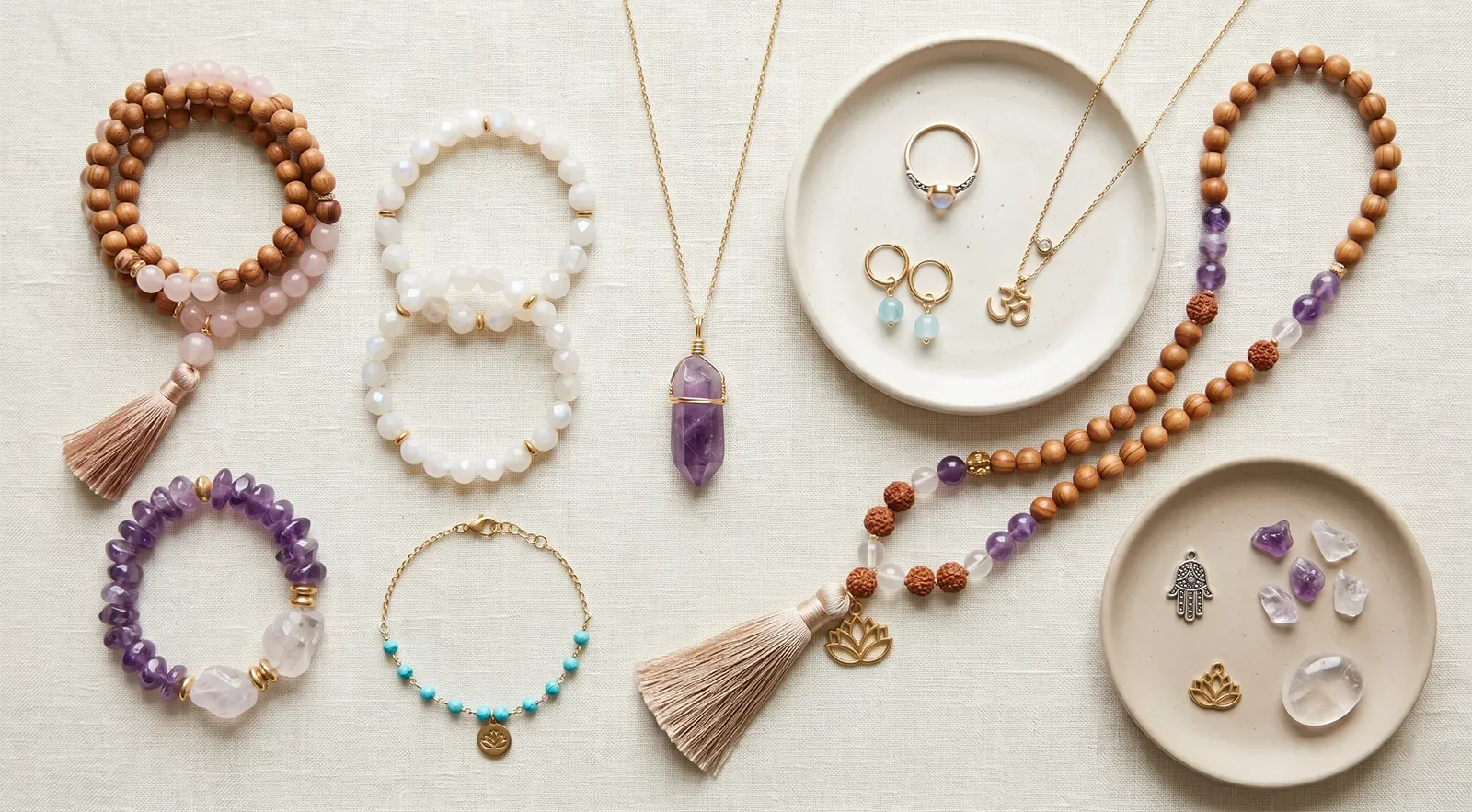
Bracelets
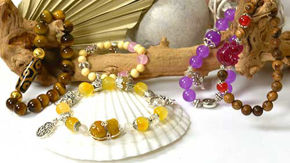
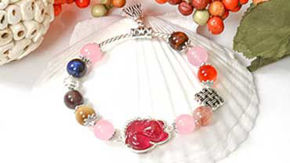
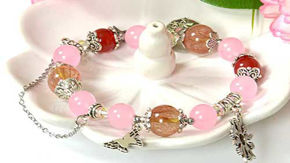
Bracelets are one of the most popular forms of healing jewelry because they are easy to start with. They do not require much styling knowledge, they fit into casual outfits, and they are visible enough to feel present throughout the day.
A bracelet also works well as a simple reminder piece. Because it sits on the wrist, you may notice it while typing, driving, writing, working, or moving through your day. For many people, that visibility is part of the appeal. The bracelet becomes less about dramatic belief and more about a steady personal cue.
Beaded bracelets are especially common in healing jewelry because they can feature a single stone, a color theme, or a mix of stones associated with a certain intention. For example, some people choose amethyst for a calm visual feel, rose quartz for softness, black tourmaline for grounding symbolism, or clear quartz for a clean, minimal look.
The main downside is friction. Bracelets touch more surfaces than necklaces or earrings. They may brush against desks, sleeves, countertops, sinks, and bags. If you work with your hands, wash your hands often, or dislike anything on your wrist, a bracelet may not be the most comfortable first choice.
Choose a bracelet if you want something easy, visible, and wearable in daily life. For a direct comparison between wrist and neck placement, read Bracelet vs. Necklace Healing Jewelry.
Necklaces
Necklaces are a strong choice for people who want their healing jewelry to feel more centered, styled, or close to the upper body. Compared with bracelets, necklaces usually experience less contact with desks, water, and hand movement. They can feel more protected, especially when worn under clothing.
A necklace can be subtle or prominent depending on chain length, stone size, and placement. A short chain may feel more visible and decorative. A longer chain may feel more relaxed or personal. Some people prefer necklaces because they do not interfere with typing, cooking, cleaning, or hand movement.
Necklaces are also easier to build into an outfit. They can sit above a simple shirt, layer with fine chains, or become one clear focal point. This makes them especially useful for people who want symbolic jewelry without wearing a full beaded bracelet.
The main practical issue is fit around the neckline. A necklace that looks beautiful but feels too tight, too heavy, or awkward with your clothing may not become part of your routine. Chain quality also matters because the chain carries the piece, not just the stone.
Choose a necklace if you want a more styled, centered, and less wrist-dependent format.
Pendants
A pendant is a focused piece that hangs from a chain. While necklaces and pendants often overlap, it helps to think of a pendant as the symbolic centerpiece and the chain as the wearable structure.
Pendants are useful when you want one clear stone, symbol, or shape rather than a full strand of beads. A pendant can feel more personal than a general necklace because the eye goes directly to the chosen stone or symbol. This makes pendants popular for people who want a single meaningful piece rather than multiple stacked items.
Pendants can also be easier to style than larger beaded pieces. A polished stone pendant, small crystal point, carved symbol, or simple metal-and-stone design can work with casual clothing, office outfits, or gift-ready jewelry.
The main thing to watch is scale. A pendant that is too large may feel heavy or too bold. A pendant that is too small may disappear against certain outfits. The chain length also changes the feeling of the piece. A pendant worn near the collarbone feels different from one worn lower on the chest.
Choose a pendant if you want one intentional focal point that is easier to style than a full beaded necklace.
Rings
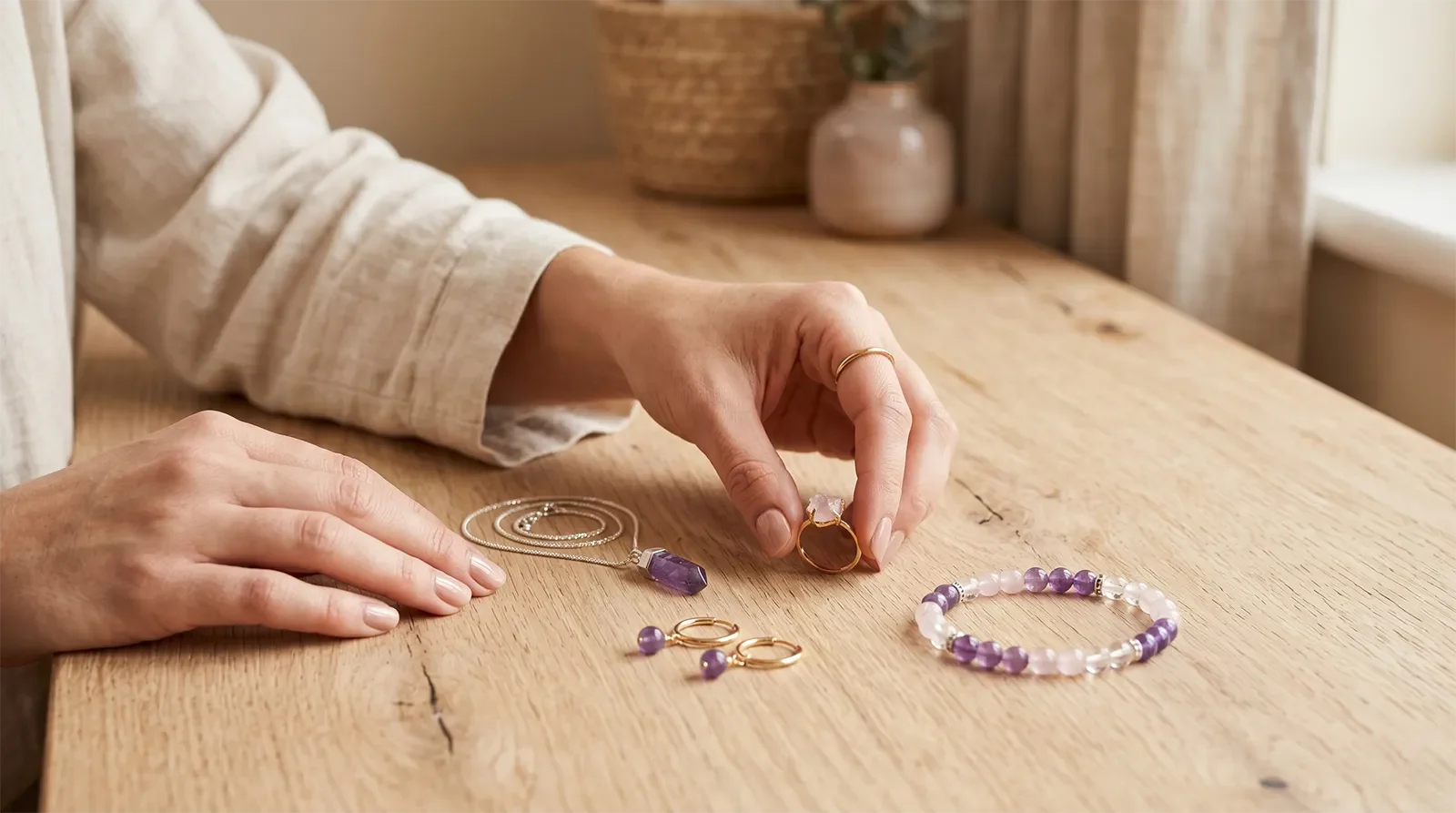
Rings are compact, tactile, and personal. They do not cover much visual space, but they can feel highly present because they are worn on the hand. For some people, that makes rings one of the most intimate forms of healing jewelry.
A ring can be a small reminder piece that you notice through touch rather than through constant visual display. You may turn it gently, notice its texture, or feel its presence while writing, working, or moving your hands. This makes rings appealing for people who want something symbolic but not overly visible.
Rings also work well for minimalist style. A single stone ring, signet-style ring, or simple band with symbolic detail can feel polished without looking too spiritual, decorative, or layered.
The practical side matters a lot. Finger size can change slightly throughout the day. Rings may feel tight in warm weather or loose in cooler conditions. They also interact with handwashing, lotion, typing, cooking, and manual work. If you remove jewelry often, a ring may be easier to lose than a necklace or bracelet.
Choose a ring if you want subtle, tactile symbolism and you already enjoy wearing rings comfortably.
Earrings
Earrings are more style-forward than many other healing jewelry formats. They frame the face, show clearly in conversation, and can make stones or symbols feel elegant rather than overtly spiritual.
For people who choose jewelry mainly by outfit, earrings can be one of the easiest formats to wear. Studs, small hoops, drops, and statement earrings all create different moods. A small pair may feel polished and everyday-friendly. A larger pair may feel expressive, artistic, or gift-worthy.
Earrings are less useful if your goal is to touch or see the piece throughout the day. Unlike a bracelet or ring, earrings are usually not part of your direct visual field. Their value is more about presentation, color near the face, and how they complete a look.
Comfort is also personal. Some people can wear earrings all day with no issue. Others are sensitive to weight, metal type, or post style. For healing jewelry earrings, the setting and metal matter as much as the stone.
Choose earrings if your priority is style, face-framing color, and a polished way to wear symbolic stones without adding wrist or neck jewelry.
Malas
Malas should be treated as their own category, not just another bracelet or necklace. A mala is traditionally associated with counting, repetition, reflection, or meditation-inspired use. Some malas are worn around the neck. Some are held. Some are wrapped. Some are kept as personal pieces rather than everyday fashion accessories.
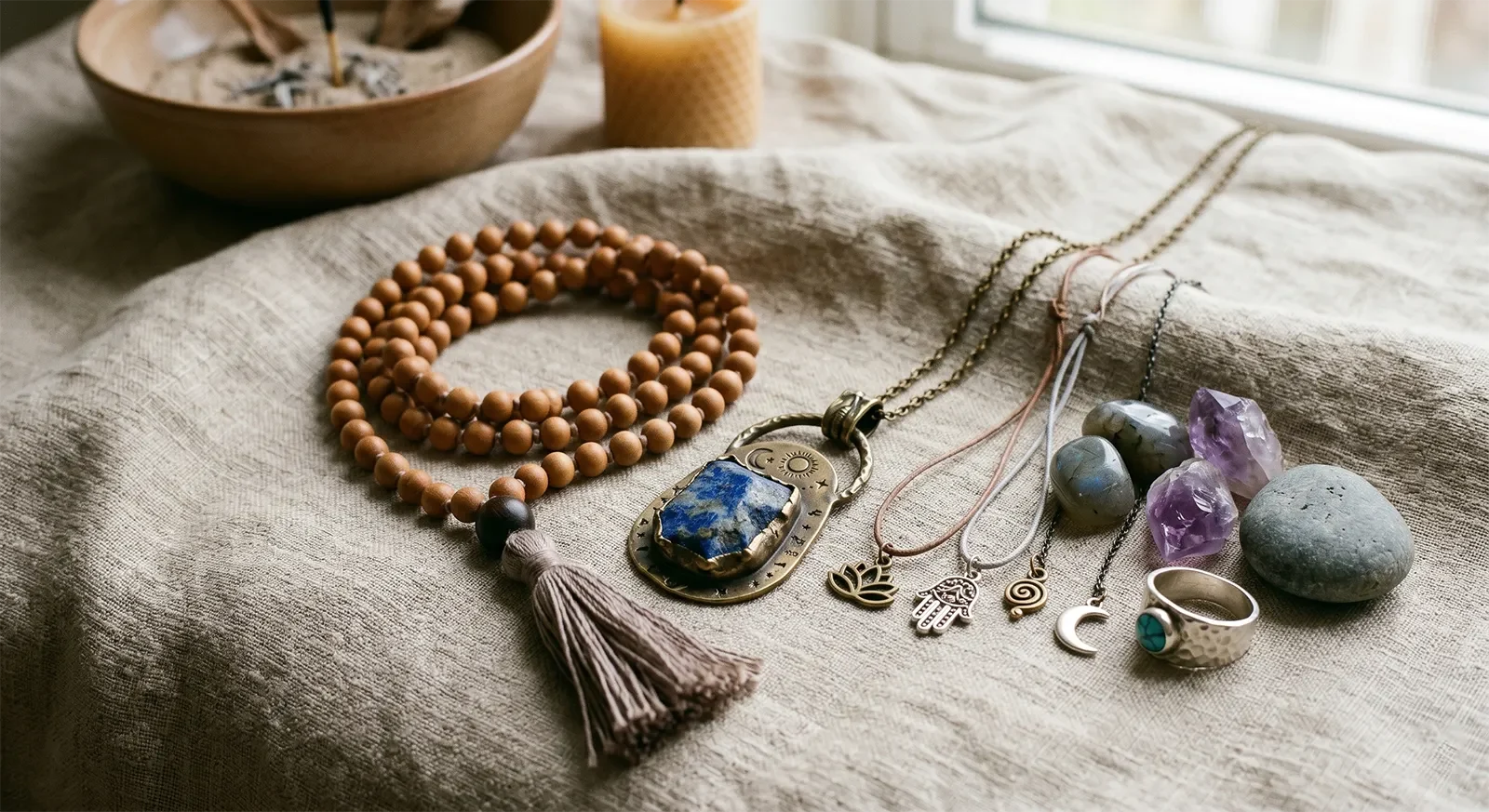
From a format perspective, malas are more structured than most casual jewelry. They often include a specific bead count, a guru bead, a tassel or finishing element, and a rhythm that changes how the piece is used. That structure is what separates a mala from a simple beaded necklace.
This does not mean a mala is automatically more powerful than other healing jewelry. It simply means the format carries a different history, use pattern, and level of intentionality. If you want a piece mainly for styling, a bracelet or pendant may be easier. If you want a piece connected with reflection or a counting practice, a mala may make more sense.
Because malas have cultural and spiritual associations, they should be approached with respect. Avoid treating them as a trend-only accessory if you are drawn to their deeper use. For a more focused explanation, read Mala Beads 101.
Charms and Talismans
Charms and talisman-style pieces are smaller, lighter, and more flexible than many standard jewelry formats. They may be worn on a chain, attached to a bracelet, added to a bag, kept as a small token, or layered with other pieces.
This category works well for people who want symbolic jewelry without wearing a large stone, full beaded bracelet, or prominent necklace. A charm can feel personal without becoming the center of the outfit. It can also be easier to gift because it is usually less size-sensitive than a ring or fitted bracelet.
Talisman language should be used carefully. Different cultures and traditions understand talismans in different ways. In a modern jewelry context, it is better to describe them as symbolic personal pieces rather than objects that guarantee protection, luck, healing, or spiritual outcomes.
Choose charms or talisman-style pieces if you want something small, portable, giftable, or easy to combine with jewelry you already wear.
How to Choose the Right Format
Start with comfort
The right healing jewelry format should feel natural on your body. If you dislike the feeling of something on your wrist, do not force yourself into a bracelet. If necklaces bother your neck, choose a ring, charm, or earrings instead. A piece that feels uncomfortable usually becomes a piece you stop wearing.
Decide how visible you want the piece to be
Some people want their jewelry to be seen. Others prefer something more private. Bracelets and necklaces are usually more noticeable. Rings are visible but understated. Earrings frame the face. Malas can be visible or personal depending on how they are used. Charms can be discreet or layered.
Think about your daily routine
Your work, clothing, movement, and habits should shape your choice. If you type all day, a bulky bracelet may bother you. If you wear uniforms or high necklines, a necklace may not show the way you want. If you wash your hands constantly, rings may require more attention. The best format is the one that survives your real routine.
Choose the format before choosing too many stones
It is easy to get pulled into long lists of stone meanings. Before doing that, decide what format you will actually wear. A stone you love in theory may not help much if it is set in a form you never reach for.
Use specific guides when your question becomes narrower
This page gives you the map. For more focused decisions, use the correct next guide. Compare wrist and neck placement in Bracelet vs. Necklace Healing Jewelry. Learn mala structure and use in Mala Beads 101. For a broader beginner buying path, read How to Choose Your First Healing Jewelry Piece.
Best Format by Lifestyle
If you want the easiest first piece
Start with a bracelet or simple pendant. These formats are easy to understand, easy to wear, and widely available in many stone styles.
If you want something private
Choose a pendant worn under clothing, a small charm, or a ring with a subtle stone. These pieces can feel personal without becoming the focus of your outfit.
If you want something visible and stylish
Choose a necklace, pendant, earrings, or a well-styled bracelet stack. These formats work best when you want the piece to contribute to your overall look.
If you want something tactile
Choose a bracelet, ring, or mala. These formats are easier to touch, notice, or hold during the day.
If you want a gift
Bracelets, pendants, and charms are usually safer than rings because they are less dependent on exact sizing. If the person already wears necklaces often, a pendant may feel more personal. If they like simple daily accessories, a bracelet may be easier.
If you want a practice-based piece
Consider a mala. It is better suited for counting, reflection, repetition, or meditation-inspired routines than a standard bracelet or pendant.
A Grounded Note on Meaning
Healing jewelry is often chosen for symbolic meaning, personal intention, beauty, comfort, or cultural association. Those meanings can be important, but they should stay grounded. Jewelry should not be presented as a guaranteed cure, medical treatment, source of protection, or promise of luck.
A more useful way to choose is to ask: Does this piece feel wearable? Does it match my style? Does the stone, color, or symbol mean something to me? Will I actually use it in daily life? Those questions lead to better choices than chasing the format that sounds the most powerful.
Frequently Asked Questions
What are the main types of healing jewelry?
The main types of healing jewelry include bracelets, necklaces, pendants, rings, earrings, malas, charms, and talisman-style pieces. Each format offers a different balance of comfort, visibility, styling, and personal use.
Which type of healing jewelry is best for beginners?
Bracelets and simple pendants are usually the easiest starting points. Bracelets are visible and easy to wear, while pendants feel focused and simple without requiring a full beaded piece.
Are malas the same as bracelets?
No. Malas are a distinct format with their own structure and use. Some malas can be worn, but they should not be treated as the same thing as a casual bracelet.
Is a necklace better than a bracelet for healing jewelry?
Neither is automatically better. A necklace may feel more centered and less exposed to daily friction. A bracelet may feel more visible and easier to notice throughout the day. For a direct comparison, read Bracelet vs. Necklace Healing Jewelry.
Are rings good for healing jewelry?
Rings can be a good option if you want something subtle, tactile, and personal. The main concern is comfort because rings are affected by sizing, handwashing, typing, and daily hand use.
What is the most discreet type of healing jewelry?
Small pendants, rings, charms, and subtle earrings are usually the most discreet options. They allow you to wear symbolic jewelry without making it the focus of your outfit.
What type is best for gifts?
Bracelets, pendants, and charms are often easier to gift than rings because they are less dependent on exact sizing. A pendant is a good choice for someone who already wears necklaces, while a bracelet works well for someone who likes easy daily accessories.
Should I choose the stone or the jewelry type first?
Choose the jewelry type first if you are buying for daily wear. Once you know whether you want a bracelet, necklace, ring, mala, or charm, it becomes easier to choose a stone that fits both your style and your routine.
Related Guides
- Bracelet vs. Necklace Healing Jewelry
- Mala Beads 101
- How to Choose Your First Healing Jewelry Piece
- How to Style Healing Jewelry for Everyday Outfits
- Chakra Bracelet Guide
Next step: If you understand the main formats but still are not sure what to buy first, continue with How to Choose Your First Healing Jewelry Piece. That guide moves from format comparison into a more practical first-purchase decision.