
Anti-feedback processing can help a karaoke system stay more stable, but it does not make feedback impossible. It works by detecting narrow frequency buildup and reducing those problem areas before they become obvious ringing or squealing.
Written by Toan Ho — Tittac editorial team.
Who this guide is for: Home karaoke users who see anti-feedback features on mixers, processors, digital amps, or DSP-based karaoke systems and want to understand what those features really do.
How this guide was prepared: This guide was written from a home-use perspective, focusing on how anti-feedback processing behaves in real karaoke systems and where its benefits and limits show up in everyday rooms.
“Anti-feedback” sounds like a promise that the system will simply stop squealing no matter what. That is why many home users expect it to solve feedback by itself. But in real karaoke use, feedback still depends on how the microphone, speaker, room, and system gain interact.
Anti-feedback is best understood as a system-control feature, not a magic shield. It listens for feedback-like behavior, reacts around certain frequency areas, and tries to reduce how easily that loop takes over. This article explains that concept in plain English, not as a product roundup or troubleshooting guide. For broader category context, browse our Karaoke Technical Guides.
Quick Answer: Anti-feedback processing detects the narrow frequency buildup that often leads to microphone feedback and tries to reduce it before or as it becomes noticeable. In many karaoke systems, this is done by applying a narrow cut, often called a notch, around the problem frequency. This can help the system feel more stable, especially when microphones and speakers are close enough to interact. But anti-feedback cannot fully overcome poor mic placement, too much gain, harsh room reflections, or an unstable setup. It reduces feedback risk; it does not remove the feedback loop itself.
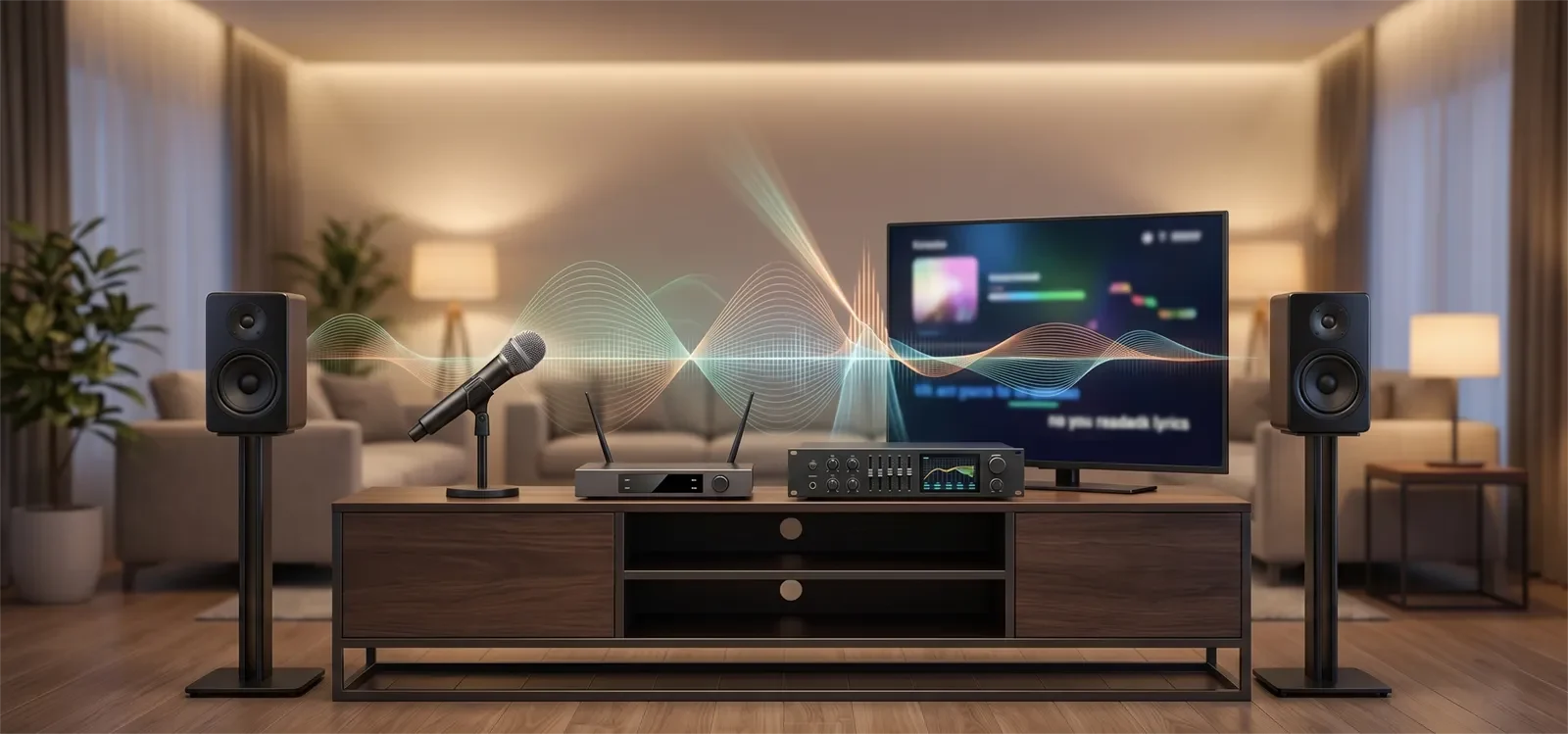
Table of Contents
What anti-feedback processing actually means
In plain English, anti-feedback processing is the system trying to notice when a certain frequency is starting to take off and then pushing that frequency down before it becomes a full squeal or ring.
In many karaoke systems, this is done by identifying a narrow problem area and applying a small cut there. That type of cut is often called a notch because it reduces a very specific part of the frequency range instead of changing the whole sound broadly.
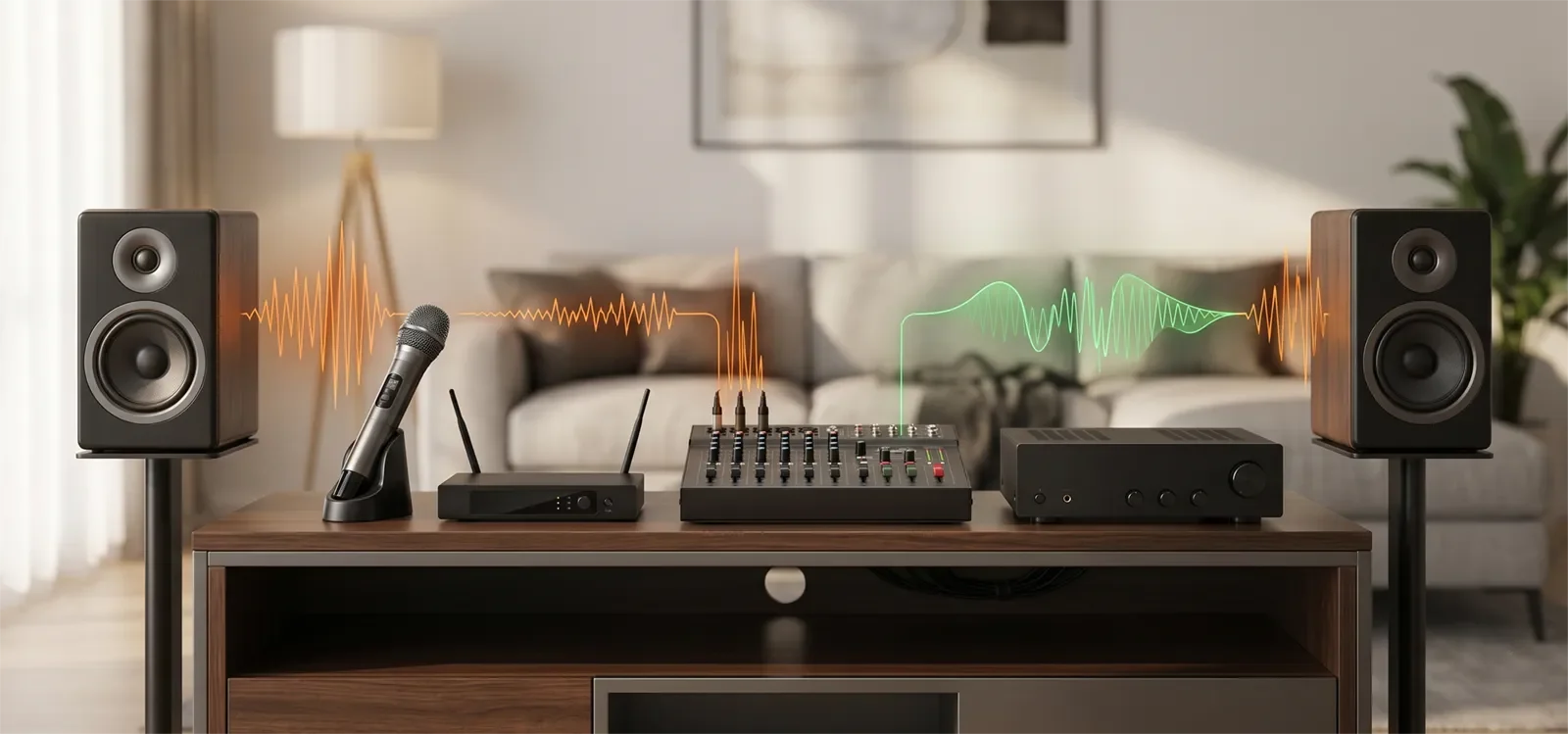
The important point is that anti-feedback processing is not rewriting the physical reality of the room. The microphone is still hearing the speaker. The room is still reflecting sound. The gain structure still matters. The processor is only trying to keep one part of that loop from growing too quickly.
How anti-feedback processing detects problem frequencies
Feedback usually starts when one frequency area begins building faster than the rest of the sound. Instead of the vocal staying natural, a narrow tone starts to ring, sharpen, or rise until it becomes uncomfortable.
Anti-feedback processing looks for that kind of narrow, unstable buildup. Once it identifies the problem area, it can reduce that frequency so the loop has less energy to keep growing.
Some systems behave more reactively, meaning they respond after the problem starts. Others are more preventive, trying to create a little extra margin before obvious feedback takes over. Either way, the basic idea is the same: detect likely feedback behavior and reduce the frequency area that is causing trouble.
This is why anti-feedback is different from a broad tone control. It is not the same as turning down treble or lowering the entire microphone volume. It is a more targeted control layer aimed at the part of the sound that is becoming unstable.
What it changes in system behavior
When anti-feedback processing is working well, the system can feel less touchy. A microphone may tolerate slightly more level before obvious ringing appears. Small changes in position may feel less risky. The overall karaoke setup may seem calmer in moments when feedback would otherwise build too quickly.
That is useful, but it does not change the basic mechanism behind feedback. Feedback still comes from the loop between microphone, speaker, room, and reinforcement. That is why Why Karaoke Feedback Happens in the First Place is the foundation article for this topic.
Anti-feedback also depends on how healthy the signal is before processing. If the system is already pushed too hard, the processor may have to work more aggressively than it should. When that happens, the vocal can start to feel less open or less natural.
That is why What Gain Structure Means in Home Karaoke connects directly to this topic. Better level staging gives anti-feedback processing a more stable place to operate.
What users hear at home
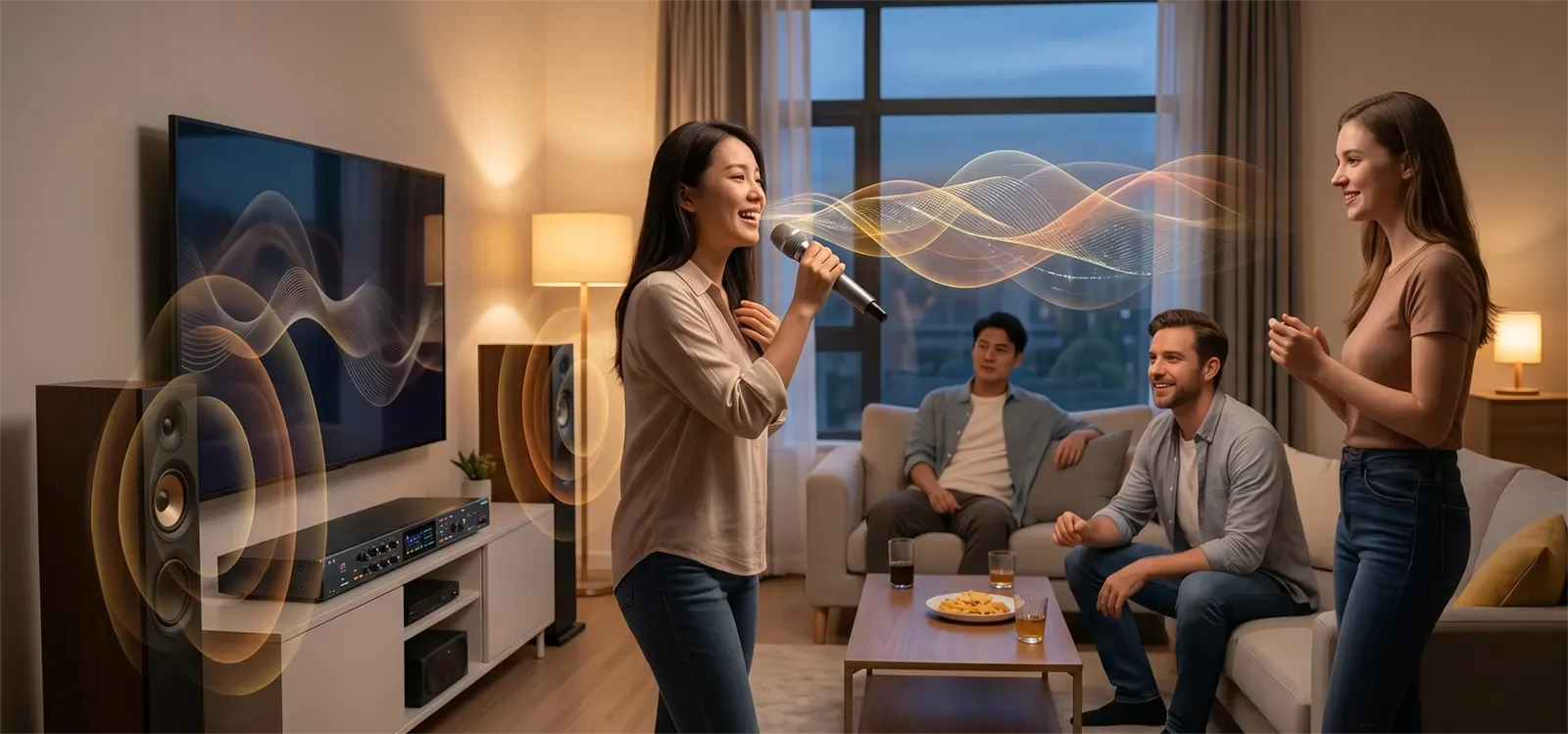
At home, good anti-feedback processing is often noticed by what does not happen. The mic feels easier to use. The system feels less ready to ring at the smallest mistake. Strong singing moments may stay more controlled instead of turning sharp or unstable.
When the system is already reasonably balanced, anti-feedback can act like a quiet safety layer. It may not call attention to itself. It simply gives the setup a little more margin before feedback becomes obvious.
But there can be side effects. Because anti-feedback often works by cutting narrow frequency areas, the vocal can sometimes feel slightly less open, less natural, or thinner if the processing has to work too hard. The more the system has to fight poor placement, high gain, or a reflective room, the more likely users are to notice that trade-off.
That is why anti-feedback can be helpful without being invisible. In a stable home system, it may work lightly in the background. In an unstable system, it may still reduce some problems, but the sound may reveal that the processor is doing too much.
Common misunderstandings
The biggest misunderstanding is thinking anti-feedback means the system cannot feed back anymore. It can. Processing can reduce risk and buy stability, but it does not cancel the underlying loop. If the microphone is pointed badly, the speakers are interacting too directly, or the room is highly reflective, feedback conditions still exist.
The second misunderstanding is assuming anti-feedback has no tonal cost. Sometimes it works gently enough that users barely notice it. But when it has to step in often or aggressively, the vocal may lose some natural character because certain frequency areas are being pushed down repeatedly.
The third misunderstanding is confusing anti-feedback with good setup behavior. It is not the same thing. Anti-feedback is a control layer inside the system. It is not a replacement for healthy placement, sensible levels, and realistic room expectations.
The better way to think about it is simple: anti-feedback improves margin. It should not be asked to rescue a system that is being pushed into feedback by poor conditions.
The practical rule
The practical rule is simple: think of anti-feedback as a helper, not a cure.
Ask whether it is giving the system a little more stability or whether it is being forced to work so hard that the vocal starts losing natural tone. If it is only working lightly, that usually means the setup is already in a healthier range. If it is constantly fighting feedback, the real problem is probably somewhere else in the chain.
For home karaoke, the goal is not to lean on processing as the main answer. The goal is to let processing support a system that is already behaving reasonably well.
Anti-feedback works best when it adds margin, not when it is being asked to overcome bad placement, excessive gain, or a room that keeps sending sound back into the microphone.
Conclusion
Anti-feedback processing helps detect and reduce the narrow frequency buildup that often leads to karaoke feedback. It can make a home system more stable and more forgiving, especially when microphones and speakers are operating close to their comfort limits.
The practical takeaway is clear: anti-feedback can help, but it does not replace good system behavior. In home karaoke, microphone position, speaker placement, room interaction, and gain structure still decide how easy the system is to control. Processing works best as support, not as a substitute for those fundamentals.
Frequently Asked Questions
Does anti-feedback processing completely stop karaoke feedback?
No. It can reduce the chance of feedback building up and may make the system more stable, but it does not remove the physical loop between microphone, speaker, and room. If the setup conditions are poor enough, feedback can still happen even when anti-feedback features are turned on.
What is a notch in anti-feedback processing?
A notch is a very narrow cut in a specific frequency area. Anti-feedback systems often use notches to reduce the exact part of the sound that is starting to ring or build too aggressively. This targets the problem more precisely than broad tone changes.
Why can anti-feedback make vocals sound a little different?
Because it often works by cutting narrow frequency areas that are becoming unstable. If the processor has to step in often or aggressively, the vocal can lose a little openness or natural character. In a calmer system, those tonal side effects are usually smaller.
Is anti-feedback still useful if placement and gain are already good?
Yes. That is often where it works best. In a stable system, anti-feedback can act as a light safety layer and provide a little extra margin before ringing begins.
Should I rely on anti-feedback instead of adjusting the room or microphone position?
No. Anti-feedback should support good system behavior, not replace it. If the room, speaker position, microphone angle, or gain level is creating strong feedback conditions, those basics still need attention.
Want to keep going into the broader processing side of home karaoke systems?