
DSP gets mentioned in a lot of home karaoke gear, but many people still are not sure what it actually changes. Some assume it is just a marketing word for “better sound.” Others think it is something only advanced users need. In real home use, DSP matters less as a buzzword and more as a way the system shapes behavior before you hear the final result.
That is why DSP should be understood as a control-and-behavior concept, not just a feature list. In a home karaoke system, it can affect how vocals sit in the mix, how bass and treble behave, how speakers divide the workload, and how the system reacts when microphones and music are active together. For broader plain-English context around how technical ideas affect home singing, see our Karaoke Technical Guides.
Written by Toan Ho — Tittac editorial team.
Who this guide is for: Home users who hear DSP mentioned in karaoke gear and want to understand what it actually changes in daily use.
How this guide was prepared: This guide was written by focusing on how digital processing affects control, stability, tuning behavior, and real listening outcomes in home karaoke systems.
Quick Answer: DSP stands for digital signal processing. In home karaoke, it means the system can shape and manage the audio signal in more precise ways before the sound reaches the speakers. That can affect EQ, crossover behavior, vocal effects, feedback control, delay, and system protection. The practical value of DSP is not that it sounds “digital.” It is that it can make the system easier to control, more stable with microphones, and better matched to the room. For most home users, DSP matters when it improves clarity, balance, and reliability. If it only adds confusing options without helping the real listening result, then the feature matters much less than people assume.
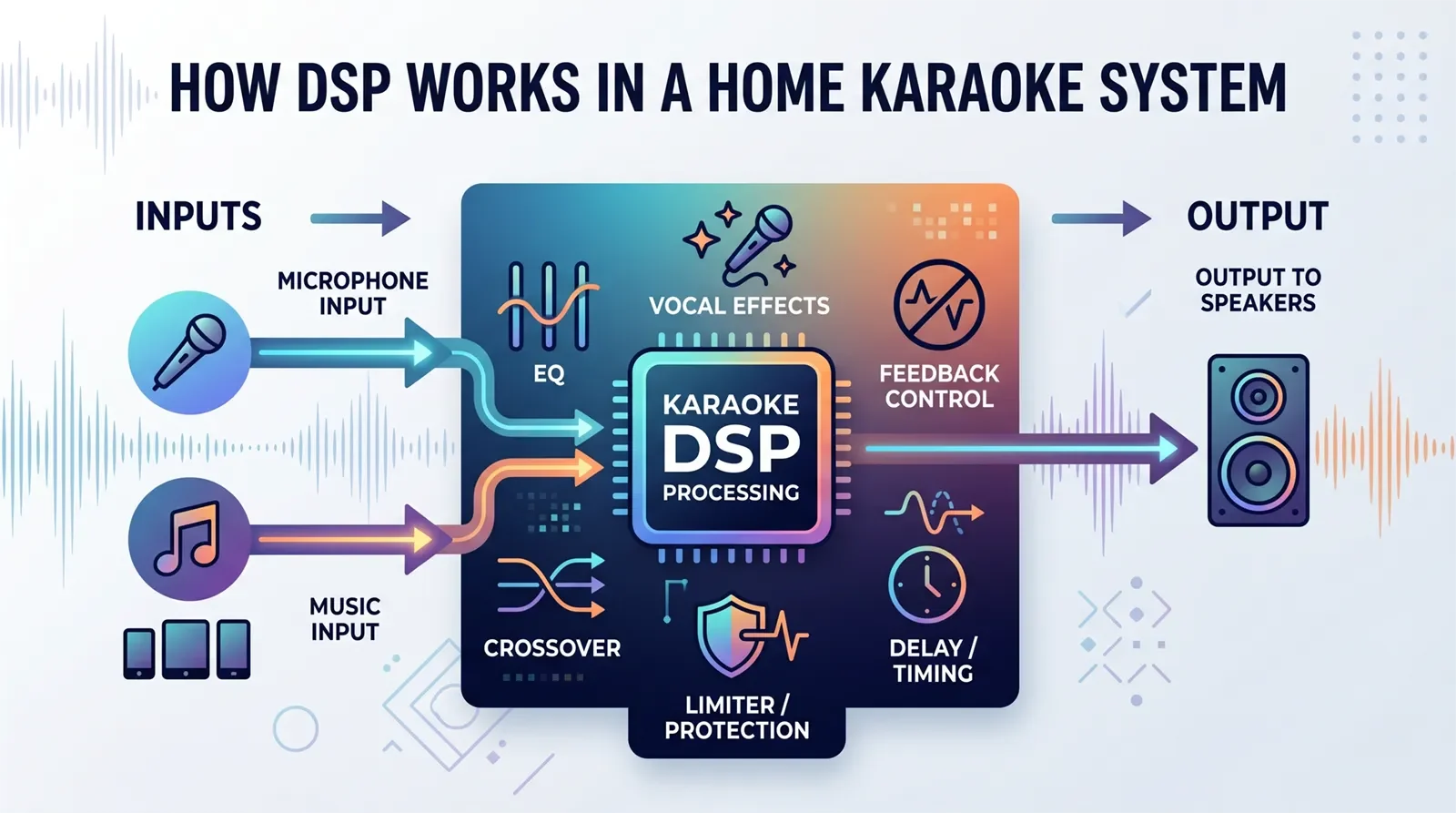
Table of Contents
What this actually means in home karaoke
DSP means the system is using digital processing to shape how the audio behaves. In plain English, that means the system is not just passing sound through simple fixed controls. It can make more deliberate decisions about tone, frequency balance, effect behavior, speaker handoff, and system protection.
That matters in karaoke because karaoke is not just music playback. The system has to handle backing tracks, live microphones, room reflections, and vocal effects at the same time. Once those things start interacting, simple controls alone often do not explain why the system feels clear one moment and unstable the next. DSP exists to manage more of that behavior inside the signal chain.
So DSP is not one single sound control. It is a category of processing tools. EQ, crossover behavior, delay alignment, feedback control, limiters, and preset tuning can all be parts of DSP depending on how the system is designed.
What it changes in system behavior
The biggest thing DSP changes is how predictable the system can become. Instead of relying only on a few broad front-panel controls, a DSP-based system can shape the signal more precisely before it reaches the speakers. That can help the system feel cleaner, more controlled, and easier to manage across different songs and singers.
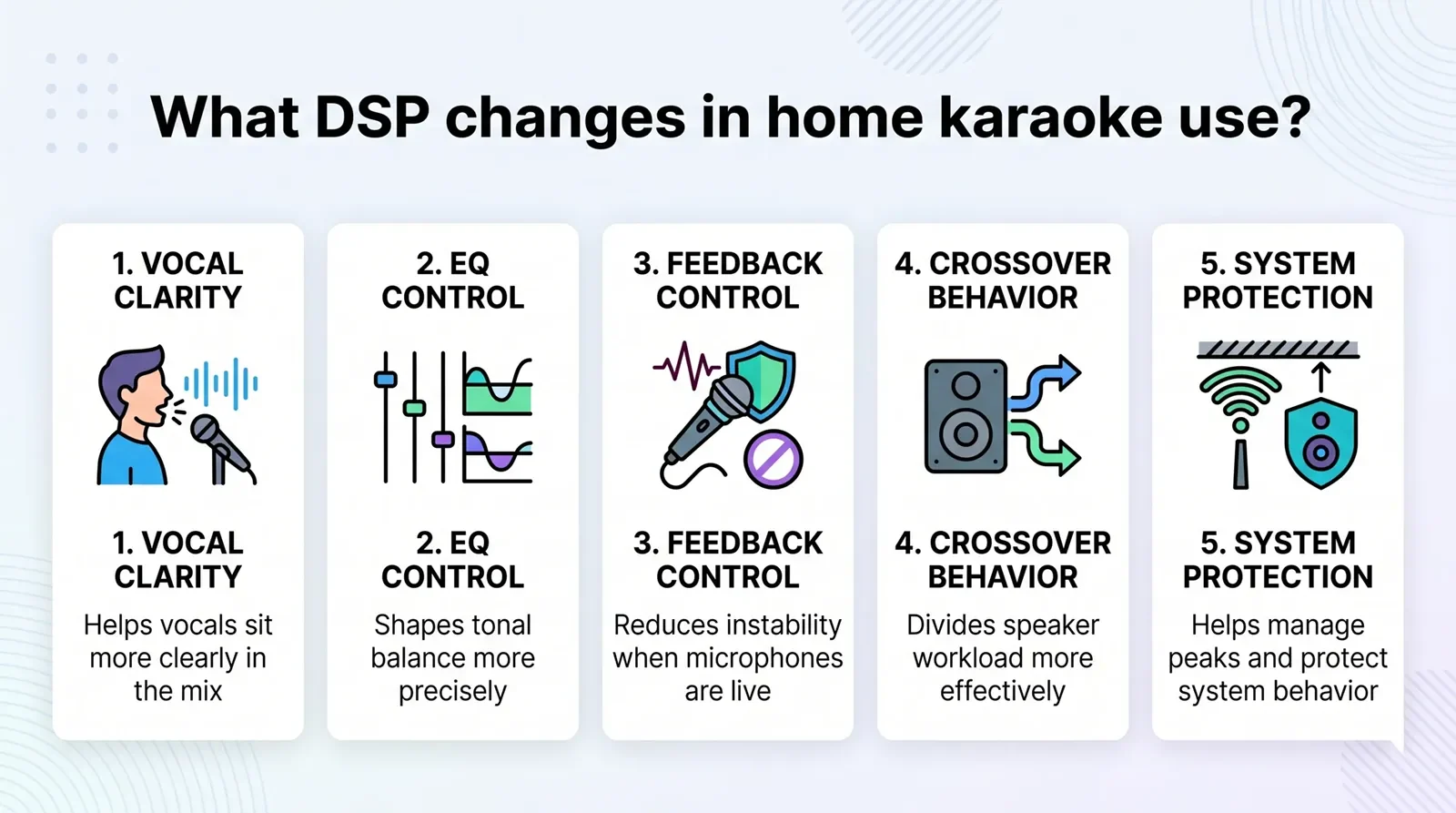
For example, DSP can help shape tonal balance so vocals are easier to follow without making the whole system sound sharp. It can also help divide frequency duties more sensibly across speaker sections. That is why crossover behavior often becomes part of the DSP conversation. If you want the more focused explanation of that one function, see What a Crossover Does in a Karaoke System.
DSP can also change how the system responds when microphones are live. Instead of waiting until the system is already unstable, processing can help reduce certain feedback tendencies, keep effects more controlled, and stop the sound from becoming overly harsh when people push too far. That is where the system starts behaving more like a managed whole instead of a set of separate knobs.
What you hear in real use
At home, DSP usually shows up as behavior more than as a dramatic “sound signature.” When it is doing its job well, the system often feels easier. Vocals sit more naturally in the mix. Effects feel more controlled. The room becomes slightly less difficult to work with. The setup may also feel more repeatable from one session to the next.
That does not mean DSP automatically makes the sound more exciting. In many cases, the real improvement is that the system feels less messy. A better-managed vocal can be easier to hear. Bass may feel more controlled instead of spreading too loosely into the room. Speaker sections may sound more connected instead of pulling in different directions.
DSP can also help with feedback-related behavior, but that only matters if the processing is actually helping the system stay usable without making the vocal sound unnatural. For the deeper explanation of that one topic, see What Anti-Feedback Processing Actually Does.
What people often misunderstand
The biggest misunderstanding is thinking DSP is a magic sound upgrade by itself. It is not. DSP only matters when it improves how the system behaves in real home use. If the processing is poorly tuned, too limited, or too confusing to use well, then “having DSP” does not automatically create a better karaoke experience.
Another mistake is assuming DSP replaces basic controls. It does not. You still need sensible control of music level, mic level, effects, and overall balance. DSP usually works underneath those controls, behind them, or around them. In a good system, it makes those normal controls behave more usefully and more predictably.
People also overreact to the word “digital,” as if DSP means the sound will automatically become artificial or clinical. That is the wrong way to think about it. DSP is not about adding a futuristic flavor. It is about managing the signal more deliberately so the system behaves better.
The simplest practical rule to remember
If you want one practical rule, use this: DSP matters when it improves control, not when it only increases complexity. That keeps the idea grounded in home use instead of in feature language.
In practical terms, that means asking better questions. Does the system keep vocals clearer? Does it help the room feel less troublesome? Does it make bass, effects, and speaker behavior more stable? Does it reduce the amount of guesswork needed to get usable sound at home? Those are the signs that DSP is doing something valuable.
So the simplest way to judge DSP is not by how advanced it sounds on a product page. Judge it by whether the system feels easier to sing through, easier to balance, and easier to trust in normal home use.
Conclusion
DSP in home karaoke is not a mystery feature and it is not a shortcut for “premium sound.” It is a way the system digitally manages tone, crossover behavior, effects, timing, feedback-related control, and protection so the whole setup behaves more intelligently.
The practical takeaway is simple: DSP is worth paying attention to when it makes the system clearer, steadier, and easier to manage in real home rooms. When understood that way, DSP stops being hype and becomes a useful explanation for why some karaoke systems feel more controlled than others.
Frequently Asked Questions
Does DSP always make a karaoke system sound better?
No. DSP only helps when it improves the actual behavior of the system. A well-implemented DSP setup can make vocals clearer and the system more stable, but a confusing or poorly tuned implementation may add complexity without creating a better home karaoke experience.
Is DSP only useful for advanced users?
No. Many home users benefit from DSP even if they never touch deep settings directly. If the processing helps keep the system balanced, reduces feedback problems, or makes presets more usable, then DSP is already doing something useful behind the scenes.
What home karaoke problems can DSP help with?
It can help with tonal balance, vocal clarity, crossover behavior, effect control, system protection, and some forms of feedback-related instability. The important part is that DSP works best when those tools support easier real-world use rather than just adding more technical options.
Is DSP the same thing as EQ?
No. EQ can be one part of DSP, but DSP is broader than EQ alone. It can also include crossover control, delay, limiter behavior, preset tuning, anti-feedback processing, and other tools that shape how the full karaoke system behaves.
Need help understanding the right setup for your home? DSP becomes easier to judge when you understand one of its most practical uses first.
The next helpful step is the guide that explains what anti-feedback processing actually does in real karaoke use.
continue with anti-feedback processing here