
Some karaoke systems sound thin at low volume because the sound loses body, warmth, and perceived bass support before it loses clarity. The system may still be working normally, but at quieter home levels the vocals and upper details can feel exposed while the music feels less grounded.
Written by Toan Ho — Tittac editorial team.
Who this guide is for: Home karaoke users who want better sound at normal household volume, not only when the system is turned up loud.
How this guide was prepared: This guide was written by focusing on how tonal balance, perceived fullness, vocal support, and real home listening levels affect karaoke sound.
Many home karaoke users notice the same frustrating pattern. The system sounds fuller, smoother, and more enjoyable once the volume is raised a little, but at lower volume it feels thin, light, or unfinished. The vocals may still be clear, yet the whole presentation feels less warm and less satisfying.
That matters because karaoke at home is not always a loud party situation. People sing in living rooms, family rooms, apartments, and late-night settings where moderate volume matters just as much as peak output. In broader technical terms, low-volume thinness is part of how a system’s tonal balance and perceived energy change with listening level. For the wider foundation, see our in-depth technical analysis of karaoke systems.

Quick Answer
Some karaoke systems sound thin at low volume because our hearing does not perceive bass, warmth, and fullness as strongly when playback gets quieter. At lower volume, vocals and upper details may remain easy to hear, while bass weight and lower-mid body feel reduced. That makes the system sound lighter, flatter, or less emotionally complete even if nothing is broken. In home karaoke, this matters because a system that feels balanced when turned up may feel underweight at the quieter levels people actually use every day.
Table of Contents
What “thin at low volume” actually means
When people say a karaoke system sounds thin at low volume, they usually do not mean the system is broken. They mean the sound feels less substantial. The music has less body, the lower range feels weaker, and the overall presentation loses weight.
Instead of sounding rounded and connected, the system may feel like upper details are sitting above a weaker foundation. The vocal is still there. The melody is still there. But the sound does not feel supported in the same way it does when the volume is raised.
This is why low-volume thinness can be confusing. At louder levels, the same system may sound exciting and complete. At quieter levels, the balance has to hold together without extra physical energy from the room. If it does not, listeners often describe the result as thin, light, or flat.
Why volume changes perceived balance
A karaoke system does not always feel tonally identical at every volume level. When the level drops, listeners often perceive less bass weight and less lower-body fullness. At the same time, vocals, consonants, and upper details may remain more noticeable.
That shift changes the whole feeling of the system. A song that feels grounded at moderate-loud volume may feel lighter at polite family-room volume. The rhythm may lose impact. The backing track may lose warmth. The voice may feel more exposed because the musical foundation underneath it feels smaller.
This is not just a spec-sheet issue. Level terms can describe part of what is happening, but they do not fully explain the listening experience. If you want the broader vocabulary around level measurement, see dB vs. dBFS vs. SPL vs. LUFS explained. This guide stays focused on what low-volume thinness feels like in a real home karaoke room.
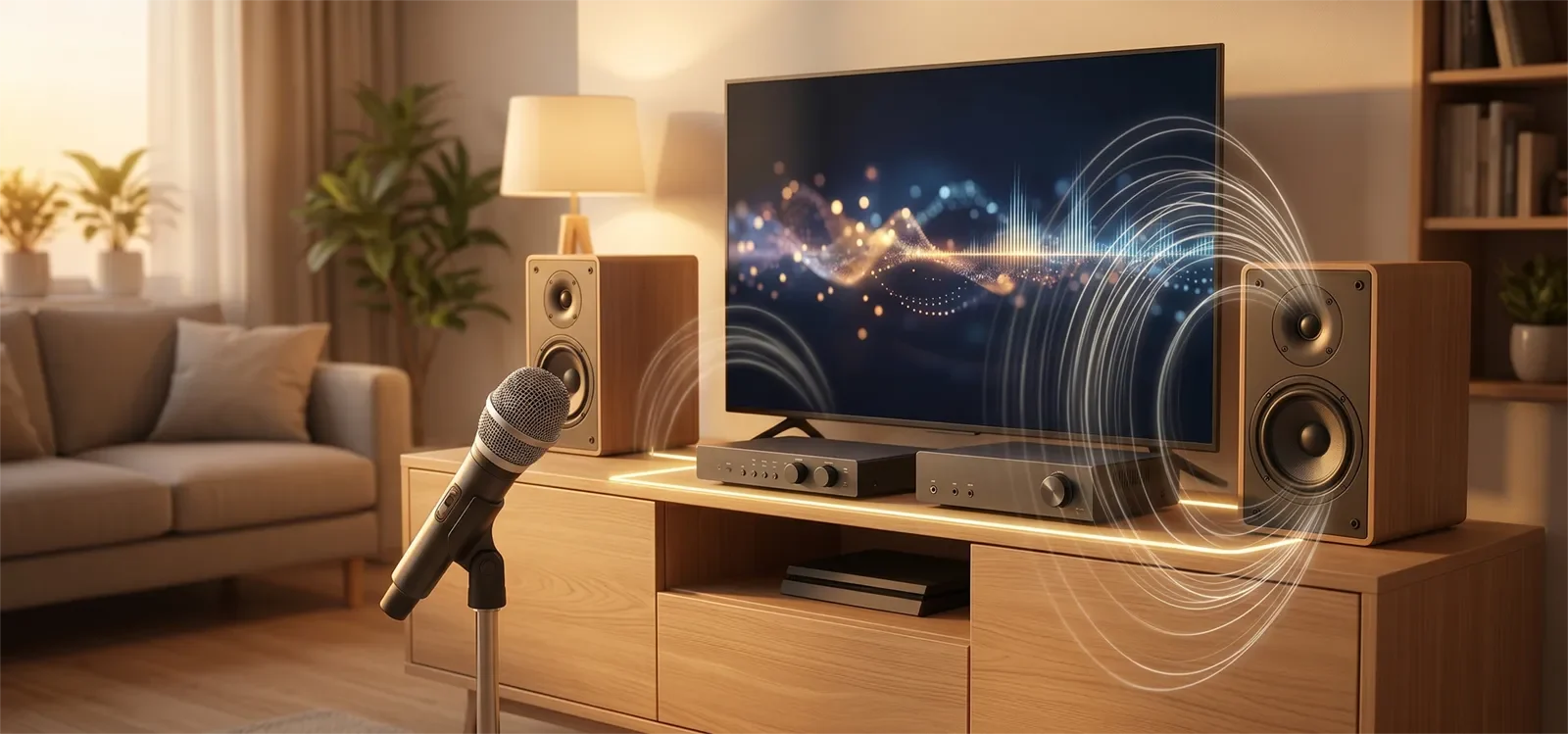
What users actually hear at home
At home, users usually hear low-volume thinness as a loss of fullness first. The backing track may feel less anchored. Kick drum, bass lines, and the body of the music may seem reduced, even though the vocal and upper parts are still easy to hear.
Vocals can also feel less supported. Instead of sitting naturally inside the music, the singer’s voice may feel like it is sitting on top of a thinner background. That can make singing feel less comfortable, especially during softer sessions where users want warmth and balance rather than loud excitement.
Another common clue is that the system seems to improve too much when turned up slightly. Once the volume rises, the music suddenly feels fuller, more connected, and more convincing. That does not mean louder is always better. It often means the system only reaches its most satisfying balance after enough level brings back the sense of body and support.
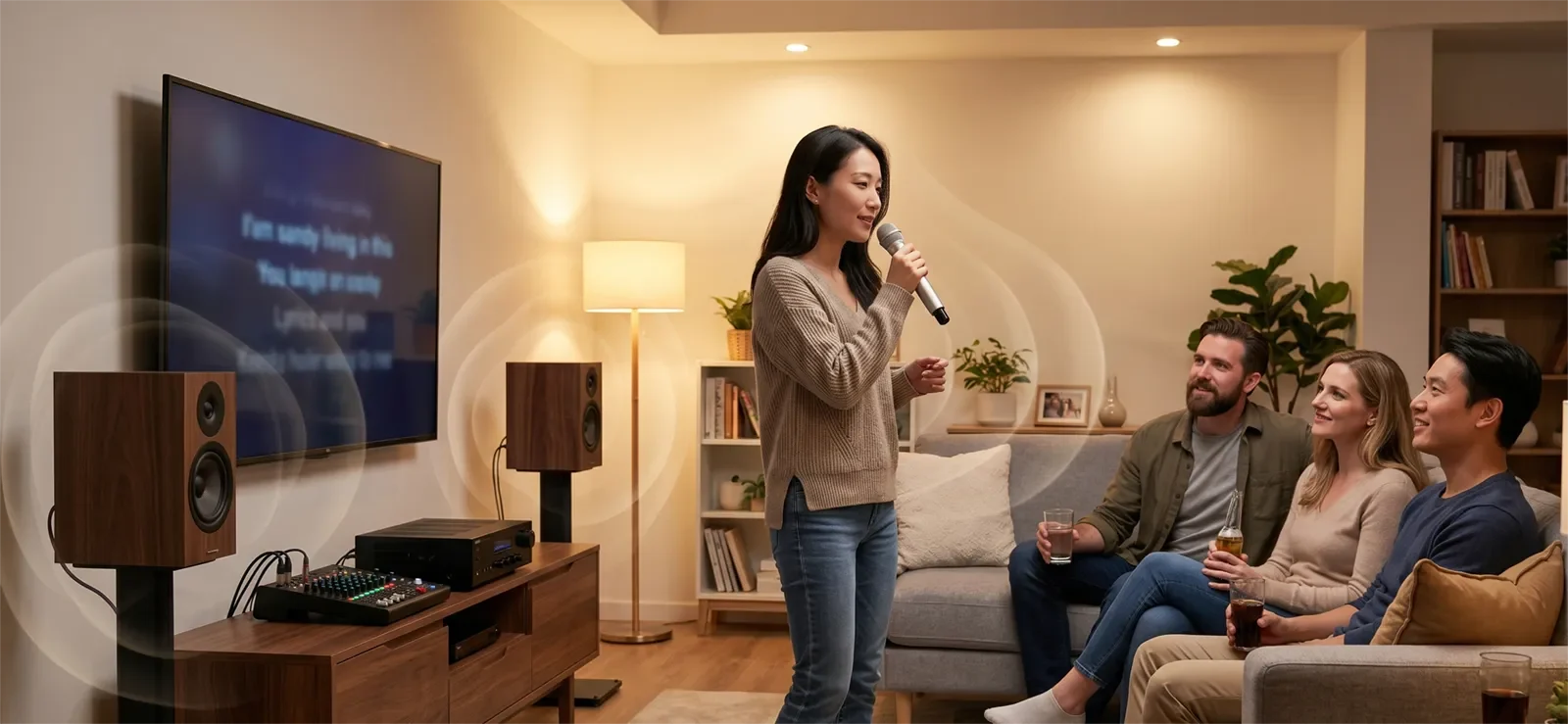
Common causes of thin karaoke sound at low volume
Thin sound at low volume usually comes from perceived balance, not one single broken part.
Reduced bass perception is one major reason. At quieter levels, bass and lower-body energy may not feel as present, so the system seems lighter even when the bass setting has not changed.
Weak lower-mid support can also make the sound feel underweight. The lower-midrange helps vocals and music feel grounded. If that area feels too light at low volume, the system may sound clean but not full.
Speaker voicing matters too. Some speakers sound more lively or complete only after they are pushed a little. At quiet levels, their tonal character may feel less filled in.
Room size and listening distance can make the issue more noticeable. In a larger or more open space, low-volume playback may not energize the room enough for the sound to feel complete.
Overly cautious volume settings can also contribute. If music and mic levels are both kept too low, the system may never reach the point where vocal support, rhythm, and musical body feel connected.
What people often misunderstand
A common mistake is assuming thin sound at low volume means the system simply needs more bass. Bass perception is part of the issue, but low-volume thinness is usually about the whole balance feeling less complete. Adding too much bass can create a different problem once the volume comes back up.
This is why the solution is not always to chase heaviness. There is a separate issue where too much low-end can make karaoke harder to sing through, which is explained in why more bass can make karaoke harder to sing. The goal is not more bass at any cost. The goal is balanced fullness at the volume you actually use.
Another misunderstanding is judging a system only by loud demo conditions. A system that feels exciting in a showroom or party setting may not feel equally satisfying in a quieter family room. That does not automatically mean the system is bad. It means low-volume listening reveals whether the sound can stay full without relying on extra output.
A practical listening rule
A useful rule is this: if the system sounds balanced only after you raise it beyond your normal home-use level, the issue is not just “not enough volume.” The issue is that the system’s tonal balance becomes more convincing at one level than another.
Listen for whether the music still feels grounded when played quietly. Does the backing track have enough body to support the singer? Does the vocal sit naturally inside the mix, or does it feel exposed above a thinner background? Does the system feel comfortable and complete at the volume your household can actually use?
The practical takeaway is simple: low-volume thinness is usually the sound of missing perceived body before missing clarity. Once you hear that difference, it becomes easier to make calm adjustments instead of overcorrecting with bass or volume.
Conclusion
Some karaoke systems sound thin at low volume because the balance that feels full at higher output does not always hold together when the level drops. Bass weight, musical body, and vocal support can all feel reduced at quieter household listening levels.
The key trade-off is simple: louder playback can make a system feel more alive, but real home karaoke also needs to sound satisfying at normal family-room volume. Once you understand low-volume thinness as a balance and perception issue, it becomes easier to judge the system more accurately without turning every adjustment into a bass chase or a volume-only fix.
Frequently Asked Questions
Does thin sound at low volume mean my karaoke system is underpowered?
Not necessarily. A system can have enough power and still sound light at low volume. In many home setups, the issue is perceived tonal balance, not a simple lack of amplifier power.
Why does my karaoke system sound better when I turn it up a little?
Because the system may feel more complete once bass presence, musical body, and vocal support become easier to perceive. At a slightly higher level, the sound can feel more grounded and connected even if no other setting changes.
Is low-volume thinness the same as harshness?
No. Harshness feels sharp, aggressive, or tiring in the upper range. Thinness at low volume is usually more about a lack of weight, warmth, and fullness. A system can sound thin without sounding harsh.
Should I fix thin sound by adding more bass?
Not automatically. A small adjustment may help in some systems, but low-volume thinness is often about overall balance. Too much bass can create muddiness or make vocals harder to sing through once the volume goes back up.
Can speaker choice affect low-volume fullness?
Yes. Some speakers maintain a fuller tonal balance at moderate volume, while others feel more complete only when pushed harder. This is part of speaker voicing and how the system behaves in the room.
If you want to turn that listening pattern into smarter tuning choices, the next step is learning how experienced listeners judge balance without overcorrecting.
Read how professionals tune karaoke systems for better home sound.