
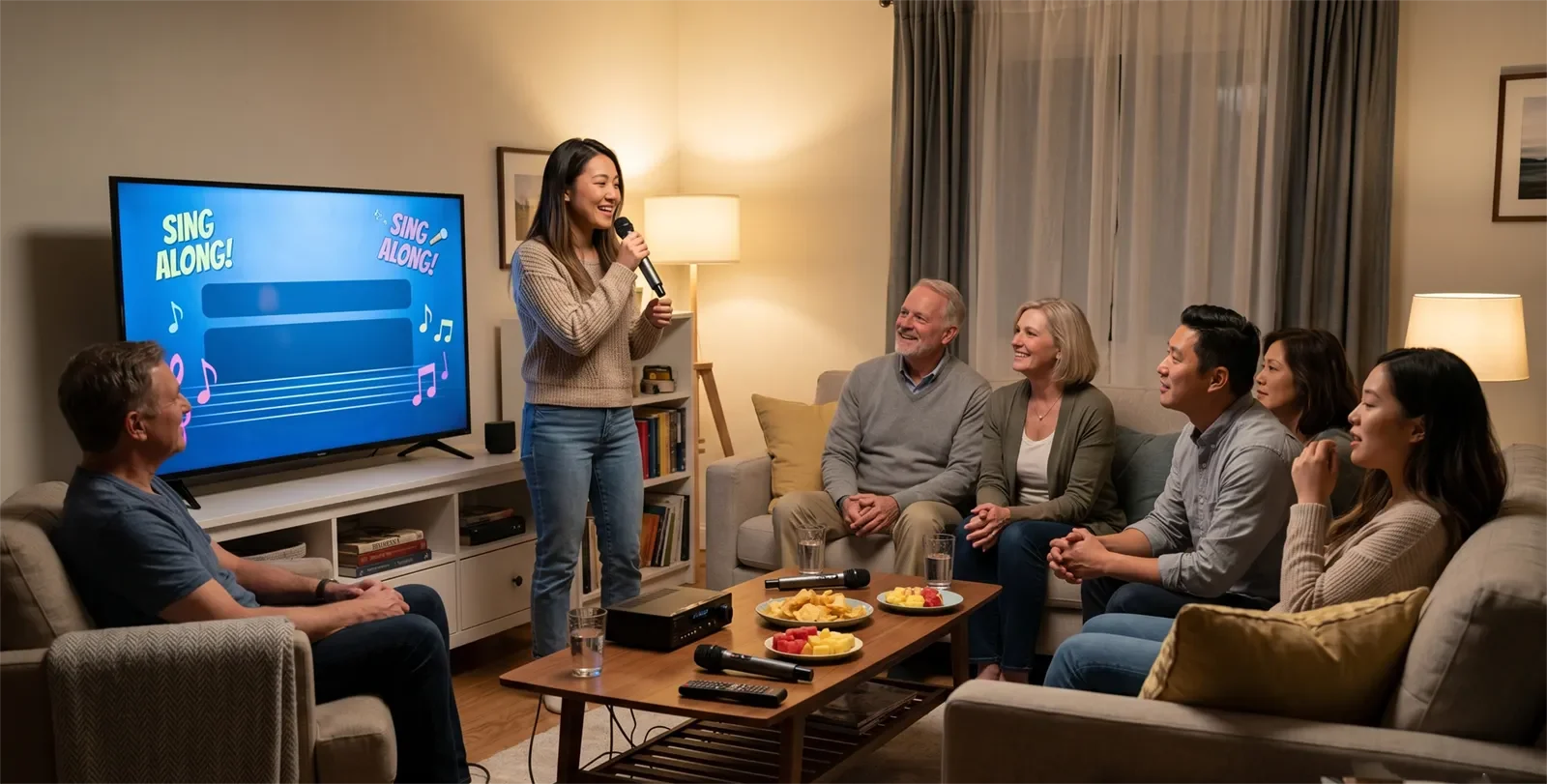
Một buổi karaoke tại nhà không cần tổ chức cầu kỳ mới vui. Muốn đỡ căng, bạn chỉ cần giữ số khách vừa với phòng, chuẩn bị lượt hát rõ, chọn bài dễ vào cuộc và sắp xếp khu hát sao cho mọi người biết mình nên ngồi, đứng và chờ ở đâu.
Bài này dành cho: Người muốn tổ chức tiệc karaoke tại nhà cho gia đình, bạn bè hoặc người thân ghé chơi nhưng không muốn cả buổi phải loay hoay tìm bài, chia lượt, chỉnh âm thanh hoặc kéo khách vào hát.
Bài viết được biên soạn dựa trên: Kinh nghiệm tư vấn dàn karaoke gia đình, cách các buổi hát tại nhà thường bị khựng nhịp, và những yếu tố thực tế như số khách, vị trí ngồi, micro, playlist, cách xoay lượt và mức độ thoải mái của người tham gia.
Nhiều buổi karaoke tại nhà không bị hỏng vì thiếu người muốn hát. Chúng bị rối vì không có nhịp: tìm bài lâu, không biết ai hát tiếp, micro chuyền tay chậm, người ngại hát không biết nên tham gia lúc nào, còn chủ nhà thì phải đứng giữa phòng xử lý mọi thứ.
Tin tốt là bạn không cần biến mình thành người dẫn chương trình chuyên nghiệp. Một buổi karaoke tại nhà chạy mượt thường đến từ vài quyết định rất đời thường: mời số người vừa với không gian, chuẩn bị vài bài mở đầu dễ hát, có cách chia lượt rõ và để phòng hát hỗ trợ cả người hát lẫn người ngồi nghe.
Nếu bạn muốn xem bức tranh rộng hơn về cách tổ chức nhiều kiểu tiệc hát tại nhà, có thể bắt đầu từ Karaoke Party Ideas. Bài này chỉ tập trung vào cách tổ chức một buổi karaoke tại nhà cho đỡ căng, dễ chạy và dễ lặp lại trong những lần sau.
Mục lục
Bắt đầu từ số khách và kiểu buổi hát
Trước khi nghĩ đến bài hát, đèn, loa hay đồ ăn, hãy nhìn đúng quy mô buổi tụ tập. Với đa số phòng khách gia đình, khoảng 8 đến 15 người thường là dễ xoay nhất. Số lượng này đủ tạo không khí nhưng chưa quá đông đến mức người hát phải chờ lâu, người ngồi khó nhìn màn hình hoặc chủ nhà phải liên tục dàn xếp chỗ đứng.
Đông hơn vẫn có thể vui, nhưng bạn cần chuẩn bị kỹ hơn về lượt hát, chỗ ngồi và thời lượng. Nếu không, buổi karaoke rất dễ rơi vào cảnh vài người hát liên tục, vài người ngồi ngoài, còn phần còn lại không biết khi nào tới lượt mình.
Sau khi biết khoảng bao nhiêu người tham gia, hãy xác định kiểu buổi hát bạn muốn. Có buổi chỉ cần nhẹ nhàng, ai thích thì hát. Có buổi muốn vui hơn, có song ca, hát nhóm và một vài bài kéo cả phòng cùng hát. Có buổi nghiêng về gia đình nhiều thế hệ, cần nhịp mềm hơn và bài quen hơn.
Khi kiểu buổi hát rõ ngay từ đầu, bạn sẽ dễ quyết định mọi thứ còn lại: nên mở đầu bằng bài nào, có cần hai micro không, nên để ai hát trước, nên cho phần hát kéo dài bao lâu và khi nào nên để buổi tiệc quay lại trò chuyện tự nhiên.
Một buổi karaoke tại nhà thật ra là bài toán về nhịp, không phải bài toán biểu diễn. Khi khách biết buổi hát dễ theo, dễ tham gia và không bị ép phải “hát cho hay”, không khí sẽ tự nhiên hơn nhiều.
Chuẩn bị phần hát để mọi người dễ tham gia
Phần hát càng đơn giản, chủ nhà càng nhẹ. Bạn không cần chuẩn bị quá nhiều thiết bị hoặc làm buổi tiệc thành một sân khấu nhỏ. Điều quan trọng là những thứ cơ bản phải chạy ổn: màn hình dễ nhìn, bài hát mở nhanh, micro rõ tiếng và âm lượng không làm người trong phòng khó chịu.
- Màn hình hoặc TV đủ lớn để người ngồi trong phòng vẫn đọc lời dễ.
- Nguồn bài hát quen tay, tìm bài nhanh và ít bị gián đoạn.
- Ít nhất hai micro nếu nhóm không quá nhỏ.
- Sạc, dây dự phòng hoặc thiết bị phụ để tránh bị ngắt nhịp giữa buổi.
- Vài bài mở đầu dễ hát để không khí vào nhanh hơn.
Hai micro thường là mức rất thực tế cho karaoke tại nhà. Một micro vẫn dùng được nếu chỉ có vài người thân, nhưng hai micro giúp chuyển lượt nhanh hơn, mở được song ca và giúp người ngại hát tham gia dễ hơn. Nhiều người không muốn cầm micro một mình ngay từ đầu, nhưng lại sẵn sàng hát chung với người thân hoặc bạn bè.
Trước khi khách tới, hãy thử một vòng ngắn: mở một bài, nhìn lời trên màn hình, cầm micro hát thử vài câu, chỉnh âm lượng nhạc và giọng, rồi đổi sang bài tiếp theo. Việc này chỉ mất vài phút nhưng giúp tránh rất nhiều khoảng chờ gượng khi buổi tiệc bắt đầu.
Đừng chuẩn bị theo kiểu “càng nhiều càng tốt”. Hãy chuẩn bị theo kiểu “đủ để buổi hát không bị đứng lại”. Với karaoke tại nhà, sự trơn tru thường quan trọng hơn sự hoành tráng.
Sắp xếp phòng và chia lượt cho đỡ rối
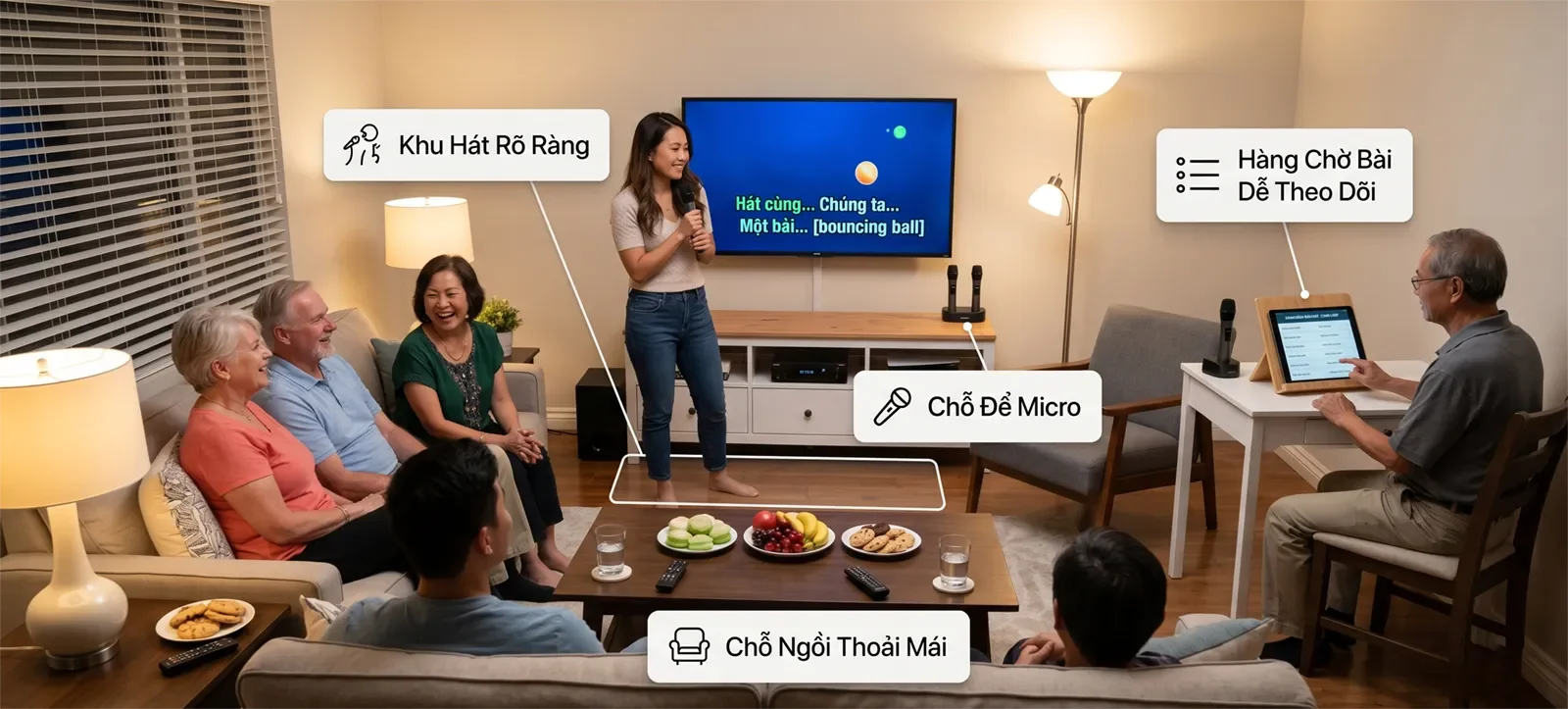
Cách sắp xếp phòng ảnh hưởng rất lớn đến cảm giác của buổi karaoke. Nếu khu hát, chỗ ngồi, bàn đồ ăn và lối đi dính hết vào nhau, chỉ vài bài là phòng bắt đầu rối. Người đi lấy nước chắn màn hình, dây dễ vướng, người hát không biết đứng đâu, còn người chờ lượt thì không biết mình có nên chuẩn bị hay chưa.
Cách dễ nhất là chia phòng thành ba vùng đơn giản. Một vùng cho người đang hát đứng hoặc ngồi hướng về màn hình. Một vùng nhỏ bên cạnh cho người sắp tới lượt. Phần còn lại là chỗ ngồi mở, để mọi người vừa nhìn được màn hình vừa thấy người đang hát.
Đồ ăn và nước nên để lệch khỏi khu micro, loa và dây kết nối. Đây là chi tiết nhỏ nhưng rất đáng làm. Khi đồ ăn nằm ngay trong khu hát, người ra vào liên tục sẽ làm buổi hát mất tự nhiên, nhất là với người vốn đã hơi ngại cầm micro.
Phần chia lượt cũng nên nhìn ra ngay được. Bạn có thể dùng ghi chú trên điện thoại, một tờ giấy nhỏ hoặc chỉ cần một danh sách miệng rõ ràng. Miễn sao mọi người biết ai đang hát, ai sắp hát và sau đó tới ai. Khi thứ tự rõ, người hát chuẩn bị tinh thần tốt hơn và buổi tiệc ít bị rơi vào khoảng im lặng sau mỗi bài.
Nếu buổi tụ tập có nhiều thế hệ trong gia đình, bạn có thể xem thêm ý tưởng karaoke cho họp mặt gia đình. Kiểu buổi này thường cần nhịp nhẹ hơn, bài quen hơn và cách rủ hát mềm hơn so với tiệc bạn bè.
Giữ nhịp buổi hát không bị khựng
Một buổi karaoke vui không có nghĩa là phải hát liên tục không nghỉ. Điều cần giữ là nhịp. Sau mỗi bài, mọi người không nên phải chờ quá lâu, không nên nhìn nhau kiểu “ai hát tiếp đây”, và cũng không nên để một vài người chiếm hết không gian ngay từ đầu.
Một cách đơn giản là cho mỗi người hoặc mỗi nhóm có một lượt đầu trước khi quay lại lượt hai. Cách này giúp buổi hát công bằng hơn và tránh việc người hát mạnh kéo cả phòng theo gu riêng quá sớm. Với người ngại hát, đừng gọi họ lên hát solo ngay. Hãy rủ họ vào bằng song ca, hát chung điệp khúc hoặc chọn một bài cả phòng đều biết.
Playlist cũng quyết định nhịp phòng. Nếu mở đầu bằng bài quá khó, phòng dễ bị căng. Nếu chọn quá nhiều bài chậm liên tiếp, không khí dễ chùng. Nếu bài nào cũng quá mới hoặc quá lệch gu, một phần khách sẽ ngồi ngoài. Bạn không cần danh sách dài, nhưng nên có một khung bài mở đầu, bài giữa buổi và bài kết để buổi hát không bị lệch.
Nếu bạn muốn chuẩn bị phần bài hát tốt hơn, hãy xem bài cách lên playlist karaoke cho tiệc tại nhà. Với một buổi karaoke tại nhà, playlist tốt không phải là danh sách thật dài, mà là danh sách giúp mọi người dễ nhập cuộc đúng lúc.
Một mẹo nhỏ: đừng để bài nào cũng là “bài tâm điểm”. Những bài vừa quen, vừa dễ hát, vừa kéo được nhiều người hát theo thường giữ không khí tốt hơn các bài quá nặng để khoe giọng. Tiệc karaoke tại nhà nên làm mọi người thấy thoải mái, không phải làm ai cũng có cảm giác mình đang lên sân khấu thi hát.
Timeline đơn giản cho tiệc karaoke tại nhà
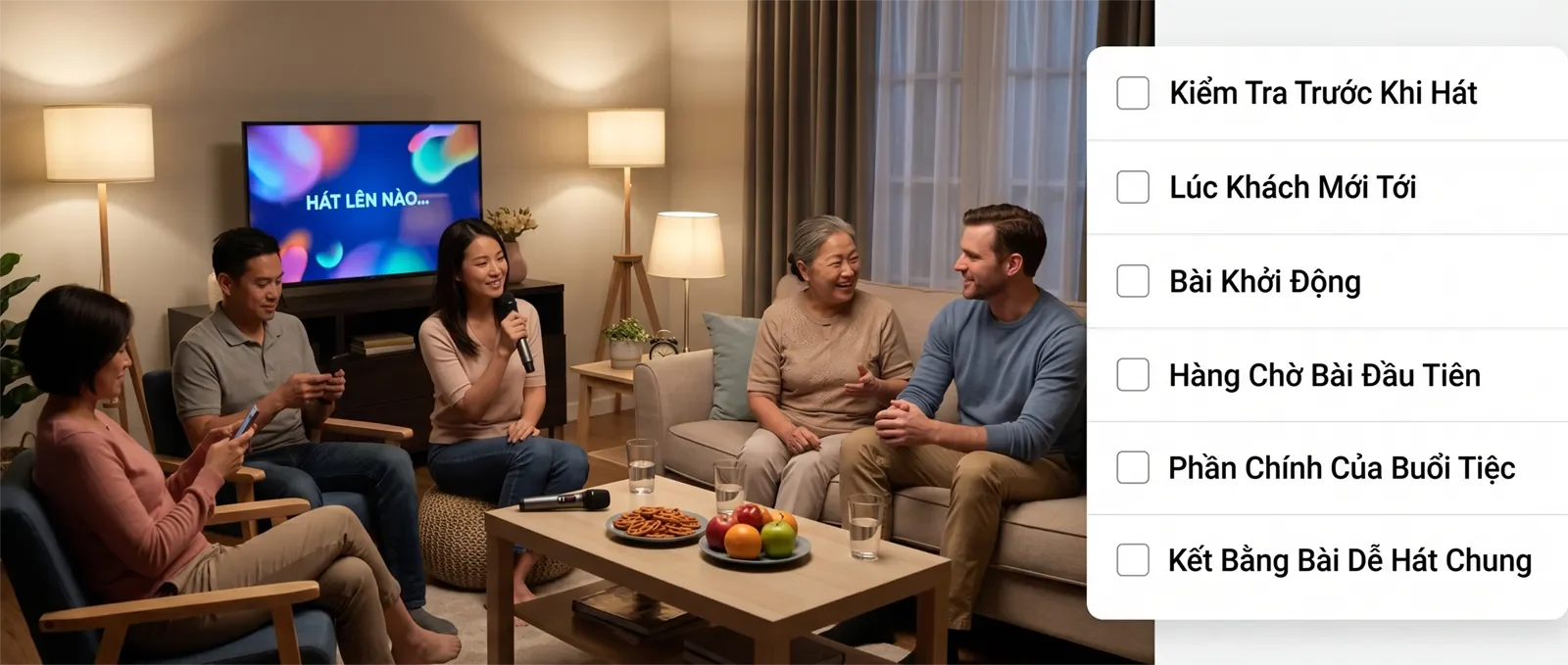
Bạn không cần dựng chương trình từng phút. Chỉ cần một khung nhẹ để buổi hát không bắt đầu lạnh, không rơi nhịp ở giữa và không kết thúc lưng chừng.
- 30 phút trước khi khách tới: thử âm thanh, mở sẵn vài bài đầu, kiểm tra micro và đặt thiết bị ở vị trí dễ dùng.
- 15–20 phút đầu: để mọi người ổn định, sau đó mở bằng một bài dễ hát, một bài song ca hoặc một bài nhiều người biết.
- Phần giữa buổi: xen kẽ người hát tự tin với bài dễ nghe, bài đôi và vài lượt cả phòng hát theo.
- Lúc buổi vui nhất: đưa vào những bài quen, bài gợi nhớ hoặc bài có điệp khúc dễ kéo nhiều người cùng tham gia.
- 15 phút cuối: khép lại bằng một hoặc hai bài ai cũng biết để kết thúc gọn, không bị hụt không khí.
Timeline này không cần theo cứng. Nó chỉ giúp chủ nhà có một đường đi rõ để buổi hát không bị trôi lung tung. Khi bạn biết lúc nào nên mở đầu nhẹ, lúc nào nên nâng không khí, lúc nào nên để mọi người nghỉ và lúc nào nên kết thúc, bạn sẽ đỡ phải xử lý mọi thứ trong lúc đang tiếp khách.
Nếu bạn hay tổ chức karaoke tại nhà, thứ đáng nâng cấp lâu dài không phải là làm buổi hát phức tạp hơn. Điều đáng nâng cấp là làm cho mỗi lần hát sau dễ hơn lần trước: thiết bị dễ dùng hơn, micro ổn hơn, âm thanh dễ chỉnh hơn và cả nhà biết cách vào cuộc tự nhiên hơn.
Kết luận
Một buổi karaoke tại nhà chạy mượt thường không đến từ việc chuẩn bị thật nhiều. Nó đến từ việc chuẩn bị đúng chỗ: số khách vừa với phòng, lượt hát rõ, khu hát gọn, bài mở đầu dễ vào và nhịp buổi vui được giữ đều.
Khi những phần này rõ ràng, chủ nhà không phải ôm hết việc, người hát không bị lúng túng và người nghe cũng dễ hòa vào không khí hơn. Karaoke tại nhà lúc đó không còn là một việc phải “tổ chức cho xong”, mà trở thành một cách rất tự nhiên để gia đình và bạn bè vui cùng nhau.
Câu hỏi thường gặp
Tiệc karaoke tại nhà nên mời khoảng bao nhiêu người?
Với đa số phòng khách, khoảng 8 đến 15 người là dễ xoay nhất. Mức này đủ tạo không khí nhưng chưa quá đông đến mức mỗi lượt hát phải chờ lâu. Nếu nhà nhỏ hơn hoặc muốn buổi hát thân mật, nhóm ít người thường lại dễ vui hơn.
Có cần hai micro cho buổi karaoke tại nhà không?
Nếu chỉ vài người rất thân thì một micro vẫn dùng được. Nhưng với hầu hết buổi karaoke tại nhà, hai micro sẽ tiện hơn vì giúp hát song ca, chuyển lượt nhanh và kéo người ngại hát vào buổi vui nhẹ nhàng hơn.
Làm sao để khách không phải chờ quá lâu tới lượt?
Hãy có một danh sách thứ tự rõ và cho mỗi người hoặc mỗi nhóm một lượt đầu trước khi quay lại lượt hai. Bạn cũng có thể xen bài solo với bài song ca hoặc bài hát nhóm để nhiều người cùng tham gia mà nhịp buổi hát không bị kéo dài.
Buổi karaoke tại nhà nên kéo dài bao lâu?
Khoảng hai đến ba tiếng thường là vừa cho phần lớn buổi karaoke tại nhà. Thời lượng này đủ để không khí lên dần, có vài đoạn vui nhất và vẫn kết thúc gọn trước khi mọi người mệt.
Làm sao để người ngại hát dễ tham gia hơn?
Đừng gọi họ lên hát solo ngay. Hãy rủ họ hát chung một đoạn, hát song ca hoặc chọn bài quen mà cả phòng có thể hát theo. Khi áp lực giảm xuống, người ngại hát thường sẽ dễ tham gia hơn.
Bạn muốn buổi karaoke tại nhà lần tới nhẹ đầu hơn ngay từ khâu chuẩn bị?
Hãy xem các bộ dàn hợp với tiệc gia đình, dễ dùng trong không gian sinh hoạt chung và phù hợp cho nhiều người cùng tham gia.
Xem dàn karaoke phù hợp cho tiệc gia đình tại nhà