
Good karaoke room lighting should make the room feel warm, readable, and comfortable to sing in. For most family home setups, the best result comes from softer ambient light, one gentle accent layer, and a clear lyric screen without glare.
Who this guide is for: Families and home karaoke hosts who want the room to feel more inviting without turning the setup into a complicated lighting project.
How this guide was prepared: This guide was written for real home karaoke spaces such as living rooms, family rooms, apartments, and multi-use entertainment areas. It focuses on comfort, lyric visibility, guest confidence, and practical lighting choices that work for mixed-age family gatherings.
A home karaoke setup can sound good and still feel awkward if the room does not feel comfortable. Bright overhead lighting can make singers feel exposed. A room that is too dark can make lyrics harder to read and movement less comfortable. Random color lights can make the space feel busy instead of fun.
Lighting matters because karaoke is social. People need to see the lyrics, feel relaxed enough to sing, and move around the room without feeling like they are standing on a stage under inspection.
If you want broader planning ideas for different home karaoke gatherings, start with Karaoke Party Ideas. This guide stays focused on karaoke room lighting ideas for family home setups.
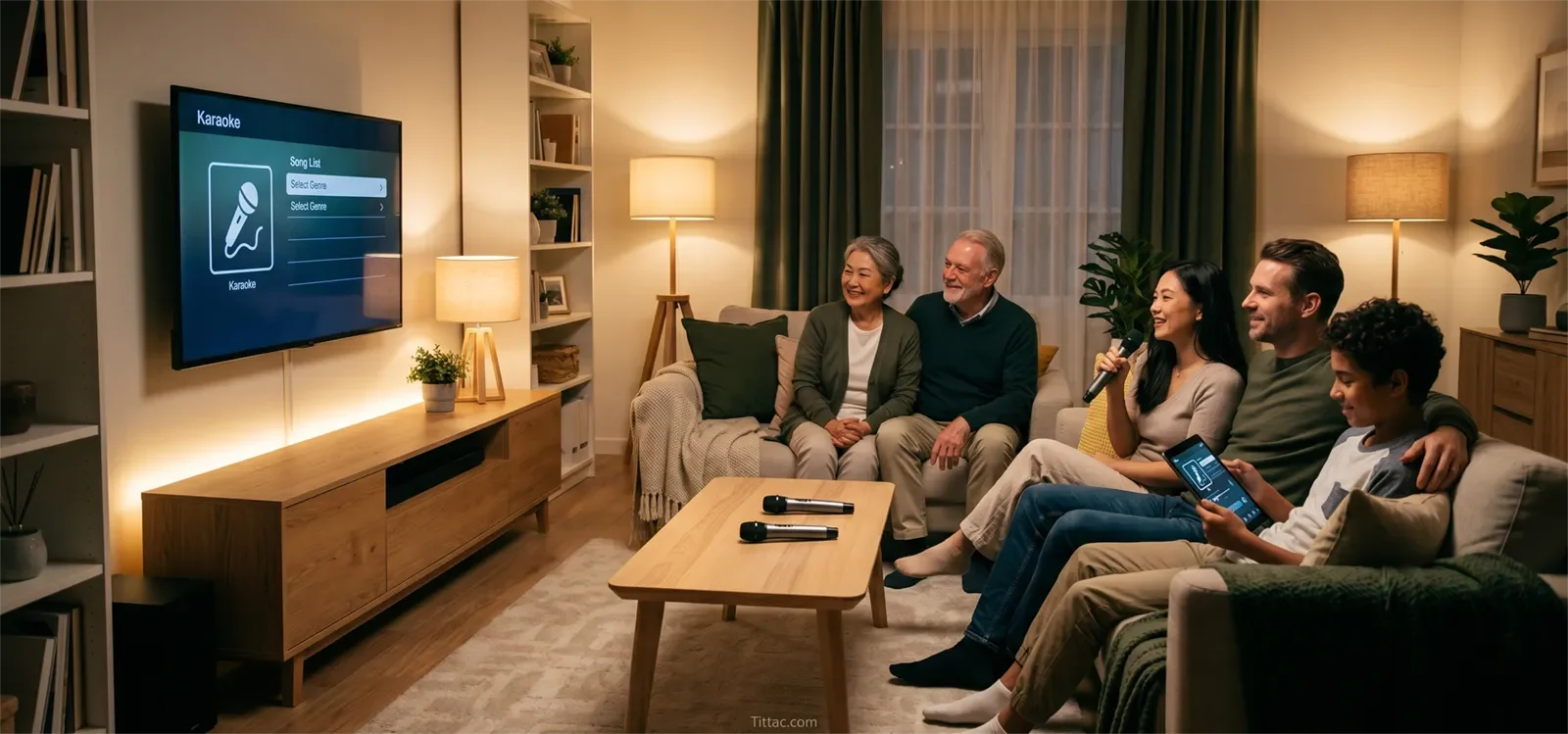
Table of Contents
Quick Answer
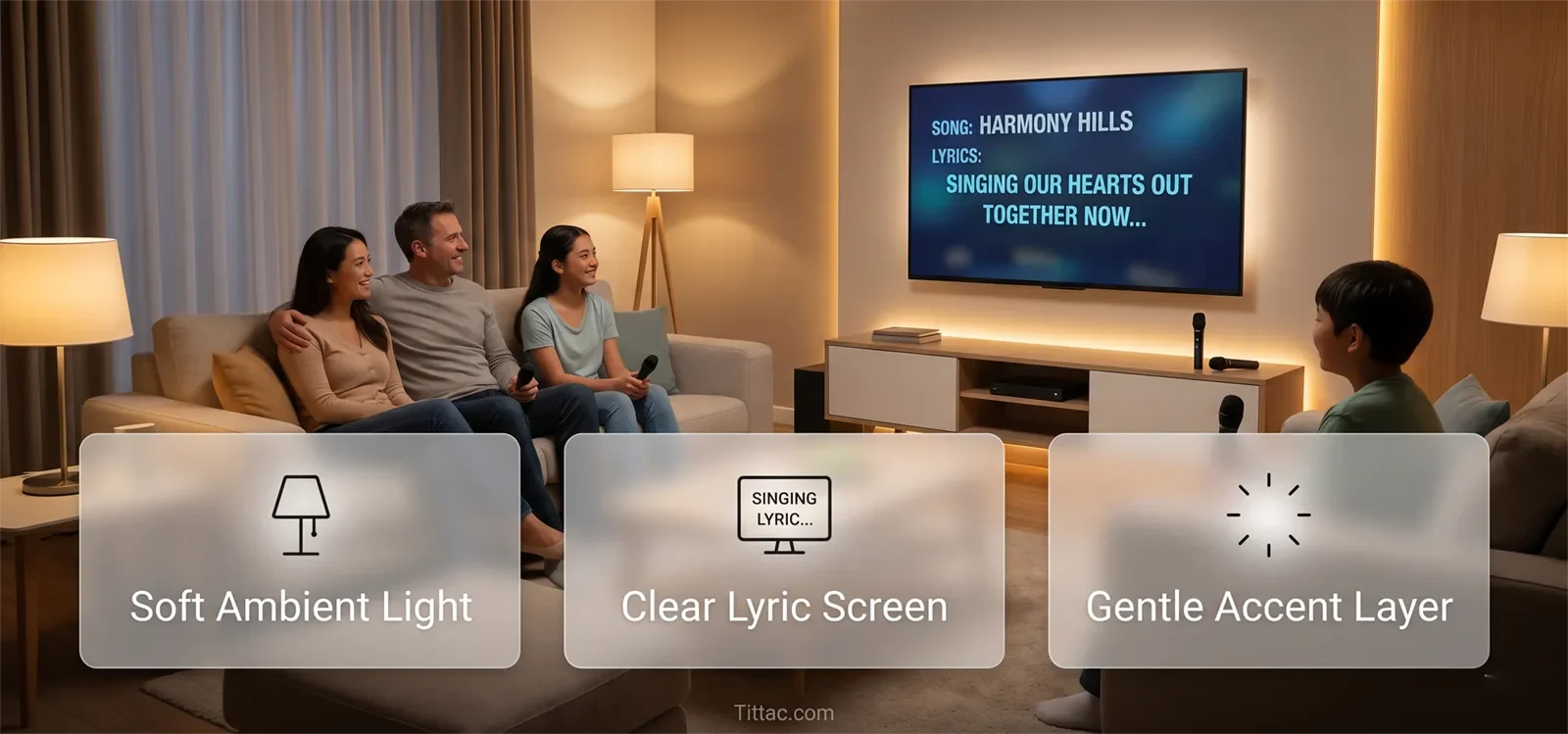
The best karaoke room lighting ideas for family home setups usually combine soft ambient light, a clear lyric screen, and one subtle accent layer. Reduce harsh overhead lighting, avoid glare on the TV or monitor, keep the room bright enough for comfort, and use warm, steady lighting instead of strong flashing effects. The room should feel inviting, not dark, chaotic, or overly staged.
Why Lighting Affects Karaoke Participation
Lighting changes how safe and comfortable the room feels. That matters because karaoke is not just about sound. It is also about whether people feel relaxed enough to hold the microphone, follow the lyrics, and sing in front of family or friends.
When the room is too bright from one overhead source, singing can feel more exposed than fun. Guests may become more aware of themselves. Quieter singers may hesitate. The room can feel flat, even if the music and equipment are working well.
When the room is too dark, the opposite problem happens. Guests may struggle to move around, older family members may feel less comfortable, and the lyric screen may become the only strong light source. That can make the screen feel harsh on the eyes over a full evening.
Family karaoke usually works best in the middle. The room should feel softer than normal daytime lighting, but still bright enough for conversation, snacks, movement, and mixed-age comfort.
Good lighting also makes the setup feel more intentional. Even a normal living room can feel more welcoming when the light has shape: a softer main glow, a clear lyric area, and a little depth in the background.
Use Softer Ambient Light First
The first lighting layer to fix is the general room light. In many homes, the ceiling light is useful for cleaning or setting up, but it is not the most flattering or comfortable light for karaoke.
If possible, dim the overhead light or turn it off once the night begins. Then use softer sources such as floor lamps, table lamps, wall lights, or indirect lighting to create a warmer room feel.
Ambient light should not compete with the lyric screen. It should make the room easier to sit in, easier to talk in, and easier to share. A warm side lamp can often improve the room more than adding dramatic party lights.
For family karaoke, soft and steady usually works better than dark and theatrical. The goal is not to make the room look like a club. The goal is to make people feel comfortable enough to sing.
Protect the Lyric Screen From Glare
The lyric screen is the most important visual point in the room. If guests cannot read the lyrics comfortably, the whole karaoke night feels harder.
Check for glare before guests arrive. A lamp, window, ceiling light, or shiny surface may reflect on the TV or monitor and make lyrics harder to read. Sometimes the fix is simple: move a lamp, close curtains, shift the screen angle, or place a light slightly behind or beside the seating area instead of directly across from the screen.
The screen should be bright enough to read, but it should not be the only bright object in the room. If the rest of the room is too dark, the lyric screen can feel sharp and tiring. If the room is too bright, the screen may lose contrast.
The best balance is a screen that feels clear while the surrounding room still has a comfortable glow.
Add One Gentle Accent Layer
Accent lighting gives the room depth. It can make a normal family room feel more intentional without changing the whole space.
A gentle accent layer might be a soft lamp in a corner, subtle LED lighting behind a TV console, a warm glow near shelving, or indirect light along a wall. The accent should support the room, not pull attention away from the singers or the lyrics.
In home karaoke, one accent layer is usually enough. Too many colors, strips, flashing lights, or moving effects can make the room feel busy. A small amount of depth often feels more premium and more comfortable than a full party-light setup.
If your karaoke space is small, accent lighting can also help the room feel warmer without adding more furniture or decorations. For layout-specific ideas, see Small-Space Karaoke Party Ideas.
Avoid Overly Dark or Flashy Lighting
It is easy to think karaoke lighting needs to be colorful, dramatic, or constantly moving. That can work for some parties, but it is not always the best choice for family home setups.
Fast-changing lights can distract from singing. Strong flashing effects can make the room feel chaotic. Deep darkness can make people less comfortable moving around, especially when the space includes kids, parents, grandparents, food, drinks, and everyday furniture.
For most homes, the better choice is steady, warm, and flattering. The room should still feel fun, but not visually tiring.
If you want color, keep it subtle. A soft amber, warm white, or gentle background color often works better than harsh blue, red, or flashing party lights. The lighting should make people feel more relaxed, not more watched.
Match Lighting to Family Use
A family karaoke room has to do more than support singing. It also has to support conversation, snacks, people walking through, kids joining and leaving, older family members sitting comfortably, and guests watching from different parts of the room.
That is why the lighting should not be designed only around the singer. It should support the whole room.
The singer area should feel clear but not exposed. The seating area should feel comfortable. The lyric screen should be easy to read. The background should feel warm enough that guests want to stay in the room even when they are not singing.
If the night includes mixed ages, avoid making the room too dark or too intense. A recurring family karaoke night usually benefits from comfort more than spectacle.
Lighting also works best when it supports the overall hosting flow. For broader guidance on pacing, guest movement, and turn-taking, read How to Host a Karaoke Party at Home Without Stress.
Simple Karaoke Room Lighting Setup
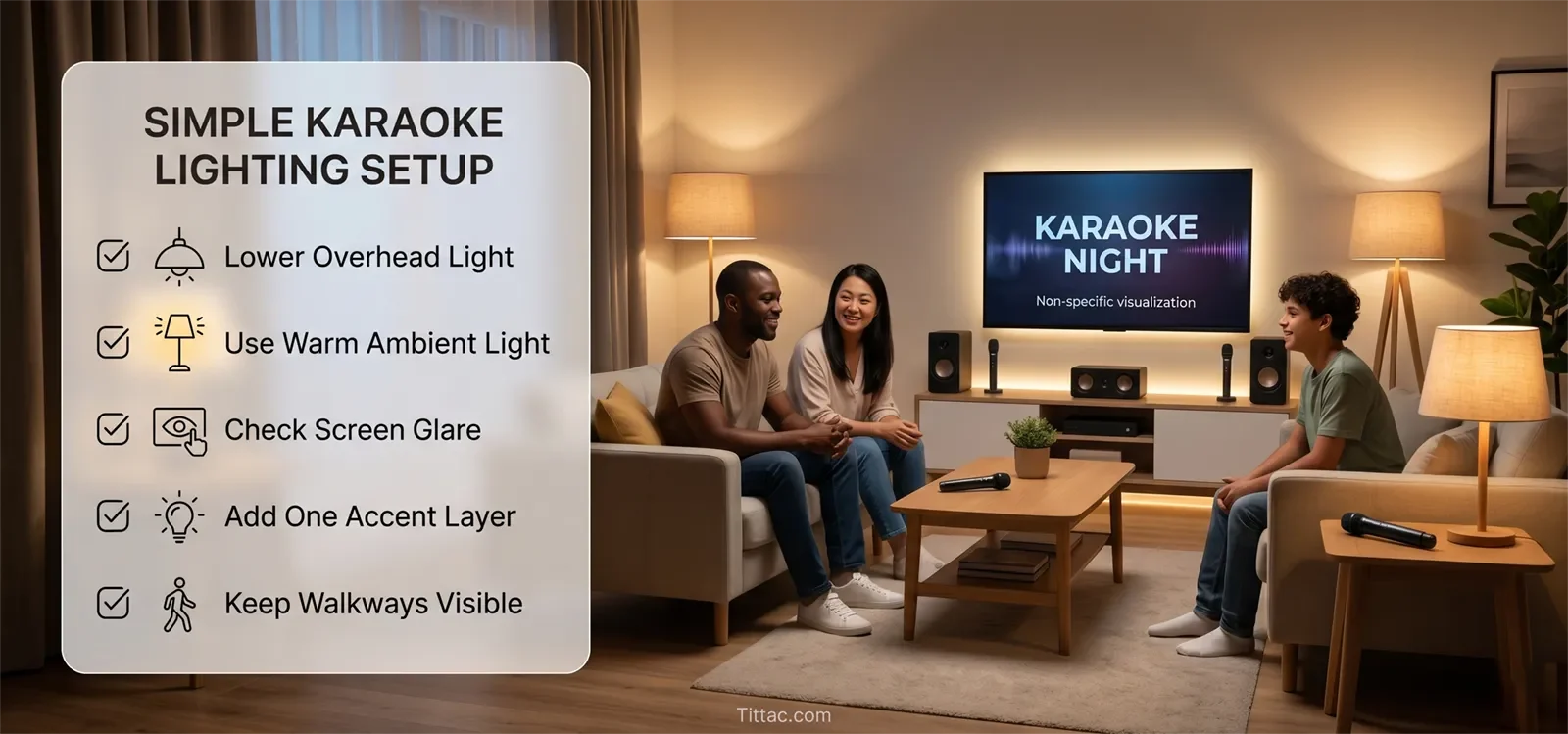
You do not need a complicated lighting system. A simple repeatable setup is usually better because you can use it again whenever family or friends come over.
- Lower harsh overhead light. Dim it, reduce it, or turn it off once the room is ready.
- Use warm ambient light. Add a floor lamp, table lamp, or indirect light that gives the room a softer glow.
- Check the lyric screen. Make sure there is no glare and that lyrics are easy to read from the main seating area.
- Add one accent layer. Use a subtle background light behind furniture, near a wall, or around the TV console.
- Keep movement safe. Make sure walkways, seating areas, and the singer zone are still visible enough for mixed-age comfort.
- Save the setup. Once the room feels right, repeat the same lighting pattern for future karaoke nights.
This setup works because it solves the main home karaoke problems without adding extra work. It softens the room, protects lyric visibility, and makes the space feel more inviting.
Common Lighting Mistakes
The most common mistake is leaving one bright overhead light as the main source. That can make the room feel exposed and less flattering for singers.
Another mistake is making the room too dark. A dark room may seem more dramatic, but it can make the lyric screen harsh and make movement less comfortable.
Too much color is another problem. Strong colored lights can be fun for a short moment, but if they dominate the room, they may distract from the music and make the space feel less relaxed.
Hosts also sometimes place lamps where they create screen glare. Always check the lyric screen from both the singer area and the seating area before the night starts.
Finally, avoid cluttering the room with too many lighting gadgets. A clean, warm setup usually feels better than a busy one.
Final Advice
Good karaoke room lighting is not about creating a dramatic show. It is about making the room easier to enjoy.
Use softer ambient light, protect the lyric screen, add one gentle accent layer, and avoid lighting that feels too harsh, too dark, or too chaotic. The best family karaoke rooms feel warm, readable, and comfortable for everyone in the room, not just the person holding the microphone.
When the room feels better, people usually relax faster. They sing more naturally, stay more engaged, and enjoy the night without feeling like they are under a spotlight.
Lighting helps the room feel better, but the full karaoke night still depends on flow. For the broader guide on turning a home setup into an easier karaoke gathering, read How to Host a Karaoke Party at Home Without Stress.
Frequently Asked Questions
Should a home karaoke room be dark?
Not completely. A room that is too dark can make movement less comfortable and make the lyric screen feel too harsh. Most family karaoke rooms work better with soft overall lighting instead of full darkness.
Are colored LED lights necessary for karaoke at home?
No. Colored LED lights are optional. Many home karaoke rooms feel better with warm ambient lighting and one subtle accent layer instead of strong colors or flashing effects.
How do I make karaoke lyrics easier to read?
Reduce glare first. Move lamps away from the screen reflection, close bright windows, and keep the room softly lit so the screen is clear without being the only bright object in the room.
What is the simplest lighting upgrade for family karaoke?
The simplest upgrade is lowering harsh overhead light and adding one warm lamp or indirect light source. That small change often makes the room feel more relaxed and flattering.
Should the singer area be brighter than the rest of the room?
It can be slightly clearer, but it should not feel like a spotlight. For home karaoke, the singer area should feel comfortable and visible without making guests feel exposed.