
Small-space karaoke works best when the room is easy to read: one clear lyric screen, one simple singer zone, seating that does not block movement, and a light queue that keeps the night moving without crowding the room.
Who this guide is for: Home hosts planning karaoke in an apartment, condo, small family room, or cozy living room where space is limited and comfort matters as much as fun.
How this guide was prepared: This guide was written for real home karaoke use, with attention to seating flow, lyric visibility, guest movement, turn-taking, and the way small rooms actually feel once people start singing, sitting, standing, and moving around.
Karaoke in a small apartment or cozy living room can feel warmer than a big party because everyone is closer to the music, the singer, and each other. But that closeness can turn uncomfortable fast if the room has no clear flow. One chair in the wrong place can block the lyrics. A crowded coffee table can make every song handoff awkward. Too many people waiting near the singer can make the room feel smaller than it really is.
The goal is not to force a full-size karaoke party into a compact room. The goal is to make the space easier to share. If you want broader hosting ideas beyond small rooms, start with Karaoke Party Ideas. This guide stays focused on small-space karaoke party ideas for apartments and cozy living rooms.
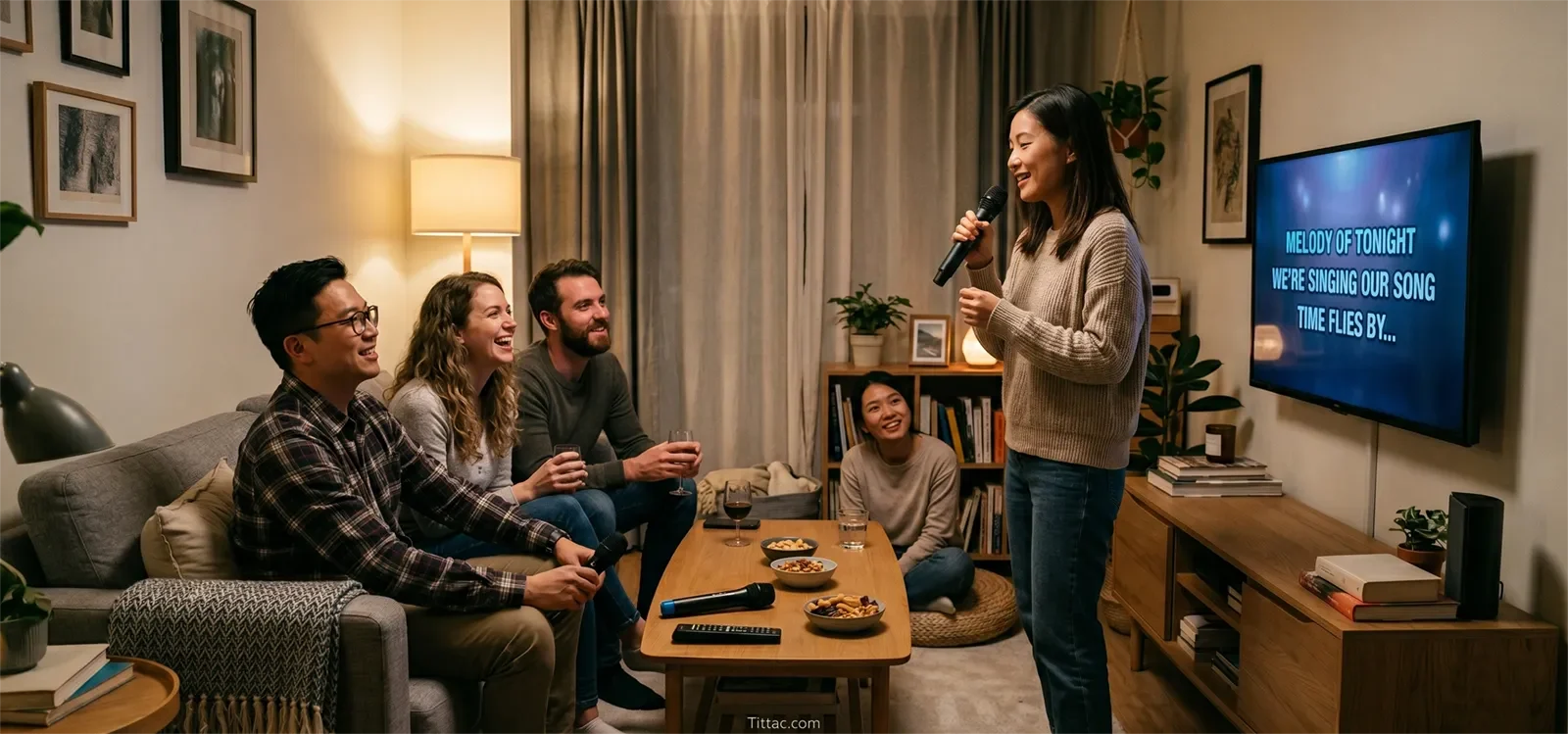
Table of Contents
Quick Answer
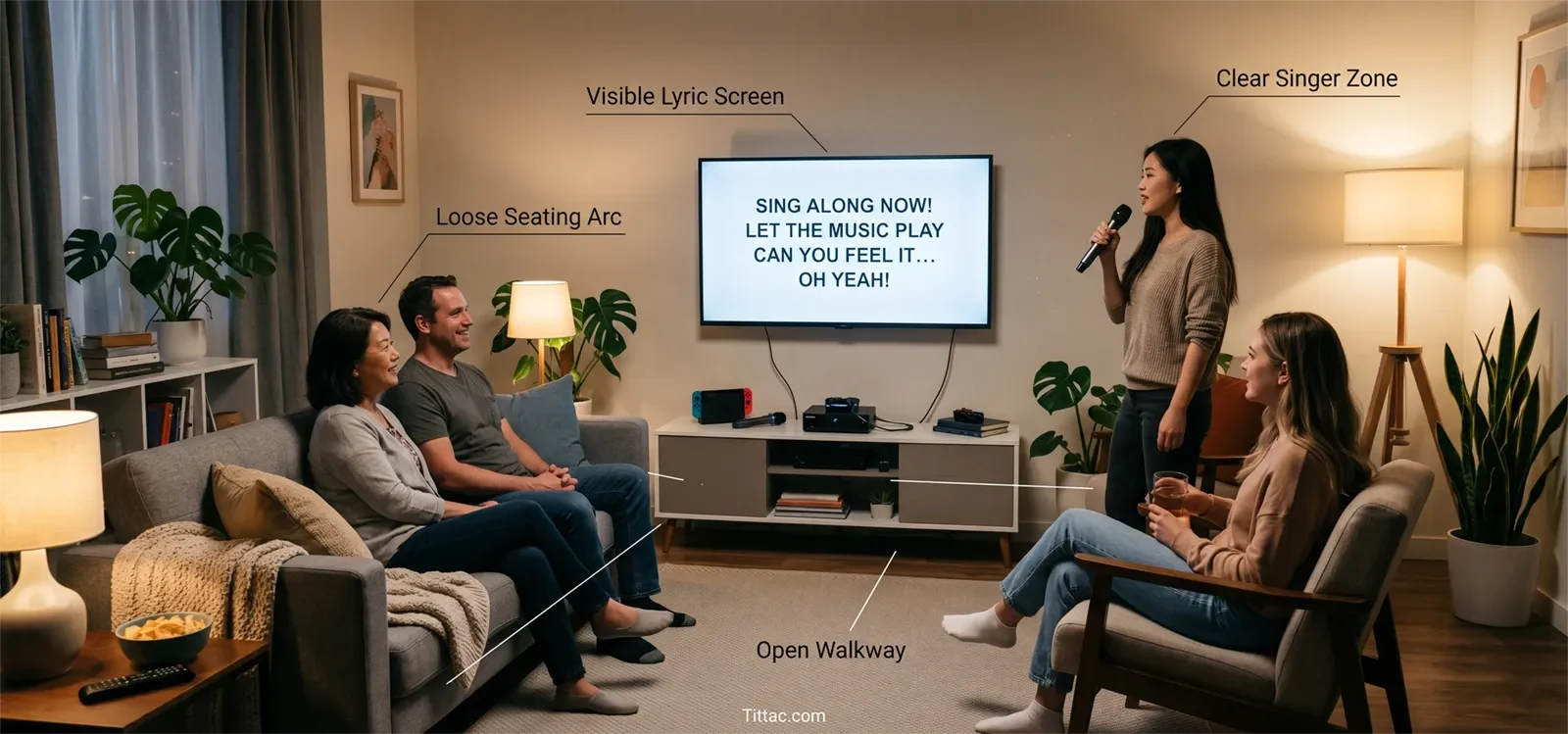
The best small-space karaoke party ideas are usually layout choices, not extra decorations. In most apartments and cozy living rooms, karaoke feels better when the lyric screen is easy to see, the singer has one obvious standing area, seating forms a loose arc, the queue stays simple, and the room has less clutter than a normal party setup. A small karaoke night should feel intimate, not packed.
What Makes Small-Space Karaoke Different
Small-space karaoke is not just regular karaoke in a smaller room. The room changes the whole rhythm of the night.
In a larger space, guests can spread out, talk on the side, wait near the singer, or step away without affecting everyone else. In a small apartment or tight living room, every movement is more noticeable. If someone stands near the TV, they may block the lyrics. If two guests wait near the front, the singer zone starts to feel crowded. If the coffee table is full, even passing the microphone can feel clumsy.
That is why small-space karaoke depends on readability. Guests should quickly understand where to sit, where to sing, where to look, and how turns move. When the room is easy to understand, people relax. When the room is confusing, the party starts to feel cramped even if the guest count is not high.
Small spaces also make pacing more important. Long turns feel longer. Heavy songs feel heavier. Waiting feels more obvious because everyone is close together. A good small-room karaoke night usually has a lighter rhythm: shorter waiting lines, easier transitions, and enough breathing room between bigger moments.
Set Up One Clear Singer Zone
The singer zone does not need to feel like a stage. It only needs to be obvious.
Choose one standing area where the singer can face the lyric screen without blocking other guests. In a small living room, this is often slightly off-center rather than directly in front of the TV. The best spot is usually where the singer can see the screen, guests can see the singer, and people can still walk through the room without squeezing behind furniture.
Leave enough room for a solo singer, a duet, or a quick microphone handoff. You do not need a large open floor. You just need enough space so the singer is not bumping into a coffee table, speaker stand, couch corner, or side table every time a song starts.
A clear singer zone also helps shy guests. When the room has one natural place to sing, people do not have to wonder where to stand or whether they are in the way. That small bit of clarity makes participation easier.
Arrange Seating So Guests Can See and Move
Seating usually works better in a loose arc than in a packed block. A sofa, a few chairs, and floor cushions can feel comfortable if they are angled toward the screen without closing off the singer zone.
Avoid placing chairs in a straight line that forces everyone to look past each other. Also avoid pushing every seat as close as possible to the screen. That may fit more people, but it often makes the room feel tighter and makes movement harder.
The best small-room seating does three things:
- Most guests can see the lyrics without leaning around someone.
- The singer can feel connected to the group, not trapped in a corner.
- People can get up, sit down, and pass the microphone without interrupting the whole room.
Screen placement matters too. The lyric screen should be readable from both the singer area and the main seating area. If guests have to twist their necks or stand up to follow the song, the room will feel less comfortable very quickly.
If the layout is already working but the room still feels flat, the issue may be atmosphere rather than furniture. Softer lighting can help the space feel warmer without adding clutter. For that specific part, see karaoke room lighting ideas.
Keep the Queue Light and Visible
Queue flow matters more in a small room because waiting is visible. In a large room, several people standing near the singer may not matter. In an apartment, that same group can block the screen, crowd the singer, and make the room feel packed.
Keep only the next singer or next duet loosely ready. Everyone else can stay seated or relaxed. The queue can still be fair and visible without turning into a physical line in the middle of the room.
A simple note on a phone, a shared list, or one person managing the order is usually enough. The host does not need to announce every detail. Guests just need to know that turns are moving and no one is being skipped.
In small spaces, it also helps to avoid letting one strong singer dominate early. A simple rotation during the first part of the night gives quieter guests a chance to join before the room becomes too performance-heavy. Once everyone is comfortable, the flow can loosen up.
Control Clutter Before It Controls the Room
Small-space karaoke usually improves when you remove things, not when you add more.
Before guests arrive, clear the floor near the singer zone. Move extra baskets, stools, cables, bags, and small tables out of the way. Keep the coffee table simple or move it slightly if it blocks the natural path between seating and the singer area.
Guests may not notice the cleanup directly, but they will feel it. A cleaner room makes it easier to move, easier to pass the microphone, and easier to relax between songs.
Try to keep drinks and snacks in one side area instead of spreading them across every surface. If every table becomes a snack station, guests will keep crossing the singer zone and the room will feel busy. One simple food-and-drink area is usually better than several small clutter points.
Gear should also stay simple. A compact karaoke setup often works better than bringing out too many pieces of equipment. The point is not to make the room look empty. The point is to protect the parts of the room that people need to sing, sit, see, and move.
Use Energy Shifts Instead of More Stuff
Many hosts try to make a small karaoke night more exciting by adding decorations, more chairs, extra lights, more song lists, or more people. Sometimes that helps, but in a small room it often creates the wrong kind of energy.
A better approach is to use energy shifts.
Start with familiar songs that do not put too much pressure on the room. Move into stronger solo songs once people are relaxed. Add a duet when the room needs a lift. Use a group chorus when guests are getting quiet. Slow the pace when people need a break.
This keeps the night fun without crowding the space. Small rooms are naturally intimate, so you do not need to make every moment big. A few strong moments are enough when the room is already close and connected.
It also helps to let guests participate at different levels. Some people may sing from their seat. Some may only join the chorus. Some may take one full turn all night. That is fine. In a small room, flexible participation usually feels better than forcing everyone into performance mode.
Simple Small-Space Karaoke Flow
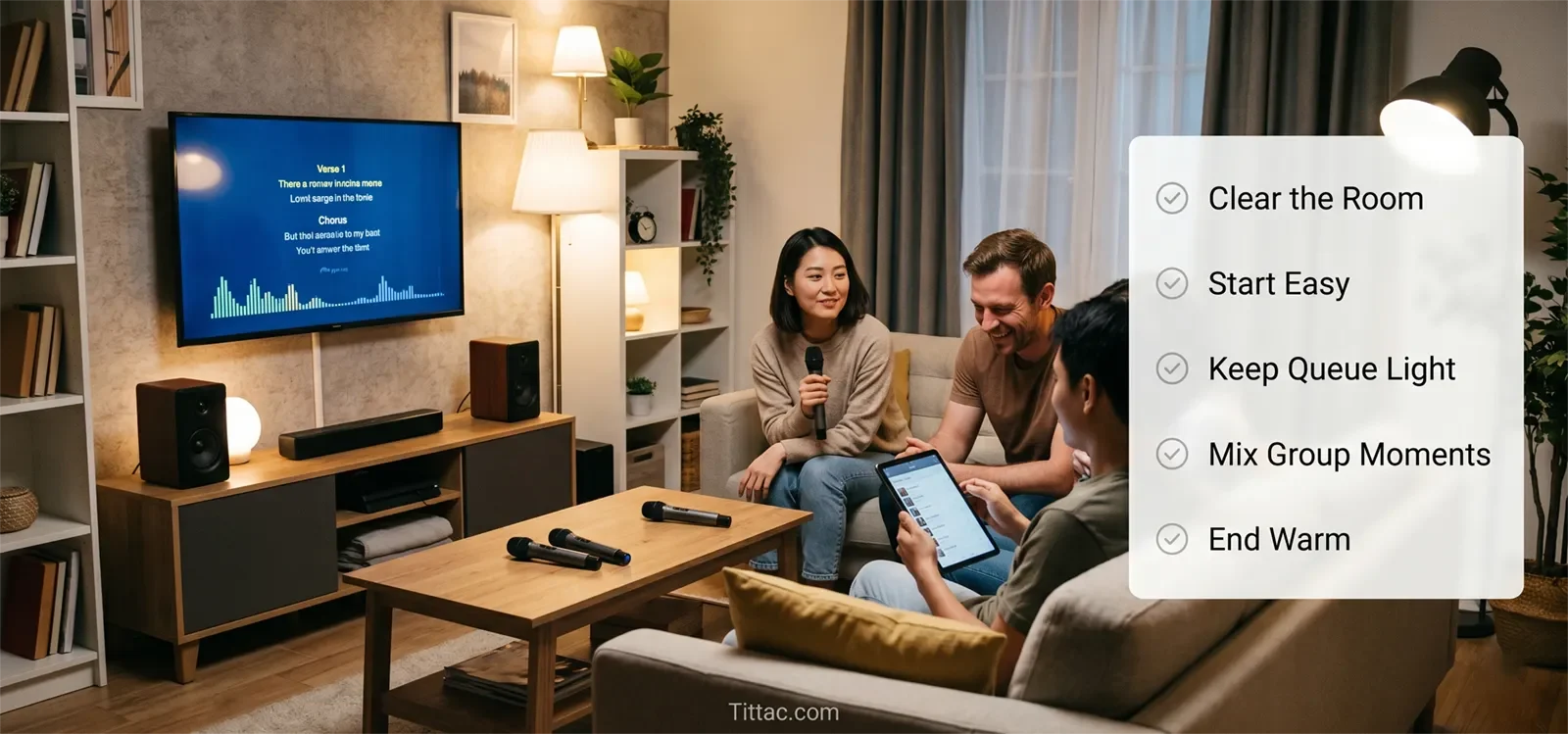
A small karaoke party does not need a strict schedule. It needs a rhythm that respects the room.
- Clear the room before guests arrive. Open the singer zone, protect the walkway, and remove anything that blocks the lyric view.
- Let guests settle first. Give people a few minutes to sit, look around, and understand the room before the queue starts.
- Start with easy songs. Choose familiar, low-pressure songs to warm up the room without making the first turns feel too serious.
- Keep the queue light. Let the next singer be ready, but do not let people gather near the front.
- Mix solos, duets, and group moments. This keeps the room involved without making one person carry the whole night.
- End before the room feels tired. In a small space, a warm ending is better than stretching the party until people feel boxed in.
This flow works because it reduces unnecessary movement. The room stays social, but it does not become chaotic. Guests know where to look, where to sit, and how the night is moving.
Common Small-Room Mistakes
The most common mistake is inviting more people than the room can comfortably hold once singing begins. A living room may seem large enough when everyone is standing, but karaoke needs sightlines, movement, seating, and a clear singer area. If those pieces disappear, the party feels crowded even before it gets loud.
Another mistake is placing the singer directly in front of the screen. This can work in some rooms, but in many apartments it blocks the lyrics for everyone else. A slightly angled singer zone often works better.
Hosts also sometimes leave too much furniture in place because the room looks normal that way. Normal living room furniture is not always karaoke-friendly. Moving one small table or extra chair can make the whole night easier.
Finally, avoid building a long visible line of singers. A small room feels more relaxed when people wait from their seats instead of standing near the front. The queue should guide the night, not take over the room.
Final Advice
The best small-space karaoke party ideas are simple because small rooms do not reward overcomplication. Clear the room, protect the lyric view, create one singer zone, arrange seating in a loose arc, and keep the queue light.
When the room is easy to read, guests feel more comfortable. When guests feel more comfortable, they sing more naturally. That is what makes small-space karaoke work: not a bigger setup, but a smarter flow.
A compact room can become one of the best places for karaoke because it feels close, warm, and personal. You just have to protect that closeness from turning into crowding.
A compact room also works best when the whole gathering has a simple hosting structure behind it. For broader guest flow, pacing, and planning beyond the room itself, read How to Host a Karaoke Party at Home Without Stress.
Frequently Asked Questions
How many guests work best for karaoke in a small apartment?
The best number depends on your seating, screen visibility, and how much open floor remains after people arrive. A moderate group usually feels better than a packed one because guests can still see the lyrics, move between turns, and relax without feeling squeezed.
Do I need a separate waiting area in a small living room?
No. In a tight room, a separate waiting area can make the space feel more crowded. It is usually better to keep only the next singer loosely ready while everyone else waits from their seat.
Should karaoke turns be shorter in small spaces?
Often yes, at least in pacing. You do not need strict time limits, but faster transitions and a lighter queue usually work better in compact rooms. Long waits and heavy song runs feel more noticeable when everyone is sitting close together.
What is the easiest way to make a small karaoke room feel better?
Clear the singer zone and improve the lyric view first. Removing clutter near the front of the room often helps more than adding decorations, extra lights, or more furniture.
Can a small apartment still feel good for karaoke?
Yes. A small apartment can be excellent for karaoke when the layout is intentional. The room may feel more personal and connected than a larger space if guests can see the screen, move comfortably, and follow the turn flow without crowding.