
The best karaoke system for family parties is not simply the loudest system. It is the system that fits your room, keeps microphones easy to share, makes songs simple to access, and lets different ages join without turning the party into a technical setup.
Written by Toan Ho — Tittac editorial team.
Who this guide is for: This guide is for home karaoke buyers who want a family-friendly setup for birthdays, holidays, weekend gatherings, and mixed-age parties where ease of use matters as much as sound quality.
How this guide was prepared: This guide focuses on the real buying factors that affect family karaoke at home: room size, vocal clarity, microphone count, setup friction, song access, storage, and whether the system will be used occasionally or regularly.
Family karaoke works best when the system feels easy before it feels impressive. People should be able to pick songs, pass microphones, adjust basic volume, and keep the night moving without one person standing beside the equipment all evening.
For most homes, the right karaoke system for family parties is the one that matches the room and the way your family actually sings. A small living room, open family room, holiday gathering, and regular weekend karaoke night do not need the same setup. If you want the broader home-buying framework first, start with How to Choose the Best Karaoke System for Your Home.
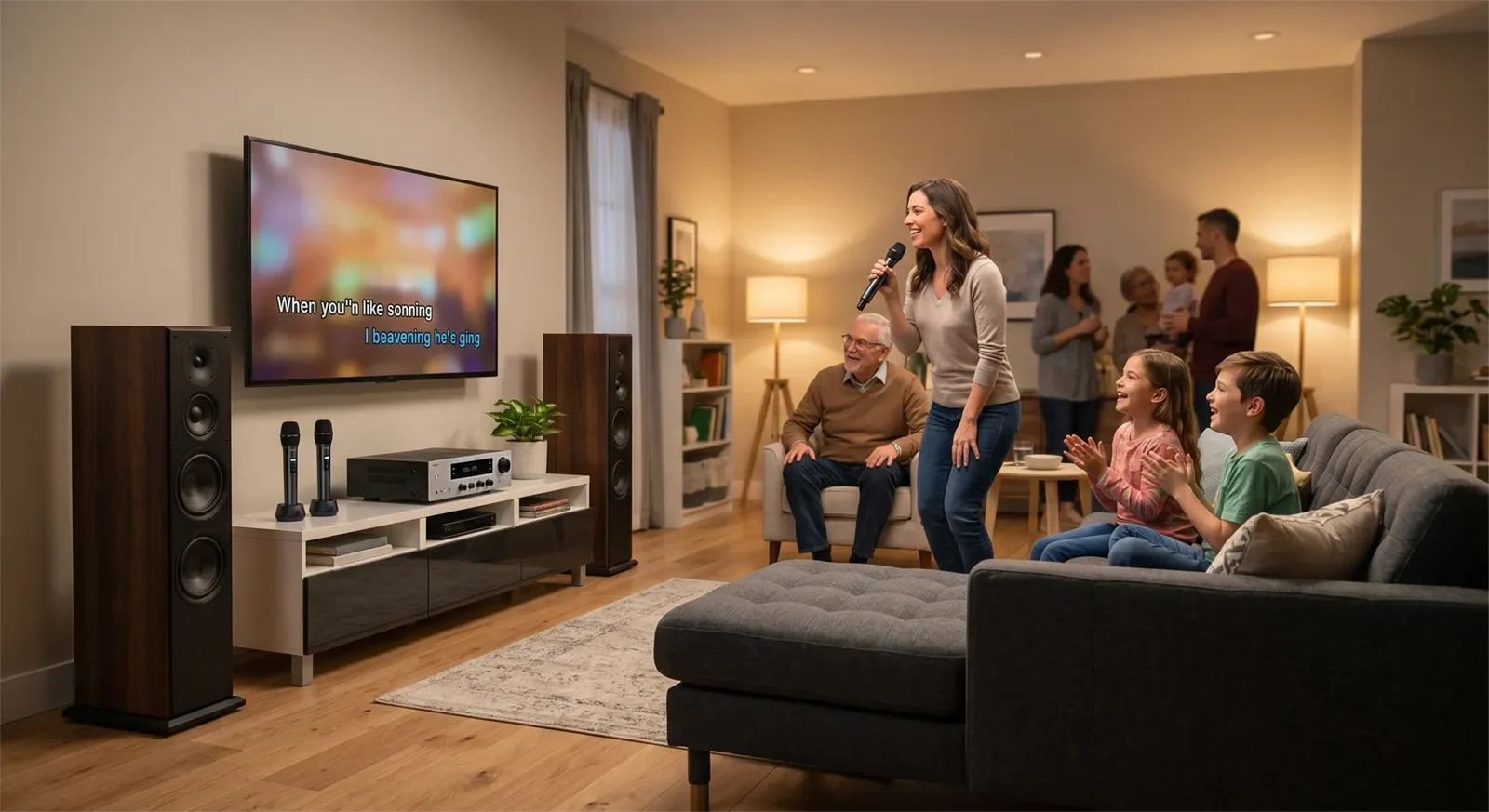
Table of Contents
Quick Answer
The best karaoke system for family parties is a home karaoke setup with clear vocals, simple controls, reliable wireless microphones, and enough room coverage for your normal gathering size. Choose a compact or easy-to-move system if karaoke is occasional. Choose a more settled full-size home system if your family sings often or hosts larger gatherings.
Do not buy only for maximum power. For family parties, the better question is whether the system is easy for parents, grandparents, kids, and guests to use without slowing down the night. Clear vocals, smooth microphone sharing, and simple song access usually matter more than the biggest speaker or the longest feature list.
What a Family-Party Karaoke System Really Needs
Clear vocals before extra loudness
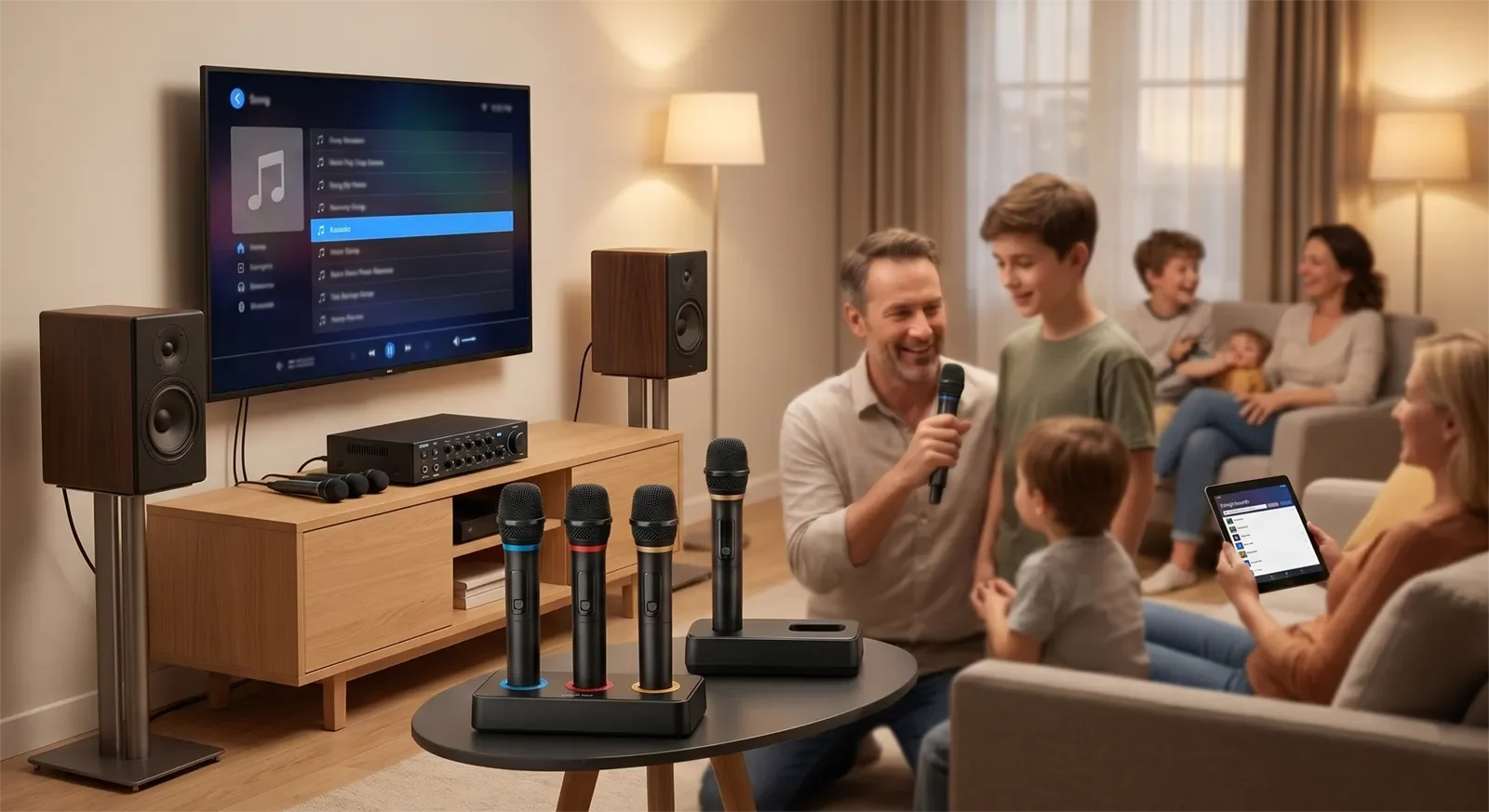
At a family party, people notice the voice first. A good karaoke system should make singing sound clear, comfortable, and easy to follow without forcing the music or microphones too loud. If the vocals are harsh, buried, or hard to control, the system may feel tiring even if it is powerful.
This is why family buyers should focus on usable sound, not just big numbers. A system with balanced speakers, stable microphones, and practical sound control will usually create a better party than a louder setup that overwhelms the room.
Simple controls for mixed-age use
Family karaoke often includes people with very different comfort levels. Some guests know exactly what song they want. Others need help finding music, holding the mic, or joining a duet. The system should make that easy.
The best family-party setups do not require constant adjustment between songs. Basic controls should be understandable, microphone handoff should feel natural, and the system should not depend on one tech-savvy person to manage every detail.
A setup that fits the room
Most family karaoke nights happen in normal homes: living rooms, open family rooms, bonus rooms, condos, or multi-use spaces. These rooms are not designed like stages. Furniture placement, ceiling height, speaker position, and how close people sit all affect the experience.
A small room usually needs balance and control more than power. A larger room may need stronger coverage and more headroom so the vocals stay clear when more people are talking, laughing, and singing along.
| Buying factor | Why it matters for family parties | What to avoid |
|---|---|---|
| Vocal clarity | Keeps singing comfortable and easy to hear | Choosing loudness over clean voice reproduction |
| Ease of use | Helps different ages join without stress | Buying a system only one person knows how to operate |
| Microphone workflow | Controls duets, handoff, group songs, and party flow | Treating microphones as a small detail |
| Room fit | Prevents overpowering small rooms or underfilling larger spaces | Buying without considering where the system will actually sit |
| Storage or permanence | Decides whether the setup should be portable or stay ready | Buying a large setup for a home that needs everything put away |
Best Fit by Home and Party Style
Best for casual family parties
Best for: birthdays, holidays, weekend gatherings, and families that want karaoke to be easy to start and easy to put away.
What to look for: a simple system with clear vocals, wireless microphones, easy song access, and enough sound for the room without taking over the house.
Not ideal if: your family sings often, hosts larger groups, or wants a setup that feels ready every weekend without rebuilding it each time.
For casual use, convenience matters. A system that starts quickly and feels approachable will usually get used more often than a more complicated setup that sounds impressive but creates friction before the first song.
Best for regular weekend karaoke
Best for: families who sing often, keep karaoke in one main room, and want the system to feel stable, familiar, and ready.
What to look for: stronger room coverage, dependable microphones, better sound control, and a layout that does not need to be packed up after every use.
Not ideal if: you only use karaoke a few times a year or your home does not have space for a more settled setup.
When karaoke becomes part of regular family life, convenience changes meaning. A more complete home system may feel like “more” at first, but it can become easier over time because the room stays ready.
Best for larger mixed-age gatherings
Best for: parties where kids, parents, grandparents, relatives, and friends all join in, especially when duets and group songs happen often.
What to look for: enough microphones for smooth participation, clear vocals at party volume, and a setup that keeps the room moving without constant interruptions.
Not ideal if: most sessions are one or two singers in a small room and the extra capacity will rarely be used.
Larger family gatherings need more than volume. They need smoother flow. When people are waiting too long for a microphone, struggling to hear the singer, or stopping the music to adjust settings, the system starts getting in the way of the party.
Why Microphone Workflow Matters
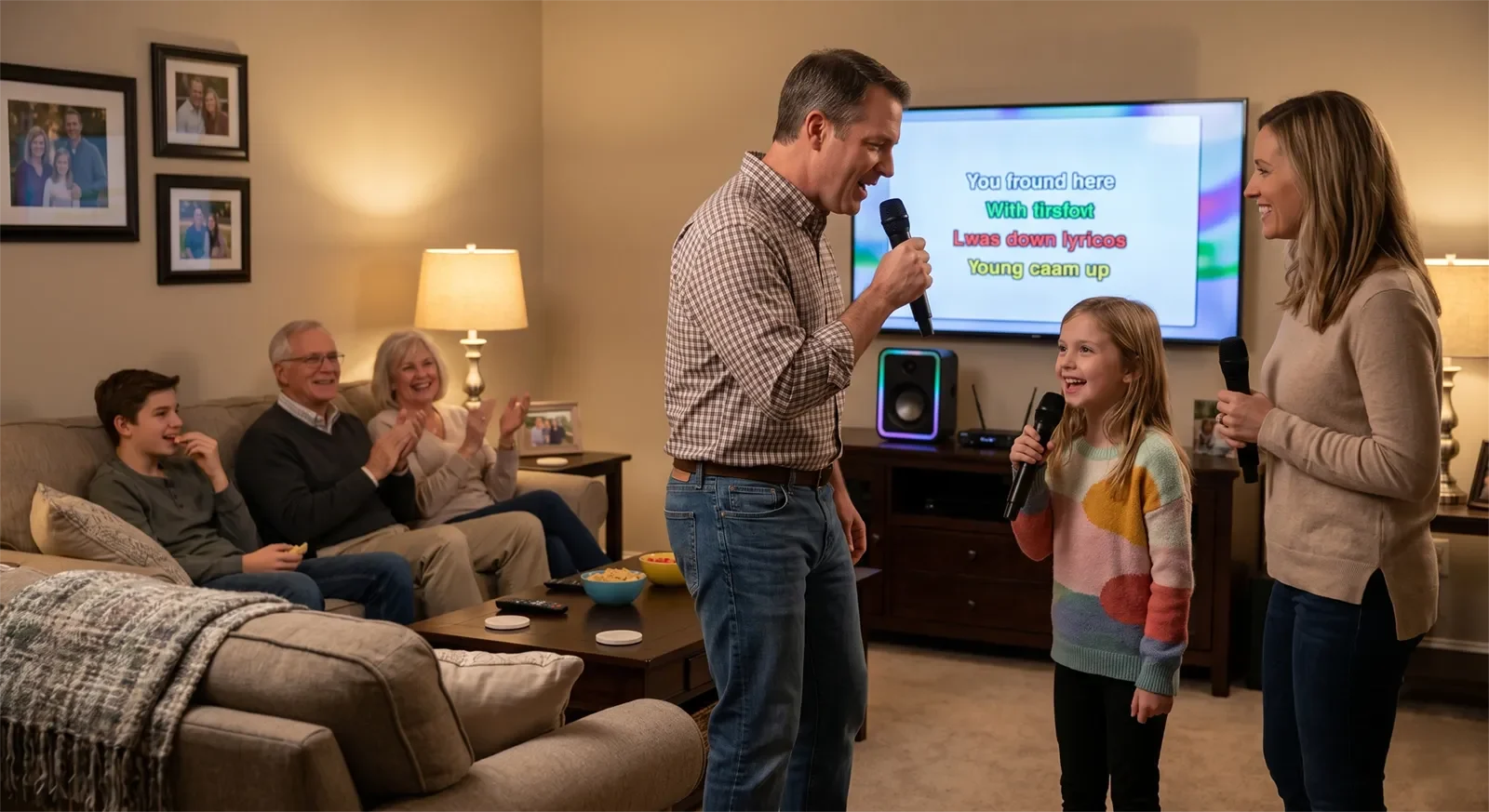
Microphones shape the real party experience more than many buyers expect. Two microphones may be enough for many homes, especially if most songs are solos or duets. Four microphones make more sense when kids join often, group songs are common, or your family likes everyone to participate at once.
The right microphone count reduces hesitation. People do not have to wait as long, duets feel more natural, and shy guests can join a group instead of singing alone. If group participation is a major reason you are buying, compare this decision early with our 2-mic vs 4-mic karaoke system guide.
| Microphone setup | Best for | Main advantage | Possible downside |
|---|---|---|---|
| 2 microphones | Small families, casual duets, occasional parties | Simple, affordable, and easy to manage | Can feel limiting when many people want to sing |
| 4 microphones | Group songs, kids, larger family gatherings | Makes participation easier and more social | May cost more and needs better control to avoid messy sound |
Budget, Room Size, and Setup Trade-Offs
The smartest karaoke purchase is usually not the cheapest system or the biggest system. It is the system that matches your normal use. Buy for the parties you actually host most often, then leave a little room to grow.
If your family sings only on holidays, a simpler setup may be the better value. If karaoke happens every weekend, spending more on stability, microphones, and room coverage can make sense because those benefits are used repeatedly.
| Home situation | Usually better choice | When to spend more | When to keep it simple |
|---|---|---|---|
| Small living room | Balanced system with clear vocals and easy placement | When you sing often and want better control | When the system is only for occasional use |
| Open family room | Stronger home system with better coverage | When guests spread across a larger space | When karaoke stays quiet and casual |
| Condos or compact homes | Controlled system that does not overpower the room | When vocal clarity is weak at lower volume | When a large setup would dominate the space |
| Large family gatherings | System with more headroom and smoother mic workflow | When group participation is central to the party | When large parties are rare |
| Regular weekend singing | More settled system that stays ready | When repeated setup becomes annoying | When storage space is limited |
Common Buying Mistakes
Buying only for the biggest party of the year
Many buyers imagine the largest holiday gathering and shop around that moment. That can lead to a system that is bigger, more expensive, or more complicated than the family needs most of the time.
A better approach is to buy for your normal gathering size and leave some room for larger nights. This keeps the system useful in daily life instead of making it feel like equipment for rare events.
Choosing power before room fit
More power does not automatically mean better karaoke. In a smaller room, too much sound can make vocals harsh, bass heavy, or hard to control. In a larger room, too little coverage can make the singer feel weak or distant.
Room fit should come before power. The goal is comfortable coverage, not maximum loudness.
Ignoring microphone count
Microphones are not just accessories. They affect who joins, how long people wait, and whether group songs feel natural. A system can sound good but still feel awkward if the mic setup does not match the way your family sings.
Think about singer count before choosing the system, not after.
Buying features your family will not use
Advanced controls can be helpful for the right buyer, but they are not automatically valuable at a family party. If extra features make the system harder to understand, they can reduce participation instead of improving the night.
Spend more only when the added feature clearly improves ease, clarity, flexibility, or long-term use.
How to Choose in 60 Seconds
- Start with the room. Decide where karaoke will happen most often and whether the space is small, open, or large.
- Choose the use pattern. Occasional parties usually need simplicity. Regular singing may justify a more settled system.
- Count real singers. If duets and group songs happen often, microphone workflow should be a priority.
- Check who will use it. If parents, grandparents, kids, and guests will all join, keep controls simple and clear.
- Set the budget around normal use. Do not overbuy for one rare event or underbuy for a habit your family already has.
If you only remember one rule, use this one: choose the karaoke system your family will use comfortably again and again, not the one that only looks strongest on paper.
Frequently Asked Questions
What type of karaoke system is best for family parties?
The best type is a home karaoke system with clear vocals, easy controls, dependable wireless microphones, and enough sound coverage for the room. Occasional parties usually need a simpler setup, while regular family karaoke may benefit from a more complete system that stays ready.
Are portable karaoke systems good for family parties?
Yes. Portable karaoke systems can work well for family parties when the setup needs to move, store easily, or come out only for gatherings. They are especially useful when convenience matters more than building a permanent karaoke area.
Do I need two microphones or four microphones for family karaoke?
Two microphones are enough for many homes, especially for solos and duets. Four microphones are better when kids, relatives, and groups often sing together. The right choice depends on how social your karaoke nights usually are.
Is a bigger karaoke system always better for family gatherings?
No. A bigger system only helps when the room and gathering size need more coverage. In smaller homes, a balanced system with clear vocals and simple control can create a better experience than a larger setup that overwhelms the room.
How much should I spend on a family karaoke system?
Spend based on how often your family will use it and how large your normal gatherings are. Occasional parties do not always need a large investment. Regular weekend singing may justify spending more for better microphones, stronger coverage, and easier long-term use.
Final Recommendation
For family parties, choose a karaoke system that makes singing easy, clear, and comfortable for the people in your home. If karaoke is occasional, keep the setup simple and convenient. If your family sings often, choose a more settled home system with better room coverage, dependable microphones, and controls that do not slow down the night.
The real decision is not small versus big. It is easy versus complicated, occasional versus regular, and room-fit versus overkill. The best family karaoke system is the one that supports your real gatherings without adding stress before the music starts.
Need help choosing the right karaoke setup for your home? Tittac can help you compare room size, microphone count, and setup style in English or Vietnamese.
Read the complete home karaoke buying guide · Compare 2-mic vs 4-mic systems · See how to host a karaoke party at home